If your hardwood floor is lifting off the subfloor in visible ridges or waves, that’s buckling, and it’s one of the more serious problems a wood floor can have. Understanding hardwood floor buckling causes early can mean the difference between a small repair and replacing an entire section.
If your hardwood floor is lifting off the subfloor in visible ridges or waves, that’s buckling, and it’s one of the more serious hardwood floor repair issues a wood floor can have.
It’s also one of the most misunderstood. A lot of Calgary homeowners assume buckled boards mean the whole floor needs replacing. Sometimes that’s true. Often it isn’t, especially when the cause gets caught early.
Calgary’s swings between bone-dry winters and humid summer stretches put extra stress on hardwood that homes in milder climates don’t deal with. Add in older housing stock in neighborhoods like Inglewood and Bridgeland, where original subfloors and plumbing weren’t built with today’s hardwood in mind, and buckling shows up here more often than people expect.
Here’s what actually causes hardwood floors to buckle, how to tell how bad it is, and what your realistic options are.
What is hardwood floor buckling
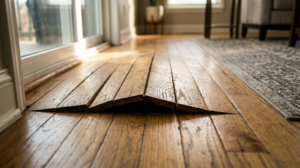
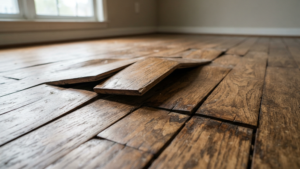
Buckling happens when wood planks pull away from the subfloor and rise upward, sometimes in a small section, sometimes across an entire room. In severe cases, boards separate from each other and stand up at the edges.
It’s different from cupping, where the edges of a board curl upward but the board stays attached to the subfloor, and different from crowning, where the center of the board rises higher than the edges. Buckling is the most extreme of the three, and it usually means moisture has been sitting somewhere for a while.
Hardwood floor buckling causes
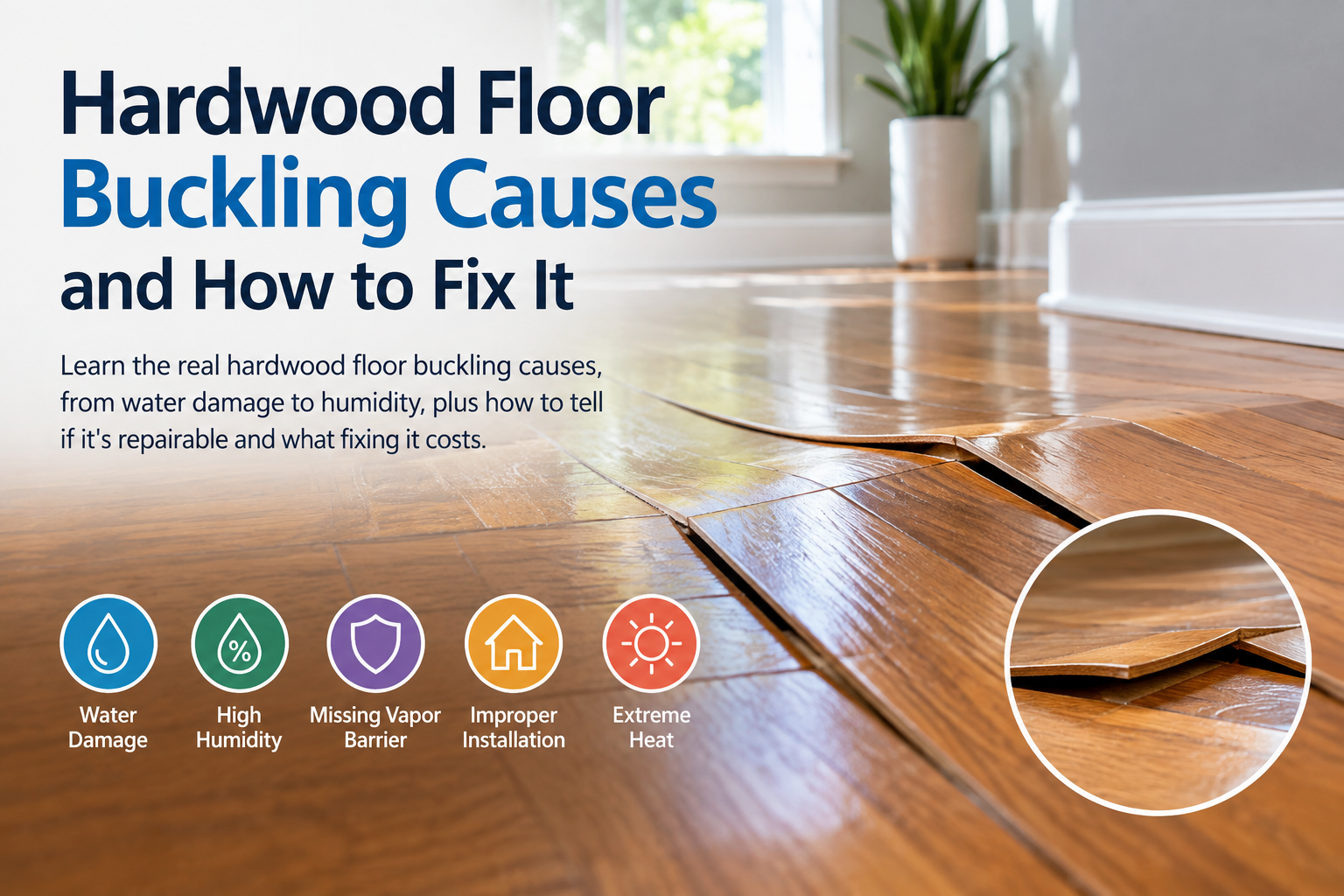
Almost every case of buckling traces back to one thing: moisture the wood wasn’t built to handle. Here’s where that moisture usually comes from.
Water damage
This is the most common cause by far. A burst pipe, an overflowing washing machine, a slow leak under a dishwasher, or flooding from outside can all soak the wood from below or above. Wood absorbs water and expands. When it has nowhere to expand into, it pushes up and buckles.
Even a leak you cleaned up quickly can cause buckling days later, once water has worked its way into the subfloor.
High humidity or poor ventilation
Wood is constantly reacting to the moisture in the air around it. In a home with poor ventilation, especially basements or additions with limited airflow, humidity can build up enough to swell the wood over time. This tends to happen more gradually than water damage, so it’s easy to miss until the buckling is already visible.
Calgary homes see this less often than gapping and cupping, since our winters run dry rather than humid. But summer humidity spikes, a poorly vented bathroom, or a basement with limited airflow can still push moisture levels high enough to cause problems, particularly in newer builds in areas like Mahogany and Seton where basements are finished quickly and ventilation sometimes gets overlooked.
Missing or damaged vapor barrier
Hardwood installed over concrete needs a proper vapor barrier between the subfloor and the wood. If that barrier is missing, damaged, or installed incorrectly, moisture from the concrete slab can seep upward into the wood for months without anyone noticing, until the floor starts to lift.
Improper acclimation before installation
Hardwood needs time to adjust to a home’s humidity and temperature before it’s installed. Skipping or rushing this step is a common mistake, especially with lower-cost installs. Wood that goes down before it’s acclimated will expand or contract once it settles into the room’s actual conditions, and buckling is one of the ways that shows up.
This matters more in Calgary than in a lot of other markets. A floor acclimated in summer humidity and then hit with our dry winter indoor air, or installed in winter and then exposed to a humid August, moves more than wood installed in a climate with less seasonal swing.
Subfloor moisture problems
If the subfloor itself was wet or damp during installation, or develops a moisture issue afterward from a slow plumbing leak or grading problem outside the home, that moisture transfers directly into the hardwood above it.
Extreme heat exposure
Less common, but worth knowing: prolonged direct heat, like sunlight through a window for years or a floor installed too close to a heat vent, can also stress the wood enough to contribute to buckling, particularly when combined with humidity swings.
Buckling vs cupping vs crowning
These three problems get mixed up constantly, and the fix is different for each one.
Problem
What it looks like
Usually caused by
Cupping
Board edges curl up, center stays lower
Moisture from below, seasonal humidity
Crowning
Center of the board rises above the edges
Over-drying after a cupping repair, or moisture from above
Buckling
Boards lift entirely off the subfloor
Prolonged water exposure, major moisture intrusion
If you’re not sure which one you’re dealing with, that’s a reasonable thing to have someone confirm in person before you decide on a fix.
Signs your hardwood floor is buckling
Catching it early makes a real difference in cost and repair options. Watch for:
Boards that feel loose or springy underfoot
Visible gaps or ridges between boards
A section of floor that looks higher than the rest
Boards separating at the seams
A musty smell, which often points to moisture sitting underneath
If you notice any of these, especially after a known water event, don’t wait to see if it gets better on its own. It won’t.
Can a buckled hardwood floor be repaired
Often, yes. Hardwood floor repair depends on how long the moisture was present and how many boards are affected.
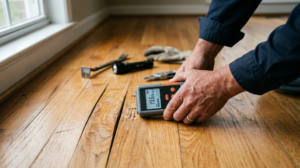
Mild to moderate buckling, caught within the first day or two of a water event, can sometimes be corrected by removing the affected boards, thoroughly drying the subfloor, and reinstalling or replacing just that section. This is where a fast response really pays off.
Severe buckling, where boards have been sitting in moisture for an extended period, often means those specific boards are warped beyond saving and need full replacement. That’s still usually a repair to a section of the floor, not a full floor replacement, unless the water damage was widespread. On older homes with discontinued or unusual species, matching replacement boards can turn into a custom hardwood flooring job rather than a straightforward swap.
How to fix a buckled hardwood floor
Find and stop the moisture source. Fixing the floor without fixing the leak or humidity problem means you’ll be back here again.
Remove the affected boards. Trying to flatten buckled boards back into place rarely works long-term.
Dry the subfloor completely. This step gets skipped more than it should. Industrial fans or dehumidifiers are often needed, not just open windows.
Check the subfloor for damage. Water that reached the hardwood may have also affected the subfloor underneath.
Replace boards and refinish to match. New boards need to be matched in species, width, and stain, then blended into the surrounding finish so the repair isn’t visible.
This isn’t usually a DIY-friendly repair. Matching stain and finish on a small section so it blends with surrounding, aged flooring takes experience, and drying a subfloor properly requires more than a fan and a few days.
How much does hardwood floor buckling repair cost
Cost depends heavily on how many boards are affected and whether the subfloor also needs repair.
Scope of repair
Typical cost
Small section (a few boards)
$300 – $800
Moderate section (one room)
$800 – $2,500
Subfloor damage included
$1,500 – $4,000+
For a broader breakdown of flooring costs across installation, refinishing, and repair, see our hardwood flooring cost guide.
How to prevent hardwood floor buckling
Wipe up spills and leaks immediately, and check under appliances periodically for slow leaks
Keep indoor humidity between roughly 35 and 55 percent, especially through Calgary’s dry winters and any humid stretches in summer
Run a humidifier in winter and a dehumidifier or extra ventilation in humid summer stretches, since Calgary’s swing between the two is wider than most cities
Make sure a proper vapor barrier was installed if your hardwood sits over concrete
Have new hardwood acclimated properly before installation, not rushed, ideally to the season it’ll actually be living in
Address any grading or drainage issues outside the home that could be pushing moisture toward your foundation, worth a second look each spring after snowmelt
Getting it looked at
Buckling is one of those problems that gets more expensive the longer it sits, since the moisture causing it usually isn’t done causing damage. If you’re seeing lifted boards, ridges, or a musty smell near your hardwood in Calgary, Airdrie, Cochrane, Okotoks, or the surrounding area, it’s worth having someone assess it before it spreads.
Contact Arbutus Hardwood for a free assessment and quote on hardwood floor repair anywhere in Calgary and the surrounding area. For general humidity guidance in Canadian homes, the Canada Mortgage and Housing Corporation publishes recommended indoor humidity ranges by season.
No. If the moisture is caught and removed quickly, many buckled sections can be repaired rather than replaced. The longer wood sits in moisture, the lower the chance of saving those specific boards.
It varies. Significant flooding can cause visible buckling within hours. A slow, hidden leak might take weeks or months to show up as buckling, since the moisture builds up gradually.
A dehumidifier can help dry out the area and prevent further damage, but it won't flatten boards that have already buckled. Those boards typically need to be removed and either dried and reinstalled or replaced.
Sometimes, depending on the cause. Sudden and accidental water damage, like a burst pipe, is often covered. Gradual damage from long-term humidity or a slow leak that went unnoticed is less likely to be covered. Check with your insurance provider for your specific policy.
No. Refinishing addresses the surface finish, not structural movement in the boards. Buckled boards need to be physically removed, dried, and replaced or reset before refinishing makes sense.
Small cosmetic issues can sometimes wait for a proper assessment, but active buckling usually means moisture is still present somewhere. It's worth having someone assess the subfloor and moisture source quickly, since delays tend to increase both the damage and the cost.
How to choose a hardwood flooring contractor in Calgary Learn how to choose a hardwood flooring contractor in Calgary by checking experience, insurance, past projects and written quotes before you hire. Contact Us Your floors will be under your feet for 20 years or more. The person you hire to…
Hardwood Flooring Cost in Calgary: What You’ll Actually Pay Planning your project but unsure about hardwood flooring cost in Calgary? This guide explains installation, refinishing, and repair expenses to help you plan your flooring budget. Contact Us If you’re planning to install, repair, or refinish hardwood flooring in Calgary, understanding…
Matte vs gloss hardwood flooring: which finish is right for your home? Matte vs gloss hardwood flooring, see which finish suits Calgary homes best for durability, style & upkeep. Get expert advice from Arbutus Hardwood. Contact Us Matte vs gloss hardwood flooring feels like a small decision until you’re standing…