Cupping hardwood floors causes almost always trace back to a moisture imbalance between the top and bottom of the board. This guide breaks down what’s actually causing it, how to tell mild cupping from severe, and whether your floor can be repaired or needs replacing.
Cupping hardwood floors usually comes down to one thing: moisture hitting the bottom of the board faster than the top can release it.
Quick answer: Cupping is when the edges of a hardwood board rise higher than the center, giving the board a slightly concave, cup-like shape. It’s almost always caused by a moisture imbalance, most often moisture coming up from underneath the floor, whether that’s a humid crawl space, a subfloor leak, or seasonal humidity swings. Mild cupping often corrects itself once the moisture source is fixed. Severe cupping usually needs sanding and refinishing.
That’s the short version. Here’s the full picture, including what’s actually causing it in your home, how to tell how bad it is, and what to do next.
What is cupping in hardwood floors
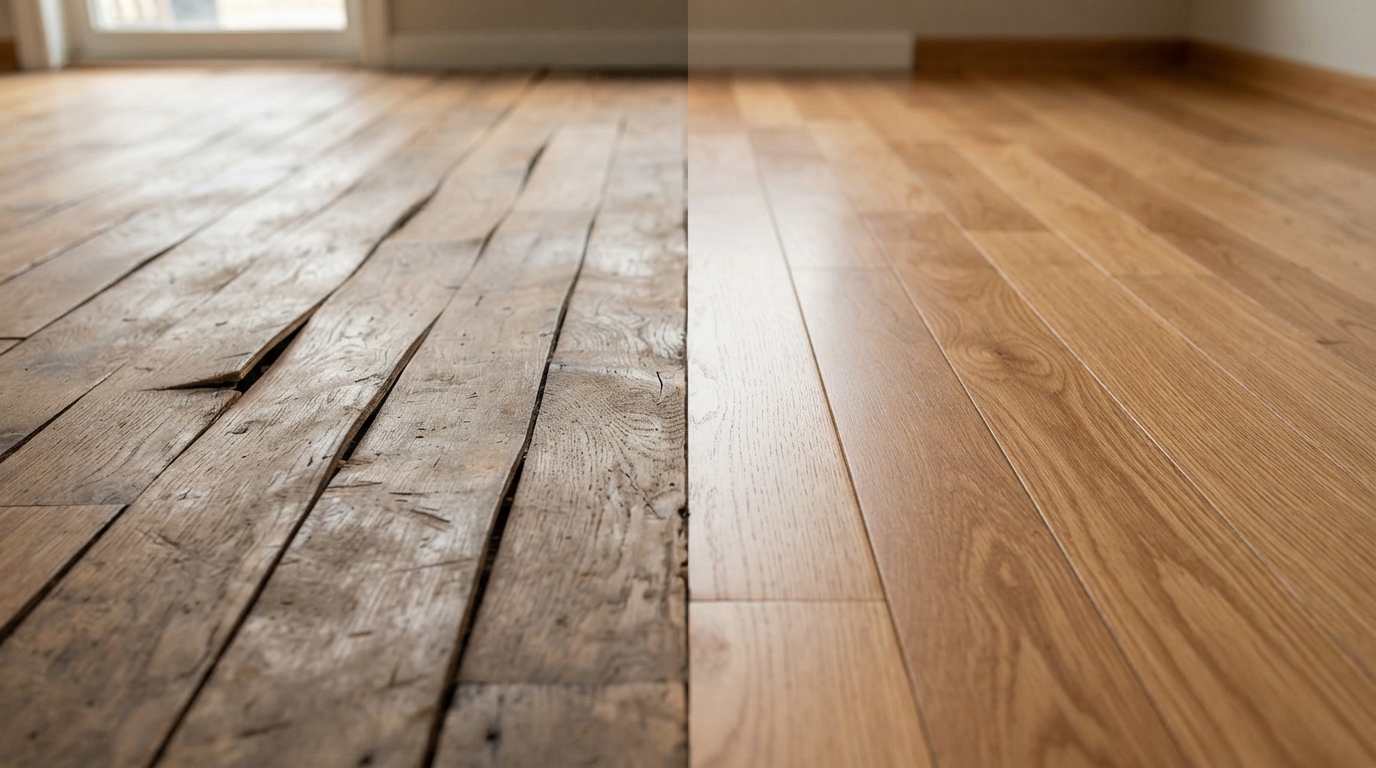
Cupping is one of three common ways hardwood boards distort. The edges of the board pull upward while the center stays lower, so if you run your hand across the plank, you can actually feel the dip in the middle.
It’s different from crowning, where the center of the board rises above the edges, and different from buckling, where entire boards lift off the subfloor. Cupping is usually the mildest of the three and the most common, especially in homes with older solid hardwood.
Cupping hardwood floors causes
Moisture imbalance between the top and bottom of the board
Wood absorbs and releases moisture constantly. When the underside of a board takes on more moisture than the top, it expands more than the top does, and the board bows upward at the edges. This is the mechanical reason behind almost every case of cupping, no matter what’s actually feeding the moisture.
High humidity or seasonal humidity changes
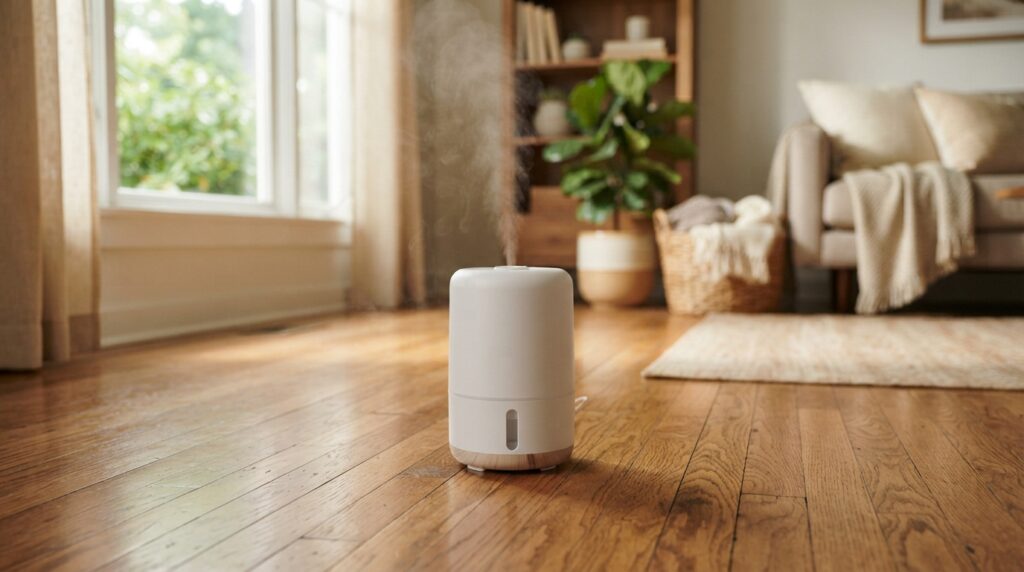
Calgary’s climate swings hard between a dry winter and a more humid summer stretch. That swing alone is enough to cause mild, seasonal cupping in solid hardwood, especially in homes without a humidifier or dehumidifier keeping indoor air consistent. This kind of cupping often reduces on its own once humidity levels settle back down.
Subfloor moisture problems
A slow plumbing leak, a spill that seeped through instead of being wiped up, or moisture trapped under the flooring during installation can all raise the moisture content of the subfloor. Since the underside of the board sits directly against that subfloor, it absorbs the excess moisture first, which is exactly the imbalance that causes cupping.
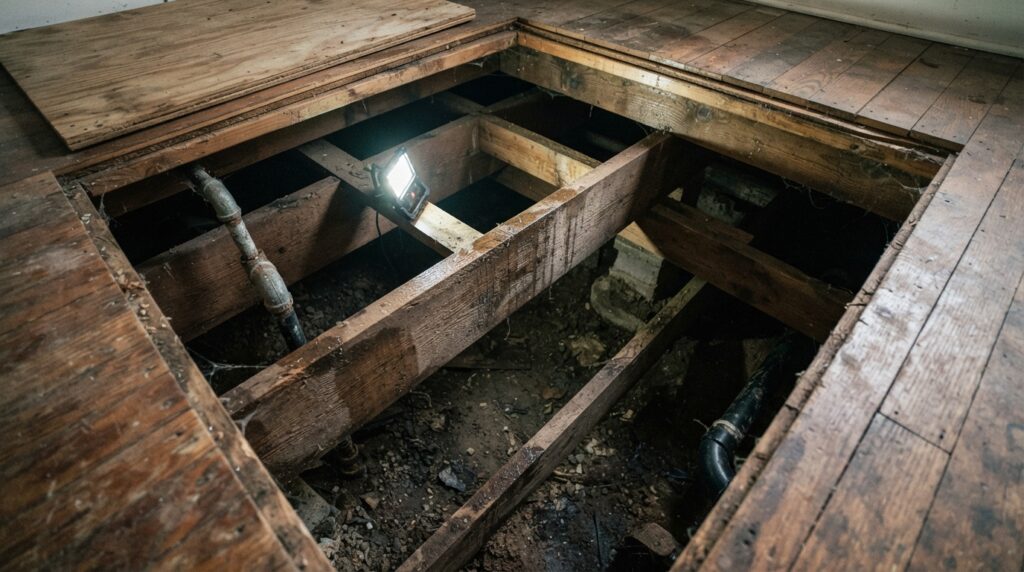
Crawl space moisture
Homes with a crawl space underneath, more common in some of Calgary’s older neighborhoods and in acreage properties around Bragg Creek, Springbank, and Priddis, can develop cupping from ground moisture rising into the space below the subfloor. A poorly ventilated or uninsulated crawl space makes this worse.
Missing or damaged vapor barrier
Hardwood installed over concrete needs a proper vapor barrier. Without one, or with one that’s damaged or was installed incorrectly, moisture from the slab works its way into the wood from below over time. This is a common, often overlooked cause in basements and homes built on slab foundations.
Improper acclimation before installation
Hardwood needs to sit in the home and adjust to its actual humidity and temperature before installation. Skipping this step means the wood settles into the room’s real conditions after it’s already down, and cupping is one of the most common results. This shows up more in Calgary and the surrounding communities like Airdrie, Chestermere, and Okotoks than in more humidity-stable climates, simply because the gap between summer and winter indoor conditions is wider here.
Cupping vs buckling vs crowning
Problem
What it looks like
Usually caused by
Cupping
Board edges rise, center stays lower
Moisture from below, seasonal humidity
Crowning
Center rises above the edges
Over-drying, or moisture reaching the top surface
Buckling
Entire boards lift off the subfloor
Severe, prolonged moisture exposure
If your floor is showing more than mild edge-curling, it’s worth confirming which of these you’re actually dealing with. We cover buckling in more detail in our guide to hardwood floor buckling causes, since the fix is different once boards have fully lifted rather than just curled at the edges.
Mild cupping vs severe cupping
Mild cupping is subtle. You might only notice it by running a hand across the floor or seeing it under angled light. It’s often seasonal and can resolve once humidity levels normalize.
Severe cupping is visible without touching the floor, sometimes dramatic enough to catch a shoe edge when walking across it. This level usually means the moisture source has been present for a while and typically needs sanding and refinishing once the wood dries back out and flattens.
Can cupped hardwood floors be repaired
Yes, in most cases. The fix depends on severity and, more importantly, on finding and fixing the moisture source first. Sanding a cupped floor before the wood has fully dried and settled is a common mistake that leads to an uneven or crowned floor later, once the wood finishes drying after the sanding is done.
Does cupped hardwood floor go back to normal
Sometimes, yes, especially with mild, humidity-driven cupping. Once indoor humidity stabilizes, boards can flatten back out on their own over a period of weeks. Severe cupping, or cupping caused by a sustained moisture problem like a subfloor leak, usually doesn’t fully self-correct and needs professional sanding and refinishing after the underlying issue is resolved.
How to fix cupped hardwood floors
Identify and fix the moisture source. Sanding a floor without addressing the cause means the cupping, or worse, will come back.
Let the wood dry and stabilize. This can take anywhere from a few days to several weeks, depending on severity. Sanding too early is one of the most common mistakes made on cupping repairs.
Confirm the board has flattened before sanding. A moisture meter reading helps confirm the wood has returned to a stable range.
Sand and refinish. Once the boards are flat and dry, refinishing restores an even surface and protective finish.
Replace any boards that don’t recover. Some boards, especially with long-term moisture exposure, stay permanently distorted and need individual repair rather than sanding alone.
How long does it take for hardwood floors to un-cup
Mild cupping can start improving within a week or two once humidity stabilizes. More significant cupping, particularly from a subfloor moisture issue, can take four to six weeks or longer to fully dry out before it’s safe to sand. Rushing this timeline is the most common reason a cupping repair doesn’t hold.
Hardwood floor cupping repair cost
Cost depends on whether the floor just needs sanding and refinishing or whether individual boards need replacing.
Scope of repair
Typical cost
Sanding and refinishing (per room)
$3 – $6 per sq ft
Individual board replacement
$50 – $150 per board
Combined with subfloor moisture repair
$1,000 – $3,000+
For a full breakdown across installation, refinishing, and repair pricing, see our hardwood flooring cost guide.
How to prevent hardwood floor cupping
Keep indoor humidity in a stable range year-round, roughly 35 to 55 percent, using a humidifier in winter and a dehumidifier in humid summer stretches
Wipe up spills immediately and check under appliances and near exterior walls for slow leaks
Make sure crawl spaces are properly vented and insulated, especially on acreage properties around Bragg Creek, Springbank Hill, and Priddis
Confirm a proper vapor barrier is in place under hardwood installed over concrete
Have new hardwood fully acclimated before installation, matched to the season it will actually be living in
Get hardwood professionally assessed at the first sign of edge curling, rather than waiting to see if it worsens
This applies whether you’re in Calgary proper or the surrounding communities we serve, including Airdrie, Cochrane, Chestermere, Okotoks, De Winton, and Crossfield. The humidity swings that cause cupping don’t stop at the city limits.
Getting it looked at
Cupping is usually fixable, but the timeline matters more than most homeowners expect. Sanding too early, or ignoring the actual moisture source, is what turns a simple fix into a repeat problem. According to general guidance from the Canadian Wood Council on wood’s response to moisture, dimensional movement like cupping is a normal reaction to humidity change, which is exactly why identifying and controlling the source matters more than the cupping itself.
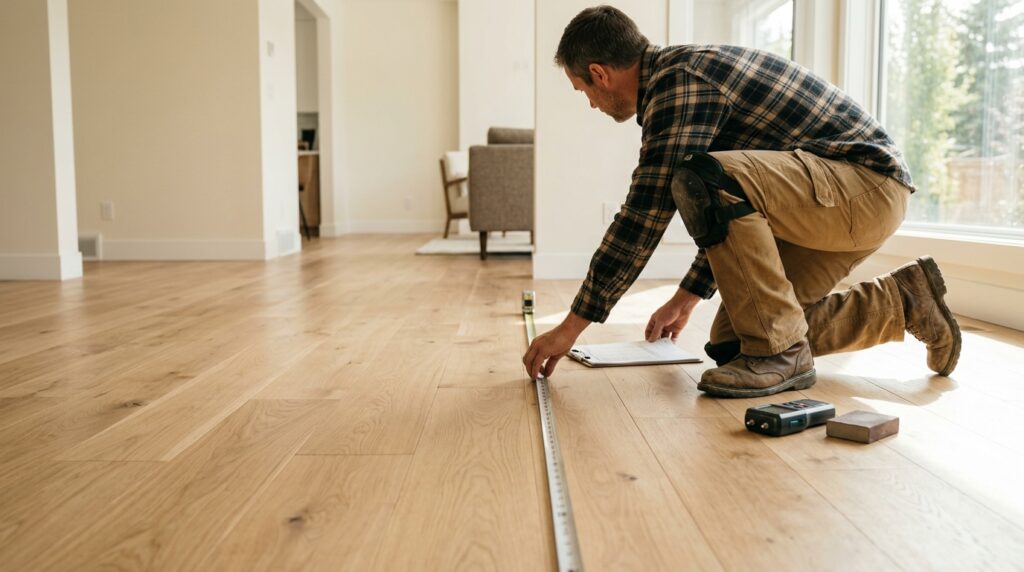
If you’re seeing edge curling in your hardwood anywhere in Calgary, Airdrie, Cochrane, Okotoks, Chestermere, or the surrounding area, contact Arbutus Hardwood for a free assessment and quote.
Not exactly. Water damage is often the source, but cupping is the specific way the wood reacts to that moisture imbalance. A board can cup from a major spill or from something as gradual as normal seasonal humidity changes, without any obvious water event at all.
It's not recommended. Sanding before the wood has fully dried and flattened often leads to an uneven floor once the boards finish settling, sometimes creating a crowned surface instead of a flat one. Confirming moisture levels before sanding takes equipment most homeowners don't have on hand.
A humidifier can help stabilize humidity and support recovery from mild, seasonal cupping, but it won't correct cupping caused by a subfloor leak or crawl space moisture. Those need the actual source fixed first.
Engineered hardwood generally resists cupping better than solid hardwood, since its layered construction is more dimensionally stable. It's not immune, but it holds up better against the kind of humidity swings that affect Calgary homes.
Compare the depth of the curl over a few weeks, ideally with a photo for reference. If it's stable or improving, it may just be seasonal. If it's deepening or spreading to more boards, that usually points to an ongoing moisture source that needs attention.
Full replacement is rarely necessary for cupping alone. Even severe cases are usually resolved with sanding, refinishing, or targeted board replacement once the moisture source is addressed. Full replacement tends to come up only when cupping has progressed into buckling or when boards are structurally compromised beyond repair. For older or discontinued flooring, matching replacement boards can sometimes turn into a custom hardwood flooring project rather than a simple swap.
How to choose a hardwood flooring contractor in Calgary Learn how to choose a hardwood flooring contractor in Calgary by checking experience, insurance, past projects and written quotes before you hire. Contact Us Your floors will be under your feet for 20 years or more. The person you hire to…
Hardwood Flooring Cost in Calgary: What You’ll Actually Pay Planning your project but unsure about hardwood flooring cost in Calgary? This guide explains installation, refinishing, and repair expenses to help you plan your flooring budget. Contact Us If you’re planning to install, repair, or refinish hardwood flooring in Calgary, understanding…
Matte vs gloss hardwood flooring: which finish is right for your home? Matte vs gloss hardwood flooring, see which finish suits Calgary homes best for durability, style & upkeep. Get expert advice from Arbutus Hardwood. Contact Us Matte vs gloss hardwood flooring feels like a small decision until you’re standing…