Hardwood floor gaps Calgary winter cases are almost always caused by furnace-dried air pulling moisture out of the wood, and most of them close back up on their own by summer. This guide breaks down what counts as normal seasonal movement, the humidity level that keeps gaps in check, and when a gap actually needs a professional look.
Hardwood floor gaps in Calgary winters are almost always the same story: furnace-dried indoor air pulling moisture out of the wood faster than it can adjust.
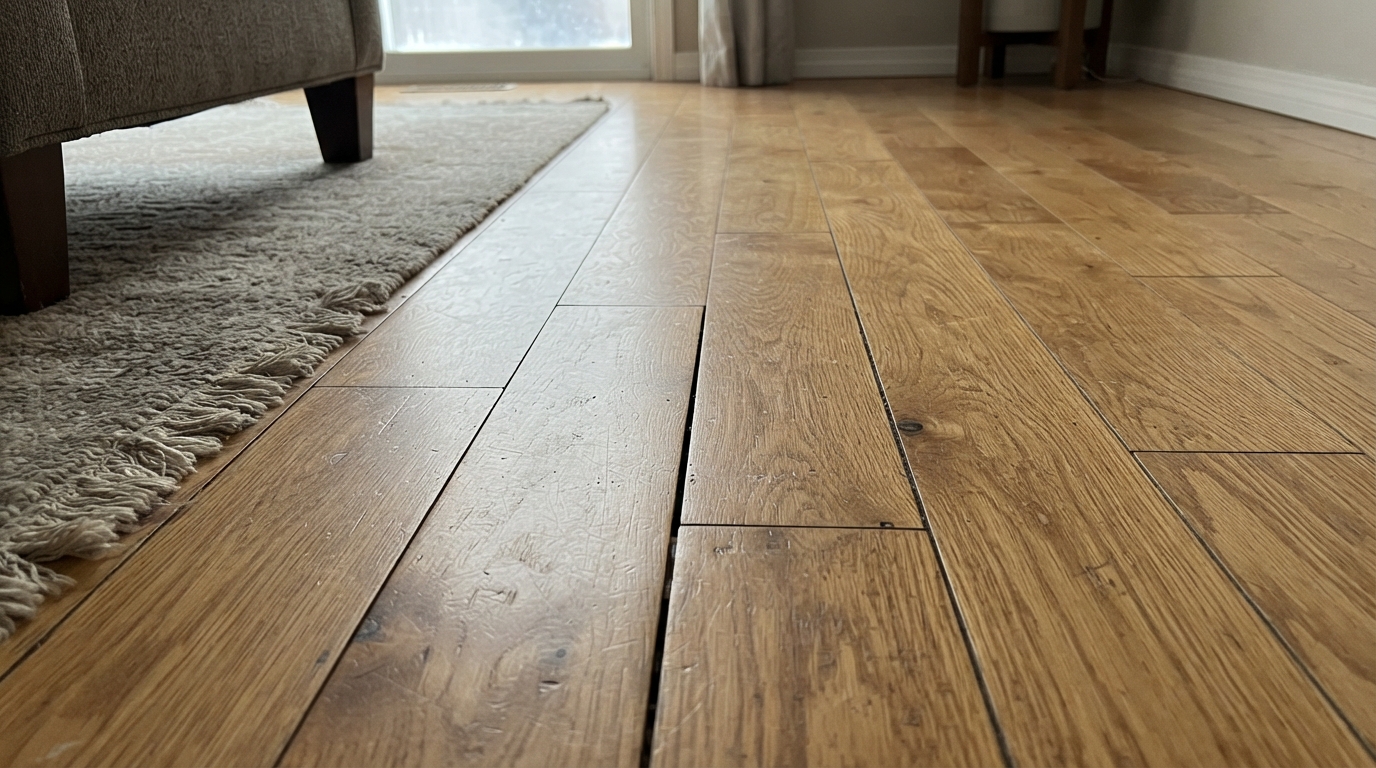
Quick answer: Small gaps between hardwood boards every winter are normal in Calgary and usually close back up on their own once spring humidity returns. They’re caused by the wood losing moisture to dry indoor air, most often from furnace heating, and shrinking slightly as a result. Gaps become a concern when they’re wider than a business card, appear suddenly, or stay open through summer, since that points to a bigger moisture or subfloor issue rather than normal seasonal movement.
Here’s the full breakdown of why this happens every year, what’s actually a normal amount of gapping, and when it’s worth calling someone.
What causes hardwood floor gaps in Calgary winter
Furnace dry air and low indoor humidity
This is the main one. Calgary winters are already dry, and running a furnace for months on end strips even more moisture out of the air inside a home. Wood naturally releases moisture into dry air, and as it loses that moisture, the boards shrink slightly at the edges. Multiply that shrinkage across a whole floor, and you get visible gaps between boards.
Wood expansion and contraction cycles
Hardwood is always responding to the air around it. It swells slightly when humidity is higher, like in Calgary’s summer months, and shrinks when the air dries out in winter. This cycle is completely normal for solid hardwood. The gaps you see in January and the tighter seams you see in July are two sides of the same process.
Species and cut type differences
Some species and board cuts move more than others. Flatsawn boards, which are the most common and least expensive cut, tend to shrink and expand more than quartersawn boards. Wider planks also show gaps more noticeably than narrow strip flooring, simply because the same percentage of shrinkage is spread across more width per board.
New floors that weren’t properly acclimated
If hardwood was installed without enough time to adjust to the home’s actual humidity levels first, its first winter often brings more dramatic gapping than it should. This is one of the most preventable causes, and it’s a step some lower-cost installers skip to save time.
Indoor humidity standards for hardwood floors in Calgary
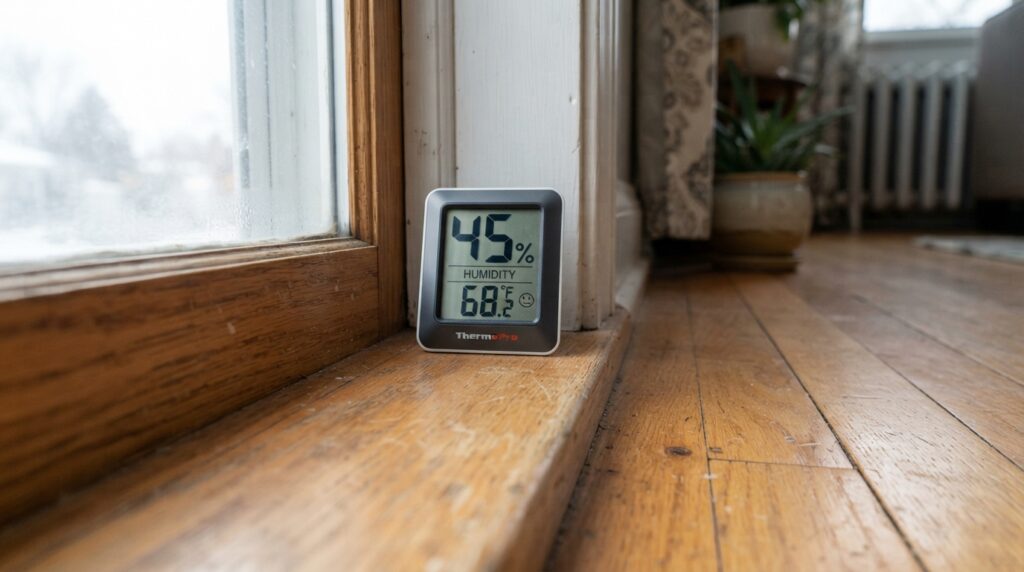
The standard target range for indoor humidity with hardwood flooring is 30 to 50 percent relative humidity year-round. Many Calgary homes drop well below that in the coldest months, sometimes into the teens or low twenties, especially in homes without a whole-home humidifier.
Keeping humidity within that range doesn’t eliminate seasonal movement entirely, but it keeps gaps to a minor, normal amount instead of something dramatic enough to notice from across the room.
Gaps vs cupping vs buckling: how winter gaps differ
Gaps aren’t the only seasonal issue Calgary hardwood deals with, and it helps to know which one you’re looking at. Gaps happen from the wood shrinking in dry air.Cupping happens from the opposite problem, excess moisture hitting the underside of a board.Buckling is the most severe of the three and usually points to sustained water exposure rather than normal seasonal dryness.
If your floor shows raised or curled boards rather than simple gaps between them, that’s a different problem with a different cause, and it’s worth reading through those specific symptoms rather than assuming it’s just winter shrinkage.
Should you fill hardwood floor gaps in winter
Generally, no. Filling gaps while they’re at their widest, during peak winter dryness, means the filler gets compressed and can pop out or crack once the wood swells back in summer humidity. Gap filling is usually done in late spring or summer, when the boards are at their most expanded and the gaps are naturally at their smallest.
Wood floor gap filler: winter vs summer
Season
What’s happening to the wood
Best time to fill gaps?
Winter
Boards shrunk, gaps at widest
No, filler will be pushed out when wood expands
Summer
Boards swollen, gaps at smallest
Yes, this is the ideal window for filling
If gaps are large enough that you’re considering filler, it’s worth having someone assess whether the humidity issue is the actual cause first, rather than filling gaps that may close up naturally anyway.
How to fix hardwood floor gaps this winter
Run a humidifier. A whole-home humidifier attached to your furnace is the most consistent fix. Portable room humidifiers help too, especially in bedrooms or living areas where you spend the most time.
Monitor humidity with a simple hygrometer. These are inexpensive and give you a real number instead of guessing.
Avoid over-humidifying. Pushing humidity too high in winter can cause condensation on windows and, in extreme cases, contribute to cupping instead. Stay within the 30 to 50 percent range.
Don’t panic over small, seasonal gaps. A hairline gap that closes up by summer is normal wear for solid hardwood, not damage.
When to call a professional for floor gap repair
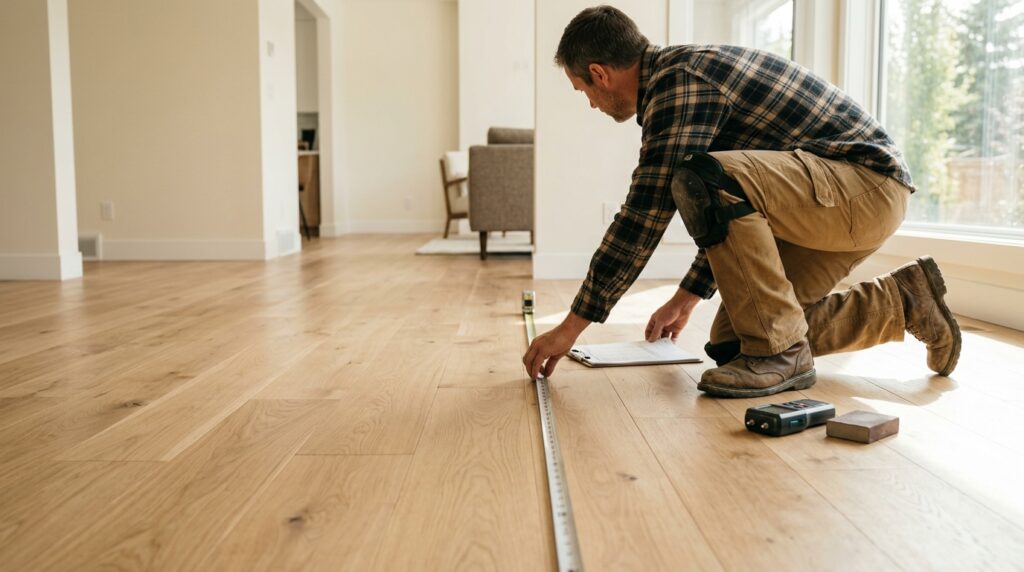
Most seasonal gapping doesn’t needrepair, just humidity management. It’s worth having a professional look at your floor if gaps are wider than a credit card, if they don’t close up by mid-summer, if they’re only happening in one section rather than across the room, or if you notice gaps alongside other signs like squeaking or soft spots. Those patterns can point to a subfloor issue rather than simple seasonal movement.
How to prevent gaps next winter
Have new hardwood properly acclimated beforeinstallation, matched to the season it will live in long-term
Install or service a whole-home humidifier before the dry season hits, typically by early fall
Choose engineered hardwood in rooms where humidity swings are hardest to control, since it resists movement better than solid wood
Keep up with regularrefinishing, since a well-sealed floor manages moisture exchange more evenly than one with a worn or damaged finish
This applies across Calgary and the surrounding communities we serve, including Airdrie, Cochrane, Chestermere, and Okotoks. The dry winter air causing these gaps doesn’t stop at city limits, and homes in outlying areas often deal with the same furnace-driven humidity drop.
Keeping your floors steady through the season
A little seasonal gapping is just how solid hardwood behaves in a climate like ours, and it’s rarely something to worry about on its own. According to guidance fromNatural Resources Canada on indoor humidity and home comfort, keeping winter humidity in a moderate range benefits more than just flooring, it also affects energy efficiency and overall indoor air quality.
If your gaps look wider than normal, won’t close, or you’d rather have a professional confirm what’s going on before winter sets in,contact Arbutus Hardwood for a free assessment anywhere in Calgary, Airdrie, Cochrane, Okotoks, Chestermere, and the surrounding area.
Small, uniform gaps that show up every winter and close by summer are normal seasonal movement, not a defect. Gaps that are unusually wide, appear suddenly, or don't close up are worth having checked.
As a general guide, gaps under about 1/8 inch, roughly the width of a credit card, are typically considered normal seasonal movement. Wider than that is worth a professional look.
Occasional seasonal dryness usually doesn't cause lasting damage. Chronic, severe dryness over many years can eventually lead to more noticeable long-term gapping or finish problems, which is why consistent humidity control matters more than a one-time fix.
Engineered hardwood generally shows less seasonal gapping than solid wood, thanks to its layered construction, but it isn't completely immune, especially in homes with very low winter humidity.
Often yes, as outdoor humidity rises in spring and summer and makes its way indoors. A humidifier just makes the swing smaller and more comfortable for both the floor and the people living on it.
Some seasonal movement in year one is normal, but new floors that gap dramatically in their first winter often point to acclimation that wasn't done properly before installation.
How to choose a hardwood flooring contractor in Calgary Learn how to choose a hardwood flooring contractor in Calgary by checking experience, insurance, past projects and written quotes before you hire. Contact Us Your floors will be under your feet for 20 years or more. The person you hire to…
Hardwood Flooring Cost in Calgary: What You’ll Actually Pay Planning your project but unsure about hardwood flooring cost in Calgary? This guide explains installation, refinishing, and repair expenses to help you plan your flooring budget. Contact Us If you’re planning to install, repair, or refinish hardwood flooring in Calgary, understanding…
Matte vs gloss hardwood flooring: which finish is right for your home? Matte vs gloss hardwood flooring, see which finish suits Calgary homes best for durability, style & upkeep. Get expert advice from Arbutus Hardwood. Contact Us Matte vs gloss hardwood flooring feels like a small decision until you’re standing…