How Often Should You Refinish Hardwood Floors in Calgary
Wondering how often should you refinish hardwood floors? You don’t always need a full sand-and-refinish instantly restore your wood with our expert hardwood floor polishing service in Calgary. We remove surface dullness, light scratches, and daily wear to bring back a smooth, rich finish with long-lasting protection.
If you’ve invested in hardwood floors for your Calgary home, you’re looking at one of the most valuable decisions you can make for your property. Beautiful hardwood floors enhance your home’s character, warmth, and resale value. But here’s the question that keeps every Calgary homeowner up at night: how often should you refinish hardwood floors?
The answer isn’t as simple as following a calendar. It’s a dynamic conversation between your floors and your lifestyle, heavily influenced by:
Your family’s daily habits and traffic patterns.
Calgary’s unique, volatile climate conditions.
The original quality of your floor’s protective finish.
The presence of active kids or energetic pets.
This comprehensive guide will walk you through everything you need to know about hardwood floor refinishing in Calgary. Whether you have a bustling household or a quiet space with minimal foot traffic, this article will help you make an informed decision on when to call in the professionals.
The 7 to 10 Year Rule: What It Really Means
You’ve probably heard it before: hardwood floors typically need refinishing every 7 to 10 years. While this timeframe is the industry standard, treating it as a hard and fast rule is where many homeowners go wrong.
Think of it more as a general guideline like a highway speed limit. Your actual household circumstances may push you to adjust your timeline considerably. If your planks have structural gaps or cracks from age, skipping straight to a comprehensivehardwood floor repair is often necessary to secure the floor before applying any new treatments.
High-Impact Homes (5 to 7 Years): Parents of multiple rambunctious kids or large dog owners will notice high-traffic areas wearing down much faster.
Average Homes (7 to 10 Years): Perfect for households with moderate foot traffic, standard sun exposure, and consistent routine maintenance.
Quiet Households (12 to 15+ Years): Single-person homes or spaces where guest bedrooms rarely see visitors can safely stretch the timeline.
Ultimately, what matters most is not the calendar on your wall, but the actual physical condition of your hardwood floors.
How Calgary’s Climate Affects Your Refinishing Timeline
Calgary’s climate is dramatically different from the humid regions of Eastern Canada or the Pacific Northwest. Our Prairie city experiences extreme temperature and moisture fluctuations between seasons, which directly impacts natural wood cells.
The Winter Shrinkage Challenge
During Calgary’s long, harsh winters, furnaces work overtime. This constant heating creates an extremely dry interior environment. When indoor humidity drops below 30%, the wood cells contract, causing the boards to shrink. This movement can create small gaps between planks and place immense structural stress on your floor’s finish. When seasonal shifting causes severe splitting or loose planks, standard maintenance won’t cut it you will need a professionalhardwood floor repair specialist to stabilize the foundation.
The Summer Moisture Swing
While Prairie summers are generally dry, the sudden introduction of air conditioning and home humidifiers can create rapid moisture fluctuations. These swings contribute to the gradual breakdown of your floor’s protective topcoat.
Pro Tip: To maximize your refinishing timeline, invest in a quality home humidifier. Maintaining a consistent interior humidity level between 35% and 50% year-round is the single best way to add years to your floor’s life.
Understanding Your Home’s Traffic Patterns
Nothing wears down a protective floor finish faster than daily foot traffic. To accurately map out your maintenance schedule, take an honest look at how different zones in your home are used.
High-Traffic Zones (Refinish every 5 to 7 years): Entryways, kitchens, main hallways, and central living rooms. These areas face thousands of footsteps daily, dropped toys, moving furniture, and accidental spills.
Medium-Traffic Zones (Refinish every 7 to 10 years): Dining rooms, secondary family rooms, and main bathrooms. These spaces see regular daily use but escape the heavy impact of main thoroughfares.
Low-Traffic Zones (Refinish every 10 to 15+ years): Guest bedrooms, home offices, and formal sitting rooms. If properly maintained, the original finish in these rooms can last surprisingly long.
Recoating vs. Full Refinishing: The Critical Difference
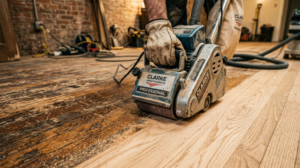
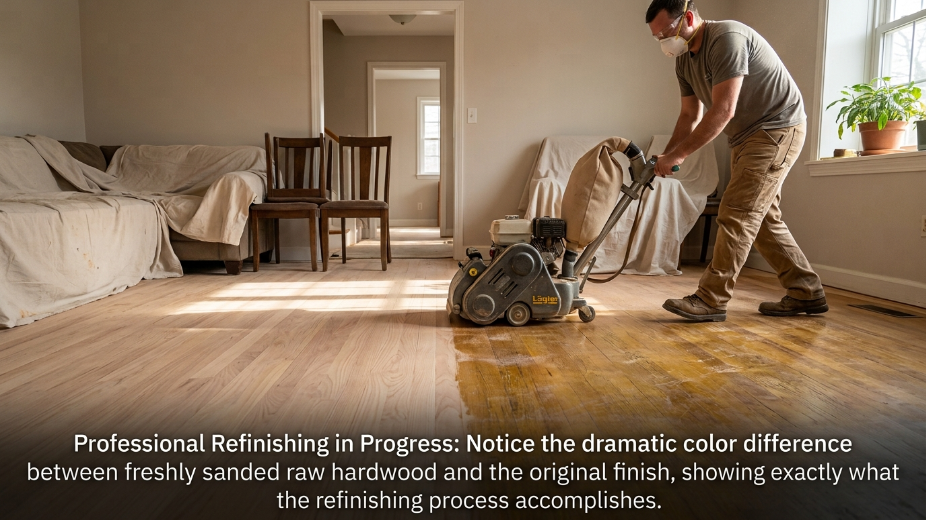
Understanding the distinction between a simple recoat and a full sand-and-refinish can save you thousands of dollars, hours of dust cleanup, and unnecessary disruption.
Feature
Recoating (Screen & Coat)
Full Refinishing
Best Suited For
Dull finishes, minor surface scratches, faded sheen.
Deep gouges, severe water stains, bare wood exposure.
The Process
Lightly scuffing the topcoat and applying a fresh protective layer.
Sanding down 1–2 mm into the raw wood to erase all damage.
Time Frame
1 to 2 days
4 to 7 days
Disruption & Dust
Minimal; fast turnaround and low odor.
High; generates dust and requires total room evacuation.
Project Cost
30% to 40% of full refinishing cost.
Standard full-service investment.
Visible Signs Your Calgary Floors Need Attention
Instead of guessing based on dates, learn to look for the specific physical warnings your floors display when their protective layer is compromised:
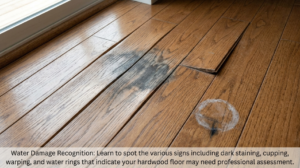
Water Damage and Dark Staining: While small spills can be wiped away, dark stains around furniture legs or appliance boundaries mean moisture has bypassed the finish and soaked into the wood fibers. Cupping or warping indicates serious moisture distress that requires professional evaluation.
Sun Fading and Discoloration: Calgary’s intense spring and summer sunlight can rapidly bleach wood. If you pull back an area rug and see a dramatic color mismatch, your finish has succumbed to UV degradation.
Deep Scratches and Gouges: Minor surface scuffs sit safely in the topcoat. However, if you run your finger over a scratch and feel it dipping into the raw wood grain, a full refinishing is required to smooth it out.
Cloudy, Worn-Out Dullness: If your floors look faded, cloudy, or chalky even immediately after a thorough, correct cleaning, the protective chemical bond of the polyurethane finish has failed.
The Hard Limit: How Many Times Can Hardwood Be Refinished?
A common misconception is that hardwood floors can be sanded down indefinitely. In reality, there is a strict mechanical limit dictated by the thickness of the floor’s wear layer (the wood sitting above the structural tongue-and-groove joint).
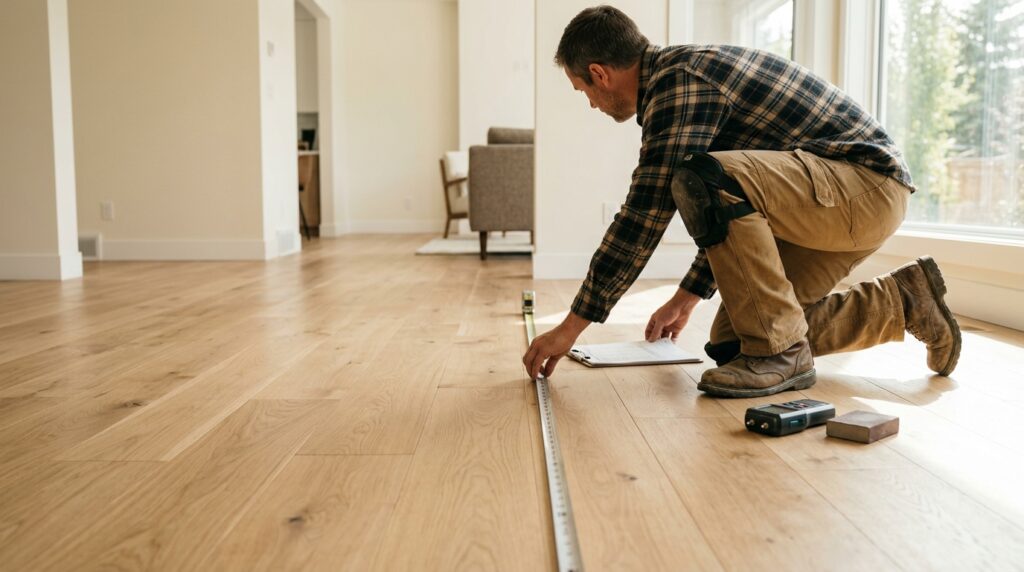
The Measurement: To safely undergo a full sand, the wear layer must be at least 1/8 inch thick.
The Lifespan: Because every full refinishing removes roughly 1 to 2 millimeters of wood, a typical solid hardwood floor can only be fully refinished 2 to 5 times over its entire lifespan.
Before planning a major project on older or inherited flooring, it is vital to have a professional measure your remaining wear layer to ensure the structural integrity of the planks.
Daily Habits to Extend Your Refinishing Timeline
The choices you make during routine cleaning have a massive impact on how long your floor finish lasts. Implement these pro habits to maximize your investment:
Debris Control: Sweep or vacuum 2 to 3 times weekly. Ground-in dirt acts exactly like sandpaper under moving feet, grinding away the finish. Always use a soft-bristled broom or a dedicated hard-surface vacuum attachment.
Smart Cleaning Products: Never use vinegar, ammonia, steam mops, or harsh all-purpose oil soaps. Use only specialty, pH-neutral hardwood cleaners applied with a barely damp microfiber mop.
Scratch Prevention: Apply heavy-duty felt pads to the bottom of all furniture legs and replace them annually. Use high-quality entry mats at exterior doors to catch outdoor gravel and grit before it enters your living spaces. Avoid sliding heavy furniture across hardwood at all costs; if you are moving large items or managing a delivery, utilizing a professional local hot-shot service likeCity Wide Courier ensures your assets are handled safely without destroying your floor’s protective coating.
Spill Response: Water remains hardwood’s primary enemy. Wipe up liquid spills instantly and dry the area completely with a towel.
The Cost Consideration: Why Timing Matters
Refinishing costs money, and Calgary homeowners want to understand what to expect. Hardwood floor refinishing in Calgary typically ranges from $1,500 to $5,000 for an average home, depending on square footage, current condition, and finish type. A full refinish costs significantly more than a recoat.
By extending your refinishing timeline through smart maintenance and humidity control, you reduce how frequently you need to invest in this service. If you can extend from 7 years to 10 or 12 years between refinishing projects, you’re saving thousands of dollars over the life of your floors.
Conversely, neglecting maintenance might force you into refinishing more frequently than necessary, making poor maintenance habits financially painful in the long run.
Addressing Water Damage and Staining in Calgary Homes
Calgary’s dry climate means you’re unlikely to experience the chronic moisture issues that plague other regions. However, water damage can happen suddenly from leaks, spills, or accidents.
The source of water damage determines your options. Small spills and surface moisture usually dry without causing permanent damage. Leaks from refrigerators, dishwashers, toilets, or patio doors represent more serious concerns. If water seeps under the finish and soaks into the wood below, it causes swelling and darkening that simple refinishing cannot fix. You’ll need professional assessment to determine whether the water damage is limited to the finish or has penetrated the wood itself.
Pet accidents and certain cleaning products can also cause discoloration. Each situation affects the wood differently. Some damage responds well to sanding and refinishing, while other damage requires repair or replacement before refinishing can occur.
Our recommendation is to have any water damage or suspicious staining professionally assessed immediately. The sooner you address it, the more options remain available.
Creating Your Hardwood Floor Action Plan for Calgary
Ready to take control of your home’s flooring? Follow this straightforward roadmap:
Assess: Walk through your home in good daylight and audit your floors room-by-room for deep scratches, fading, or dullness.
Establish a Baseline: Take high-resolution photos of high-traffic areas to monitor wear over the coming months.
Control Air Quality: Place a digital hygrometer in your main living room to monitor interior humidity, aiming for that sweet spot of 35% to 50%.
Consult Experts: Schedule a professional inspection every 3 to 5 years once your floors cross their 5-year benchmark to see if a cost-effective recoat can save you from a future full refinish.
Professional Services for Calgary Hardwood Floors
If you’re uncertain about your floor’s condition, need expert guidance about refinishing versus recoating, or are ready to move forward with a refinishing project, Arbutus Hardwood Floor offers comprehensive services across Calgary.
Our team specializes in hardwood floor refinishing that brings new life to tired floors. We assess your specific situation, explain your options clearly, and provide transparent quotes. We’re proud to serve all Calgary neighborhoods and understand the specific challenges that our local climate creates for hardwood floors.
For most Calgary homeowners, hardwood floor refinishing falls within a 7–10 year cycle. However, no calendar can accurately predict when every floor will need attention. The most reliable indicators are the condition of the finish, the amount of daily traffic, and the presence of visible wear.
By maintaining proper humidity, following recommended cleaning practices, and addressing problems early, homeowners can often extend the life of their floors while preserving their beauty, durability, and long-term value. When in doubt, a professional inspection can determine whether a simple recoat will suffice or whether full refinishing is the smarter long-term investment.
Absolutely. When we perform a full sand down to the raw wood, it completely clears away the old color, allowing you to select an entirely new stain. This is the perfect time to modernize your home by switching from an outdated golden oak to a contemporary light gray, natural blonde, or deep espresso tone.
Traditional sanding creates substantial airborne dust, but utilizing a professional service with an advanced, truck-mounted dust containment system captures up to 99% of particles at the source. This modern setup keeps your air clean, protects your electronics, and eliminates the need for intensive post-project deep cleaning.
Refinishing your existing wood is significantly more cost-effective, typically costing only 20% to 30% of the price of a total replacement. Choosing to sand and coat preserves your high-quality original wood planks while instantly restoring their structural beauty and market value.
You can perform a simple "water droplet test" by pouring a few drops of water onto your floor's most worn areas. If the water beads up, your protective seal is still intact and your floors just need a professional cleaning or a light buff and recoat. If the water quickly soaks into the wood fibers and leaves a dark spot, your finish has failed and a full refinish is required.
Yes, we can apply a specialized wood filler across the floor during the sanding process to fill active gaps. However, because Calgary’s dry winter air causes natural wood to contract, some minor seasonal shifting is completely normal even after professional filler is applied.
How to choose a hardwood flooring contractor in Calgary Learn how to choose a hardwood flooring contractor in Calgary by checking experience, insurance, past projects and written quotes before you hire. Contact Us Your floors will be under your feet for 20 years or more. The person you hire to…
Hardwood Flooring Cost in Calgary: What You’ll Actually Pay Planning your project but unsure about hardwood flooring cost in Calgary? This guide explains installation, refinishing, and repair expenses to help you plan your flooring budget. Contact Us If you’re planning to install, repair, or refinish hardwood flooring in Calgary, understanding…
Matte vs gloss hardwood flooring: which finish is right for your home? Matte vs gloss hardwood flooring, see which finish suits Calgary homes best for durability, style & upkeep. Get expert advice from Arbutus Hardwood. Contact Us Matte vs gloss hardwood flooring feels like a small decision until you’re standing…
Choosing the right hardwood flooring species is one of the most important steps in creating a durable and visually appealing home. Calgary’s climate requires careful consideration, making it essential to select a species that can handle environmental changes without compromising performance. If you’re planning to install hardwood flooring contact us today to get the best results from your investment.