Hardwood floor refinishing vs replacement usually isn’t as close a call as it feels. Most floors can be refinished. Fewer actually need to be replaced than homeowners assume.
Quick answer: Refinishing is almost always the better option if the boards are structurally sound and there’s enough wood thickness left to sand. Replacement becomes the right call when boards are warped beyond flattening, water damage has reached the subfloor, or the floor has already been sanded down to the point where there’s nothing left to remove. For most homes, that means refinishing wins on both cost and value, with replacement reserved for genuinely damaged floors.
Here’s how to tell which situation you’re actually in, what each option costs, and what the process looks like for both.
What’s the real difference between refinishing and replacing
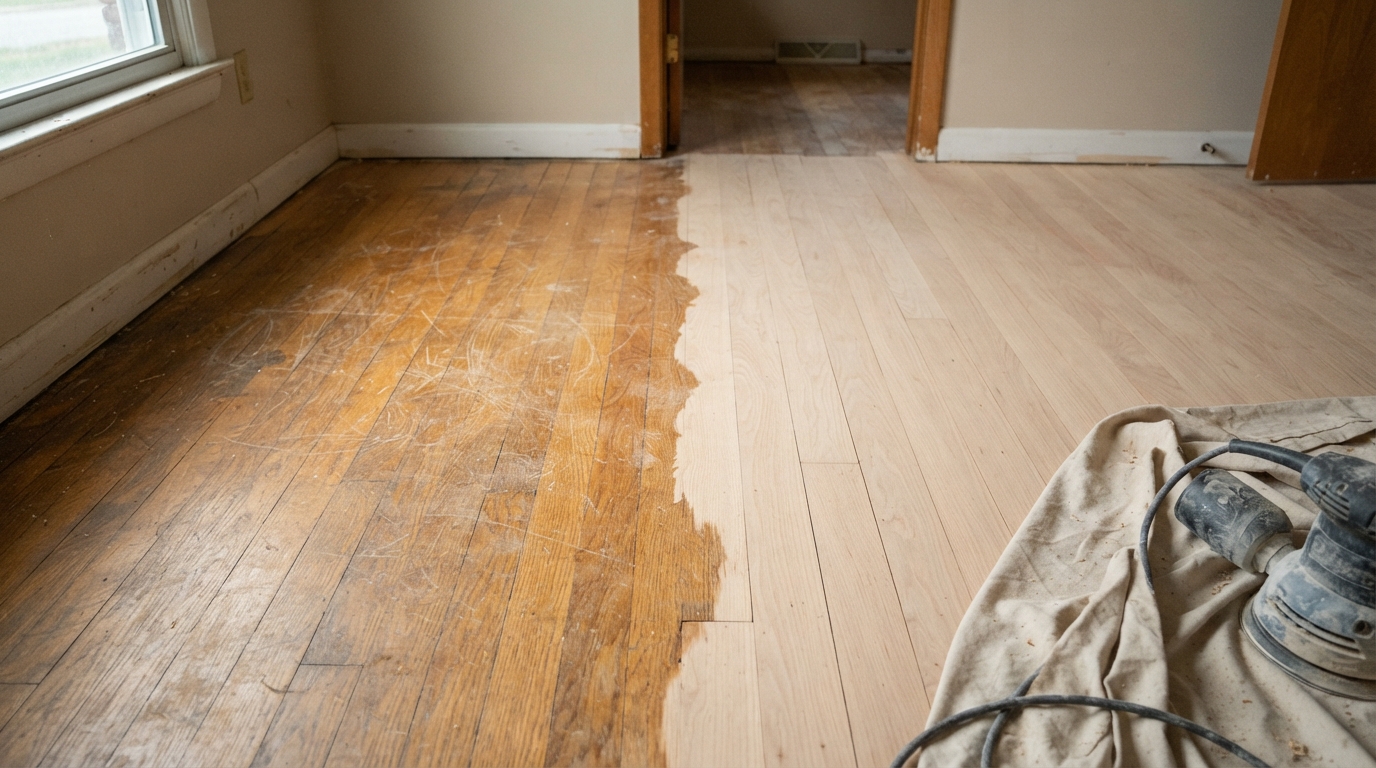
Refinishing means sanding down the existing wood surface and applying a new finish, working with the boards you already have. Replacement means removing the existing flooring entirely and installing new material.
The decision comes down to one core question: is the wood itself still good, or is the problem underneath the surface?
How many times can hardwood floors be refinished
Solid hardwood can typically be refinished 4 to 6 times over its lifetime, depending on the original thickness of the boards and how aggressively each sanding removes material. Engineered hardwood is more limited, usually good for 1 to 2 refinishes, since only a thin veneer layer sits on top of the plywood core.
This is the single biggest factor in the refinish vs replace decision. A 1990s solid oak floor that’s only been refinished once still has plenty of life left. A floor that’s already been sanded three or four times is getting close to its limit.
- Surface scratches, scuffs, or dullness from years of foot traffic
- Discoloration or an outdated stain color you want to change
- Minor, shallow gouges that don’t go deep into the wood
- Squeaks that come from finish wear rather than structural movement
- A floor that still has visible wood thickness above the tongue and groove
Signs hardwood floors need replacing instead
- Boards that are warped, cupped, or buckled badly enough that sanding won’t flatten them
- Water damage that reached the subfloor, not just the surface finish
- Wood that’s been sanded down close to the nail line or tongue and groove, leaving little material left to remove
- Rot, mold, or structural decay in the wood itself
- Engineered hardwood with a veneer too thin to sand again
If your floor is showing signs closer to the second list, especially significant warping, it’s worth reading through our guide on hardwood floor buckling causes to understand whether the damage is something that formed gradually or points to an ongoing moisture problem that needs addressing either way.
How deep can you sand hardwood floors
Most solid hardwood has enough wear layer to be sanded roughly 1/8 to 3/16 of an inch total over its lifetime, spread across multiple refinishing jobs. Each refinish typically removes a small, controlled amount, which is why professional assessment matters. Sanding too aggressively, or sanding a floor that’s already near its limit, can expose nail heads or weaken the tongue and groove joints.
Pro Tip: Not sure if your floor has enough wood left to sand? Remove a floor vent cover in any room to inspect the cross-section of your floorboard directly. It’s one of the easiest ways to get a rough sense of remaining thickness without any tools.
| Flooring type | Typical refinish limit | Why |
|---|
| Solid hardwood | 4 to 6 times | Full thickness of wood throughout the board |
| Engineered hardwood | 1 to 2 times | Thin veneer layer over a plywood core |
This table alone answers a lot of the refinish vs replace question. If you know which type of flooring you have and roughly how many times it’s been refinished, you already have a strong sense of which side of the decision you’re on.
Hardwood floor refinishing cost vs replacement cost
| Option | Typical cost per sq ft | What it includes |
|---|
| Refinishing | $3 – $6 | Sanding, staining (optional), and new protective finish |
| Full replacement | $8 – $22 | Removal of old flooring, new material, and full installation |
Refinishing is almost always the more budget-friendly hardwood floor restoration route, often costing a third or less of full replacement for the same square footage. For a broader breakdown of installation, refinishing, and repair pricing across different scopes, see our hardwood flooring cost guide.
Does refinishing hardwood floors increase home value
Yes, generally. Refinished hardwood is one of the more reliable renovation investments for return on value, since original hardwood is a strong selling point for most buyers and refinishing costs far less than replacement while delivering a comparable visual result. In a market where homes are moving quickly, a freshly refinished floor can also make a property show better without the disruption of a full flooring replacement project.
How long does each option take
| Project | Typical timeline |
|---|
| Refinishing (single room) | 2 to 3 days |
| Refinishing (full main floor) | 4 to 7 days |
| Replacement (single room) | 3 to 5 days |
| Replacement (full main floor) | 1 to 3 weeks |
Timelines shift based on drying time between coats, subfloor condition, and whether old flooring needs to be removed and disposed of before new material goes down.
Refinishing process steps
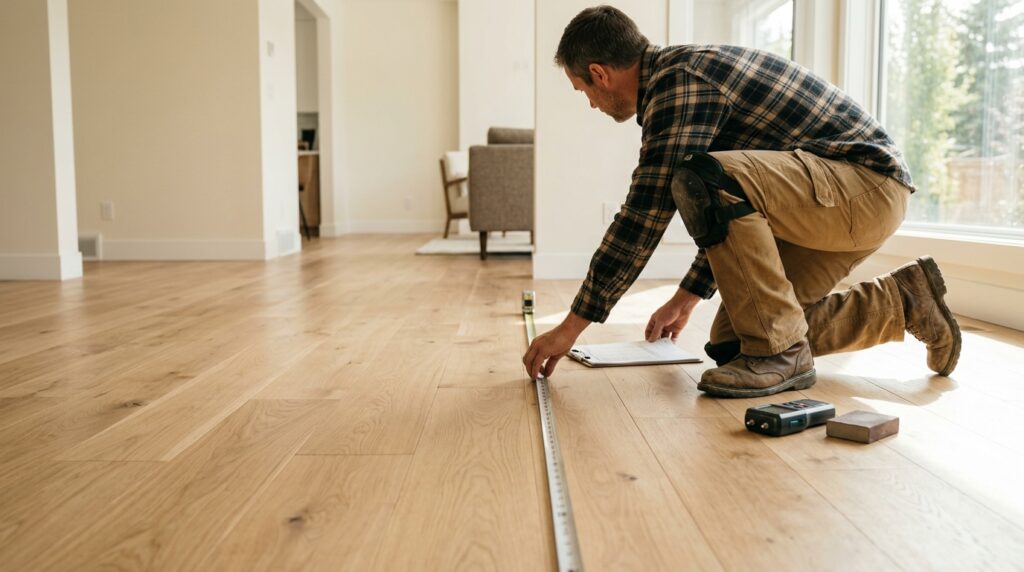
- Assess the floor’s current wood thickness and refinish history
- Sand down the existing finish and surface
- Repair or replace any individual damaged boards before finishing
- Apply stain, if changing color
- Apply multiple coats of protective finish with drying time between coats
Replacement process steps
- Remove and dispose of the existing flooring
- Inspect and repair the subfloor as needed
- Allow new hardwood to acclimate to the home’s humidity
- Install using the appropriate method for the space
- Sand and finish on-site, or install prefinished material
Special situations: water damage, warping, and old floors
Water damaged hardwood floor: refinish or replace depends entirely on depth. Surface staining from a spill usually sands out fine. Water that soaked into the subfloor, causing warping across multiple boards, often points toward replacement of that section.
Discolored hardwood floor fix options: discoloration from sun exposure, old rugs, or pet stains is often correctable through refinishing and re-staining, unless the discoloration has penetrated deep into the wood grain.
Old hardwood floor in older Calgary homes: original hardwood in older neighborhoods is often solid wood with plenty of refinishing life left, even when it looks worn. Before assuming an old floor needs replacing, it’s worth having someone confirm the actual wood thickness remaining, since many older floors are better candidates for refinishing than newer, thinner engineered products.
Making the right call for your floor
The deciding factor almost always comes down to wood thickness and structural condition, not how old or worn the floor looks on the surface. A dull, scratched floor with plenty of wood left is a straightforward refinish. A warped or water-damaged floor with little material remaining is a replacement.
According to the National Wood Flooring Association’s general guidance on wood flooring lifespan, well-maintained solid hardwood can last several decades and go through multiple refinishing cycles before replacement is ever necessary, which is why a professional assessment before assuming the worst is almost always worth the time.
If you’re not sure which side of this decision your floor falls on, contact Arbutus Hardwood for a free assessment anywhere in Calgary and the surrounding area. We’ll tell you honestly whether refinishing will do the job or if replacement is genuinely the better move, and give you a clear, upfront quote either way.