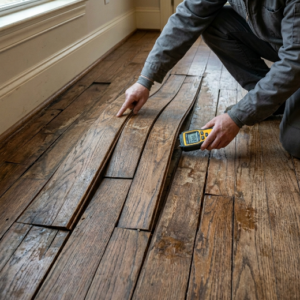
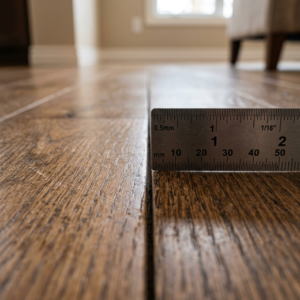
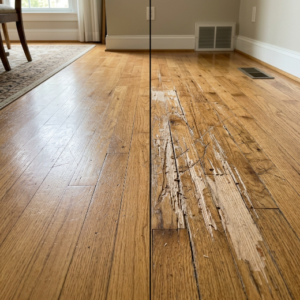
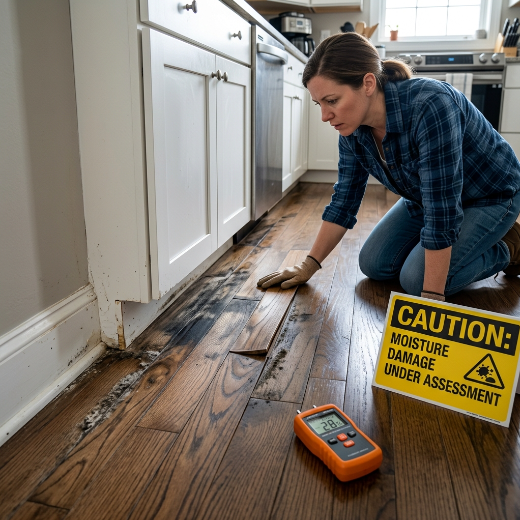
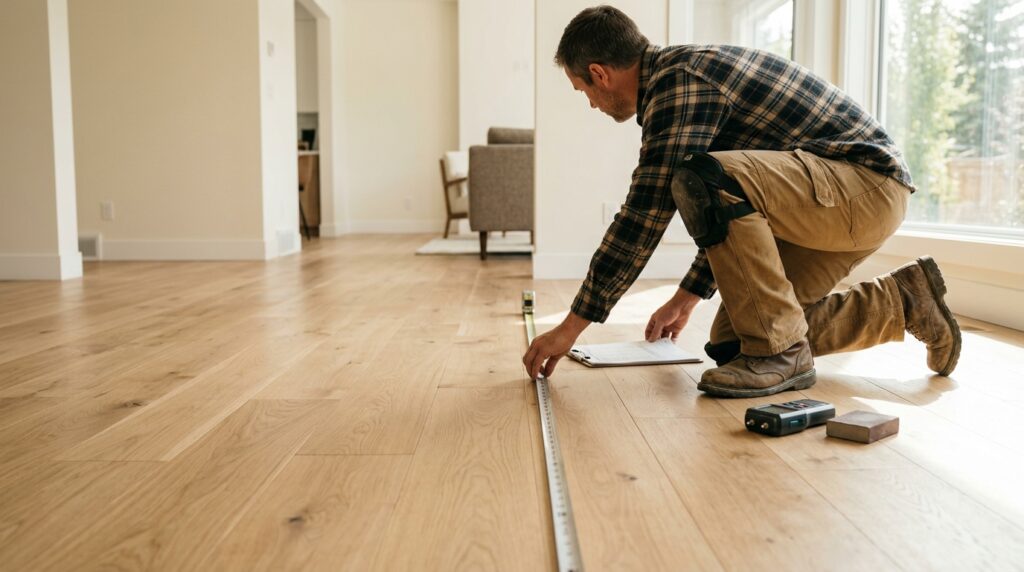
If you’re noticing gaps, loose planks, water damage, or other signs you need hardwood floor repair, professional attention can help stop the problem from getting worse. Timely repairs can restore the beauty and durability of your hardwood floors.
So you’ve been staring at a spot on your floor for a few weeks now, telling yourself it’s nothing. Maybe it’s a gap that wasn’t there last summer, or a board that talks back every time someone walks past the kitchen. Honestly, that hesitation is normal. Most people don’t call a flooring guy until something’s been bugging them for a while. But there are some real signs you need hardwood floor repair that are easy to miss if you’re not sure what you’re looking at, and Calgary’s climate doesn’t make it any easier our winters are brutally dry, and that does things to wood that homeowners in wetter cities never have to deal with.
This isn’t going to be one of those “10 tips” listicles you’ve already read five versions of. I want to walk through what’s actually happening under your feet, why it happens more here than in, say, Vancouver or Toronto, and how to tell the difference between “eh, give it a season” and “call someone now.”
Why Calgary Floors Age Differently
If you’ve lived here more than a winter or two, you already know the air gets brutal in January. Indoor humidity can drop into the single digits some weeks. Wood doesn’t love that. It’s basically a sponge that’s spent its whole life trying to find equilibrium with whatever moisture is in the room, and when that moisture disappears, the wood shrinks. That’s where a lot of these issues start not from bad installation necessarily, just from the wood doing what wood does in a climate like ours.
So before we get into specific red flags, it helps to know that some movement is just part of owning hardwood here. Small seasonal gaps in January that mostly close up by July? Normal. The trouble starts when things don’t bounce back, or when the damage clearly isn’t seasonal at all.
There’s also a Calgary specific wrinkle that doesn’t get talked about much. A lot of homes here were built or had floors installed during boom years when crews were stretched thin and timelines were tight. Acclimation, which is letting the wood sit in the house for a week or two before installation so it adjusts to the indoor environment, sometimes gets skipped or shortened. That decision from fifteen or twenty years ago is still showing up today as wider-than-normal gaps or boards that move more than they should. It’s not really anyone’s fault at this point, just something worth knowing if you’re trying to figure out why your floor seems “worse” than your neighbor’s even though both houses were built around the same time.
If you are noticing these issues and are unsure whether they are normal or signs of a larger problem, it may be worth having a professional inspect your floor. Our hardwood floor repair services can help identify the cause of the issue and recommend the right solution before the damage becomes more expensive to fix.
1. Cupping, Crowning, or Outright Buckling Wood Floors
One of the clearest signs you need hardwood floor repair is when boards begin changing shape.
What Is Cupping?
Cupping happens when the edges of a board rise higher than the center. The board begins to look slightly curved.
This problem is usually caused by moisture. Water may be coming from underneath the floor, a plumbing leak, excess humidity, or poor ventilation.
What Is Crowning?
Crowning is the opposite of cupping. The center of the board rises higher than the edges.
This can happen when a previously cupped floor is sanded before it has fully dried. Once the moisture problem is gone and the wood returns to normal, the center remains higher than the edges.
What Is Buckling?
Buckling is the most serious of the three problems.
Instead of slightly changing shape, the boards begin lifting away from the floor underneath them. In severe cases, sections of flooring may rise several inches.
Buckling is usually caused by major moisture problems such as flooding, burst pipes, or water trapped under the floor for a long period.
How These Problems Are Repaired
The first step is always finding and fixing the source of moisture.
Once the moisture problem has been corrected, the wood needs time to dry naturally. After moisture levels return to normal, a flooring professional can determine whether sanding, repairs, or board replacement is needed.
If buckling has occurred, damaged boards often need to be removed and replaced.
Fixing the moisture problem first is essential. Otherwise, the same issue will likely return.
2. Gaps in Hardwood Floor Winter When Normal Becomes a Problem
Every solid hardwood floor in Calgary develops some gapping in winter. It’s basically guaranteed. The question isn’t whether you’ll see gaps, it’s whether they’re seasonal and shrinking, or permanent and growing.
Type of Gap
Typical Cause
Normal or Concerning?
Hairline gaps appearing only in winter
Low indoor humidity (common Calgary issue)
Normal, usually closes by summer
Gaps under 2mm that persist year-round
Acclimation issue during installation
Mildly concerning, monitor
Gaps over 2mm that don’t close
Subfloor movement or chronic low humidity
Needs professional repair
Gaps clustered near exterior walls only
Poor insulation or humidity imbalance
Worth investigating insulation too
Gaps with visible darkening at edges
Possible moisture or dirt buildup
Repair recommended
For the wider stuff, putty is honestly a band-aid that cracks out within a year or two. The better fix, and what we typically do, is cutting thin slivers of matching wood and gluing them directly into the gap so it becomes a real wood-to-wood bond instead of a filler that’s just sitting there waiting to pop loose. For the really fine hairline gaps, mixing actual sanding dust from your own floor into a resin paste gets you a color match that putty from a hardware store just can’t touch.
If your humidity at home runs low all winter (and in Calgary, it often does), running a humidifier for a few days before any gap repair matters more than people think. Repair wood that’s still actively shrinking and you’re repairing something that’s going to keep moving.
A lot of homeowners ask whether they should just leave winter gaps alone since they close up anyway. For genuinely seasonal hairline gaps, that’s not unreasonable; chasing every tiny gap with filler every single winter is overkill, and the wood needs room to move or you risk buckling instead. But there’s a saying that separates “normal seasonal” from “needs attention.” Run your finger along the edge of a persistent gap. If it feels sharp or splintery, that edge has likely dried out enough that it’s becoming brittle, and brittle edges chip and catch on socks or bare feet. That’s usually the point where it’s worth addressing even if the gap technically narrows again come summer.
Worth mentioning too, gaps that show up in a totally new spot, somewhere they’ve never appeared before, are a slightly different conversation than gaps that have always shown up in the same few boards every January. New, unexpected gapping sometimes points to a change in the home itself: maybe a furnace humidifier stopped working, maybe an addition or renovation changed airflow patterns in that room. Worth a quick check of your home’s humidity levels with a basic hygrometer before assuming it’s just the usual winter thing.
3. Deep Scratches, Gouges, and Hardwood Floor Splintering
Surface scratches are just life. Pets, shoes, the leg of a chair someone dragged instead of lifted. Those are cosmetic and a screen-and-recoat usually handles them in an afternoon.
What’s different is when a scratch goes deep enough to expose raw wood, or when you start noticing hardwood floor splintering little slivers of wood actually lifting up or breaking off, especially in high-traffic paths like hallways or in front of a couch. That’s a sign the finish has worn through completely in that spot, and the wood itself is taking the abuse now instead of the protective coating.
Honestly, once you see splintering, that’s not really a “wait and see” situation anymore. Bare wood soaks up moisture, dirt gets ground into the open grain, and the damage spreads faster than people expect. The repair side of this usually involves a structural filler, sometimes a wood epoxy, sometimes a color-matched burn-in wax pressed into the gouge, then leveled flush with a cabinet scraper so there’s no bump underfoot. After that, some shops will even hand-paint grain lines back into the filled area with a fine brush so it doesn’t look like an obvious patch. It sounds excessive until you’ve seen a poorly filled scratch under afternoon light. It sticks out like a sore thumb.
There’s also a category of damage that falls somewhere between a regular scratch and full splintering, which is the dragging mark from furniture legs without protective pads. These tend to be wider and shallower than a typical scratch, almost like a groove, and they show up most around dining tables, couches, and anywhere chairs get pushed back from a desk repeatedly. They’re usually fixable with the same structural filling approach, though if the groove is wide enough, sometimes a localized sand-and-blend works better than trying to fill it, since filler in a wide shallow area can look like a patch no matter how well it’s color-matched.
One thing worth flagging pet claws create a slightly different wear pattern than most other scratches. Instead of one clean line, you tend to get clusters of short, curved scratches concentrated near doorways, by windows where pets watch the street, or along favorite walking paths through the house. Individually those marks look minor, but the cumulative effect over a few years of a medium or large dog can wear through the finish across an entire section faster than people expect, just because of how repetitive the traffic pattern is.
4. Water Damage Hardwood Floor Signs (Including Black Stains and Graying)
Water is, without question, the worst thing that can happen to a hardwood floor. Worse than scratches, worse than normal wear, worse than most furniture damage combined.
Some of the more common water damage hardwood floor signs to watch for:
Dark, almost blackish discoloration that doesn’t match the surrounding wood
A musty smell near baseboards, especially in a spot that doesn’t get much airflow
Boards that feel soft or give slightly when you press on them
Cupping concentrated in one specific area rather than spread evenly
When hardwood floors turn gray, that’s usually long-term UV exposure or oxidation rather than fresh water damage, a different problem, different fix, usually solved with sanding and a fresh coat rather than anything structural. But black stains on wood floors are a different story entirely. Black almost always means water has been sitting long enough to start breaking down the wood fibers or feeding mold underneath the surface. If the wood hasn’t softened yet, sometimes sanding it out works. If it’s gone soft or the black has spread deep into the grain, the boards usually need to come out.
So how to tell if a wood floor has water damage for sure, rather than guessing? Professionals use moisture meters and sometimes thermal imaging to map out where the water actually traveled, because it’s common for it to spread sideways under the baseboards even when the visible surface looks dry. We’ve walked into homes where the homeowner thought it was a small spot near the dishwasher, and the meter showed moisture three feet further than anyone expected. Drying it out properly and this part matters has to happen slowly. Pull moisture out too fast with aggressive heat and the wood can split or check instead of drying evenly.
The drying process itself usually relies on industrial dehumidifiers, the kind that pull deep-seated moisture out gradually rather than just running a regular home dehumidifier and hoping for the best. Combined with air movers positioned to push airflow across the affected boards, this can take several days to a week depending on how much water got in and how long it sat there before anyone noticed. Once moisture readings come back down to a safe range, usually somewhere around 8 to 10 percent, the boards get reassessed. Some will have stayed structurally sound and just need refastening if they loosened. Others will have cupped permanently or started rotting, and those come out.
A detail that surprises a lot of homeowners’ water damage doesn’t always announce itself right away. Sometimes a small spill gets wiped up promptly and looks like a non-event, but if even a little moisture works its way into a seam between boards, it can sit there quietly for months before any visible sign shows up. That’s part of why a slow leak under a fridge or behind a washing machine is so much more damaging long-term than an obvious one-time spill — nobody’s watching for it, so it just keeps feeding moisture into the same spot day after day.
5. Pet Urine Stains on Hardwood Floor
This one deserves its own section because it’s genuinely different from regular water damage, and a lot of people try to handle it the same way.
Pet urine stains on hardwood floors soak in differently than spilled water because of the ammonia content, and once it’s gone dark, bleaching almost never actually fixes it and can even damage the surrounding finish if you try. If the wood has turned black from urine, the affected boards typically need to be pulled, the subfloor treated with an odor-sealing product, and new matching boards put in. Trying to sand it out alone usually just exposes more discoloration underneath, because the staining tends to run deeper than the sanding depth allows for.
If you’ve got a dog or a cat and you’re noticing a smell that seems to come from the floor specifically, not just “the house generally,” it’s worth checking sooner than later. The longer it sits, the deeper it travels into the grain.
6. Squeaky Floors, Loose Planks, and Hollow Sounds Underfoot
Okay, this last category covers a few related things, but they’re all pointing toward the same root issue most of the time: something underneath the surface has shifted.
How to fix squeaky hardwood floors?
the actual answer depends on why they’re squeaking in the first place. Sometimes it’s as simple as a fastener that’s worked loose over the years and just needs to be re-secured. Other times it’s the subfloor itself moving slightly under load, which is a bigger job. A few squeaks here and there in an older home, not a huge deal. A sudden increase, or squeaks concentrated in one specific spot, usually means something’s actually loosened underneath.
Loose hardwood floor planks:
are related but a bit more obvious you can feel the board shift or rock when you step on it, not just hear noise. Left alone, a loose board puts extra stress on the boards next to it, so what starts as one board can turn into three or four over a year or two.
Soft spots in hardwood floor:
are the one that gets people’s attention fastest, because it genuinely feels different underfoot, almost springy or slightly sunken. That’s usually rot or sustained moisture damage doing its work below the surface, and it’s not really a “wait it out” situation. Walking on a weakened spot regularly just accelerates things.
And then there’s the hollow sound under wood flooring, which a lot of homeowners notice when they’re vacuuming or just walking around barefoot, a spot that sounds different, almost like there’s an air pocket underneath. That usually points to the subfloor not being properly bonded to the planks above it in that section, which can happen with age or with installations that didn’t get enough adhesive coverage originally.
Show Image Alt tag: inspecting loose hardwood floor planks near baseboard with flashlight
If you’ve got a hardwood floor repair Calgary company come take a look, this is usually where they’ll walk the whole floor and tap around with a mallet or just listen sounds simple, but it tells a trained ear a lot about where the subfloor has separated.
Worth noting, squeaks and hollow sounds aren’t always urgent the way water damage or splintering can be. A house can squeak for a decade without the floor failing structurally. But the reason people eventually get it fixed isn’t usually safety; it’s that the compound squeaks. One creaky board near the kitchen turns into “the whole hallway sounds like a haunted house” within a few years, especially in a busy household with kids or pets running through regularly. At that point, the fix is the same whether you do it now or later, except later usually means more boards involved and a bigger job.
There’s also a slightly less obvious cause worth mentioning: seasonal wood movement combined with nail or staple fasteners that were driven at a slight angle during original installation. Over years of expansion and contraction, that angled fastener works its way slightly loose with every cycle, even if the installation was otherwise solid. It’s not really anyone’s fault it’s just an accumulation of small movements over a long time, which is honestly true of a lot of hardwood floor problems generally. Nothing happens overnight. It’s death by a thousand cycles of dry winter, humid summer, repeat.
Hardwood Floor Repair vs Refinishing
People mix these up constantly, so here’s the short version.
Repair
Refinishing
Fixes
Loose boards, gaps, water damage, structural issues
Surface dullness, light scratches, color fading
Depth of work
Goes below the surface, into boards/subfloor
Sands and recoats the top layer only
When it’s used
Localized, isolated damage
Floor-wide wear that’s mostly cosmetic
Can they be combined?
Yes, repair damaged boards first, then refinish for a uniform look
Often the final step after repair
Honestly, a lot of jobs need both. Repair the actual problem areas, then refinish the whole floor so it doesn’t look like a patchwork of old and new. You can check out ourhardwood floor refinishing page for more on how that process works on its own.
When to Replace Hardwood Floors Instead of Repairing
Not every damaged floor is a repair candidate, and it’s worth being honest about that instead of trying to sell a fix that won’t hold.
Generally, when to replace hardwood floors comes down to a few things. If the wood has gone soft across a wide area rather than just one or two boards. If black water staining has spread through a large section rather than staying localized. If the floor has already been sanded down close to its limit over the decades (solid hardwood can typically handle several refinishes over its life, but eventually there’s not enough wood left to sand). Or if the subfloor underneath is compromised in a way that no amount of board replacement will fix long-term.
For engineered hardwood specifically, it’s a bit more limited the real wood wear layer on top is usually only 2 to 4mm thick, so once damage goes past that into the core material, you’re often looking at replacing that section rather than sanding it.
If you’re at that point, ourhardwood floor installation team can talk through whether full replacement or a partial section swap makes more sense for your specific floor.
What Repair Actually Costs (So You’re Not Guessing)
People always want a number, so here’s a rough sense of it. Hardwood floor scratch repair cost and other localized structural work tends to run somewhere between $20 and $40 per square foot for the specific area being treated that’s higher per square foot than full installation pricing because it’s detailed, manual labor rather than laying out large sections of new flooring. Obviously that range moves depending on whether you’re dealing with simple surface scratches or something that involves subfloor access, moisture remediation, board matching, the whole thing.
This is part of why a professional wood floor inspection before any work starts actually saves money rather than costing extra. Guessing at the cause and paying for the wrong fix is the expensive route.
Getting an Actual Inspection Done
If you’ve read through this and you’re recognizing two or three of these signs in your own place, the next reasonable step is getting eyes on it not a guess from a forum post, an actual look from someone who does this daily.
A real professional wood floor inspection usually involves checking moisture levels with a meter, sometimes thermal imaging if water damage is suspected, and a physical walk of the floor to listen for hollow spots or movement. That tells you whether you’re looking at a $300 fix or something that involves pulling boards. Worth knowing before you commit to anything.
If you’re trying to find local hardwood flooring contractors who actually understand Calgary’s climate specifically, not just generic flooring advice copied from a city where humidity isn’t an issue, local knowledge ends up mattering more than people expect going in.
Why a Calgary Hardwood Floor Repair Company Matters Specifically
This is maybe the part that gets glossed over the most. A lot of flooring advice online is written for climates that don’t deal with single-digit indoor humidity for three or four months a year. What works for a floor in Seattle or Toronto doesn’t always translate directly here.
A Calgary hardwood floor repair company that’s been doing this locally for a while will know, for instance, that fixing humidity gaps in wood floors Calgary style means checking the home’s humidity levels before doing any gap work at all because repairing a gap while the wood is still actively shrinking just means redoing it next winter. They’ll also know which neighborhoods tend to have older subfloors that need extra attention, and which builds from certain decades had installation shortcuts that show up as repair issues fifteen or twenty years later.
We’ve been doing this in Calgary for more than three decades now at Arbutus, and honestly, the climate piece is the thing that separates a generic repair from one that actually holds. You can check out ourhardwood floor repair page if you want the full breakdown of how we approach it, or ourhardwood floor polishing service if what you’re actually dealing with is more about restoring shine than fixing structural stuff.
A Quick Word on the Website Side of Things
Slightly off-topic from floors, but worth mentioning if you’re a fellow flooring or home services business reading this wondering how to actually get a page like this ranking, the technical side of SEO and web development matters just as much as the writing. We’ve worked withClear Solutions IT for our own site’s development and SEO, and they handle the full scope of website-related work for us. Just passing that along in case it’s useful to anyone in a similar spot.
So, Where Does That Leave You
If you’ve made it this far, you probably already had a decent idea something was off before you started reading that’s usually how it goes. The signs you need for hardwood floor repair aren’t always dramatic. Sometimes it’s just a board that’s a little too vocal, or a patch near the back door that looks slightly different than it used to. Calgary’s dry winters mean some of this is just par for the course, but the stuff that doesn’t bounce back with the seasons, or feels different underfoot, or smells a little off near the baseboards that’s worth getting a second pair of eyes on sooner rather than later. Floors are forgiving for a while. Just not forever.
FAQs
How do I know if my hardwood floor needs repair or just refinishing?
If the damage is mostly surface-level scratches, dullness, fading refinishing usually covers it. If you’re dealing with gaps, loose boards, water damage, or anything structural, that’s repair territory, sometimes followed by a refinish to even out the look.
Is it normal for hardwood floors to have gaps in winter?
Yes, especially in Calgary. Low indoor humidity causes wood to shrink slightly, and small gaps that close up again by summer are considered normal seasonal movement.
Can cupped hardwood floors be fixed without replacing the boards?
Often, yes, if the moisture source is identified and resolved first. Mild cupping can sometimes be sanded out once the wood has dried back to a stable moisture level. Severe or long-term cupping may require board replacement.
How much does it cost to repair water damaged hardwood floors?
It varies quite a bit depending on how far the moisture spreads and whether boards need replacing, but structural repair work generally runs in the range of $20 to $40 per square foot for the affected area.
Can pet urine stains be removed from hardwood floors?
Light surface staining sometimes responds to cleaning, but once it’s turned black, the staining usually runs deeper than sanding can reach, and the affected boards typically need to be replaced along with treating the subfloor underneath.
If the damage is mostly surface-level scratches, dullness, fading refinishing usually covers it. If you're dealing with gaps, loose boards, water damage, or anything structural, that's repair territory, sometimes followed by a refinish to even out the look.
Yes, especially in Calgary. Low indoor humidity causes wood to shrink slightly, and small gaps that close up again by summer are considered normal seasonal movement.
Often, yes, if the moisture source is identified and resolved first. Mild cupping can sometimes be sanded out once the wood has dried back to a stable moisture level. Severe or long-term cupping may require board replacement.
It varies quite a bit depending on how far the moisture spreads and whether boards need replacing, but structural repair work generally runs in the range of $20 to $40 per square foot for the affected area.
Light surface staining sometimes responds to cleaning, but once it's turned black, the staining usually runs deeper than sanding can reach, and the affected boards typically need to be replaced along with treating the subfloor underneath.
How to choose a hardwood flooring contractor in Calgary Learn how to choose a hardwood flooring contractor in Calgary by checking experience, insurance, past projects and written quotes before you hire. Contact Us Your floors will be under your feet for 20 years or more. The person you hire to…
Hardwood Flooring Cost in Calgary: What You’ll Actually Pay Planning your project but unsure about hardwood flooring cost in Calgary? This guide explains installation, refinishing, and repair expenses to help you plan your flooring budget. Contact Us If you’re planning to install, repair, or refinish hardwood flooring in Calgary, understanding…
Matte vs gloss hardwood flooring: which finish is right for your home? Matte vs gloss hardwood flooring, see which finish suits Calgary homes best for durability, style & upkeep. Get expert advice from Arbutus Hardwood. Contact Us Matte vs gloss hardwood flooring feels like a small decision until you’re standing…
Choosing the right hardwood flooring species is one of the most important steps in creating a durable and visually appealing home. Calgary’s climate requires careful consideration, making it essential to select a species that can handle environmental changes without compromising performance. If you’re planning to install hardwood flooring contact us today to get the best results from your investment.