9 Hardwood Installation Mistakes That Wreck Calgary Floors
Calgary’s harsh weather makes hardwood floors especially prone to damage from hardwood installation mistakes. From skipping acclimation to using the wrong underlayment, these errors cause buckling, gaps, and costly repairs. Here are the 9 most common hardwood installation mistakes that wreck Calgary floors and how to avoid them.
A new hardwood floor is one of the best upgrades you can make to a home. It looks warm, it adds real value, and it lasts for decades when it’s done right.
The problem is that most hardwood installation mistakes don’t show up on day one. They show up three months later, when the heat kicks on and the wood starts telling you the truth about how it was installed.
We’ve spent over 30 years fixing floors in Calgary homes, and almost every callback traces back to one of the same handful of errors. Some are made by inexperienced DIYers. A surprising number are made by installers who skipped a step to save time. Either way, the fix is almost always more expensive than doing it right the first time.
Here are the nine hardwood installation mistakes we see most often, why they happen, and what to do instead. Whether you’re hiring a professional crew or tackling part of the project yourself, understanding these hardwood installation mistakes before work begins can save you thousands of dollars and a lot of frustration down the road.
1. Skipping or Rushing the Acclimation Period
Hardwood is not like tile or vinyl. It’s a natural material that keeps reacting to the air around it long after it’s been milled and boxed.
When boards go straight from a delivery truck to your subfloor without time to adjust, they’re still carrying the humidity level of the warehouse or the truck they came from. That almost never matches the humidity of your living room.
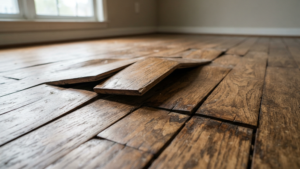
What goes wrong: If the wood is drier than your home, it will absorb moisture after installation and swell, causing the boards to buckle or push against each other. If it’s more humid than your home, the opposite happens: it shrinks, and you end up with gaps you can slide a coin into.
The fix: Boards need to sit in the actual room where they’ll be installed for at least three to five days before work begins. In a Calgary winter, when indoor air can drop to 20 to 30 percent relative humidity, this step matters even more than it does in milder climates.
This is one of the first things a good installer checks before touching a single plank. If you’re comparing quotes, ask how the acclimation period is handled. It’s a fair question, and any experiencedhardwood floor installation team should have a clear answer.
2. Ignoring Subfloor Preparation
A hardwood floor is only as good as what’s underneath it. This is the step that gets rushed most often, because it’s invisible once the planks go down.
What goes wrong: An uneven, dirty, or structurally weak subfloor telegraphs straight through to the finished surface. You’ll notice hollow-sounding spots when you walk across the room, squeaks that never go away, and in bad cases, cracked joints between boards within the first year.
The fix: Before installation starts, the subfloor should be checked for flatness, cleaned, and repaired where needed. Self-leveling compound handles minor dips. Larger structural issues need to be addressed before flooring goes anywhere near the room.
Skipping this step is one of the most common reasons homeowners end up calling us for repairs a year or two after a rushed install. If your floor already has that hollow, springy feeling, it’s worth reading up on thesigns your hardwood floor needs repair before the problem gets worse.
3. Skipping Moisture Testing
This is the mistake that causes the most expensive damage, and it’s also the easiest one to prevent.
What goes wrong: Wood doesn’t have to look wet to hold too much moisture. A concrete slab can feel perfectly dry to the touch and still be holding enough residual moisture to ruin a floor. When hardwood is installed over a subfloor with hidden moisture, you often see cupping, where the edges of each board rise higher than the center. In worse cases, mold can start growing underneath the surface where nobody sees it until the smell shows up.
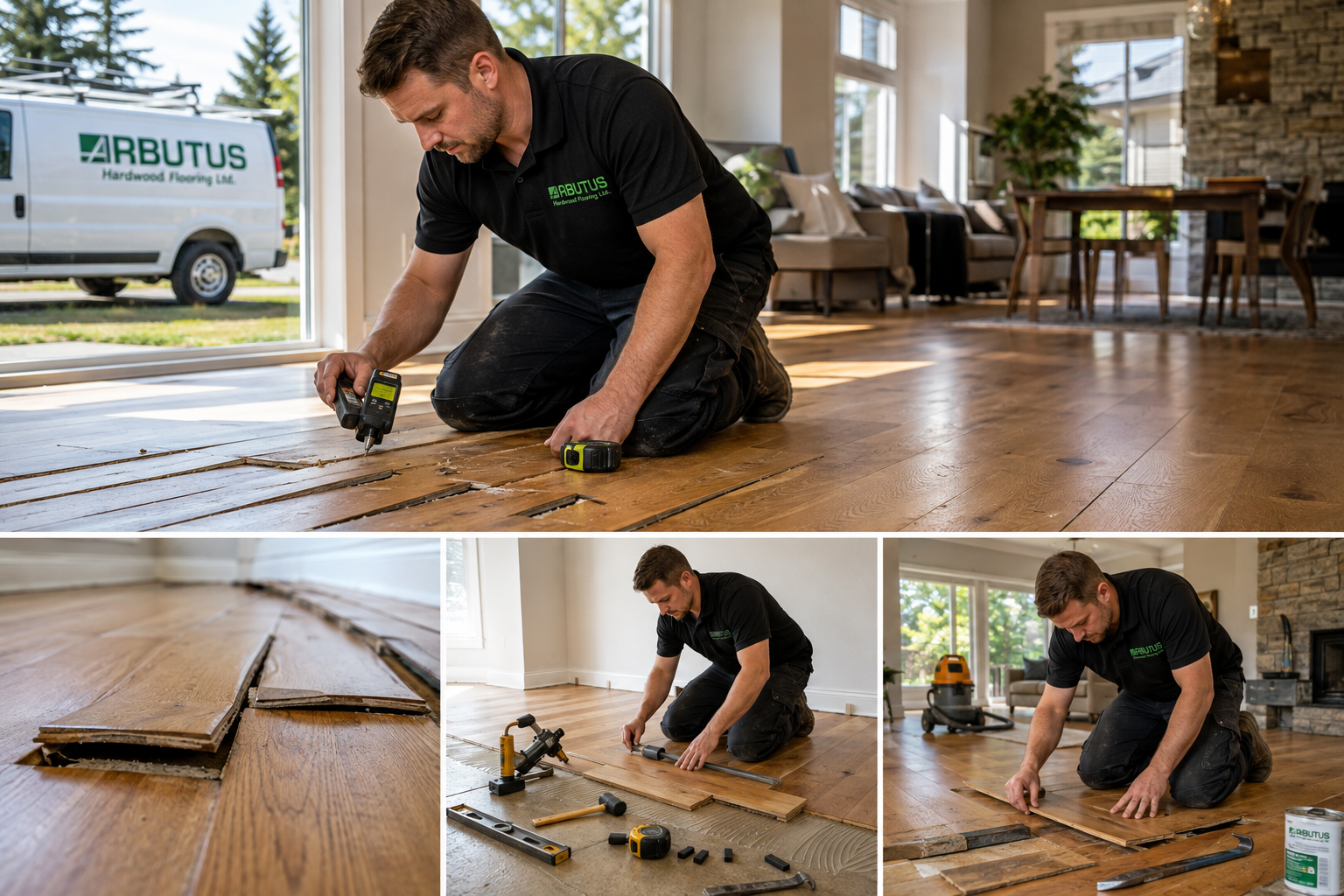
The fix: A professional moisture meter should be used on both the hardwood itself and the subfloor before installation begins. The readings need to fall within the range the manufacturer recommends, not just whatever feels close enough. This step follows the same standards outlined in theNWFA installation guidelines, which is the industry reference most professional installers use to set moisture and acclimation benchmarks.
If your basement or main floor sits over concrete, this step is non-negotiable, especially with Calgary’s seasonal humidity swings between a dry winter and a wetter summer.
4. Forgetting Expansion Gaps
Wood moves. It always has, and it always will, no matter how good the finish looks on installation day.
What goes wrong: When planks are installed too tightly against the walls, there’s nowhere for the wood to go when it naturally expands with the seasons. The pressure builds along the perimeter until the entire floor has no choice but to buckle or lift somewhere in the middle of the room.
The fix: A consistent gap, usually around half an inch, needs to be left around the perimeter of every room. Spacers keep this even during installation, and the gap gets covered later by baseboards, so nobody ever sees it. It’s a small detail that prevents one of the most dramatic and expensive failures a hardwood floor can have.
5. Choosing the Wrong Installation Method for the Subfloor
Not every hardwood installation method works with every subfloor, and this is a mistake we see even from installers who should know better.
What goes wrong: Nailing hardwood into a concrete slab isn’t possible without the right underlayment, and gluing a floating floor system down defeats the purpose of the design. When the method doesn’t match the subfloor, adhesion fails, boards shift over time, and the floor starts making noise within months.
The fix: The subfloor type should decide the method, not personal preference or whatever the installer is most comfortable doing. Wood subfloors typically support nail-down installation. Concrete usually calls for glue-down or a floating system. If you’re weighing your options, our guide onchoosing between nail-down and glue-down methods breaks down which one fits your situation.
6. Choosing the Wrong Wood Type for Calgary’s Climate
This mistake happens before installation even starts, at the point where the wrong product gets ordered.
What goes wrong: Solid hardwood is a beautiful, long-lasting product, but it’s more sensitive to humidity swings than engineered hardwood. In a climate like Calgary’s, where indoor air can be extremely dry through the winter heating season, solid wood installed without the right precautions is more prone to gapping. Homeowners who don’t know this end up disappointed by a floor that looked perfect in the showroom.
The fix: Engineered hardwood’s layered construction resists movement better, which makes it a smart choice for basements, homes with radiant heat, and rooms with more humidity swings. Solid hardwood still works beautifully in the right rooms with the right humidity control. The key is matching the product to the space. Our breakdown ofsolid vs. engineered hardwood for Calgary homes covers this in more detail if you’re still deciding.
7. Buying Low-Quality or Wrong-Grade Material
Sometimes the mistake isn’t the installation at all. It’s what got installed.
What goes wrong: Cheaper hardwood often uses thinner wear layers, inconsistent milling, or lower-grade wood that doesn’t hold up to daily traffic. It might look fine for the first year, then start showing wear, warping, or finish damage well before it should.
The fix: Buying from a supplier who stands behind their product matters as much as who installs it. This is one of the reasons we handlesourcing quality hardwood flooring directly for our clients instead of leaving it to chance. If you’re shopping around, our guide totrusted hardwood flooring brands in Calgary is a good starting point before you commit to a product.
8. Poor Nailing or Gluing Technique
This one is purely about workmanship, and it’s a big reason experience matters more than a lower quote.
What goes wrong: Too few nails, inconsistent spacing, or glue that doesn’t make full contact with the subfloor all lead to the same result: planks that shift under weight. Over time, that movement creates gaps, and the floor starts to pop or squeak every time someone walks across it.
The fix: Nail spacing should follow industry standards, generally every 6 to 8 inches, and glue-down installations need full, even adhesive coverage between the subfloor and the plank. This is a detail that’s easy to rush and hard to fix later without pulling up boards.
9. Rushing the Installation Timeline
The last mistake ties several of the others together: trying to compress a job that needs time.
What goes wrong: Acclimation gets cut short. Moisture readings get skipped because there’s no time to wait for them. Subfloor repairs get glossed over because the schedule doesn’t allow for delays. A rushed installation almost always means one of the earlier steps on this list got shortcut somewhere along the way.
The fix: A realistic timeline protects every other step in the process. If you’re planning a renovation and trying to figure out scheduling, it helps to knowhow long hardwood installation actually takes before you lock in a move-in date or a deadline that forces shortcuts.
Why Calgary’s Climate Makes These Mistakes More Costly
Every one of these hardwood installation mistakes can happen anywhere. But a handful of them do more damage, faster, in a city like Calgary than they would in a more humid climate.
Winters here are long, dry, and cold enough that furnaces run for months at a stretch. That constant heat pulls moisture out of the air, and indoor humidity can drop into the 20 to 30 percent range without a homeowner ever noticing, since it doesn’t feel uncomfortable the way summer humidity does. Wood doesn’t get that pass. It reacts to every percentage point.
Summers bring the opposite swing. Humidity climbs, sometimes sharply after a wet spell, and wood that wasn’t given proper expansion room during installation has nowhere to go but up.
This back-and-forth is exactly why acclimation, moisture testing, and expansion gaps matter more here than they might in a milder region. A mistake that might only cause a minor issue in a stable climate can turn into a full board replacement after one Calgary winter.
It’s also why we lean toward engineered hardwood for a lot of local installations, and why we take humidity readings seriously on every job, not just the ones over concrete. Thirty years of watching how local homes behave through the seasons has taught us which shortcuts simply don’t hold up here, even if they’d be fine somewhere else.
Common Mistakes at a Glance
Mistake
Common Consequence
Prevention
Skipped acclimation
Buckling or gapping
3–5 day on-site acclimation
Poor subfloor prep
Hollow spots, squeaks
Level, clean, and repair subfloor first
No moisture testing
Cupping, mold
Moisture meter readings before install
No expansion gaps
Buckling at perimeter
1/2 inch gap, hidden by baseboards
Wrong installation method
Adhesion failure, shifting
Match method to subfloor type
Wrong wood type
Gapping in dry climates
Engineered hardwood for humidity-prone rooms
Low-grade material
Premature wear
Buy from a trusted supplier
Poor nailing or gluing
Popping, squeaking
Follow industry nail/glue spacing standards
Rushed timeline
All of the above, at once
Build a realistic schedule
What to Do If Your Hardwood Was Already Installed Incorrectly
If your floor is already down and something feels off, whether that’s a squeak that won’t quit, a board that’s started to cup, or gaps that seem to be getting wider, it’s worth having it looked at before the damage spreads to more of the floor. Small issues caught early are usually a repair. Left alone, they tend to turn into a full replacement.
We offerhardwood floor repair services across Calgary for exactly this situation, and in most cases, a trained eye can tell within minutes whether the problem is cosmetic or structural.
The Bottom Line
Most hardwood installation mistakes happen before a single board is nailed or glued down. Skipped acclimation, untested moisture levels, and rushed subfloor prep cause more damage over time than almost anything that happens during the actual installation day.
The good news is that every mistake on this list is preventable. It just takes the right process, the right materials for your home’s climate, and an installer who won’t cut corners to hit a deadline.
If you’re planning a new hardwood installation in Calgary, or you’re already noticing signs that something wasn’t done right the first time, our team at Arbutus Hardwood has spent over 30 years getting it right for homeowners across the city.Contact us today for a free quote, and let’s make sure your floor is one that lasts.
Most manufacturers recommend three to five days, but in Calgary's dry winter months, some products may need closer to a full week. The goal is for the wood's moisture content to match the room, not just for a certain number of days to pass.
Yes, but it takes more planning. Indoor heating dries the air significantly, so humidification during and after installation is often necessary to keep boards from shrinking too much once the season shifts.
Look for gaps that seem larger than a coin's width, edges of boards sitting higher than the center, persistent squeaking, or areas that sound hollow when you walk on them. Any of these are worth a professional inspection.
It depends on the scope. Simple, small rooms with floating floor systems can be manageable for an experienced DIYer. Glue-down installations over concrete, wide-plank solid hardwood, and anything involving moisture-prone subfloors are much harder to get right without training and the proper tools.
Most manufacturers recommend keeping indoor relative humidity between 35 and 55 percent year-round. In Calgary, that usually means running a humidifier through the winter and, in some homes, a dehumidifier during humid summer stretches.
It varies widely depending on the extent of the damage. A few boards with gapping or minor cupping can often be repaired without pulling up the whole floor. Widespread moisture damage or subfloor issues usually cost more, since those repairs mean removing larger sections to fix the root cause.
How to choose a hardwood flooring contractor in Calgary Learn how to choose a hardwood flooring contractor in Calgary by checking experience, insurance, past projects and written quotes before you hire. Contact Us Your floors will be under your feet for 20 years or more. The person you hire to…
Hardwood Flooring Cost in Calgary: What You’ll Actually Pay Planning your project but unsure about hardwood flooring cost in Calgary? This guide explains installation, refinishing, and repair expenses to help you plan your flooring budget. Contact Us If you’re planning to install, repair, or refinish hardwood flooring in Calgary, understanding…
Matte vs gloss hardwood flooring: which finish is right for your home? Matte vs gloss hardwood flooring, see which finish suits Calgary homes best for durability, style & upkeep. Get expert advice from Arbutus Hardwood. Contact Us Matte vs gloss hardwood flooring feels like a small decision until you’re standing…