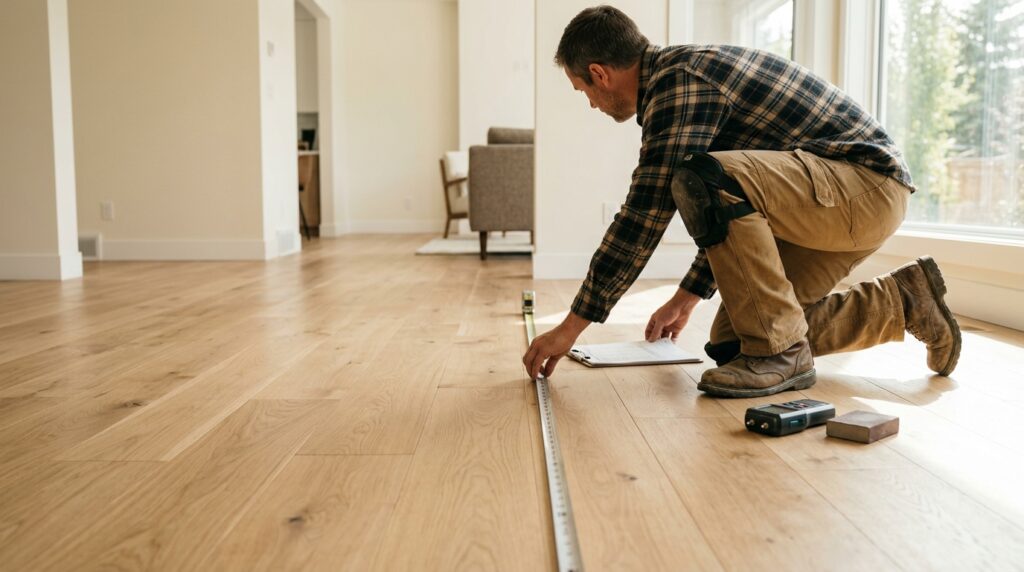
So you’re thinking about engineered hardwood installation for your Calgary home. Good move. It’s one of the few flooring upgrades that actually holds up against our dry winters and wild humidity swings, and it still gives you that real wood look under your feet.
But installation isn’t a one-size-fits-all job. The method, the cost, and even the wood species you pick all depend on your subfloor, your budget, and how much of the work you want to do yourself.
I’ve put this guide together after years of installing, repairing, and refinishing floors across Calgary and the surrounding towns. Below you’ll find the real process, the real numbers, and the mistakes that cost homeowners the most.
What is engineered hardwood, and why it works in Calgary
Engineered hardwood is built in layers. A real wood veneer sits on top, bonded to several layers of plywood underneath, usually running in a cross-grain pattern.
That layered build is the whole point. It resists the shrinking, expanding, and gapping that solid hardwood is prone to when humidity drops in January and climbs again in July.
Calgary’s chinooks are brutal on flooring. One week it’s minus 20, the next it’s plus 10 and everything in your house is contracting and expanding at a different rate. Engineered wood handles that stress far better than solid planks.
There are three main ways to get engineered hardwood down, and the right one depends on your subfloor.
Floating installation
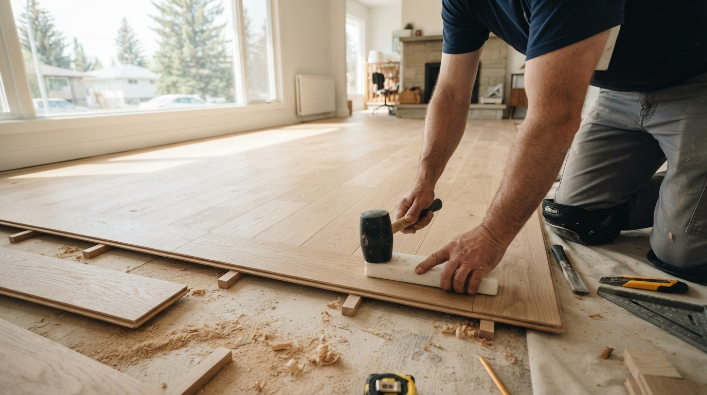
Floating floors aren’t attached to the subfloor at all. The planks click together (tongue and groove or a locking system) and rest on a cushioned underlayment.
This is the fastest method and the most forgiving for slightly uneven subfloors. It’s also the go-to choice over concrete, in basements, or over radiant heating systems where nailing isn’t an option.
Glue-down installation
Here, the planks get bonded directly to the subfloor with a urethane adhesive. It’s messier and takes longer, but it produces the quietest, most solid-feeling floor. Fewer hollow sounds. Less movement underfoot.
Glue-down is usually the pick for concrete subfloors when you want maximum stability, or in high-traffic rooms where you don’t want any give at all.
Nail-down or staple-down installation
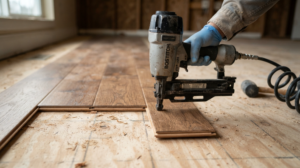
This is the traditional method, and it only works on wood subfloors (plywood or OSB, not concrete). Planks get fastened through the tongue at an angle, hidden once the next row locks in.
It needs a thicker plank, usually 3/4 inch, and a bit more skill to pull off cleanly. Done right, it’s rock solid for decades.
Not sure which method fits your home? Our article onnail-down vs glue-down hardwood floors compares them side by side, including cost and noise differences.
Method
Best for
Difficulty
Sound quality
Floating
Concrete, basements, radiant heat
Easy
Good, can feel slightly hollow
Glue-down
Concrete, high-traffic rooms
Moderate to hard
Excellent, very solid
Nail-down
Plywood or OSB subfloors
Hard
Excellent, traditional feel
What to expect during the installation process
Here’s what a typical engineered hardwood installation actually looks like, start to finish, for an average-sized Calgary home.
Acclimation (3 to 7 days). The wood sits in the room where it’ll be installed, still in its packaging, so it adjusts to your home’s temperature and humidity. Skip this step and you risk gaps or buckling down the road.
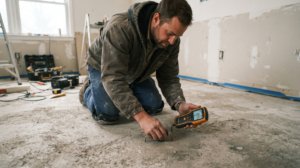
Subfloor prep (1 to 2 days). Old flooring comes out. The crew checks the subfloor for flatness, usually within 3/16 inch over 10 feet, and levels any dips or sands down high spots. Moisture gets tested too, especially over concrete.
Layout and installation (1 to 3 days, depending on square footage). Chalk lines mark the starting point. Planks go down row by row, staggered joints, expansion gaps left around every wall.
Trim and transitions (half a day to a full day). Baseboards or shoe molding cover the expansion gaps. Transition strips go in at doorways where flooring meets tile or carpet.
Curing time (24 to 48 hours). You wait before moving heavy furniture back, longer if the floor was glued down.
For a 1,000 square foot space, most homeowners are looking at 8 to 12 days total from delivery to move-in, including acclimation. That timeline stretches or shrinks depending on room count, layout complexity, and whether the crew is also removing old carpet or tile. Our guide onhow long hardwood installation takes in Calgary breaks down timelines room by room if you want more detail.
Engineered hardwood installation cost in Calgary
Pricing varies a fair bit based on wood species, plank width, installation method, and subfloor condition. Here’s a rough range to budget around.
Cost factor
Typical range (per sq ft, installed)
Basic engineered oak, floating
$6 to $9
Mid-range engineered hardwood, glue-down
$9 to $13
Premium wide-plank or exotic species
$13 to $18+
Subfloor leveling or repair (if needed)
$2 to $5 extra per sq ft
Removal of old flooring
$1 to $3 extra per sq ft
These numbers include materials and labor but don’t factor in baseboards, custom staining, or stair work, which get quoted separately. If your existing subfloor needs major leveling, that adds to the bill fast, so it’s worth asking your contractor to inspect before you get a final number.
Choosing the right engineered hardwood for your home
The installation method matters, but so does the product itself. A few decisions here will shape how your floor looks and performs for years.
Picking a wood species
Oak is still the most popular choice in Calgary, mostly because it stains well and holds up to daily traffic. But the species you pick changes the whole feel of a room.
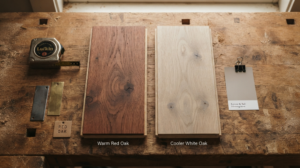
Red oak leans warm, with visible grain and a slightly pink undertone. White oak runs cooler and more neutral, which is why it’s become the go-to for modern, Scandinavian-style interiors. If you’re torn between them, our comparison ofred oak vs white oak flooring covers the visual and durability differences.
Choosing a brand
Not all engineered hardwood is built the same. Wear layer thickness, core construction, and finish quality all vary between manufacturers, and that affects how many times (if any) the floor can be sanded and refinished later.
Most flooring failures I get called out to fix trace back to one of these:
Skipping acclimation. Installing the wood the same day it’s delivered is asking for gaps or buckling within a year.
Ignoring subfloor moisture. Concrete that tests high on moisture will ruin a floor from underneath, glue-down or not.
Wrong expansion gaps. Too tight against the wall and the floor has nowhere to move when it expands. It’ll buckle.
Uneven subfloor left unaddressed. Even a small dip creates a hollow spot or a squeak that shows up months later.
Choosing the wrong installation method for the subfloor. Nailing over concrete, for example, just doesn’t work.
We’ve written a full breakdown of the most frequenthardwood installation mistakes homeowners run into, along with how each one gets fixed once it’s already happened.
DIY or hire a professional?
Floating floors with a click-lock system are genuinely doable for a confident DIYer with a weekend to spare. I’ve seen plenty of homeowners pull it off well.
Glue-down and nail-down installations are a different story. They demand precise layout work, the right tools, and experience reading how a subfloor will behave. One misaligned starting row and the whole floor telegraphs that mistake wall to wall.
If your project involves concrete moisture testing, radiant heat, stairs, or a layout with a lot of cuts around cabinets and door frames, hiring a professional saves you from a costly redo. Our team handlesengineered and solid hardwood installation across Calgary and the surrounding area, from single rooms to full main-floor projects.
Subfloor prep, acclimation, and moisture testing
This is the part that gets skipped most often, and it’s the part that determines whether your floor lasts 20 years or fails in 2.
Before anything gets installed, the subfloor needs to be flat, clean, dry, and structurally sound. Any loose panels get fastened down. Dips get filled with leveling compounds. High spots get sanded flat.
Over concrete, moisture testing is non-negotiable. A calcium chloride test or a relative humidity probe tells you whether the slab is dry enough to install over. Skip it and you’re gambling with warping, mold, or adhesive failure down the line.
TheNational Wood Flooring Association sets the industry standards most professional installers follow for acclimation periods, moisture thresholds, and subfloor tolerances. If a contractor tells you they can skip acclimation or install without testing, that’s worth a second opinion.
Custom flooring options
Standard plank widths and finishes work for most homes, but some projects call for something specific: a wider plank, a custom stain to match existing trim, or a herringbone layout that no off-the-shelf product offers.
If that’s the direction you’re leaning, ourcustom hardwood flooring service covers sourcing, staining, and layout design tailored to your space.
Final thoughts
Engineered hardwood installation done right comes down to three things: proper acclimation, a subfloor that’s actually ready, and a method that matches your specific space. Get those right and the floor will outlast most of the furniture sitting on it.
If you’re weighing your options or just want a straight answer on what your home needs, our team is here to help. We’ve been installing, repairing, and refinishing hardwood across Calgary and the surrounding communities for over 30 years, and we’re happy to walk you through what your project actually requires before you spend a dollar on materials.
Yes, and it's actually one of the better flooring options for radiant heat systems. Floating installation is usually recommended here since it allows the floor to expand and contract without stressing the adhesive or fasteners.
That depends entirely on the wear layer thickness. A 2mm wear layer typically allows for one light sanding, while a 4mm or thicker layer can handle 2 to 3 refinishes over the floor's lifetime.
Generally, yes. Real estate agents in the city consistently note that hardwood, engineered or solid, ranks above laminate and vinyl in buyer preference, particularly in main living areas.
Most manufacturers require at least 3/4 inch thickness for nail-down or staple-down methods. Thinner planks don't hold fasteners securely and are better suited to floating or glue-down installation.
You can, especially with a click-lock floating system. Just budget extra time for acclimation, subfloor prep, and the learning curve on your first few rows, since mistakes there carry through the whole floor.
Light foot traffic is usually fine after 24 hours. If the floor was glued down, wait the full 48 hours before moving furniture or appliances back into the room.
How to choose a hardwood flooring contractor in Calgary Learn how to choose a hardwood flooring contractor in Calgary by checking experience, insurance, past projects and written quotes before you hire. Contact Us Your floors will be under your feet for 20 years or more. The person you hire to…
Hardwood Flooring Cost in Calgary: What You’ll Actually Pay Planning your project but unsure about hardwood flooring cost in Calgary? This guide explains installation, refinishing, and repair expenses to help you plan your flooring budget. Contact Us If you’re planning to install, repair, or refinish hardwood flooring in Calgary, understanding…
Matte vs gloss hardwood flooring: which finish is right for your home? Matte vs gloss hardwood flooring, see which finish suits Calgary homes best for durability, style & upkeep. Get expert advice from Arbutus Hardwood. Contact Us Matte vs gloss hardwood flooring feels like a small decision until you’re standing…