Picking a sheen sounds like the easy part of a flooring project. Then you stand in a showroom under fluorescent lights, staring at two nearly identical wood samples and suddenly it isn’t easy at all.
High-gloss vs satin hardwood finish is one of the most common questions we get from Calgary homeowners once the wood species and stain color are already decided. It seems small. It isn’t. Sheen changes how a room feels, how much cleaning you’ll do and how long the floor looks new.
I’ve walked through this decision with hundreds of homeowners over the years, from young families with muddy dogs to empty nesters redoing a formal dining room. The right answer depends less on trends and more on how you actually live in the space.
Let’s get into what separates these two finishes and how to figure out which one belongs in your home.
What sheen actually means before you pick a finish
Sheen is just the amount of light a floor’s topcoat reflects. Nothing more mysterious than that.
Manufacturers measure it in gloss units, using a device called a gloss meter that shoots light at the surface and reads how much it bounces back. TheNational Wood Flooring Association tracks these standards across the industry and most residential finishes fall somewhere between a flat matte and a full high-gloss.
There are four sheen levels you’ll run into:
Matte: 10 to 25 gloss units. Almost no shine. Hides everything.
Satin: 35 to 45 gloss units. Soft, even glow. The most popular choice by a wide margin.
Semi-gloss: 45 to 60 gloss units. Noticeably shinier, less forgiving.
High-gloss: 60 to 90+ gloss units. Mirror-like. Dramatic. Demanding.
Here’s the part that trips people up: sheen has nothing to do with strength. A high-gloss finish isn’t tougher than a satin one. Same polyurethane, same protection, just a different amount of light reflecting off the surface. Durability comes from the coating itself (oil-based vs water-based, number of coats, how well it was applied) not the shine level.
High-gloss hardwood finish: what you’re actually signing up for
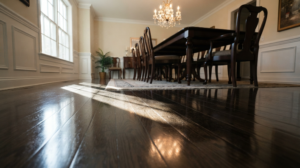
High-gloss floors turn heads. There’s no getting around it. A dark walnut floor with a high-gloss topcoat looks like something out of a design magazine, especially under good lighting.
That shine comes with a trade-off, though.
Where high-gloss actually works
High-gloss earns its keep in low-traffic, design-forward spaces. Think formal dining rooms, a home library, a primary bedroom that sees light foot traffic and heavy design attention. It also shows up a lot in commercial settings like hotel lobbies and boutique retail, where staff mop and buff the floors daily.
We rarely recommend high-gloss for a kitchen, entryway, or family room. Not because it can’t handle wear (it can, structurally) but because every footprint, dust particle and hairline scratch becomes visible almost instantly. Dog nails are especially rough on high-gloss surfaces.
The maintenance reality
I’ll be honest with clients about this one every single time. A high-gloss floor needs more attention than any other sheen.
Dust shows. Streaks from mopping show. Sunlight hitting the floor at a low angle shows every swirl mark left by a vacuum. Some homeowners love the discipline of keeping a showpiece floor spotless. Others find it exhausting within six months.
If you go this route, plan on:
Cleaning with a soft microfiber mop 2 to 3 times a week in high-visibility rooms
Using furniture pads under every chair and table leg
Satin is the finish most Calgary homes end up with and it isn’t close.
It reflects just enough light to keep a room from looking flat, without turning every scuff into a spotlight moment. That balance is why it works across almost any style, from a modern farmhouse kitchen to a traditional character home in Mount Royal.
Why satin is the go-to sheen for busy homes
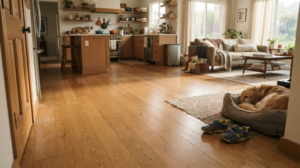
Satin hides what life throws at the floor. Kids, pets, moving furniture, winter boots dragging in salt and grit off the driveway. None of it disappears completely, but it fades into the finish instead of jumping out at you.
Maintenance is simpler too. A regular sweep or vacuum, an occasional damp mop with a wood-safe cleaner and you’re set. Most homeowners we work with go years between deep cleanings and still love how the floor looks.
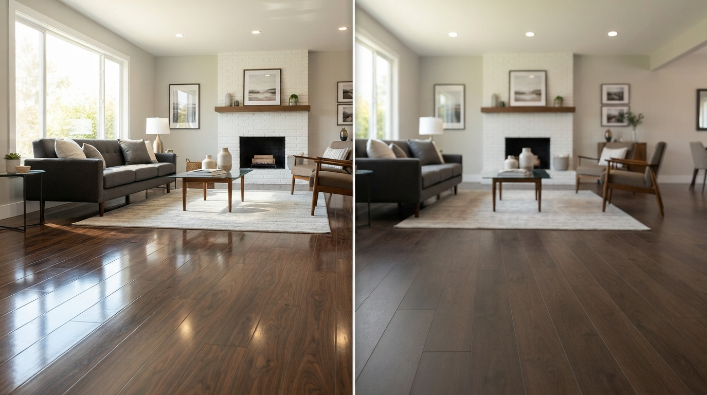
Satin also plays well with Calgary’s seasonal light. Long summer evenings bring harsh, low-angle sun through west-facing windows and a high-gloss floor would throw glare across the whole room. Satin softens that without dulling the wood.
High-gloss vs satin hardwood finish: side-by-side comparison
Factor
High-gloss
Satin
Gloss units
60-90+
35-45
Best rooms
Formal dining, library, low-traffic spaces
Kitchen, living room, hallway, bedrooms
Scratch visibility
High
Low to moderate
Maintenance frequency
Frequent, careful cleaning
Occasional, easy upkeep
Style fit
Formal, dramatic, modern
Fits almost any style, transitional, everyday elegance
Resale appeal
Polarizing, some buyers love it, some don’t
Broadly appealing to most buyers
Light handling
Reflects and can glare
Diffuses light softly
How lighting changes everything
This one gets overlooked constantly. Two identical floors, in two different rooms, can look completely different depending on the light hitting them.
A north-facing room with soft, indirect light can handle a high-gloss finish without much glare. A south or west-facing room with strong afternoon sun will turn that same high-gloss floor into a mirror you can’t look at directly during golden hour.
Before committing to a sheen, walk the room at three different times of day. Morning, midday and evening. Bring a sample board if you can. What looks elegant at 10am can look blinding by 6pm.
Matching sheen to room and traffic
Traffic matters as much as light. Here’s how we typically guide clients room by room:
Entryways and mudrooms: satin or even matte, because grit and moisture do the most damage here
Kitchens: satin, since spills and foot traffic are constant
Living rooms: satin for families, semi-gloss or high-gloss for adults-only formal spaces
Bedrooms: satin for comfort, high-gloss works fine in primary suites with lighter use
Formal dining rooms: high-gloss is a genuinely good fit here, since these rooms see occasional, careful use
If you’re still not sure which category your space falls into, ourhardwood floor refinishing team can walk the room with you and talk through real usage patterns before you commit to anything.
Wood species and stain color change how sheen reads
The same sheen level looks different depending on the wood underneath it.
Darker stains, like espresso or ebony tones, make high-gloss finishes look even more dramatic because the contrast between dark wood and bright reflection is sharp. Lighter woods, like natural white oak, soften that effect since there’s less color contrast to begin with.
Species matters too. If you’re still deciding betweenred oak vs white oak flooring, know that white oak’s tighter, straighter grain tends to look cleaner under high-gloss, while red oak’s busier grain pattern hides more under a satin finish.
And if you haven’t locked in the flooring type itself yet, it’s worth reading up onsolid vs engineered hardwood before choosing a sheen, since some engineered products come pre-finished with limited sheen options.
Oil-based vs water-based finish and how it affects sheen
Sheen level is one decision. The finish type is a separate one and it affects how that sheen actually looks and lasts.
Oil-based polyurethane ambers over time, giving satin and high-gloss finishes alike a warmer, honey-toned cast that deepens with age. Water-based finishes stay clear for years, so the sheen you install is closer to the sheen you’ll see a decade later.
We break this down in more detail in our guide onoil-based vs water-based floor finish, including dry times and VOC differences that matter if anyone in your home has sensitivities.
Cost and lifespan
Sheen level itself doesn’t change the price much. What changes cost is the finish type, the number of coats and how often you’ll need touch-ups.
Not every coating holds up the same way, either. Some product lines are built for high-traffic Calgary homes and others lean more decorative. Our rundown of thebest hardwood flooring brands in Calgary covers which lines actually hold their sheen longest if you want to dig into specifics before your consultation.
High-gloss
Satin
Typical lifespan before recoat
5-8 years (shows wear faster)
8-12 years
Recoat frequency needed
Sooner, due to visible wear
Later
Long-term maintenance cost
Higher
Lower
If a high-gloss floor starts looking tired, a full strip-down isn’t always necessary. Many homes just need a fresh coat throughhardwood floor polishing to bring the shine back without redoing the whole job.
Mistakes homeowners make when choosing a sheen
A few patterns show up again and again on jobs we’ve done across Calgary and the surrounding area.
Picking based on a tiny sample chip. A 6-inch sample under showroom lighting tells you almost nothing about how a full room will look under your actual windows.
Choosing high-gloss for a family home with kids or pets, then regretting it within a year. This is the single most common callback we get.
Assuming sheen determines toughness. It doesn’t. A well-applied satin finish holds up just as well structurally as high-gloss. The difference is purely visual.
Not asking how the finish will age. Oil-based finishes darken. That amber shift changes how a sheen reads over 5 years and skipping this conversation leads to surprises down the road.
Forgetting about pets before the sheen goes down. A large dog with untrimmed nails on a high-gloss floor is a recipe for visible scratching within the first winter. If you’ve got a dog that isn’t going anywhere, satin (or even matte in high-traffic zones) is almost always the smarter call, no matter how good the high-gloss sample looked in the showroom.
If your existing floor is showing its age and you’re weighing whether to touch it up or start over, our piece onhardwood floor polishing vs refinishing breaks down exactly when each option makes sense.
Testing a sheen before you commit
Don’t trust a 4-inch sample chip taped to a wall. I’ve seen too many homeowners make a final call based on one tiny piece of wood under one type of light.
Here’s what actually works:
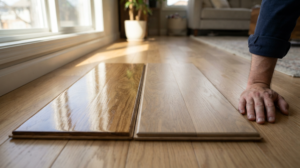
Get a sample board at least 12 by 12 inches, not a paint-chip-sized swatch
Lay it flat on the actual floor, not propped against a wall
Look at it barefoot, from standing height and from a chair, since your eye level changes how sheen reads
Leave it in the room for at least 24 hours so you catch morning and evening light
Take a photo on your phone under each lighting condition and compare them side by side later
This sounds like overkill until you’ve watched a client fall in love with a floor in the store, then call two weeks after installation because the glare in their kitchen window is driving them up the wall. A day of testing saves months of regret.
DIY vs hiring a professional for sheen selection
Plenty of homeowners handle their own painting, their own tiling, even their own deck staining. Hardwood finish is different and the sheen decision is only half the story.
Applying a high-gloss topcoat evenly is genuinely hard. Every roller mark, every missed spot, every bit of dust that settles before the coat cures becomes visible under that much reflection. Satin is more forgiving of small application errors, but even then, getting consistent coverage across a large room without lap marks takes practice.
A professional crew also knows how local humidity and temperature affect cure time, which matters more in Calgary than people expect given how dry our winters get and how much that dryness can affect drying and adhesion.
If you’re leaning toward doing it yourself, at minimum have a professional walk the space with you first so the sheen choice itself is solid before you start applying anything.
How Arbutus Hardwood helps Calgary homeowners choose
We’ve refinished floors in century homes in Inglewood and brand-new builds in the southeast communities and the sheen conversation comes up on nearly every project.
Our process is simple. We look at the room’s light, the household’s traffic, the wood species and your design goals, then bring physical samples so you can see the finish in your actual space, not a showroom. For homeowners worried about dust during the process, we also offerdustless hardwood floor refinishing, which keeps the mess contained while the work gets done.
The bottom line
High-gloss brings drama and works best in formal, low-traffic rooms where you’re prepared for regular upkeep. Satin brings everyday practicality and handles the wear and tear of real life without much fuss.
Most Calgary households land on satin and for good reason. But if you’ve got a dining room or study that deserves a little theatre, high-gloss earns its place there too.
If you’re still weighing your options, bring us your floor plan and we’ll walk through samples in your actual lighting. Reach out to Arbutus Hardwood Floors and we’ll help you land on the sheen that fits how your home actually gets used, not just how it looks in a showroom.
Contact us to book a free in-home consultation. We’ll bring the samples, you bring the coffee.
Yes and a lot of homeowners do exactly this. High-gloss in a formal dining room, satin everywhere else, is a common and visually smooth combination as long as the rooms are separated by a doorway or clear transition.
It can help, since the reflection bounces more light around the space. Satin does something similar with less glare, so it's often the safer bet for small, light-starved rooms.
Satin remains the top-selling sheen across most of North America. It isn't a trend. It's the practical middle ground that most households genuinely need.
The finish itself doesn't scratch more easily. What happens is that scratches on high-gloss show up faster to the eye because of how much light bounces off the surface, even hairline ones.
In most cases, yes. Moving from high-gloss down to satin, or the other way around, usually just requires a screen and recoat rather than a full sand-down, assuming the wood itself is still in good shape.
How to choose a hardwood flooring contractor in Calgary Learn how to choose a hardwood flooring contractor in Calgary by checking experience, insurance, past projects and written quotes before you hire. Contact Us Your floors will be under your feet for 20 years or more. The person you hire to…
Hardwood Flooring Cost in Calgary: What You’ll Actually Pay Planning your project but unsure about hardwood flooring cost in Calgary? This guide explains installation, refinishing, and repair expenses to help you plan your flooring budget. Contact Us If you’re planning to install, repair, or refinish hardwood flooring in Calgary, understanding…
Matte vs gloss hardwood flooring: which finish is right for your home? Matte vs gloss hardwood flooring, see which finish suits Calgary homes best for durability, style & upkeep. Get expert advice from Arbutus Hardwood. Contact Us Matte vs gloss hardwood flooring feels like a small decision until you’re standing…