How Long Does Hardwood Floor Refinishing Take? (Calgary Guide)
Dealing with water-damaged hardwood floors? Our flooring specialists can assess the damage, recommend the right repair solution, and restore your floors to their original beauty. From minor stains and cupping to warped boards and deeper moisture damage, we use proven restoration techniques and premium materials to deliver results that last. And if you’re already wondering how long does hardwood floor refinishing take once the repair is done, most projects wrap up in just 2 to 5 days, so you won’t be without your floors for long.
If you’re planning hardwood floor refinishing in Calgary, the first question on your mind is probably simple: how long will this take?
It’s a fair question. You need to plan around it. Maybe you’re hosting a family event, selling your home soon, or just want your floors back so you can move around your house normally again.
The short answer: most hardwood floor refinishing projects take 2 to 5 days, depending on the size of the space and the condition of your floors.
But the real answer has a lot more detail in it, and that detail actually matters. It affects how you plan your week, where you sleep, and what you should expect from your contractor.
In this guide, we’ll walk through the full timeline step by step, what speeds the process up, what slows it down, and how to plan your project in Calgary and nearby areas like Airdrie, Okotoks, Cochrane, De Winton, Priddis, and Chestermere.
Average Timeline for Hardwood Floor Refinishing
Let’s start with the numbers, since that’s usually what people want first. To help you visualize the week, here is how a typical project breaks down day by day.
Project Phase
Estimated Duration
Key Homeowner Takeaway
Furniture Removal & Prep
Half a Day
The area must be completely clear; high noise levels begin.
Sanding
1 to 2 Days
Loudest and messiest phase; dustless systems recommended.
Staining (Optional)
Half a Day
Required only if you are changing the floor color.
Applying Finish Coats
1 to 2 Days
2 to 3 coats are applied; strictly zero foot traffic allowed.
Drying & Curing
24 Hours to 2 Weeks
Safe for socks in 24 hours; wait on rugs and pets.
Add it all up, and a single room usually takes 1 to 2 days. A full main floor or an entire house can take 3 to 5 days.
Bigger homes, homes with detailed inlays, or floors with heavy damage sometimes take longer. It’s not a race. A floor done right the first time saves you money and stress down the road.
The Full Refinishing Process, Step by Step
It helps to understand what actually happens during those days. Here’s the process broken down.
Step 1: Inspection and Prep
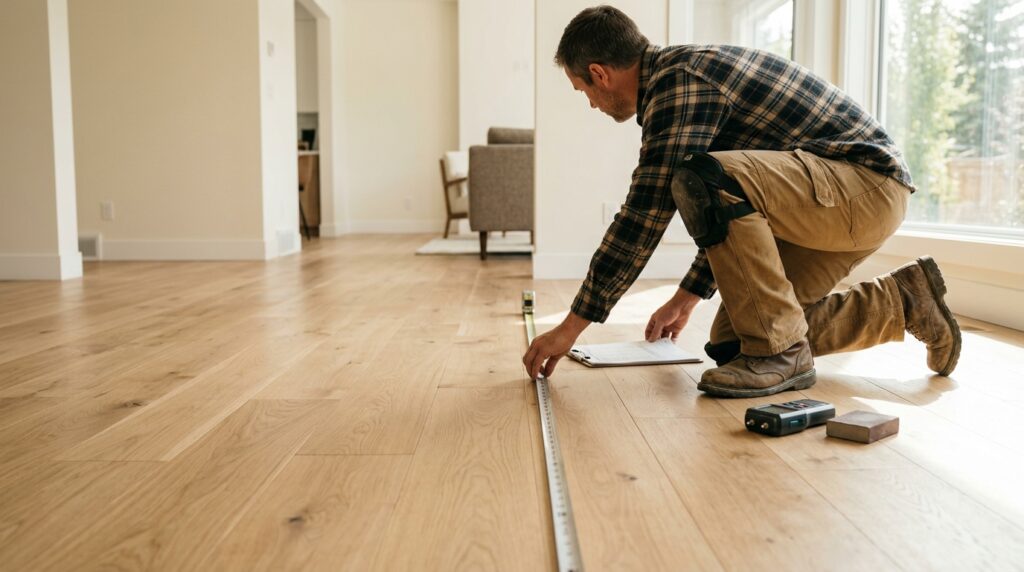
Before any sanding starts, your contractor checks the floor for loose boards, nail heads sticking up, gaps, or water damage.
If there’s damage, that needs to be addressed first, sometimes through hardwood floor repair rather than a quick fix. If the damage is from a leak or spill, it’s worth reading up onhow to repair water-damaged hardwood floors so you know what to expect before work begins.
This step also includes removing furniture, rugs, and floor vents, and sealing off the work area from the rest of your home. This stage usually takes half a day for an average room, longer for a full house.
Step 2: Sanding
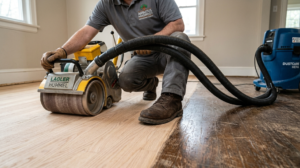
Sanding removes the old finish and any surface damage. It’s usually done in a few passes, starting with a coarse grit and moving to a finer one.
This step is the loudest and messiest part of the job, though dustless systems cut down on the mess significantly. Sanding a single room usually takes about a day.
A full house can take two days or more. This is especially true if the old finish is thick or the floor has deep scratches.
Step 3: Staining
If you’re changing the color of your floor, staining happens after sanding.
This step needs to dry fully before the finish coats go on. This usually adds half a day to a full day, depending on humidity and the type of stain used.
If you’re keeping the natural wood tone, you can skip this step entirely and move straight to the finish.
Step 4: Applying the Finish
This is where the floor gets its protective finish coating, which protects the wood from scratches, moisture, and everyday wear. Most floors get two to three coats.
Each coat needs to dry before the next one goes on. This is usually the longest part of the whole project, because you can’t rush drying time without risking a poor finish.
Oil-based finishes generally need a full day to dry between coats. Water-based finishes dry faster, sometimes in just a few hours, which can shave a day or more off your total timeline.
Drying and curing aren’t the same thing. Drying means the surface feels safe to walk on. Curing means the finish has fully hardened.
Most floors are safe to walk on in socks within 24 hours, but full curing can take up to two weeks. This is why contractors usually ask you to avoid rugs, heavy furniture, and pets with sharp nails for a little while after the job wraps up.
🛠️ Planning a refinishing project in the Calgary area? Let’s map out a timeline specific to your home’s unique square footage and needs.Get a local expert consultation here.
What Affects How Long Refinishing Takes
A few factors can add real time to your project. Knowing these ahead of time helps you set the right expectations.
Size of the Area: This one’s obvious, but worth repeating. A small bedroom refinishes faster than an open-concept main floor. More square footage means more sanding passes and more drying time between coats.
Condition of Your Existing Floors: If your floors have deep scratches, dark stains, or years of old finish buildup, they need extra sanding passes to get down to clean wood. If you’re dealing with actual water damage, that’s a different kind of repair altogether, and it’s worth handling that separately before you book a refinish.
Type of Finish You Choose: Oil-based finishes take longer to dry between coats, sometimes a full day each. Water-based finishes dry faster, which can shorten your total project time. Each option has its own trade-offs beyond just speed, including durability, smell, and how the final color looks.
Number of Coats: Most floors get two to three coats of finish. Higher-traffic homes, or homes with kids and pets, sometimes need an extra coat for durability. Each additional coat adds drying time to the schedule.
Weather and Humidity: Calgary’s dry climate actually works in your favor here. Low humidity generally helps finishes cure faster compared to more humid cities. That said, during winter, indoor heating can dry the air out even more, which sometimes affects how evenly a finish sets. An experienced contractor knows how to adjust for this.
Dustless vs Traditional Sanding: Dustless refinishing systems contain the dust with a vacuum attachment connected directly to the sanding equipment. This keeps the mess down and often keeps the whole process moving faster, since there’s less cleanup needed between steps and less dust settling back onto wet finish.
Can You Stay Home During the Refinishing Process?
This is one of the most common questions homeowners ask, right after “how long will it take.” The honest answer depends on the size of the job and your comfort level.
Sanding is loud and can create dust, even with dustless systems. Finish coats also have a noticeable smell, especially oil-based ones, while they’re drying.
Many homeowners do stay home during smaller jobs, especially if only one or two rooms are being done and the rest of the house stays livable.
For full-house refinishing projects, some people choose to stay elsewhere for a couple of nights. This is particularly helpful while finish coats are drying, just for comfort and to avoid walking through wet or tacky floors by accident.
Can You Speed Up the Process?
A little, yes. Here’s what actually helps:
Clear the room of furniture, rugs, and small items before the crew arrives.
Choose a water-based finish if drying time matters most to you.
Confirm the number of coats upfront, so there are no surprise delays mid-project.
Avoid last-minute layout or color changes once work has started.
Keep pets and kids out of the work area during sanding and finishing.
What Slows It Down
Old, thick layers of finish that need extra sanding passes.
Sudden humidity swings during the finishing stage.
Adding stain color changes midway through the project.
Skipping proper dry time between coats, which can ruin the final result.
Hidden water damage discovered partway through sanding.
Common Mistakes That Extend the Timeline
Rushing the process is one of the most common mistakes homeowners run into. It usually costs more time and money to fix later than it would have taken to just wait it out the first time.
Walking on floors too soon, moving furniture back too early, or choosing the cheapest possible finish without asking about dry time are all small decisions that can lead to bigger delays or redo work.
Another mistake is skipping the hardwood floor polishing option when it’s actually all your floor needs. Not every floor needs a full sand-and-refinish.
If your floor just looks dull but isn’t damaged, it might only need a polish, which takes far less time. It’s worth readinghardwood floor polishing vs refinishing before you commit to the longer process.
Planning Your Project in Calgary and Nearby Areas
If you live in Calgary or nearby communities like Okotoks, De Winton, Priddis, Airdrie, or Cochrane, your timeline will look about the same across the board.
Local weather, home age, and floor condition play the biggest role in how long your project takes, not your specific neighborhood. Calgary’s dry climate is generally a plus for curing time, no matter where in the region you’re located.
If you’re not sure whether your floors need a full refinish or just a polish, it helps to get a professional opinion first. It can save you both time and money, and it changes your whole timeline.
And if your existing hardwood is beyond saving, it’s worth asking aboutcustom hardwood floor options instead of refinishing an old floor past its prime.
How to Maintain Your Floors After Refinishing
Once the work is done, a little care goes a long way. Avoid placing rugs or furniture back for at least 24 to 48 hours, longer if your contractor recommends it.
Use felt pads under furniture legs once you do move things back. Sweep or vacuum regularly, and avoid wet mopping for the first couple of weeks while the finish fully cures. This keeps your new finish looking sharp for years instead of months.
A Simple Way to Think About the Timeline
Refinishing isn’t a rushed job, and that’s actually a good thing. A floor that’s sanded properly and given the right drying time between coats will last for years without needing attention again.
Think of the few days of inconvenience as an investment in a floor that won’t need touching up again for a long time.
Final Thoughts
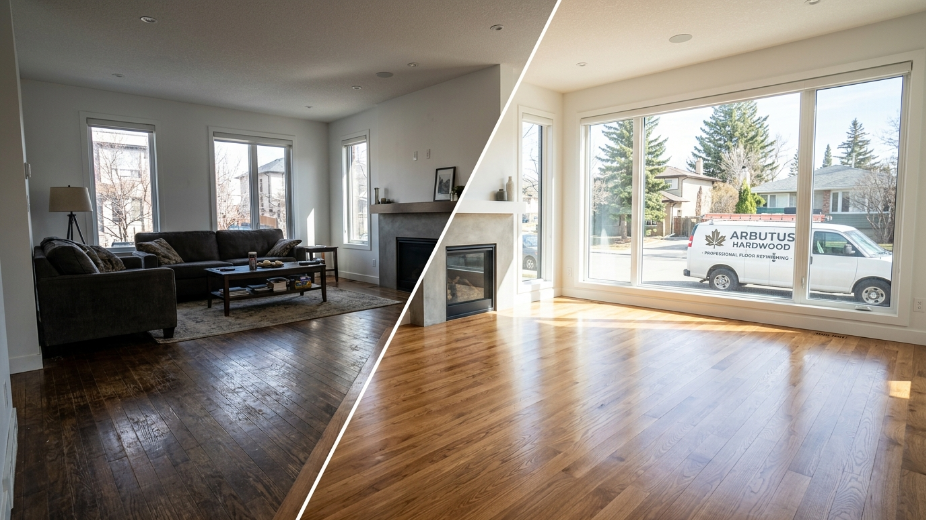
Refinishing your hardwood floors is a short-term inconvenience for a long-term result. Most projects wrap up within a week, and the wait is worth it once you see the finished floor looking new again.
If you’re ready to get a timeline specific to your home, our team serves Calgary and surrounding areas including Okotoks, Priddis, De Winton, Airdrie, and Cochrane, and we’re happy to walk you through the entire process from start to finish.
A full main floor or whole house typically takes 3 to 5 days, depending on square footage and floor condition. Larger or more damaged floors can take longer.
You can usually walk carefully in socks after 24 hours, but full curing can take up to 2 weeks. Avoid heavy furniture or rugs until your contractor gives the go-ahead.
Yes, for smaller jobs many homeowners stay home comfortably. For full-house projects, some people prefer to stay elsewhere for a night or two while the finish dries, mainly for comfort.
How to choose a hardwood flooring contractor in Calgary Learn how to choose a hardwood flooring contractor in Calgary by checking experience, insurance, past projects and written quotes before you hire. Contact Us Your floors will be under your feet for 20 years or more. The person you hire to…
Hardwood Flooring Cost in Calgary: What You’ll Actually Pay Planning your project but unsure about hardwood flooring cost in Calgary? This guide explains installation, refinishing, and repair expenses to help you plan your flooring budget. Contact Us If you’re planning to install, repair, or refinish hardwood flooring in Calgary, understanding…
Matte vs gloss hardwood flooring: which finish is right for your home? Matte vs gloss hardwood flooring, see which finish suits Calgary homes best for durability, style & upkeep. Get expert advice from Arbutus Hardwood. Contact Us Matte vs gloss hardwood flooring feels like a small decision until you’re standing…
Dealing with water damage doesn’t always mean replacing your entire hardwood floor. Our water damaged hardwood repair specialists can assess the extent of the damage, recommend the most effective repair solution, and restore your floors with lasting results. Whether you’re facing cupping, buckling, stains, or warped boards, contact us today for expert repairs that protect your investment and bring your hardwood floors back to life.