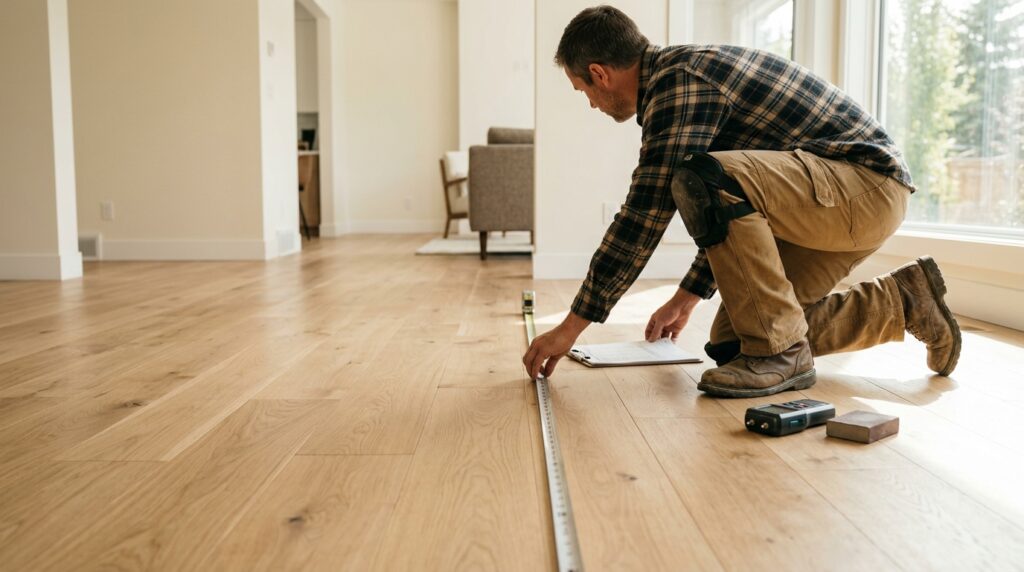
Proper maintenance after refinishing is essential to protect your investment and prevent early damage. This complete guide covers curing timelines, safe cleaning practices, and climate care to help you maintain hardwood floors after refinishing for long-lasting shine.
Getting your hardwood floors refinished is one of the best upgrades you can make to your home. The wood looks new again, the scratches are gone, and that fresh coat of finish brings out a warmth that old, worn floors just can’t match.
But here’s the part a lot of homeowners miss: what you do in the days and months after refinishing matters just as much as the refinishing job itself. A brand new finish is actually more vulnerable than you’d think, and a few wrong moves in the first month can undo weeks of careful sanding and coating.
If you’re wondering how to maintain hardwood floors after refinishing so they stay beautiful for years instead of months, this guide covers the curing period, daily care, long-term protection, and the mistakes that quietly wreck a fresh finish.
Most of what damages a new finish early on isn’t dramatic. It’s small, everyday things like moving furniture back too soon, using the wrong cleaner, or not accounting for Calgary’s dry winters. None of these mistakes are obvious until months later, when you notice dull patches, faint scratches, or gaps between boards that weren’t there before. The good news is that almost all of it is avoidable once you know what to watch for.
Understanding the Curing Process: Water-Based vs Oil-Based Finish Cure Time
This is where most confusion starts, so it’s worth clearing up first.
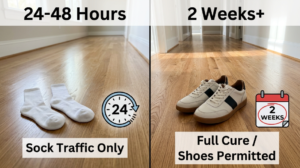
There’s a difference between a floor being dry and a floor being fully cured. Most water-based finishes feel dry to the touch within a few hours, and you can usually walk on the floor in socks within 24 hours. Some homeowners are told it’s safe to walk on in as little as 3 to 4 hours after the final coat.
But “walkable” isn’t the same as “ready for normal life.” The finish is still hardening underneath the surface, and that process can take 7 to 14 days for water-based finishes, and up to 30 days for oil-based ones. If you’re weighingoil vs water based finishes for your Calgary home, cure time is one of the biggest practical differences between the two. During this window, the finish is soft enough to scuff, dent, or scratch far more easily than once fully cured. This is exactly why homeowners who move furniture back too soon often see marks appear almost immediately.
Quick Curing Timeline & Walkability
Time After Final Coat
What You Can Do
3–4 hours
Walk on the floor in socks or bare feet
24–48 hours
Light foot traffic, no hard-soled shoes
5–7 days
Move light furniture carefully, avoid rugs
14 days
Place rugs and mats (with caution)
30 days
Resume completely normal use, deep cleaning
If your floor was finished with an oil-based product, add extra time to each step above. When in doubt, ask your installer what product they used and how long they recommend waiting.
The First 30 Days: Critical Care Rules & How Long After Refinishing Floors Can You Put Furniture Back
Think of the first month as a probation period for your floor. It looks finished, but it hasn’t fully hardened yet, and it needs a bit of extra care.
Keep rugs and mats off direct sunlight areas: Placing rugs down too early, especially in sunny spots, can trap moisture or create uneven fading once the rug is removed. Wait at least two weeks, and avoid heavy rubber-backed mats until the floor has cured.
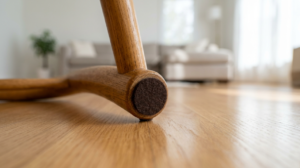
Never drag furniture across the floor: This causes more damage than almost anything else. Dragging a couch, table, or bookshelf across a curing floor can gouge straight through the finish. Instead, lift furniture completely when moving it, use felt pads on every leg, and use a rubber-wheeled dolly for heavier pieces.
Keep blinds and curtains closed: Direct UV exposure during curing can cause uneven color development across the room.
Rotate items occasionally: Rugs, plants, or furniture left in one spot for weeks can leave faint discoloration once moved. Shifting items every so often during the first couple of months avoids obvious sun-bleaching patterns.
Be careful with tape: If you need to tape down protective paper during a move, use only low-tack painter’s tape and remove it within a few hours. Regular tape can pull up the finish.
Daily and Weekly Hardwood Floor Cleaning Routine
Once your floor is past the initial curing period, the goal shifts from protection to ongoing maintenance. A consistent, gentle cleaning routine is the single biggest factor in how long your refinish actually lasts.
Daily Cleaning Habits:
Sweep or dry-mop with a microfiber cloth to remove grit before it gets ground into the finish
If vacuuming, use the hardwood attachment, never the rotating beater bar
Wipe up spills immediately with a soft, absorbent cloth
Weekly Deep Cleaning Routine:
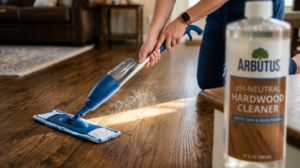
Use the best cleaner for refinished hardwood floors (specifically formulated for hardwood, never an all-purpose cleaner or vinegar solution)
Apply cleaner to a damp microfiber mop rather than pouring it directly onto the floor
Avoid soaking the floor. Standing water is one of the fastest ways to damage wood, even freshly refinished wood
What to Avoid Completely:
Steam mops: the heat and moisture can break down the finish and even affect the wood underneath
Vinegar and water mixes: vinegar is acidic and can dull a fresh finish over time
Wax-based products: these build up on modern finishes and make future recoats harder
If your floor already has water exposure or staining from a spill that sat too long, it’s worth reading up on how to repair water-damaged hardwood floors before trying a DIY fix, since some water damage looks minor on the surface but runs deeper into the boards.
Once you’re past the first few months, maintenance becomes more about prevention than reaction.
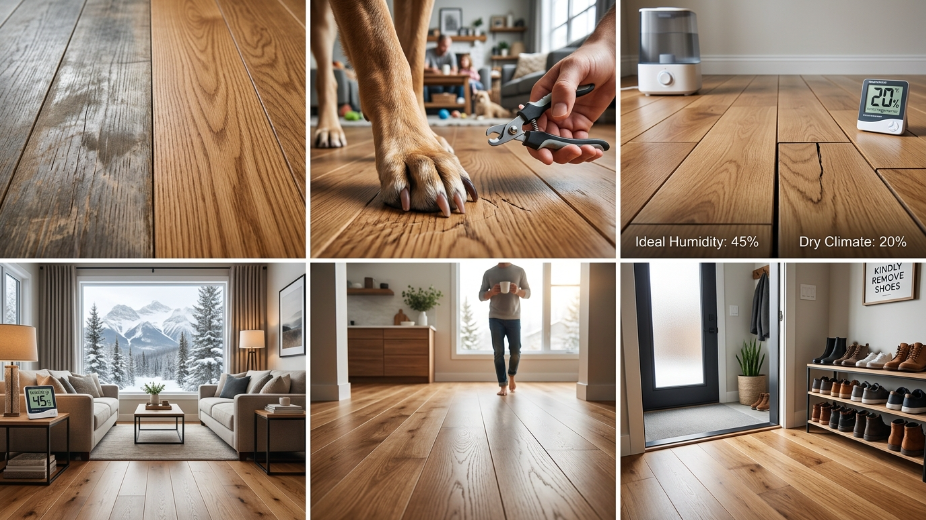
Control indoor humidity: Wood expands and contracts with humidity changes. In Calgary’s climate, with dry winters and humid summers, this movement can eventually cause gaps between boards or, in more extreme cases, cupping and warping. The National Wood Flooring Association recommends keeping indoor relative humidity between 35% and 55% and temperature between 60°F and 80°F year-round to keep wood flooring performing as it should.
Manage sun exposure. UV rays don’t just fade the finish, they can fade the wood itself over time, creating visible patterns where furniture or rugs block the light. UV-filtering window film or simply keeping blinds partially closed during peak sun hours slows this down.
Protect high-traffic areas. Entryways, hallways, and kitchen walkways take the most abuse. Use walk-off mats at exterior doors, consider a no-shoes policy, and check furniture pads periodically since they wear down over time.
Living with pets. Dog nails in particular can leave fine scratches across a finish faster than almost anything else in the house. Keep nails trimmed short, wipe paws before pets come inside, and consider keeping high-energy play off the hardwood.
Maintenance Coat vs. Full Refinish: Which Do You Need?
This is one of the most common questions homeowners have a few years after refinishing.
A maintenance coat, sometimes called a screen-and-recoat, adds a fresh layer of finish on top of the existing one without sanding down to bare wood. It’s fast, usually done in a single day, and roughly a third of the cost of a full refinish. It only works if the existing finish hasn’t worn through to raw wood.
A fullhardwood floor refinishing involves sanding the floor down completely and starting over, which becomes necessary once the wood itself is exposed or the damage runs too deep for a surface-level fix. If you’re not sure which one your floor needs, a quick inspection is usually the fastest way to find out and to get an accurate sense of cost before committing either way.
How to Tell Which One You Need
Sign
Likely Fix
Dull finish, light surface scratches
Maintenance coat / polishing
Water spots or minor surface discoloration
Maintenance coat
Bare wood visible in high-traffic spots
Full refinish
Deep gouges, stains, or board damage
Hardwood floor repair
Floor hasn’t been recoated in 5+ years
Inspection recommended
As a general rule, a maintenance coat every 3 to 5 years extends the life of your floor significantly and delays the need for a full, more expensive refinish. Waiting until the finish wears through to bare wood almost always means you’ve missed the window for the cheaper option.
When to Handle Maintenance Yourself vs. Calling a Hardwood Professional
Day-to-day care, sweeping, mopping, humidity control, is something every homeowner can and should handle on their own. It doesn’t require special tools or training, just consistency.
Where it makes sense to bring in a professional is anything that touches the finish itself. Screen-and-recoat work, buffing out deeper scratches, or assessing whether a water-damaged area needs board replacement all require judgment that’s hard to get right on the first try. A DIY recoat gone wrong, using the wrong abrasion level or an incompatible product, can actually make the floor harder to fix later.
If you’re weighing a DIY approach against calling someone in, it also depends on the type of flooring you have. For example, homeowners comparingnail-down vs glue-down hardwood flooring often find that the installation method affects how forgiving the floor is of minor repairs, which is worth understanding before attempting anything beyond basic cleaning.
A good rule of thumb: if the fix involves sanding, staining, or reapplying finish, it’s worth getting a professional opinion first, even if you end up doing some of the prep work yourself.
Common Mistakes That Damage a Fresh Refinish
Even careful homeowners make a few of these without realizing it:
Moving back in too fast: rushing furniture and rugs back before the cure period ends is the top cause of early damage
Using the wrong cleaner: vinegar and all-purpose cleaners slowly dull and degrade the finish
Skipping felt pads: a single chair dragged without pads can leave a mark that lasts for years
Ignoring humidity swings: many homeowners don’t connect seasonal gapping to humidity until it’s already happened
Waiting too long for a maintenance coat: letting the finish wear through means paying for a full refinish that could’ve been avoided
Letting spills sit: even a small puddle left overnight can leave a permanent water mark.
Final Thoughts
Knowing how to maintain hardwood floors after refinishing really comes down to two things: patience during the curing period, and consistency afterward. Give the finish time to fully harden before moving furniture and rugs back in, stick to the right cleaning products, and stay ahead of wear with a maintenance coat every few years instead of waiting for damage to show.
Done right, a refinished hardwood floor can look great for well over a decade before it needs sanding again. If you’re not sure whether your floor needs a simple maintenance coat,polishing, or a fullrefinish, it’s worth getting a professional opinion before small issues turn into bigger, more expensive ones.
Have questions about your specific floor, or ready to schedule a maintenance coat before the next season change?Contact Arbutus Hardwood for a quick assessment and a straightforward recommendation.
Most water-based finishes are safe to walk on in socks within 3 to 4 hours, but full cure time takes 1 to 2 weeks. Avoid shoes and heavy foot traffic during that window.
It's best to wait at least two weeks before placing rugs, and avoid rubber-backed mats until the floor has fully cured, since they can trap moisture against the finish.
A pH-neutral cleaner made specifically for hardwood floors is the safest choice. Avoid vinegar, oil soaps, and any cleaner with wax, as these can dull or damage the finish over time.
Yes. Wood naturally expands and contracts with humidity changes, and keeping indoor levels between 35% and 55% helps prevent gaps, cupping, or warping over time, especially through Calgary's dry winters.
No. Steam mops introduce heat and moisture that can break down the finish and potentially damage the wood underneath, even on floors that were recently refinished.
How to choose a hardwood flooring contractor in Calgary Learn how to choose a hardwood flooring contractor in Calgary by checking experience, insurance, past projects and written quotes before you hire. Contact Us Your floors will be under your feet for 20 years or more. The person you hire to…
Hardwood Flooring Cost in Calgary: What You’ll Actually Pay Planning your project but unsure about hardwood flooring cost in Calgary? This guide explains installation, refinishing, and repair expenses to help you plan your flooring budget. Contact Us If you’re planning to install, repair, or refinish hardwood flooring in Calgary, understanding…
Matte vs gloss hardwood flooring: which finish is right for your home? Matte vs gloss hardwood flooring, see which finish suits Calgary homes best for durability, style & upkeep. Get expert advice from Arbutus Hardwood. Contact Us Matte vs gloss hardwood flooring feels like a small decision until you’re standing…