How Long Does Hardwood Floor Installation Take in Calgary?
Hardwood floor installation time in Calgary typically ranges from 1 to 5 days for installation, plus 3 to 7 days for proper acclimation before work begins. The exact timeline depends on factors like your flooring type, home size, subfloor condition, and the complexity of the project. This guide explains every stage so you know exactly what to expect.
If you’re planning new floors, the first question is almost never about wood species or finish. It’s this: how long is my house going to be turned upside down?
Fair question. Hardwood floor installation time in Calgary usually runs 1 to 5 days for the actual installation, plus 3 to 7 days of acclimation before anyone even picks up a hammer. For a full-home project, total project time (delivery to final walkthrough) often lands somewhere between one and two weeks.
But that range hides a lot of detail, and the “it depends” answer that most flooring sites give you isn’t very useful when you’re trying to book time off work or figure out when the movers should show up. So this guide breaks down exactly what happens at each stage, what stretches the timeline, and why Calgary’s climate specifically plays a bigger role here than most articles mention.
How Long Does Hardwood Floor Installation Really Take?
Before we get into the step-by-step process, here’s the short version most homeowners actually want:
Project Size
Installation Time
Total Time (incl. Acclimation)
Single room (up to 300 sq ft)
1 day
4–8 days
Multiple rooms (500–1,000 sq ft)
1–2 days
5–10 days
Main floor (1,000–2,000 sq ft)
2–4 days
7–12 days
Whole home (2,000+ sq ft)
3–5 days
10–14 days
Baseline Speed: A two-person installation crew typically covers 750 to 1,000 square feet per day under normal conditions, open layout, no major obstacles, no pattern work. That number is the baseline everything else in this article adjusts up or down from.
Understanding what actually happens during each phase makes the total timeline make a lot more sense.
Step 1: In-Home Consultation and Measurement
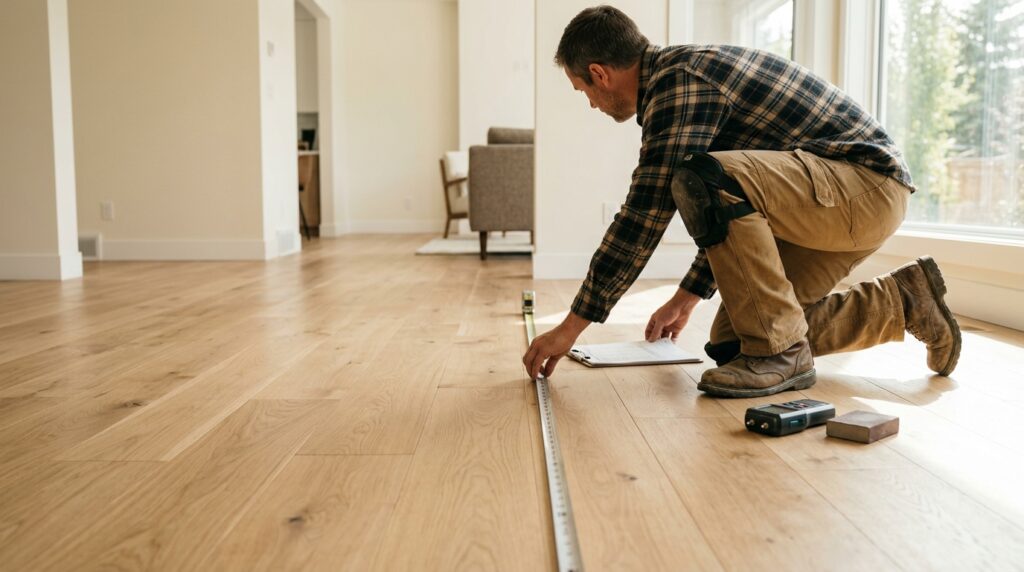
Most projects start with a walkthrough where a professional measures the space, checks the subfloor, and helps you settle on a wood type. This usually takes an hour or two and happens days or weeks before installation begins. If you’re comparing companies for hardwood floor installation in Calgary, this is also the point where you’ll get an honest, project-specific timeline instead of a generic estimate.
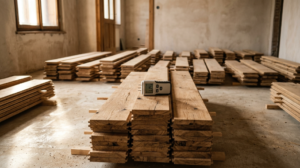
Acclimation means letting the wood adjust to the humidity and temperature of your home before it’s installed. Skip this step, and you risk gaps, cupping, or buckling months later.
Solid hardwood generally needs 5 to 7 days to acclimate. Engineered hardwood is more dimensionally stable and often needs only 1 to 3 days. This stage follows the standards laid out in the NWFA installation guidelines , which require the wood’s moisture content to fall within a small percentage of the subfloor’s moisture content before installation can safely begin.
Here’s the part most guides skip: Calgary’s climate makes this step more important than it is in milder regions. Winters here are extremely dry, and chinook winds can swing temperature and humidity dramatically within 24 hours. That combination stresses wood flooring more than a steady, humid climate would. Rushing acclimation in a Calgary home is one of the most common reasons floors develop problems within the first year.
Step 3: Old Flooring Removal
If you’re replacing carpet, tile, or old hardwood, this adds time before the new floor can go down. Carpet removal is quick, usually 2 to 4 hours for an average room. Tile and old hardwood removal takes longer, sometimes a full day for larger areas, since it often involves scraping adhesive or dealing with nails.
Step 4: Subfloor Preparation
The subfloor needs to be clean, level, dry, and structurally sound. Squeaks, soft spots, or uneven areas need to be fixed before installation starts. This is one of the biggest wildcards in any timeline. A subfloor in good shape adds almost no time. One with hidden moisture damage or serious leveling issues can add one to two extra days, sometimes more.
If your existing floor shows signs of water damage or structural issues before you even get to this stage, it’s worth having a hardwood floor repair assessment done first, rather than discovering the problem mid-installation.
Step 5: Installation Day(s)
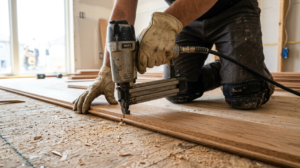
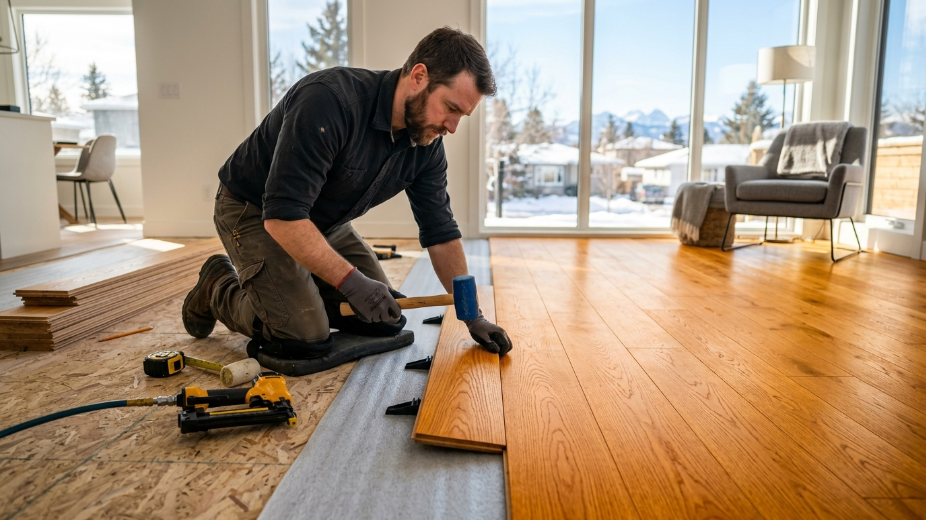
This is the main event. Installers lay, cut, and secure the planks using whichever method fits your flooring type: nailing, gluing, or floating. For a straightforward room with no major obstacles, this can be done in a single day. Larger or more complex spaces take longer, and we’ll cover exactly why in the next section.
Step 6: Finishing (If You Chose Unfinished Hardwood)
If you went with site-finished hardwood, the floor gets sanded, stained (if desired), and sealed with multiple coats of finish after installation. Each coat needs drying time, usually 24 hours, and most floors need two to three coats. This adds 2 to 4 extra days compared to prefinished flooring, which arrives ready to walk on.
Step 7: Final Walkthrough and Cleanup
Once everything is installed and cured enough to walk on, your installer should do a final walkthrough with you, check for any gaps or issues, and clean the site. This is usually quick, under an hour for most homes.
What Affects Hardwood Floor Installation Time?
Two projects of the same square footage can take very different amounts of time. Here’s what actually moves the needle.
Solid vs. Engineered Hardwood:
Solid hardwood needs longer acclimation and is more sensitive to humidity swings, which matters more in a Calgary winter than almost anywhere else in Canada. Engineered hardwood is built with cross-layered cores that resist movement, so it acclimates and installs faster. If you’re still deciding between the two, thissolid vs engineered hardwood comparison breaks down how each performs in Alberta homes specifically.
Installation Method (Nail-Down, Glue-Down, or Floating):
The method you choose changes both the install speed and the skill required. Nail-down is the traditional approach for solid wood and takes longer per square foot. Glue-down requires curing time for the adhesive. Floating floors, often used with engineered wood, go down fastest since planks click together without nails or glue. If you’re weighing your options, this guide onnail-down vs. glue-down hardwood floors walks through the trade-offs in more detail.
Prefinished vs. Unfinished Flooring:
Prefinished floors arrive stained and sealed from the factory, so you can walk on them almost immediately after installation. Unfinished flooring needs onsite sanding and finishing, which is where most of the extra days in a “site-finished” project come from.
Room Layout and Obstacles:
Open, rectangular rooms are the fastest to install. Add cabinets, fireplaces, closets, or staircases, and the crew has to cut around each one individually. A staircase alone can add a full day, since each step is essentially its own custom installation.
Pattern Choice:
Standard straight-plank installation is the quickest layout. Herringbone or parquet patterns require significantly more precision and cutting, and can take two to three times longer than a standard install for the same square footage.
Subfloor Condition:
As mentioned earlier, this is often the biggest hidden variable. A flat, dry, structurally sound subfloor barely affects your timeline. A damaged or uneven one can turn a two-day job into a four-day job.
Removing Old Flooring:
Multiple layers of old flooring, stubborn adhesive, or nails left behind from a previous install all add hours to the prep stage before new hardwood can even be laid down.
Hardwood Floor Installation Time by Type
Hardwood Type
Typical Acclimation
Typical Installation Speed
Best For
Solid Hardwood (Nail-Down)
5–7 days
750–1,000 sq ft/day
Traditional homes, long-term durability
Engineered Hardwood (Floating/Glue)
1–3 days
800–1,200 sq ft/day
Faster projects, basements, radiant heat
Prefinished Hardwood
Same as above by type
Same as above, no added finishing time
Homeowners wanting quick move-back-in
Unfinished Hardwood
Same as above by type
Add 2–4 days for onsite sanding/finishing
Custom stain matching, high-end finishes
Hardwood Floor Installation Time vs. Cost: A Quick Reality Check
Time and cost move together more than most homeowners expect. Faster installation methods, like floating engineered floors, tend to cost less in labour hours. Longer processes, like unfinished solid hardwood with a custom pattern, cost more partly because of the extra days involved in sanding, staining, and curing.
If your quote seems to have a wide time range, ask your installer to break down which stage (acclimation, subfloor repair, or finishing) is driving that range. A detailed, honest breakdown is a good sign you’re working with a professional rather than getting a rough guess.
How to Speed Up Your Hardwood Floor Installation
A few things are within your control, and they genuinely shave time off the process:
Clear the space before installers arrive: Moving furniture yourself instead of having the crew do it can save hours per room.
Book your consultation early: Ordering flooring and starting acclimation ahead of time means installation day isn’t delayed waiting on materials.
Get your subfloor checked in advance: Catching problems before installation day avoids mid-project surprises.
Choose prefinished flooring: Ideal if timeline matters more than custom finish options.
Keep pets and kids out of the work zone: It sounds minor, but it genuinely keeps installers working at full speed.
Ask about HVAC requirements ahead of time: Some finishes need a specific temperature range to cure properly, and Calgary’s dry indoor heat in winter can affect this more than people expect.
Common Mistakes That Delay Hardwood Floor Installation
Skipping or rushing acclimation to save a few days (which often causes gaps or cupping later).
Not addressing subfloor issues early, leading to repairs discovered mid-installation.
Underestimating obstacles like staircases, cabinetry, or fireplaces when asking for a timeline.
Choosing a complex pattern without budgeting extra time for the cutting and layout work it requires.
Not clearing furniture ahead of time, which pushes back the actual installation start.
What About Repairs and Refinishing Timelines?
If your existing hardwood just needs restoring rather than full replacement, the timeline is different from a new installation. Refinishing typically takes less time overall since there’s no acclimation stage for new material, but sanding, staining, and multiple coats of finish still apply.
Hardwood floor installation time really comes down to a handful of factors: the size of your space, the type of wood you choose, the condition of your subfloor, and how much prep work is needed before the crew even starts. In Calgary, the added variable is climate. Between dry winters and chinook swings, giving your flooring proper time to acclimate matters more here than in most parts of the country.
Most projects, from delivery to final walkthrough, wrap up somewhere between one and two weeks, with the actual installation itself taking just one to five days depending on scope. If you want an exact timeline instead of a general range, the only way to get one is a proper in-home assessment.
If you’re ready to get a clear, honest timeline for your own home, visitArbutus Hardwood or reach out for a free estimate and we’ll walk you through exactly what to expect, start to finish.
With prefinished hardwood, yes, usually right after installation. Light furniture can go back after 24 hours, and heavier pieces after 48 hours. Unfinished floors need longer, since the finish coats need time to cure before regular foot traffic.
For a single room or two, most homeowners stay in their home without issue. For whole-home installations, some people choose to stay elsewhere for a few days, mainly due to dust, noise, and limited access to certain rooms.
If it's prefinished, there's no drying time since the finish was applied at the factory. If it's unfinished and sanded on site, each coat of finish typically needs about 24 hours to dry, with full curing taking up to 30 days.
Not necessarily longer to install, but acclimation can behave differently. Calgary's dry winter air and chinook-driven humidity swings mean it's especially important not to rush the acclimation period during colder months.
Prefinished engineered hardwood with a floating or click-lock installation is generally the quickest option, since it skips onsite finishing and has a shorter acclimation window than solid wood.
Yes. Hidden subfloor damage, unexpected moisture issues, or discovering the floor isn't level are common reasons a timeline shifts once work begins. A good installer will flag this early and explain what it means for your schedule.
How to choose a hardwood flooring contractor in Calgary Learn how to choose a hardwood flooring contractor in Calgary by checking experience, insurance, past projects and written quotes before you hire. Contact Us Your floors will be under your feet for 20 years or more. The person you hire to…
Hardwood Flooring Cost in Calgary: What You’ll Actually Pay Planning your project but unsure about hardwood flooring cost in Calgary? This guide explains installation, refinishing, and repair expenses to help you plan your flooring budget. Contact Us If you’re planning to install, repair, or refinish hardwood flooring in Calgary, understanding…
Matte vs gloss hardwood flooring: which finish is right for your home? Matte vs gloss hardwood flooring, see which finish suits Calgary homes best for durability, style & upkeep. Get expert advice from Arbutus Hardwood. Contact Us Matte vs gloss hardwood flooring feels like a small decision until you’re standing…