

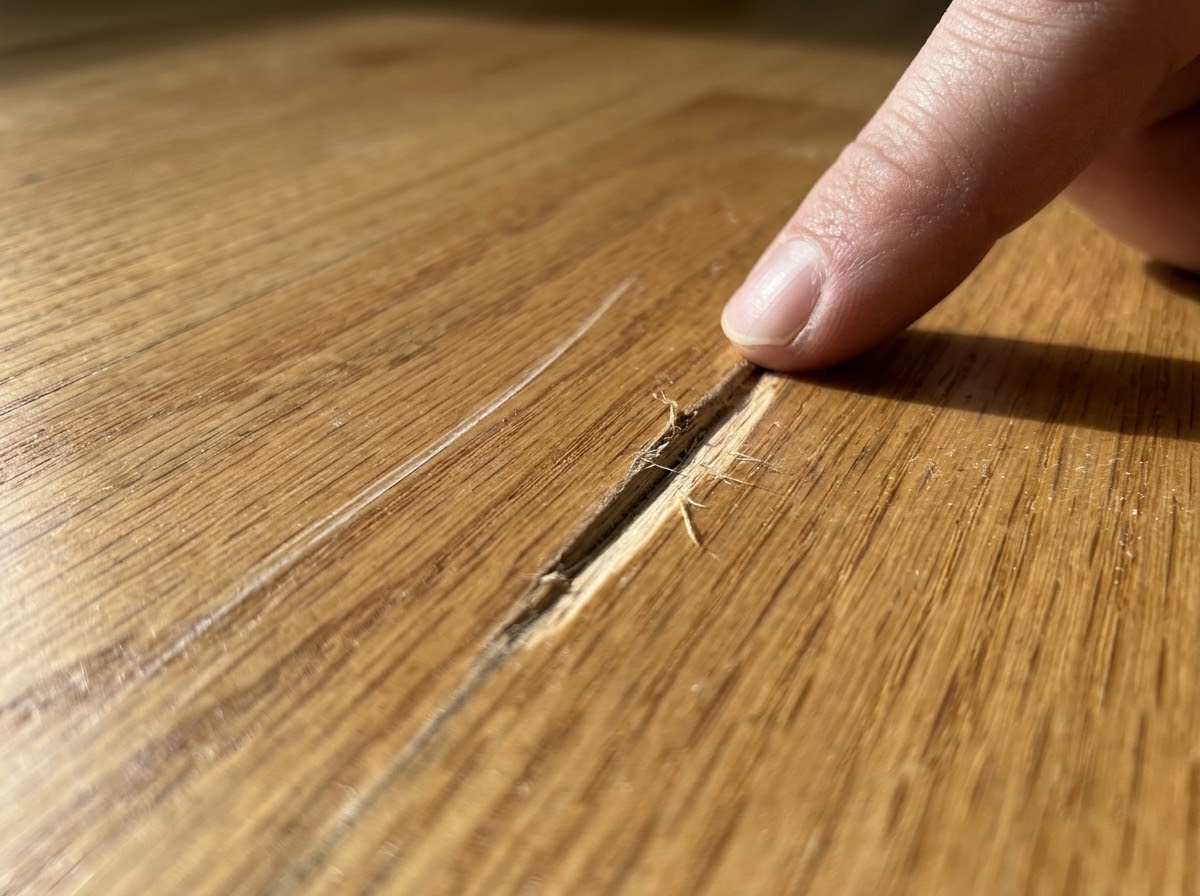
You can fix scratches on hardwood floors without sanding, but only some of them. The trick is knowing what kind of scratch you have. Light scratches that sit in the finish can often be hidden, filled, or recoated. Scratches that have cut into the wood itself usually can’t be fixed without sanding or repairing the board.
Quick answer: Clean the area, then check how deep the scratch is. Surface scratches in the finish can be treated with a color-matched touch-up marker or filler, or fixed across a whole room with a screen and recoat. Deep scratches and gouges that catch a fingernail need sanding or a board repair. Home remedies like oil and vinegar usually make future refinishing harder, so we’d avoid them.
Here’s how to tell the difference, which fixes are worth trying, and what to skip.
First, find out how deep the scratch is
Most of the guesswork disappears once you know what you’re looking at.
| What you see | What it means | Fix without sanding? |
| Fine white or hazy lines | Scratches in the finish only | Often, yes |
| Lines you can see but not feel | Light surface scratches | Usually, yes |
| Scratch your fingernail catches in | Has reached the wood | Partly, with filler or a touch-up |
| Dark or gray lines | Wood is exposed and may have taken moisture | Unlikely, needs sanding or repair |
| Deep gouge or dent | Wood is damaged | No |
White scratches look worse than they are. They happen because the scratch scatters light in the finish. They often blend back in once the surface is cleaned or recoated.
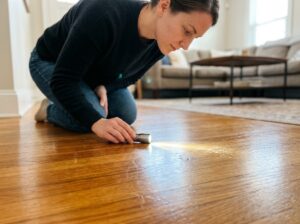
Pro Tip: Check scratches with a flashlight held low across the floor, and look at them again in daylight. Raking light shows depth and gives you a more honest read than overhead light, which can hide or exaggerate marks.
Step 1: Clean the scratch properly
Dirt and grit make scratches look deeper. Before you try anything, clean the spot with a damp cloth and a cleaner made for hardwood. Dry it fully. Sometimes what looks like a scratch is a scuff mark that wipes away.
Avoid soaking the floor. Too much water can lead to problems like cupping, which we explain in our guide on cupping causes.
How to fix scratches on hardwood floors without sanding
Touch-up markers and stain pens
Markers designed for wood floors add color to a scratch so it blends in. They work best on fine, shallow scratches. The key is matching your floor color. Test in a hidden spot first, because a marker that’s too dark looks worse than the scratch.
Wax filler sticks and putty
These fill slightly deeper scratches. They come in a range of colors and can be pressed into the scratch and buffed level. They’re a cosmetic fix, not a structural one.
One caution: wax and putty can sit on the surface and interfere with a future recoat or refinish. If you plan to refinish soon, mention what you used so the contractor can prep the floor properly.
Scratch repair kits
These combine filler, color, and sometimes a clear topcoat. They’re more complete than a marker alone, but they take care to do well. Follow the instructions closely and work on a small area.
Floor polish and restorers
Some products add a thin layer that fills very fine scratches and adds shine. The effect is temporary, and residue from some products can cause problems for a professional recoat later. If you’re planning a recoat, check before you use one. We cover this in our guide to refinishing hardwood floors without sanding.
Screen and recoat for widespread light scratches
If scratches are spread across a room, a screen and recoat is usually the best fix. A buffer lightly abrades the old finish, then a fresh coat of finish fills and covers the fine scratches. It’s faster and cheaper than sanding, and it doesn’t remove wood. Our comparison of screen and recoat vs sand and refinish explains when it works.
Which fix suits which scratch
| Fix | Best for | Limits |
| Cleaning | Scuffs and dirt that look like scratches | Doesn’t fix real scratches |
| Touch-up marker | A few fine, shallow scratches | Color match is tricky |
| Wax filler stick | Slightly deeper single scratches | Can interfere with refinishing |
| Repair kit | One or two noticeable scratches | Takes care to blend |
| Polish or restorer | Very fine scratches, short-term shine | Temporary, can leave residue |
| Screen and recoat | Many light scratches across an area | Won’t fix deep scratches |
Home remedies to skip
You’ll see plenty of tips online. Some are harmless. Some cause trouble.
- Olive oil and vinegar mixes. They can leave an oily film that attracts dirt and blocks future finish from bonding.
- Rubbing a walnut on the scratch. It may darken a tiny scratch for a while, but the effect is inconsistent and temporary.
- Steel wool. It can dull the finish and leave marks of its own.
- Wax or silicone sprays. They hide scratches for a short time and make later refinishing harder.
- Crayons and shoe polish. They rarely match the color and can stain.
If you’ve already tried one of these, don’t worry. Just tell your contractor so they can prep the floor before recoating or refinishing.
When you can’t avoid sanding
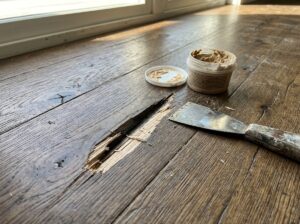
Some scratches need more than a surface fix. You’ll likely need sanding or a repair if:
- Your fingernail catches in the scratch
- The scratch is dark or gray
- There are deep gouges or many scratches in the same area
- The finish is peeling or worn through to bare wood
- Scratches show up as pale lines on bare wood
In these cases, the options range from a small patch to a full refinish. Our guide on spot refinishing hardwood floors explains when a patch blends and when it shows, and our hardwood floor repair service can assess the damage and recommend the right fix.
How much does it cost to fix scratches
These are rough Calgary-area estimates, not quotes.
| Fix | Typical cost |
| DIY marker or filler kit | Roughly $15 to $40 |
| Professional scratch or gouge repair | About $200 to $500 per spot |
| Screen and recoat | About $1.50 to $3.50 per sq ft |
| Full sand and refinish | About $3 to $6 per sq ft |
For a wider look at what each option costs, see our hardwood floor refinishing cost guide.
How to prevent scratches
- Trim pet nails regularly. Long nails are a common cause.
- Use felt pads under furniture legs, and replace them when they wear out.
- Lift, don’t drag, furniture and heavy items.
- Place mats at every entrance. In Calgary winters, grit, sand, and salt on boots act like sandpaper.
- Use rugs in high-traffic areas. Choose pads that are safe for hardwood.
- Take off high heels and sports cleats indoors.
- Sweep or vacuum often. Dry grit scratches the surface.
- Keep the finish healthy. A worn finish scratches more easily, and a timely recoat protects the wood.
Floors with a matte or satin finish and some texture also hide scratches better than high-gloss floors. Dark floors tend to show them more than mid-tone ones.
Scratches in older Calgary homes
In neighborhoods like Inglewood and Bridgeland, original hardwood often has decades of wear, and years of buildup. Scratches in these floors can be harder to treat, because the finish may be very worn or layered. A quick assessment tells you whether the wood has enough thickness left for sanding, which is worth knowing before you invest in a fix.
Frequently asked questions
Why do my hardwood scratches look white?
White scratches are usually in the finish layer. The scratch scatters light, so it looks pale. They often fade after cleaning or a recoat.
Can scratches on hardwood floors be buffed out?
Light scratches in the finish can be improved by a professional buff and recoat. Scratches that go into the wood can’t be buffed out and need sanding.
Does olive oil really fix scratches on hardwood?
It can make a scratch look less obvious for a short time, but it leaves a film and can make later refinishing harder. We’d skip it.
Will a scratch get worse over time?
Surface scratches usually stay the same. Scratches that expose bare wood can collect dirt and moisture, so they can darken or widen over time.
Can I fix scratches on engineered hardwood?
Yes, with the same surface methods. Be careful with sanding, because engineered floors have a thin top layer that limits how much can be removed.
How do I know if a scratch needs a professional?
If your fingernail catches in it, it’s dark or gray, or you have many scratches in one area, a professional can tell you whether a patch, a recoat, or sanding is the right move.
Choosing the right fix
To fix scratches on hardwood floors without sanding, start by finding out how deep they are. Light scratches in the finish often respond to cleaning, a touch-up, or a recoat. Deeper damage needs sanding or a repair, and the quicker you deal with it, the smaller the job stays.
Not sure which one you have? Contact Arbutus Hardwood for a free assessment in Calgary, Airdrie, Cochrane, Okotoks, Chestermere, or nearby. We’ll check the scratches, tell you plainly what a quick fix can and can’t do, and give you a clear quote. For general care guidance, the National Wood Flooring Association is also a useful reference.