Written by Arbutus Hardwood Flooring Team | Reviewed by Dave Cunnings, Lead Flooring Specialist
Screen and recoat vs sand and refinish is one of the most common questions we get on dull or scratched hardwood. Both bring a tired floor back to life. They cost different amounts, take different amounts of time, and fix different problems. Picking the wrong one means paying for a job that doesn’t solve what’s bothering you.
Quick answer: A screen and recoat refreshes the top layer of finish without removing wood. It’s the right choice when the finish is worn or dull but the wood is in good shape. A sand and refinish removes the old finish and a thin layer of wood, so it’s the right choice when there are deep scratches, stains, damaged finish, or you want to change the color.
Here’s how to compare them, what each one costs, and how to decide before anyone quotes your floor.
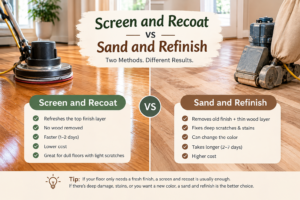
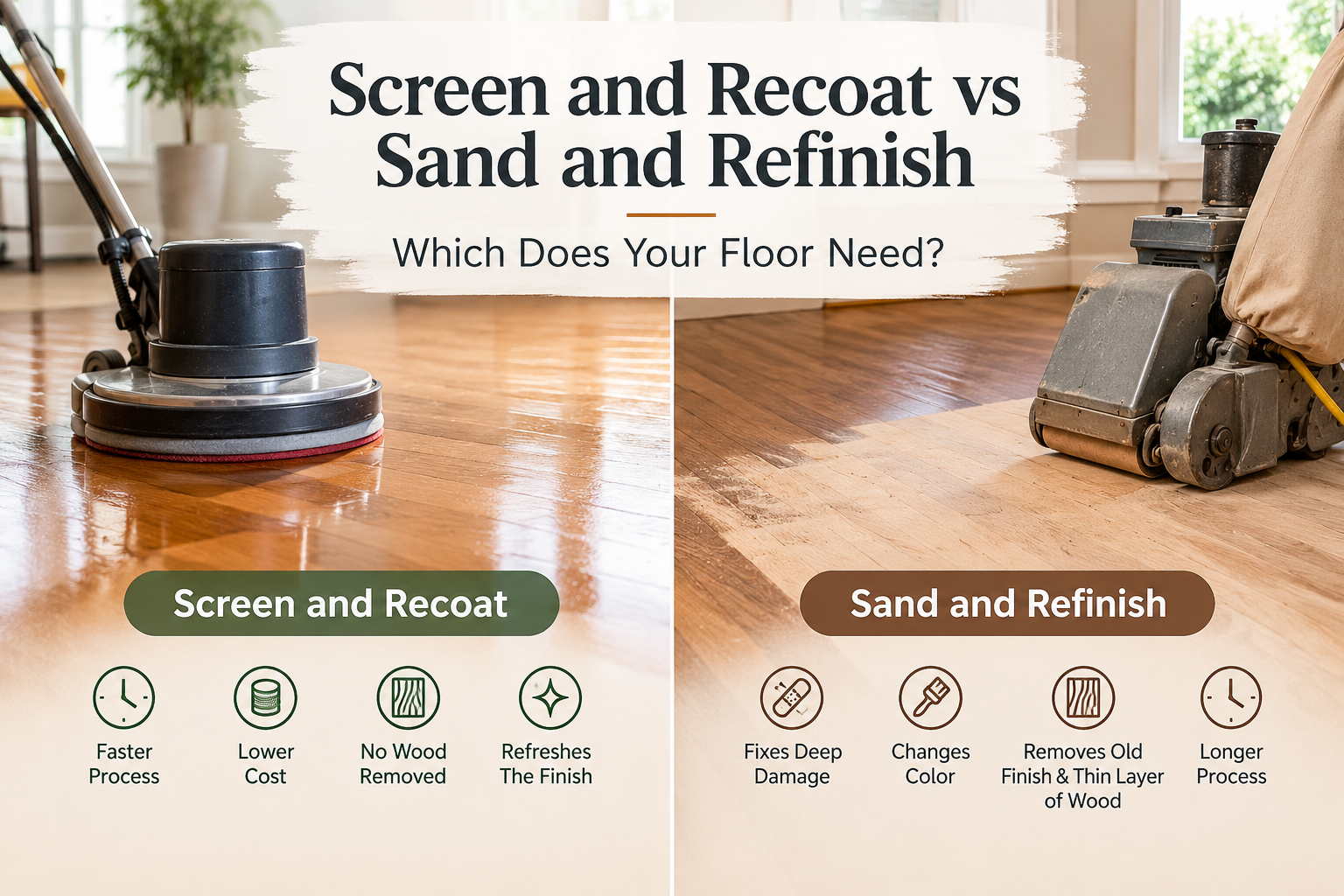
Screen and recoat vs sand and refinish: the short answer
Screen and recoat
Sand and refinish
What it does
Scuffs the old finish, adds a new coat
Removes old finish and a thin layer of wood
Fixes dullness
Yes
Yes
Fixes light scratches
Hides them
Removes them
Fixes deep scratches and stains
No
Yes
Changes stain color
No
Yes
Wood removed
None
A thin layer each time
Typical time
1 to 2 days
2 to 7 days
Typical cost per sq ft
$1.50 to $3.50
$3 to $6
If your floor only needs the finish renewed, the first column wins on cost and wood preservation. If the damage is in the wood or you want a new color, the second column is the honest answer.
What a screen and recoat does
A screen and recoat, sometimes called buff and recoat, works on the finish layer only.
The floor is cleaned and checked for wax, oils, or residue
A buffer with a fine abrasive screen scuffs the existing finish so new finish can grip
Dust is removed completely
One or two new coats of finish are applied
Because no wood is removed, it can be repeated more than once during a floor’s life. It also creates much less dust than sanding. We explain the process more in our guide onrefinishing hardwood floors without sanding.
The old finish is sanded off, using several grits from coarse to fine
Gaps, nail holes, and damaged boards are repaired
Stain is applied if you’re changing the color
Multiple coats of finish go on, with drying time between each
The floor cures before regular use
This resets the floor completely. It’s also what deals with deep damage. The tradeoff is that it uses up a bit of the wood’s limited thickness each time, which is why solid hardwood can only be fully sanded so many times. See our guide onhardwood floor refinishing vs replacement for how that limit works.
Which one does your floor need
Use this as a rough guide.
A screen and recoat is likely enough if:
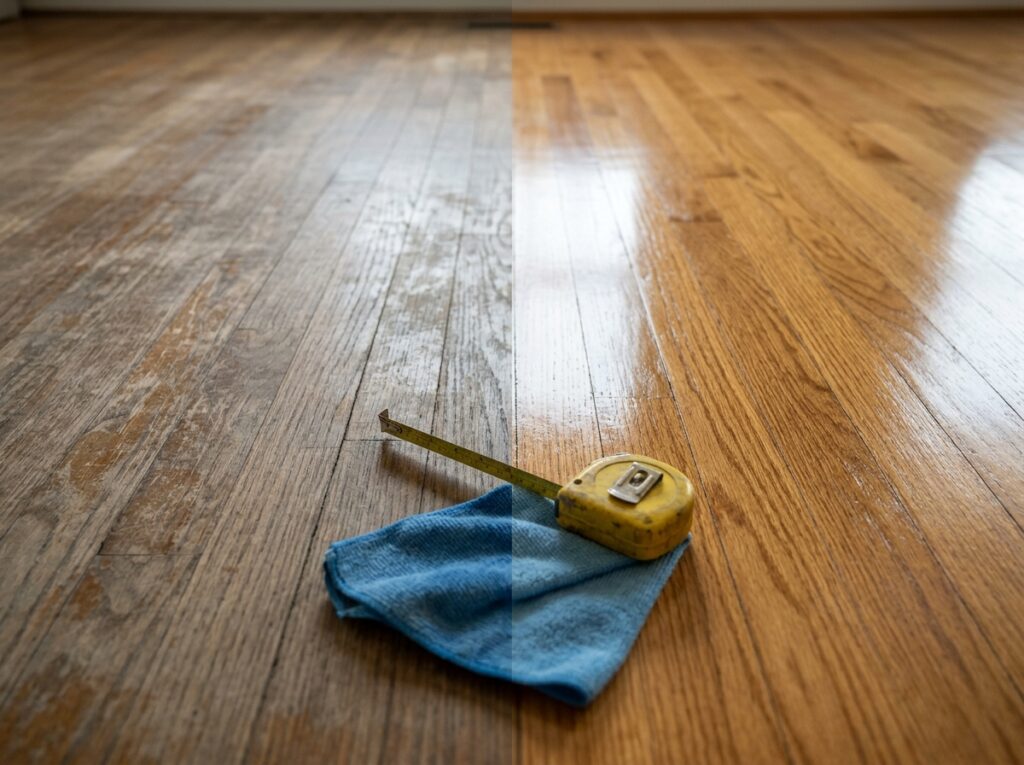
The floor looks dull or cloudy, but the wood is clean
Scratches are light and only in the finish
The floor was finished within the last several years
There’s no bare wood showing and no gray or dark spots
You like your current color
The finish is still mostly intact and bonded
You probably need a sand and refinish if:
Scratches or gouges go into the wood
There are pet stains, water marks, or dark spots
The finish is peeling, flaking, or worn to bare wood in traffic lanes
You want a different stain color
Wax or polish has built up
The floor has never been properly maintained and has years of wear
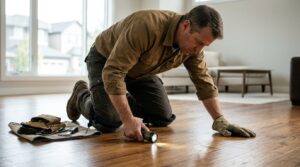
Pro Tip: Check the busiest spot on your floor, like the path from the front door or in front of the kitchen sink. If you see gray, dark, or bare wood there, the finish is already gone, and a recoat won’t last. If the wood looks clean and just a bit dull, you’re likely a good recoat candidate.
Screen and recoat vs sand and refinish cost
These are rough Calgary-area estimates, not quotes.
Job
Typical cost
Example: 1,000 sq ft
Screen and recoat
$1.50 to $3.50 per sq ft
About $1,500 to $3,500
Sand and refinish
$3 to $6 per sq ft
About $3,000 to $6,000
Stain color change
Adds $1 to $2 per sq ft
Adds about $1,000 to $2,000
Your final price depends on square footage, floor condition, finish type, and how much furniture has to be moved. For the full picture across installation, repair, and refinishing, see ourhardwood flooring cost guide.
The cost over time
The cheaper job isn’t always the one with the lowest price tag today. Think about the life of the floor.
A recoat every few years costs less than a full refinish and keeps the wood thick. Many homeowners can stretch a floor’s life a long way by recoating at the right time, before the finish wears through to bare wood. Waiting too long means the floor needs sanding anyway, and you’ve lost the chance to use the cheaper option.
That’s the real reason a recoat is called a maintenance step. It protects the wood, which protects the bigger investment.
How often should you screen and recoat
A common range is every three to five years for many homes. Busy households, pets, and lots of foot traffic may need it sooner. Quiet homes with low traffic may stretch it longer.
The better rule is to watch the floor, not the calendar. Recoat when the finish begins to look dull or worn, but before it wears through. A full sand and refinish is usually needed much less often, closer to every 10 to 20 years, depending on wear.
When a recoat won’t stick
Sometimes a recoat fails even when the floor looks fine. The usual causes are:
Wax, oil soap, or polish buildup. These leave a film that stops new finish from bonding.
Incompatible finishes. Some products don’t bond well over others.
Silicone contamination. Some cleaning sprays leave residue that causes fisheyes and peeling.
Dirt and residue. Any contamination on the surface can show up in the new coat.
A good contractor tests for adhesion before starting, usually with a small test patch. If the test fails, the only fix is sanding. This is why you should mention any products you’ve used on the floor when you ask for a quote. If your floor only has a few trouble spots, aspot repair may be a smarter step before a larger recoat.
Screen and recoat for engineered hardwood
For engineered floors, a recoat is often the best choice. The wood layer on top is thin, so there’s limited room for sanding, and a full refinish may only be possible once or twice. Recoating protects the finish without cutting into that wear layer. If your engineered floor is already worn beyond what a recoat can help, check the veneer thickness before planning a sand. Our guide tostaining hardwood floors a different color also covers what engineered floors can handle.
What to expect after each job
After a screen and recoat:
Light foot traffic is usually possible the next day with water-based finishes
Furniture goes back after a few days
Rugs wait longer, because finish takes time to harden fully
After a sand and refinish:
Light foot traffic may be possible after a day or two
Furniture and rugs wait longer
The finish keeps curing for weeks
Your contractor should give you exact timing for their products. Rushing it can mark the finish.
Calgary considerations
Winter dryness. Our indoor air gets very dry once the heating season starts. A finish that’s recently applied does best when you can ventilate while it dries, so fall is a good time to book either job. Our guide tohardwood floor gaps in Calgary winters explains what to expect when the air turns dry.
Older homes. In neighborhoods like Inglewood and Bridgeland, floors often have decades of wear and layers of old finish. A recoat may not stick well on those, and a sand and refinish is often the better move. Older painted floors need extra care; read our guide onpainting hardwood floors before you sand anything.
Newer builds. In areas like Mahogany and Seton, floors are often in good shape after several years, which makes them good candidates for a maintenance recoat.
Mistakes to avoid
Recoating a floor that needs sanding. It looks better for a short time, then fails.
Sanding a floor that only needed a recoat. That costs more and removes wood unnecessarily.
Using wax or polish before the job. It can ruin adhesion.
Skipping the adhesion test. Always ask for one.
Waiting too long. Once the finish wears to bare wood, a recoat is no longer an option.
Rushing the cure time. Furniture and rugs too soon can damage the new finish.
Making the right choice for your floor
When you weigh screen and recoat vs sand and refinish, the question comes down to where the damage is. If it’s in the finish, a recoat is usually the right, cheaper fix. If it’s in the wood, or you want a new color, sanding is the honest answer. Catching a floor early enough to recoat is one of the best ways to protect your investment, and theNational Wood Flooring Association offers general guidance on wood floor care.
Not sure which one your floor needs?Contact Arbutus Hardwood for a free assessment in Calgary, Airdrie, Cochrane, Okotoks, Chestermere, or nearby. We’ll test the finish, check the wood, and tell you plainly whether a recoat will do the job. For finish refreshes, you can also look at ourhardwood floor polishing service, or ourhardwood floor repair service if individual boards need attention first.
Why Wood Species Selection Matters for Calgary Homes
Selecting the right hardwood species is not just a design choice it directly impacts how your flooring performs for years to come. Calgary’s climate creates conditions where wood movement is unavoidable, making it essential to choose a species that can handle these fluctuations without compromising stability.
Each wood type has different levels of density, flexibility, and grain structure. These characteristics determine how resistant the flooring will be to dents, scratches, and seasonal expansion. Homeowners who understand these differences can avoid costly repairs and ensure their flooring maintains both its function and appearance over time.
Durability Differences Grain Behavior Moisture Response When these factors are
carefully considered the result is a floor that not only looks great but also performs reliably in everyday living conditions. Ignoring them often leads to premature wear or dissatisfaction even with high quality materials.
Climate Considerations for Hardwood Flooring in Calgary
Calgary’s dry winters and fluctuating humidity levels make it one of the more challenging environments for hardwood flooring. Wood naturally reacts to moisture, and in a climate where indoor air can become extremely dry, this reaction becomes more noticeable.
Seasonal contraction during winter can create small gaps between planks and summer humidity may cause expansion. These changes are normal, but choosing the right species and installation approach can significantly reduce their impact.
Stable Wood Species Proper Acclimation Controlled Indoor Humidity Proper planning plays a major role in long term performance.
Allowing the wood to acclimate before installation and maintaining consistent indoor humidity levels can prevent many common issues.
Oak Hardwood Flooring
Oak hardwood flooring remains the most popular choice in Calgary due to its exceptional balance of durability, affordability, and design flexibility. It has been widely used for decades and continues to perform reliably in both modern and traditional homes.
One of the key advantages of oak is its strong and visible grain pattern. This natural texture helps conceal everyday wear such as scratches and minor dents, that makes it highly practical for busy households. Unlike smoother woods, oak maintains its appearance even after years of use.
Oak is also highly adaptable when it comes to finishing. It accepts stains evenly that allow homeowners to achieve a wide variety of looks without compromising the natural beauty of the wood. Because of this versatility oak remains one of the safest and most recommended choices for Calgary homes.
Maple Hardwood Flooring
Maple hardwood flooring is known for its clean, smooth appearance and subtle grain pattern. It is often chosen for modern interiors where a more uniform and refined look is desired. Compared to oak, maple offers a more contemporary aesthetic that works well in minimalist spaces.
In terms of performance, maple is harder than many other domestic species which makes it resistant to dents and surface wear. However, it is slightly more sensitive to humidity changes, meaning proper installation and environmental control are essential.
High Hardness Smooth Grain Modern Appearance
Because of its strength and sleek look, maple is a strong choice for homeowners who want durability without a pronounced grain pattern
Ash Hardwood Flooring
Ash hardwood flooring offers a unique combination of strength and visual character. It is similar to oak in durability but features a more pronounced and dynamic grain pattern, which gives it a distinct appearance.
Its lighter tone makes it ideal for creating bright and open spaces, especially in modern Calgary homes where natural light is a key design element. Ash also provides a level of flexibility that helps it absorb impact better than more rigid species.
Strong Structure Bold Grain Pattern Light Color Tones
This combination of durability and visual appeal makes ash a versatile option for homeowners who want something slightly different from traditional oak
Walnut Hardwood Flooring
Walnut hardwood flooring is widely recognized for its rich, dark tones and luxurious finish. It adds depth and warmth to interiors, making it a preferred choice for high end residential spaces.
Although walnut is softer than oak or hickory, its aesthetic value often outweighs this limitation. It performs best in areas with moderate foot traffic, where its appearance can be preserved without excessive wear.
deep color smooth texture premium look
For homeowners focused on elegance and design, walnut delivers a level of sophistication that few other species can match. When used in the right setting, it becomes a standout feature in any room
Hickory Hardwood Flooring
Hickory hardwood flooring is one of the toughest domestic options available. Its high density provides excellent resistance to dents, scratches, and heavy foot traffic.
Visually, hickory stands out due to its dramatic color variation and bold grain patterns. This gives it a more rustic and natural look compared to more uniform species like maple.
Extreme Hardness High Durability Strong Visual Contrast
Because of its strength hickory is particularly well suited for homes with pets, children, or high daily usage. It is a long term solution for homeowners who prioritize durability above all else.
Cherry Hardwood Flooring
Cherry hardwood flooring is known for its warm, reddish tones that deepen over time. This natural aging process enhances its appearance that gives it a richer and more refined look as the years go by.
While it is softer than many other hardwoods, cherry is valued more for its aesthetic qualities than its durability. It is best suited for areas where foot traffic is limited.
Warm Tones Smooth Grain Natural Aging
Cherry is often chosen for formal spaces where elegance and character are more important than heavy duty performance.
Mahogany Wood Floors
Mahogany wood floors are associated with luxury and high end interior design. They feature a fine, even grain and deep color tones that create a sophisticated and polished look.
Mahogany offers moderate hardness and performs well when properly maintained. Its consistent texture gives it a refined appearance that works well in upscale environments.
Rich Color Fine Grain Elegant Finish
This species is often selected for statement spaces where visual impact is a priority. It provides a classic, upscale feel that enhances the overall design of a home
Pine Wood Flooring
Pine wood flooring is a softer option that offers a rustic and natural appearance. It features visible knots and grain variations that give it a more casual and lived in look. Because it is softer, pine is more prone to dents and marks. However, many homeowners appreciate this as it adds character over time.
Soft Texture Rustic Look Natural Knots
Pine is ideal for farmhouse style or cottage inspired interiors where imperfections contribute to the overall charm of the space.
Ipe Wood Flooring
Ipe wood flooring is an exotic hardwood known for its exceptional durability and resistance to environmental factors. It is significantly harder than most domestic species and performs extremely well under heavy use. Its density also makes it resistant to moisture, insects, and general wear, that makes it a long lasting investment.
Extreme Density High Resistance Long Lifespan
Although it is more expensive and harder to install, ipe offers unmatched durability for homeowners looking for a premium solution
Teak Wood Flooring
Teak wood flooring is another premium option valued for its natural oils and moisture resistance. It performs well in environments where humidity changes are common, that features make it a reliable choice. Its warm tones and smooth texture create a welcoming and high end appearance.
Natural Oils and Moisture Resistance Premium Finish
Teak is often used in luxury applications where both performance and aesthetics are equally important.
Best Hardwood Flooring Species for High Traffic Areas
Choosing the right species for high traffic areas is essential for maintaining the appearance of your flooring over time. Durability becomes the primary factor in these spaces.
Hickory Hardwood Flooring Oak Hardwood Flooring Maple Hardwood Flooring
These species offer the best resistance to wear and are capable of handling daily use without showing significant damage. Selecting one of these options ensures your flooring remains in good condition even in busy households.
Cost Comparison of Different Wood Species
Understanding cost differences helps homeowners make better long term decisions. While initial pricing varies, durability and maintenance also affect overall value.
Mid range options are the most common because they provide a strong balance between cost and performance. Higher end species are typically chosen for their visual appeal and exclusivity rather than practicality alone.
Common Mistakes When Choosing Hardwood Flooring
Many homeowners overlook key factors when selecting hardwood flooring, which can lead to long term issues. Avoiding these mistakes can save both time and money.
Choosing Based On Looks Only Ignoring Climate Impact Overlooking Maintenance Needs Skipping Professional Installation
Making informed decisions ensures your flooring performs as expected and maintains its appearance over time. Proper planning and expert guidance play a crucial role in achieving the best results
Cost Comparison of Different Wood Species
Understanding cost differences helps homeowners make better long term decisions. While initial pricing varies, durability and maintenance also affect overall value.
Mid range options are the most common because they provide a strong balance between cost and performance. Higher end species are typically chosen for their visual appeal and exclusivity rather than practicality alone.
Yes, when the floor qualifies. It costs less than a full refinish, takes less time, and doesn't remove wood. If the floor has deep damage, it isn't worth it, because the problems will still be there.
Should you refinish hardwood floors before selling your house? Should you refinish hardwood floors before selling your house? See when it’s worth it, what it costs, how long it takes, and what buyers notice in Calgary. Contact Us Most Used Hardwood Flooring Species in Calgary If you’re about to list…
Hardwood flooring installation process The hardwood flooring installation process explained: prep, acclimation, nail down vs glue down vs floating, timelines, and costs for Calgary homes. Contact Us Most Used Hardwood Flooring Species in Calgary Written by Arbutus Hardwood Flooring Team | Reviewed by Dave Cunnings, Lead Flooring Specialist The hardwood…
Hardwood vs LVP, laminate and carpet: which is best for Calgary homes? Hardwood vs LVP, laminate, carpet, and tile: compare cost, lifespan, and resale for Calgary homes, and find out where each one makes sense. Contact Us Most Used Hardwood Flooring Species in Calgary Written by Arbutus Hardwood Flooring Team…
Choosing the right hardwood flooring species is one of the most important steps in creating a durable and visually appealing home. Calgary’s climate requires careful consideration, making it essential to select a species that can handle environmental changes without compromising performance. If you’re planning to install hardwood flooring contact us today to get the best results from your investment.