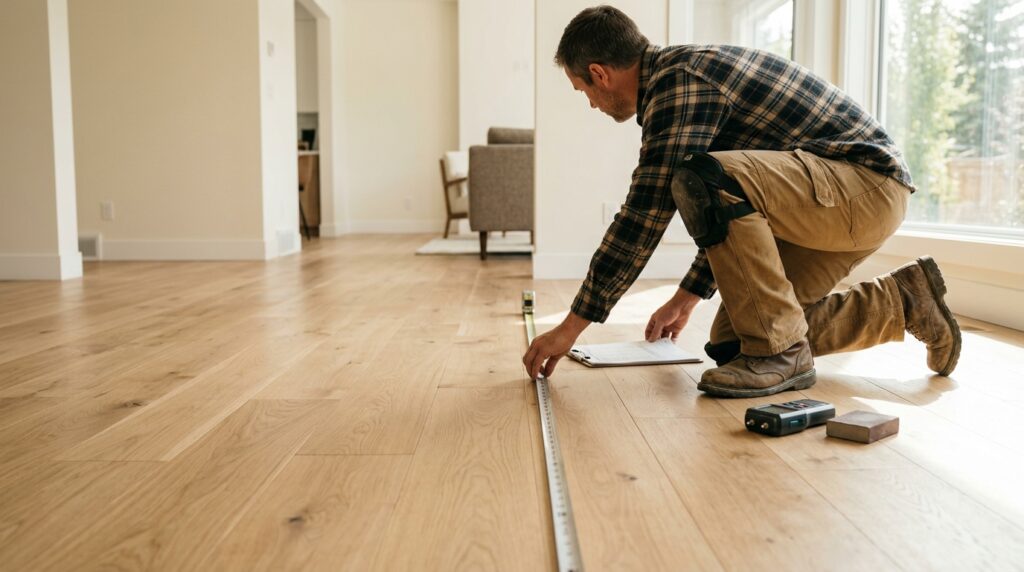
If you’ve ever wondered why your floors looked amazing right after polishing and then went dull again within a few months, timing is probably the culprit. The best time to polish hardwood floors depends on humidity, temperature and how much your home’s air changes throughout the year. In Calgary, that window is narrower than most homeowners think.
We’ve been polishing and refinishing floors across Calgary for over 30 years. The question we get asked more than almost anything else is simple: “When should I actually get this done?” So let’s answer it properly, with real numbers and real seasonal breakdowns, not vague advice you could find on any generic blog.
Why timing actually matters for hardwood floor polishing
Wood moves. It absorbs moisture from the air, swells a little, then releases that moisture and shrinks back down. This happens constantly, all year, whether you notice it or not.
Polishing puts a fresh protective layer on your floor’s surface. If that layer cures while the wood is expanding or contracting too much, you get problems. Cloudy patches. Uneven sheen. Sometimes tiny cracks in the finish where the wood pulled away underneath it.
Get the timing right and the polish bonds evenly, dries at the correct pace and lasts years instead of months.
We’ve seen both outcomes plenty of times. A client who polished mid-January without running a humidifier ended up with a finish that looked slightly hazy near the exterior walls, right where the dry air hit hardest. Another client did the exact same job in late April with zero issues, same product, same crew. The only real difference was the air in the house.
That’s the whole point of this guide. Not just telling you spring and fall are good, but explaining why, so you can make a smart call even if your schedule doesn’t cooperate with the ideal window.
The best season to polish hardwood floors in Calgary
Spring and early fall are your best bet. Here’s why those two windows beat summer and winter in a city like Calgary.
Spring (April to early June)
Calgary springs bring milder temperatures and humidity that sits in a manageable range, usually somewhere between 30% and 50%. Your furnace isn’t running constantly anymore, so the air isn’t bone dry the way it is in January. That’s close to ideal for polyurethane and polish products to cure properly.
Homeowners also tend to book spring appointments before summer travel and backyard season take over their calendars, so scheduling is usually easier too.
There’s a practical side to this as well. Spring cleaning season means most people are already thinking about their floors, moving furniture and noticing wear they’ve ignored all winter. Booking the polish while you’re already in that mindset tends to work out better than waiting until fall reminds you again.
Fall (September to mid-November)
Fall works almost as well as spring, sometimes better. The summer humidity has dropped off, the furnace hasn’t kicked into full winter mode yet and temperatures are stable enough for even curing.
A lot of our clients specifically time their polishing before the holidays. Makes sense. Nobody wants sticky floors two days before hosting Thanksgiving dinner.
Why summer is riskier than people assume
Calgary summers aren’t as humid as, say, a coastal city, but on hot, sticky days indoor humidity can still climb high enough to slow drying times and cause a tacky finish that takes forever to fully harden.
Air conditioning helps. If you’re set on a summer polish job, run the AC steadily for a few days before and after the work is done.
Winter needs extra care, not avoidance
Winter isn’t off the table entirely, but it comes with its own challenge: dry winter air. Calgary furnaces can push indoor humidity down below 20% in the coldest months. That kind of dry winter air causes wood to contract, sometimes leaving small gaps between boards.
If you’re polishing in winter, run a humidifier for a week or two beforehand to bring moisture content in the wood back into a healthier range. It’s not a deal breaker. It just takes a bit more prep.
Ideal humidity levels for polishing hardwood floors
Most flooring manufacturers, including the brands we install and service here in Calgary, recommend keeping indoor relative humidity between 35% and 55% year round. That range keeps seasonal wood movement small enough that your floors stay stable and your finish cures the way it’s supposed to.
Here’s a quick breakdown by season:
Season
Typical Calgary indoor humidity
Polishing outlook
Spring
30-50%
Excellent
Summer
40-65% (varies with AC use)
Good, with climate control
Fall
30-50%
Excellent
Winter
15-30% (without a humidifier)
Fair, needs humidity support
If you’re not sure where your home currently sits, a $15 hygrometer from any hardware store will tell you in seconds. Worth doing before you book anything.
How often should you polish hardwood floors?
This depends on foot traffic, pets and how well you maintain your floors day to day. As a general rule:
Light traffic homes: every 3 to 5 years
Moderate traffic with kids or one pet: every 2 to 3 years
High traffic homes with multiple pets or heavy use: every 1 to 2 years
Polishing is a surface-level treatment. It restores sheen and adds a protective finish layer without sanding down to bare wood. That’s very different from a fullhardwood floor refinishing, which strips the floor back and rebuilds the finish from scratch. If you want the full breakdown of when each option makes more sense, we’ve coveredhow polishing differs from refinishing in detail.
Signs your floors are ready for polishing
You don’t need to wait for a specific date on the calendar. Your floors will usually tell you when they’re due:
The sheen looks flat or dull instead of reflective
Light scratches are visible but haven’t gone through the finish
Foot traffic areas look worn compared to under furniture
Water no longer beads on the surface when spilled
If you’re seeing deeper gouges, dark staining or boards that feel unstable underfoot, polishing alone won’t fix it. That usually points to bigger issues. It’s worth reviewing thesigns your floors need attention before booking a simple polish.
How Calgary’s climate makes this different from other cities
Most flooring advice online comes from cities with wetter, more humid climates. Calgary is different. We get chinooks that swing temperatures dramatically within a single day, plus long stretches of dry winter air thanks to our forced-air heating systems.
That combination makes indoor climate control more important here than almost anywhere else in Canada. Homes with solid hardwood tend to show seasonal wood movement more noticeably than homes with engineered hardwood, since engineered flooring’s layered construction resists humidity swings a bit better. If you’re deciding between the two for a Calgary home, our guide onsolid vs engineered hardwood in Calgary’s climate walks through which one handles our weather better long term.
Polish, wax or recoat: what’s actually right for your floor?
People use these terms interchangeably. That causes real confusion.
Polish restores shine and adds light surface protection. It doesn’t involve sanding.
Wax was common decades ago but isn’t compatible with modern polyurethane finishes. If your floors were finished any time in the last 20 years, skip wax entirely.
Recoat adds a fresh layer of finish over the existing one, usually after a light abrasion or buffing step. This lasts longer than a basic polish and works well for floors with moderate wear.
The type of finish your floor already has affects how it should be maintained too. Oil-based finishes and water-based finishes cure differently. Theirdrying times vary significantly, which matters even more when you’re timing the job around Calgary’s seasonal humidity swings.
Keeping your floor’s shine between polishing appointments
Timing the polish itself is only half the equation. What you do in between appointments determines whether you’re polishing every 2 years or every 5.
A few habits that genuinely extend the life of a polish job:
Use felt pads under furniture legs, especially chairs that get dragged in and out daily
Sweep or vacuum with a hard-floor attachment weekly to remove grit before it scratches the surface
Stick to cleaning products made for polyurethane or polished wood finishes, not generic all-purpose cleaners
Wipe up spills right away rather than letting moisture sit on the surface
Add a mat at every exterior entrance to cut down on dirt and gravel tracked in from outside
None of this replaces a proper polish or recoat down the road, but it buys you time and keeps the finish looking better for longer between jobs.
Choosing a sheen that matches your home
Polishing is also a chance to reconsider your floor’s finish level. Some homeowners switch from high gloss to satin, or the reverse, when they polish. Gloss shows scratches more easily but photographs beautifully. Satin hides daily wear better, which matters if you’ve got kids or dogs running around.
Pricing depends on square footage, current condition and the product used, but here’s a general range homeowners can expect:
Job size
Typical price range
Turnaround time
Single room (under 200 sq ft)
$200-$400
1 day
Full main floor (600-1,000 sq ft)
$600-$1,200
1-2 days
Whole home (1,500+ sq ft)
$1,500-$2,500+
2-3 days
These numbers assume a standard polish or recoat, not a full sand-down refinish. If your floor needs sanding first because of deep scratches or water staining, expect the cost and timeline to increase.
Get an exact number by requesting a free quote, since every home’s floor condition is a little different.
Common mistakes homeowners make with timing
A few patterns show up again and again with jobs that don’t turn out as well as they should.
Booking right before a chinook. Calgary’s rapid temperature swings can throw off curing conditions mid-job. If a chinook is forecast, it’s worth pushing the appointment a few days.
Skipping the humidity check in winter. Plenty of people assume their furnace keeps the house comfortable enough. Comfortable to a person and correct for wood finish curing aren’t the same thing. Always check with a hygrometer first.
Polishing right after a major renovation. Drywall dust, paint fumes and new construction humidity can all interfere with a clean cure. Wait a few weeks after any major renovation work before scheduling.
Moving furniture back too soon. Even once a floor feels dry to the touch, the finish underneath may still be curing for days or weeks. Rushing furniture back in can leave permanent indentations or dull spots.
What to expect on polishing day
Most single-room jobs follow a similar timeline:
Morning: Room is cleared, floor is deep cleaned and inspected for problem areas
Midday: Light screening or buffing prepares the surface for the new coat
Afternoon: Polish or recoat is applied evenly across the floor
Evening: Floor is safe to walk on carefully in socks, but stays off-limits to furniture and pets
Full cure time varies by product, but plan on 5 to 7 days before rugs go back down and 2 to 3 weeks before anything heavy sits on the surface long term.
What professional polishing actually involves
A lot of homeowners assume polishing means a quick mop-and-shine job. Professionalhardwood floor polishing is more thorough than that. It typically includes:
A deep clean to remove grit and debris that can scratch the surface during buffing
Light screening or buffing to prep the existing finish
Application of a fresh polish or recoat layer
Controlled drying time, ideally in stable humidity conditions
Done right, the whole process takes a single day for most rooms, with the floor safe to walk on within a few hours and fully cured within a week or two depending on the product used.
Preparing your home before polishing
A few simple steps make a real difference in how well the finish cures, no matter what season you book:
Clear the room of furniture and rugs
Run your HVAC system a few days beforehand to stabilize indoor humidity
Avoid scheduling right before or after a major weather swing, especially during chinook season
Keep pets and kids off the floor until the finish has fully set
This same humidity and seasonal advice applies whether you’re in the city or just outside it. We regularly handlepolishing service near De Winton and other surrounding communities. The climate factors stay consistent across the region: dry winters, chinook swings and a narrow humidity window in spring and fall.
Getting the timing right
Spring and fall give you the most forgiving conditions for polishing hardwood floors in Calgary. Summer and winter both work, but they need a bit more humidity management to get the same results.
If you’re not sure which season fits your schedule, or you want a professional to check your floor’s current condition before committing to a date, our team at Arbutus Hardwood has spent over 30 years working with Calgary homes and this exact climate.Contact us for a free quote and we’ll tell you honestly whether your floors are ready for a polish, a recoat, or something more.
You can do very light maintenance, using manufacturer-approved polish products. But getting an even finish without streaking or buildup takes practice. Using the wrong product on the wrong finish type can actually damage the floor, so for anything beyond a light touch-up, professional application gives a more even, longer-lasting result.
Light surface scratches, yes, usually. Deeper scratches that have gone through the finish layer and into the wood need sanding or spot repair first, then polishing afterward.
With normal household traffic, a professional polish typically holds up for 2 to 4 years before it starts looking dull again. Heavy traffic homes may need it sooner.
Polishing costs significantly less than a full refinish since there's no sanding involved. It's the more budget-friendly option when your floor's wear is still surface-level rather than structural.
The finish may cure unevenly, develop a cloudy appearance or fail to bond properly, which shortens how long it lasts before needing to be redone. This is exactly why humidity control matters so much here.
Mostly yes, though the wear layer thickness on engineered flooring limits how many times it can be polished or refinished over its lifespan compared to solid hardwood.
How to choose a hardwood flooring contractor in Calgary Learn how to choose a hardwood flooring contractor in Calgary by checking experience, insurance, past projects and written quotes before you hire. Contact Us Your floors will be under your feet for 20 years or more. The person you hire to…
Hardwood Flooring Cost in Calgary: What You’ll Actually Pay Planning your project but unsure about hardwood flooring cost in Calgary? This guide explains installation, refinishing, and repair expenses to help you plan your flooring budget. Contact Us If you’re planning to install, repair, or refinish hardwood flooring in Calgary, understanding…
Matte vs gloss hardwood flooring: which finish is right for your home? Matte vs gloss hardwood flooring, see which finish suits Calgary homes best for durability, style & upkeep. Get expert advice from Arbutus Hardwood. Contact Us Matte vs gloss hardwood flooring feels like a small decision until you’re standing…