Arbutus Hardwood Floors

Hardwood floor refinishing vs replacement: how to actually decide

Deciding between hardwood floor refinishing vs replacement usually comes down to one thing: how much usable wood is actually left in the boards. This guide breaks down the real signs, costs, and timelines for each option, so you can tell which one your floor actually needs.

Hardwood floor refinishing vs replacement usually isn’t as close a call as it feels. Most floors can be refinished. Fewer actually need to be replaced than homeowners assume.

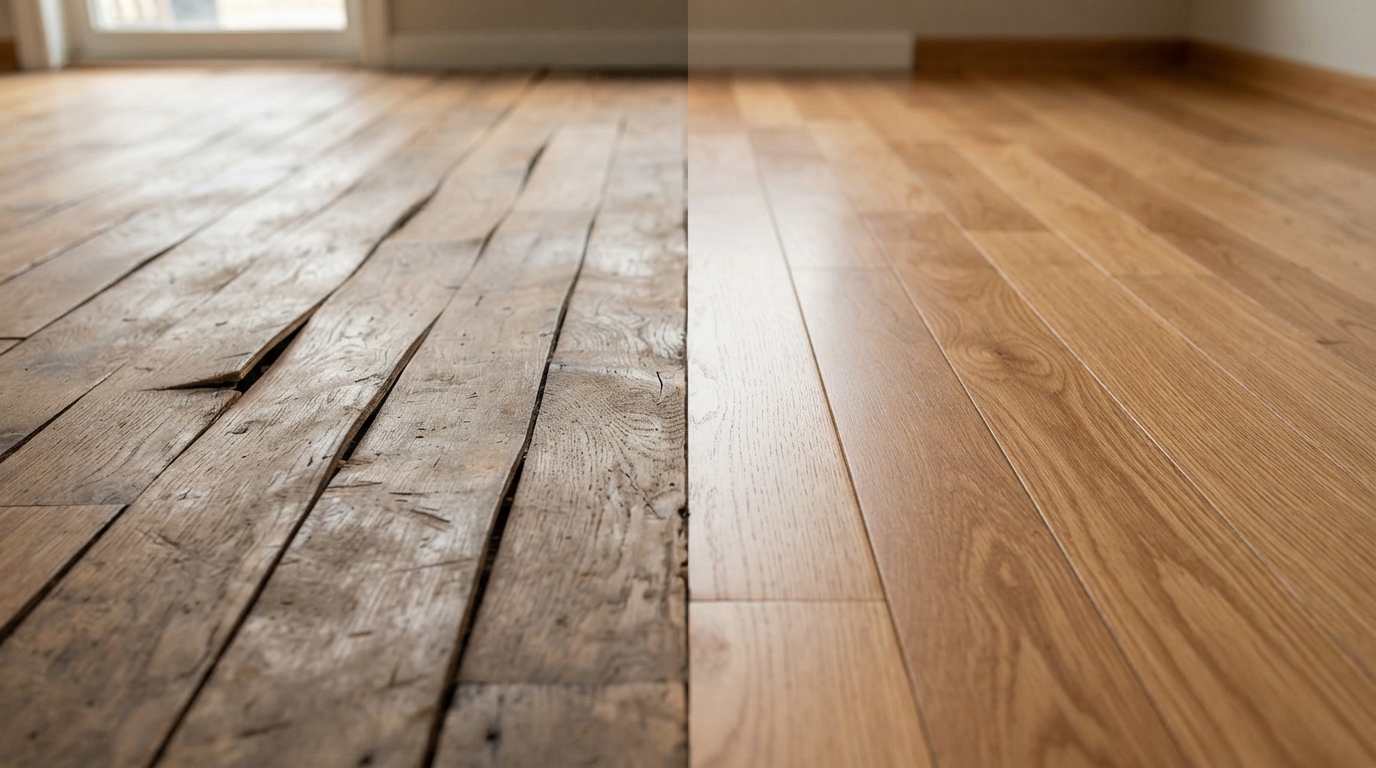
Quick answer: Refinishing is almost always the better option if the boards are structurally sound and there’s enough wood thickness left to sand. Replacement becomes the right call when boards are warped beyond flattening, water damage has reached the subfloor, or the floor has already been sanded down to the point where there’s nothing left to remove. For most homes, that means refinishing wins on both cost and value, with replacement reserved for genuinely damaged floors.

Here’s how to tell which situation you’re actually in, what each option costs, and what the process looks like for both.

What’s the real difference between refinishing and replacing

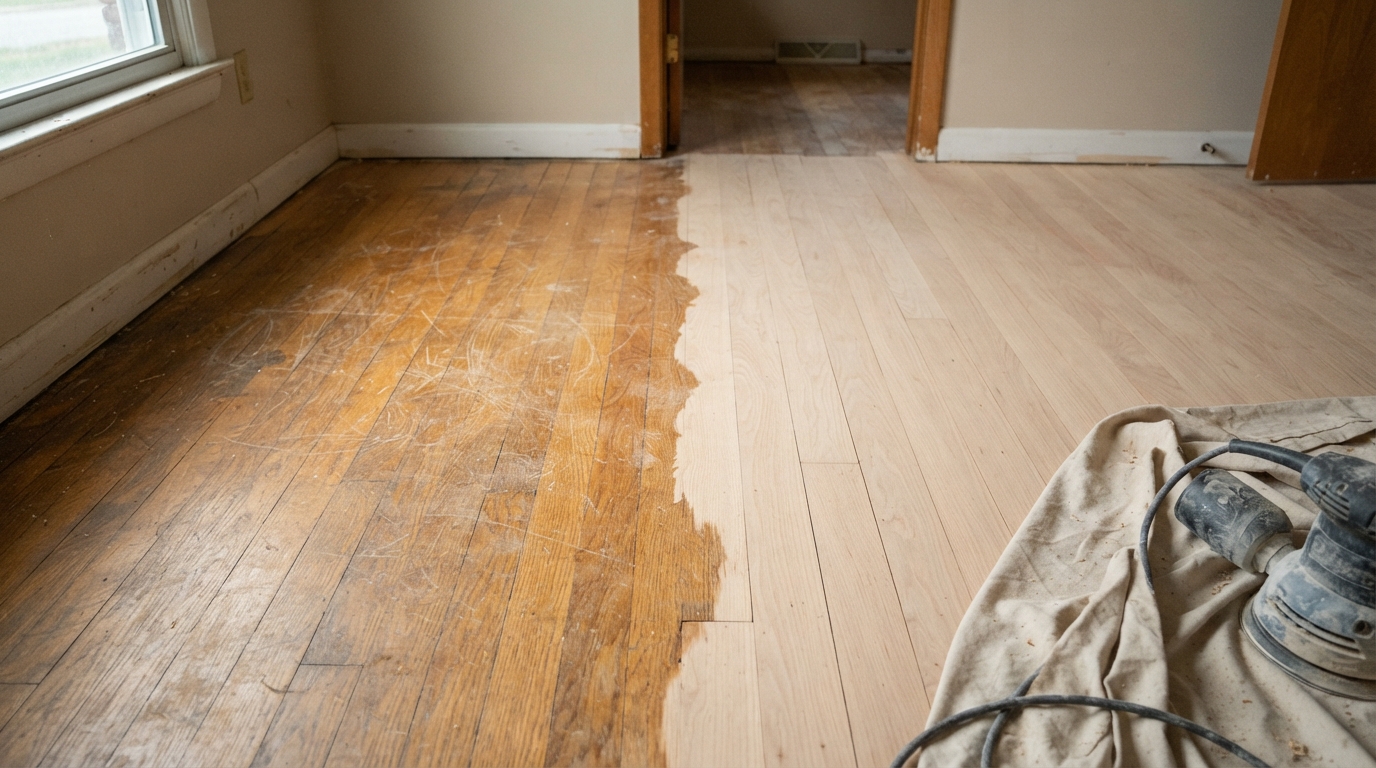
Refinishing means sanding down the existing wood surface and applying a new finish, working with the boards you already have. Replacement means removing the existing flooring entirely and installing new material.

The decision comes down to one core question: is the wood itself still good, or is the problem underneath the surface?

How many times can hardwood floors be refinished

Solid hardwood can typically be refinished 4 to 6 times over its lifetime, depending on the original thickness of the boards and how aggressively each sanding removes material. Engineered hardwood is more limited, usually good for 1 to 2 refinishes, since only a thin veneer layer sits on top of the plywood core.

This is the single biggest factor in the refinish vs replace decision. A 1990s solid oak floor that’s only been refinished once still has plenty of life left. A floor that’s already been sanded three or four times is getting close to its limit.

Signs your hardwood floors can be refinished

  • Surface scratches, scuffs, or dullness from years of foot traffic
  • Discoloration or an outdated stain color you want to change
  • Minor, shallow gouges that don’t go deep into the wood
  • Squeaks that come from finish wear rather than structural movement
  • A floor that still has visible wood thickness above the tongue and groove

Signs hardwood floors need replacing instead

  • Boards that are warped, cupped, or buckled badly enough that sanding won’t flatten them
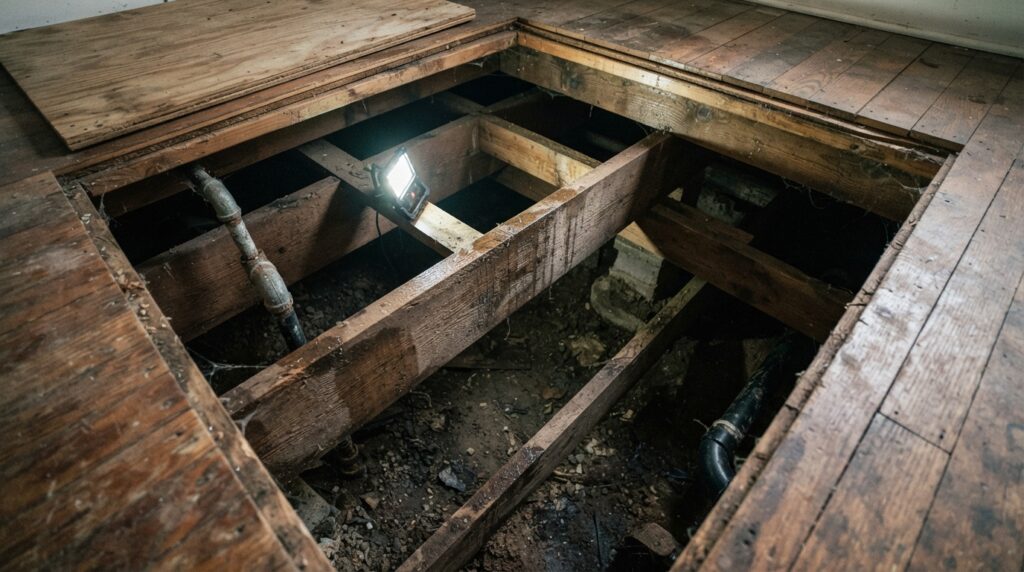
  • Water damage that reached the subfloor, not just the surface finish
  • Wood that’s been sanded down close to the nail line or tongue and groove, leaving little material left to remove
  • Rot, mold, or structural decay in the wood itself
  • Engineered hardwood with a veneer too thin to sand again

If your floor is showing signs closer to the second list, especially significant warping, it’s worth reading through our guide on hardwood floor buckling causes to understand whether the damage is something that formed gradually or points to an ongoing moisture problem that needs addressing either way.

How deep can you sand hardwood floors

Most solid hardwood has enough wear layer to be sanded roughly 1/8 to 3/16 of an inch total over its lifetime, spread across multiple refinishing jobs. Each refinish typically removes a small, controlled amount, which is why professional assessment matters. Sanding too aggressively, or sanding a floor that’s already near its limit, can expose nail heads or weaken the tongue and groove joints.

Pro Tip: Not sure if your floor has enough wood left to sand? Remove a floor vent cover in any room to inspect the cross-section of your floorboard directly. It’s one of the easiest ways to get a rough sense of remaining thickness without any tools.

Solid vs engineered hardwood: refinishing limits

Flooring typeTypical refinish limitWhy
Solid hardwood4 to 6 timesFull thickness of wood throughout the board
Engineered hardwood1 to 2 timesThin veneer layer over a plywood core

This table alone answers a lot of the refinish vs replace question. If you know which type of flooring you have and roughly how many times it’s been refinished, you already have a strong sense of which side of the decision you’re on.

Hardwood floor refinishing cost vs replacement cost

OptionTypical cost per sq ftWhat it includes
Refinishing$3 – $6Sanding, staining (optional), and new protective finish
Full replacement$8 – $22Removal of old flooring, new material, and full installation

Refinishing is almost always the more budget-friendly hardwood floor restoration route, often costing a third or less of full replacement for the same square footage. For a broader breakdown of installation, refinishing, and repair pricing across different scopes, see our hardwood flooring cost guide.

Does refinishing hardwood floors increase home value

Yes, generally. Refinished hardwood is one of the more reliable renovation investments for return on value, since original hardwood is a strong selling point for most buyers and refinishing costs far less than replacement while delivering a comparable visual result. In a market where homes are moving quickly, a freshly refinished floor can also make a property show better without the disruption of a full flooring replacement project.

How long does each option take

ProjectTypical timeline
Refinishing (single room)2 to 3 days
Refinishing (full main floor)4 to 7 days
Replacement (single room)3 to 5 days
Replacement (full main floor)1 to 3 weeks

Timelines shift based on drying time between coats, subfloor condition, and whether old flooring needs to be removed and disposed of before new material goes down.

Refinishing process steps

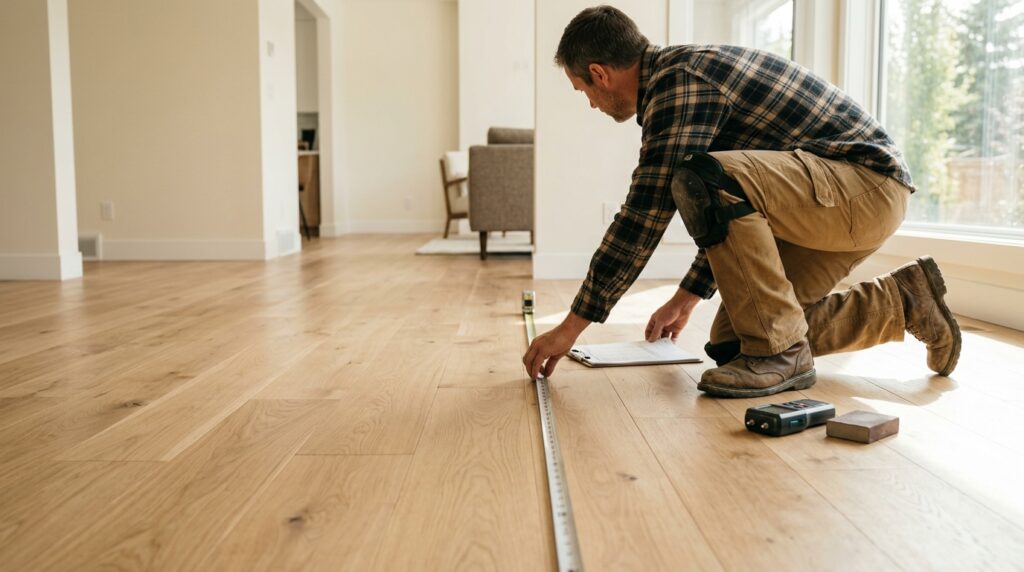
  1. Assess the floor’s current wood thickness and refinish history
  2. Sand down the existing finish and surface
  3. Repair or replace any individual damaged boards before finishing
  4. Apply stain, if changing color
  5. Apply multiple coats of protective finish with drying time between coats

Replacement process steps

  1. Remove and dispose of the existing flooring
  2. Inspect and repair the subfloor as needed
  3. Allow new hardwood to acclimate to the home’s humidity
  4. Install using the appropriate method for the space
  5. Sand and finish on-site, or install prefinished material

Special situations: water damage, warping, and old floors

Water damaged hardwood floor: refinish or replace depends entirely on depth. Surface staining from a spill usually sands out fine. Water that soaked into the subfloor, causing warping across multiple boards, often points toward replacement of that section.

Discolored hardwood floor fix options: discoloration from sun exposure, old rugs, or pet stains is often correctable through refinishing and re-staining, unless the discoloration has penetrated deep into the wood grain.

Old hardwood floor in older Calgary homes: original hardwood in older neighborhoods is often solid wood with plenty of refinishing life left, even when it looks worn. Before assuming an old floor needs replacing, it’s worth having someone confirm the actual wood thickness remaining, since many older floors are better candidates for refinishing than newer, thinner engineered products.

Making the right call for your floor

The deciding factor almost always comes down to wood thickness and structural condition, not how old or worn the floor looks on the surface. A dull, scratched floor with plenty of wood left is a straightforward refinish. A warped or water-damaged floor with little material remaining is a replacement.

According to the National Wood Flooring Association’s general guidance on wood flooring lifespan, well-maintained solid hardwood can last several decades and go through multiple refinishing cycles before replacement is ever necessary, which is why a professional assessment before assuming the worst is almost always worth the time.

If you’re not sure which side of this decision your floor falls on, contact Arbutus Hardwood for a free assessment anywhere in Calgary and the surrounding area. We’ll tell you honestly whether refinishing will do the job or if replacement is genuinely the better move, and give you a clear, upfront quote either way.

Refinishing is almost always cheaper, typically costing a fraction of full replacement for the same area, as long as the existing wood is structurally sound enough to sand.

Not always. Surface-level water exposure often refinishes fine. Water that reached the subfloor or caused significant warping usually means the affected boards need replacing, even if the rest of the floor is fine to refinish.

A professional can check remaining wood thickness above the tongue and groove. Visible nail heads, a very thin-feeling surface, or a floor that's noticeably lower than surrounding transitions are signs it may be near its limit.

Squeaks usually come from loose boards or subfloor movement, not the wood itself, and are typically resolved through repair rather than full replacement. Persistent squeaking across a large area is worth having assessed, since the underlying cause matters more than the noise itself.


Yes. Since engineered hardwood can usually only be refinished once or twice, it reaches its replacement point sooner than solid hardwood, which can often go through several more refinishing cycles over the same number of years.

Yes, and it's fairly common. A main floor with solid hardwood in good condition might just need refinishing, while a water-damaged section or an outdated engineered floor elsewhere in the home might call for replacement. These decisions can be made room by room rather than all at once.
 

How to choose a hardwood flooring contractor in Calgary

How to choose a hardwood flooring contractor in Calgary

How to choose a hardwood flooring contractor in Calgary Learn how to choose a hardwood flooring contractor in Calgary by checking experience, insurance, past projects and written quotes before you hire. Contact Us Your floors will be under your feet for 20 years or more. The person you hire to…

Hardwood Flooring Cost Calgary: 2026 Price & Installation Guide

Hardwood Flooring Cost Calgary: 2026 Price & Installation Guide

Hardwood Flooring Cost in Calgary: What You’ll Actually Pay Planning your project but unsure about hardwood flooring cost in Calgary? This guide explains installation, refinishing, and repair expenses to help you plan your flooring budget. Contact Us If you’re planning to install, repair, or refinish hardwood flooring in Calgary, understanding…

Matte vs Gloss Hardwood Flooring | Arbutus Hardwood

Matte vs Gloss Hardwood Flooring | Arbutus Hardwood

Matte vs gloss hardwood flooring: which finish is right for your home? Matte vs gloss hardwood flooring, see which finish suits Calgary homes best for durability, style & upkeep. Get expert advice from Arbutus Hardwood. Contact Us Matte vs gloss hardwood flooring feels like a small decision until you’re standing…

    Hardwood floor refinishing vs replacement: how to actually decide 3

    Cupping Hardwood Floors: Causes, Signs, and How to Fix It

    Cupping hardwood floors causes almost always trace back to a moisture imbalance between the top and bottom of the board. This guide breaks down what’s actually causing it, how to tell mild cupping from severe, and whether your floor can be repaired or needs replacing.

    Cupping hardwood floors usually comes down to one thing: moisture hitting the bottom of the board faster than the top can release it.

    Quick answer: Cupping is when the edges of a hardwood board rise higher than the center, giving the board a slightly concave, cup-like shape. It’s almost always caused by a moisture imbalance, most often moisture coming up from underneath the floor, whether that’s a humid crawl space, a subfloor leak, or seasonal humidity swings. Mild cupping often corrects itself once the moisture source is fixed. Severe cupping usually needs sanding and refinishing.

    That’s the short version. Here’s the full picture, including what’s actually causing it in your home, how to tell how bad it is, and what to do next.

    What is cupping in hardwood floors

    Cupping is one of three common ways hardwood boards distort. The edges of the board pull upward while the center stays lower, so if you run your hand across the plank, you can actually feel the dip in the middle.

    It’s different from crowning, where the center of the board rises above the edges, and different from buckling, where entire boards lift off the subfloor. Cupping is usually the mildest of the three and the most common, especially in homes with older solid hardwood.

    Cupping hardwood floors causes

    subfloor moisture

    Moisture imbalance between the top and bottom of the board

    Wood absorbs and releases moisture constantly. When the underside of a board takes on more moisture than the top, it expands more than the top does, and the board bows upward at the edges. This is the mechanical reason behind almost every case of cupping, no matter what’s actually feeding the moisture.

    High humidity or seasonal humidity changes

    Calgary’s climate swings hard between a dry winter and a more humid summer stretch. That swing alone is enough to cause mild, seasonal cupping in solid hardwood, especially in homes without a humidifier or dehumidifier keeping indoor air consistent. This kind of cupping often reduces on its own once humidity levels settle back down.

    Subfloor moisture problems

    A slow plumbing leak, a spill that seeped through instead of being wiped up, or moisture trapped under the flooring during installation can all raise the moisture content of the subfloor. Since the underside of the board sits directly against that subfloor, it absorbs the excess moisture first, which is exactly the imbalance that causes cupping.

    Crawl space moisture

    Homes with a crawl space underneath, more common in some of Calgary’s older neighborhoods and in acreage properties around Bragg Creek, Springbank, and Priddis, can develop cupping from ground moisture rising into the space below the subfloor. A poorly ventilated or uninsulated crawl space makes this worse.

    Missing or damaged vapor barrier

    Hardwood installed over concrete needs a proper vapor barrier. Without one, or with one that’s damaged or was installed incorrectly, moisture from the slab works its way into the wood from below over time. This is a common, often overlooked cause in basements and homes built on slab foundations.

    Improper acclimation before installation

    Hardwood needs to sit in the home and adjust to its actual humidity and temperature before installation. Skipping this step means the wood settles into the room’s real conditions after it’s already down, and cupping is one of the most common results. This shows up more in Calgary and the surrounding communities like Airdrie, Chestermere, and Okotoks than in more humidity-stable climates, simply because the gap between summer and winter indoor conditions is wider here.

    Cupping vs buckling vs crowning

    ProblemWhat it looks likeUsually caused by
    CuppingBoard edges rise, center stays lowerMoisture from below, seasonal humidity
    CrowningCenter rises above the edgesOver-drying, or moisture reaching the top surface
    BucklingEntire boards lift off the subfloorSevere, prolonged moisture exposure

    If your floor is showing more than mild edge-curling, it’s worth confirming which of these you’re actually dealing with. We cover buckling in more detail in our guide to hardwood floor buckling causes, since the fix is different once boards have fully lifted rather than just curled at the edges.

    Mild cupping vs severe cupping

    Mild cupping is subtle. You might only notice it by running a hand across the floor or seeing it under angled light. It’s often seasonal and can resolve once humidity levels normalize.

    Severe cupping is visible without touching the floor, sometimes dramatic enough to catch a shoe edge when walking across it. This level usually means the moisture source has been present for a while and typically needs sanding and refinishing once the wood dries back out and flattens.

    Can cupped hardwood floors be repaired

    Yes, in most cases. The fix depends on severity and, more importantly, on finding and fixing the moisture source first. Sanding a cupped floor before the wood has fully dried and settled is a common mistake that leads to an uneven or crowned floor later, once the wood finishes drying after the sanding is done.

    Does cupped hardwood floor go back to normal

    Sometimes, yes, especially with mild, humidity-driven cupping. Once indoor humidity stabilizes, boards can flatten back out on their own over a period of weeks. Severe cupping, or cupping caused by a sustained moisture problem like a subfloor leak, usually doesn’t fully self-correct and needs professional sanding and refinishing after the underlying issue is resolved.

    How to fix cupped hardwood floors

    Humidity control

    1. Identify and fix the moisture source. Sanding a floor without addressing the cause means the cupping, or worse, will come back.
    2. Let the wood dry and stabilize. This can take anywhere from a few days to several weeks, depending on severity. Sanding too early is one of the most common mistakes made on cupping repairs.
    3. Confirm the board has flattened before sanding. A moisture meter reading helps confirm the wood has returned to a stable range.
    4. Sand and refinish. Once the boards are flat and dry, refinishing restores an even surface and protective finish.
    5. Replace any boards that don’t recover. Some boards, especially with long-term moisture exposure, stay permanently distorted and need individual repair rather than sanding alone.

    How long does it take for hardwood floors to un-cup

    Mild cupping can start improving within a week or two once humidity stabilizes. More significant cupping, particularly from a subfloor moisture issue, can take four to six weeks or longer to fully dry out before it’s safe to sand. Rushing this timeline is the most common reason a cupping repair doesn’t hold.

    Hardwood floor cupping repair cost

    Cost depends on whether the floor just needs sanding and refinishing or whether individual boards need replacing.

    Scope of repairTypical cost
    Sanding and refinishing (per room)$3 – $6 per sq ft
    Individual board replacement$50 – $150 per board
    Combined with subfloor moisture repair$1,000 – $3,000+

    For a full breakdown across installation, refinishing, and repair pricing, see our hardwood flooring cost guide.

    How to prevent hardwood floor cupping

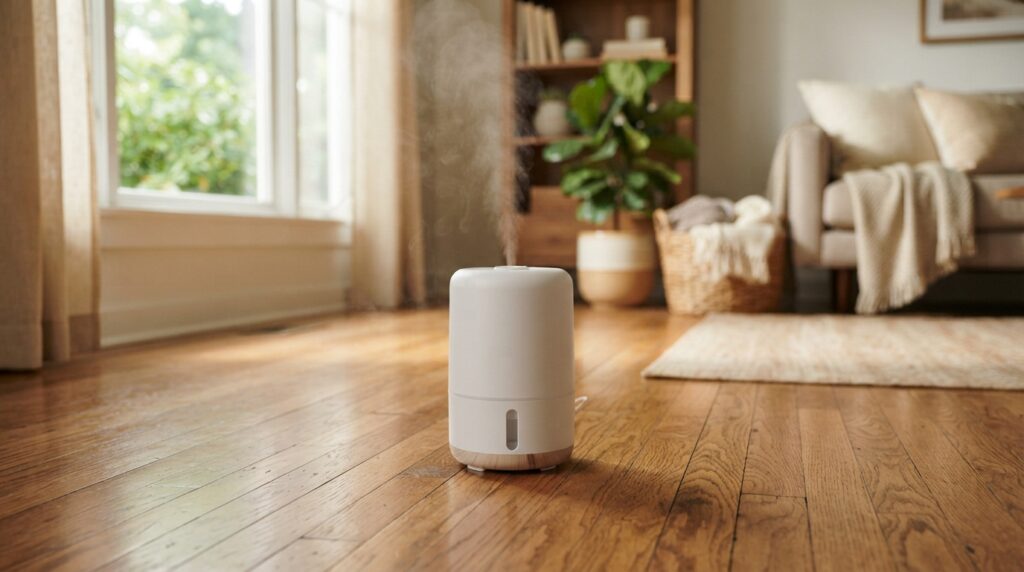
    • Keep indoor humidity in a stable range year-round, roughly 35 to 55 percent, using a humidifier in winter and a dehumidifier in humid summer stretches
    • Wipe up spills immediately and check under appliances and near exterior walls for slow leaks
    • Make sure crawl spaces are properly vented and insulated, especially on acreage properties around Bragg Creek, Springbank Hill, and Priddis
    • Confirm a proper vapor barrier is in place under hardwood installed over concrete
    • Have new hardwood fully acclimated before installation, matched to the season it will actually be living in
    • Get hardwood professionally assessed at the first sign of edge curling, rather than waiting to see if it worsens

    This applies whether you’re in Calgary proper or the surrounding communities we serve, including Airdrie, Cochrane, Chestermere, Okotoks, De Winton, and Crossfield. The humidity swings that cause cupping don’t stop at the city limits.

    Getting it looked at

    Cupping is usually fixable, but the timeline matters more than most homeowners expect. Sanding too early, or ignoring the actual moisture source, is what turns a simple fix into a repeat problem. According to general guidance from the Canadian Wood Council on wood’s response to moisture, dimensional movement like cupping is a normal reaction to humidity change, which is exactly why identifying and controlling the source matters more than the cupping itself.

    If you’re seeing edge curling in your hardwood anywhere in Calgary, Airdrie, Cochrane, Okotoks, Chestermere, or the surrounding area, contact Arbutus Hardwood for a free assessment and quote.

    Not exactly. Water damage is often the source, but cupping is the specific way the wood reacts to that moisture imbalance. A board can cup from a major spill or from something as gradual as normal seasonal humidity changes, without any obvious water event at all.

    It's not recommended. Sanding before the wood has fully dried and flattened often leads to an uneven floor once the boards finish settling, sometimes creating a crowned surface instead of a flat one. Confirming moisture levels before sanding takes equipment most homeowners don't have on hand.

    A humidifier can help stabilize humidity and support recovery from mild, seasonal cupping, but it won't correct cupping caused by a subfloor leak or crawl space moisture. Those need the actual source fixed first.

    Engineered hardwood generally resists cupping better than solid hardwood, since its layered construction is more dimensionally stable. It's not immune, but it holds up better against the kind of humidity swings that affect Calgary homes.

    Compare the depth of the curl over a few weeks, ideally with a photo for reference. If it's stable or improving, it may just be seasonal. If it's deepening or spreading to more boards, that usually points to an ongoing moisture source that needs attention.

    Full replacement is rarely necessary for cupping alone. Even severe cases are usually resolved with sanding, refinishing, or targeted board replacement once the moisture source is addressed. Full replacement tends to come up only when cupping has progressed into buckling or when boards are structurally compromised beyond repair. For older or discontinued flooring, matching replacement boards can sometimes turn into a custom hardwood flooring project rather than a simple swap.

    How to choose a hardwood flooring contractor in Calgary

    How to choose a hardwood flooring contractor in Calgary

    How to choose a hardwood flooring contractor in Calgary Learn how to choose a hardwood flooring contractor in Calgary by checking experience, insurance, past projects and written quotes before you hire. Contact Us Your floors will be under your feet for 20 years or more. The person you hire to…

    Hardwood Flooring Cost Calgary: 2026 Price & Installation Guide

    Hardwood Flooring Cost Calgary: 2026 Price & Installation Guide

    Hardwood Flooring Cost in Calgary: What You’ll Actually Pay Planning your project but unsure about hardwood flooring cost in Calgary? This guide explains installation, refinishing, and repair expenses to help you plan your flooring budget. Contact Us If you’re planning to install, repair, or refinish hardwood flooring in Calgary, understanding…

    Matte vs Gloss Hardwood Flooring | Arbutus Hardwood

    Matte vs Gloss Hardwood Flooring | Arbutus Hardwood

    Matte vs gloss hardwood flooring: which finish is right for your home? Matte vs gloss hardwood flooring, see which finish suits Calgary homes best for durability, style & upkeep. Get expert advice from Arbutus Hardwood. Contact Us Matte vs gloss hardwood flooring feels like a small decision until you’re standing…
      Cupping Hardwood Floors: Causes, Signs, and How to Fix It 7

      Hardwood floor buckling causes: why it happens and what to do

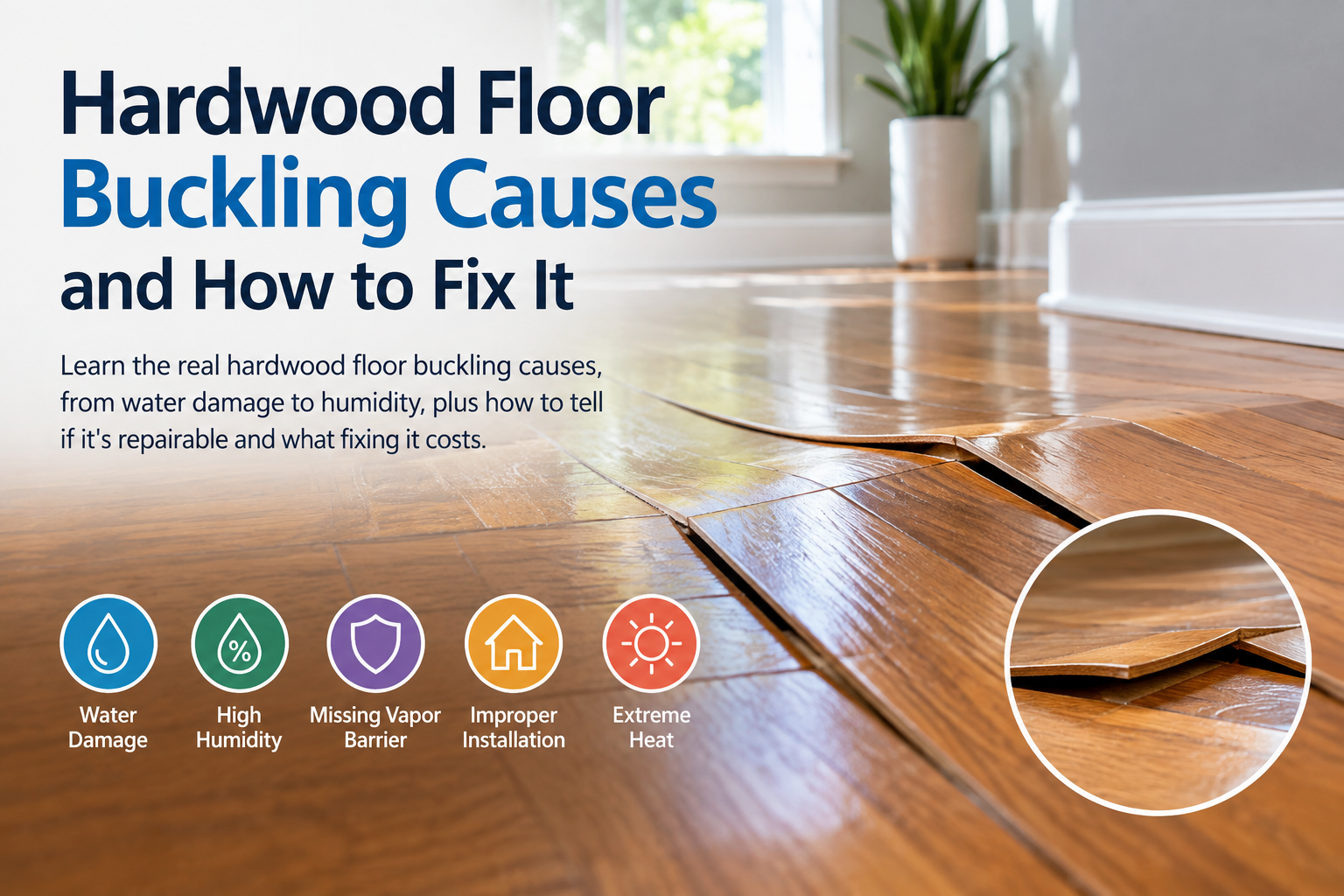
      If your hardwood floor is lifting off the subfloor in visible ridges or waves, that’s buckling, and it’s one of the more serious problems a wood floor can have. Understanding hardwood floor buckling causes early can mean the difference between a small repair and replacing an entire section.

      If your hardwood floor is lifting off the subfloor in visible ridges or waves, that’s buckling, and it’s one of the more serious hardwood floor repair issues a wood floor can have.

      It’s also one of the most misunderstood. A lot of Calgary homeowners assume buckled boards mean the whole floor needs replacing. Sometimes that’s true. Often it isn’t, especially when the cause gets caught early.

      Calgary’s swings between bone-dry winters and humid summer stretches put extra stress on hardwood that homes in milder climates don’t deal with. Add in older housing stock in neighborhoods like Inglewood and Bridgeland, where original subfloors and plumbing weren’t built with today’s hardwood in mind, and buckling shows up here more often than people expect.

      Here’s what actually causes hardwood floors to buckle, how to tell how bad it is, and what your realistic options are.

      Hardwood floor buckling damage

      What is hardwood floor buckling

      Buckling happens when wood planks pull away from the subfloor and rise upward, sometimes in a small section, sometimes across an entire room. In severe cases, boards separate from each other and stand up at the edges.

      It’s different from cupping, where the edges of a board curl upward but the board stays attached to the subfloor, and different from crowning, where the center of the board rises higher than the edges. Buckling is the most extreme of the three, and it usually means moisture has been sitting somewhere for a while.

      Hardwood floor buckling causes

      Almost every case of buckling traces back to one thing: moisture the wood wasn’t built to handle. Here’s where that moisture usually comes from.

      Water damage

      Moisture Damage & Buckling

      This is the most common cause by far. A burst pipe, an overflowing washing machine, a slow leak under a dishwasher, or flooding from outside can all soak the wood from below or above. Wood absorbs water and expands. When it has nowhere to expand into, it pushes up and buckles.

      Even a leak you cleaned up quickly can cause buckling days later, once water has worked its way into the subfloor.

      High humidity or poor ventilation

      Wood is constantly reacting to the moisture in the air around it. In a home with poor ventilation, especially basements or additions with limited airflow, humidity can build up enough to swell the wood over time. This tends to happen more gradually than water damage, so it’s easy to miss until the buckling is already visible.

      Calgary homes see this less often than gapping and cupping, since our winters run dry rather than humid. But summer humidity spikes, a poorly vented bathroom, or a basement with limited airflow can still push moisture levels high enough to cause problems, particularly in newer builds in areas like Mahogany and Seton where basements are finished quickly and ventilation sometimes gets overlooked.

      Missing or damaged vapor barrier

      Hardwood installed over concrete needs a proper vapor barrier between the subfloor and the wood. If that barrier is missing, damaged, or installed incorrectly, moisture from the concrete slab can seep upward into the wood for months without anyone noticing, until the floor starts to lift.

      Improper acclimation before installation

      Hardwood needs time to adjust to a home’s humidity and temperature before it’s installed. Skipping or rushing this step is a common mistake, especially with lower-cost installs. Wood that goes down before it’s acclimated will expand or contract once it settles into the room’s actual conditions, and buckling is one of the ways that shows up.

      This matters more in Calgary than in a lot of other markets. A floor acclimated in summer humidity and then hit with our dry winter indoor air, or installed in winter and then exposed to a humid August, moves more than wood installed in a climate with less seasonal swing.

      Subfloor moisture problems

      Contractor checking hardwood floor

      If the subfloor itself was wet or damp during installation, or develops a moisture issue afterward from a slow plumbing leak or grading problem outside the home, that moisture transfers directly into the hardwood above it.

      Extreme heat exposure

      Less common, but worth knowing: prolonged direct heat, like sunlight through a window for years or a floor installed too close to a heat vent, can also stress the wood enough to contribute to buckling, particularly when combined with humidity swings.

      Buckling vs cupping vs crowning

      These three problems get mixed up constantly, and the fix is different for each one.

      ProblemWhat it looks likeUsually caused by
      CuppingBoard edges curl up, center stays lowerMoisture from below, seasonal humidity
      CrowningCenter of the board rises above the edgesOver-drying after a cupping repair, or moisture from above
      BucklingBoards lift entirely off the subfloorProlonged water exposure, major moisture intrusion

      If you’re not sure which one you’re dealing with, that’s a reasonable thing to have someone confirm in person before you decide on a fix.

      Signs your hardwood floor is buckling

      Catching it early makes a real difference in cost and repair options. Watch for:

      • Boards that feel loose or springy underfoot
      • Visible gaps or ridges between boards
      • A section of floor that looks higher than the rest
      • Boards separating at the seams
      • A musty smell, which often points to moisture sitting underneath

      If you notice any of these, especially after a known water event, don’t wait to see if it gets better on its own. It won’t.

      Can a buckled hardwood floor be repaired

      Often, yes. Hardwood floor repair depends on how long the moisture was present and how many boards are affected.

      Mild to moderate buckling, caught within the first day or two of a water event, can sometimes be corrected by removing the affected boards, thoroughly drying the subfloor, and reinstalling or replacing just that section. This is where a fast response really pays off.

      Severe buckling, where boards have been sitting in moisture for an extended period, often means those specific boards are warped beyond saving and need full replacement. That’s still usually a repair to a section of the floor, not a full floor replacement, unless the water damage was widespread. On older homes with discontinued or unusual species, matching replacement boards can turn into a custom hardwood flooring job rather than a straightforward swap.

      How to fix a buckled hardwood floor

      1. Find and stop the moisture source. Fixing the floor without fixing the leak or humidity problem means you’ll be back here again.
      2. Remove the affected boards. Trying to flatten buckled boards back into place rarely works long-term.
      3. Dry the subfloor completely. This step gets skipped more than it should. Industrial fans or dehumidifiers are often needed, not just open windows.
      4. Check the subfloor for damage. Water that reached the hardwood may have also affected the subfloor underneath.
      5. Replace boards and refinish to match. New boards need to be matched in species, width, and stain, then blended into the surrounding finish so the repair isn’t visible.

      This isn’t usually a DIY-friendly repair. Matching stain and finish on a small section so it blends with surrounding, aged flooring takes experience, and drying a subfloor properly requires more than a fan and a few days.

      How much does hardwood floor buckling repair cost

      Cost depends heavily on how many boards are affected and whether the subfloor also needs repair.

      Scope of repairTypical cost
      Small section (a few boards)$300 – $800
      Moderate section (one room)$800 – $2,500
      Subfloor damage included$1,500 – $4,000+

      For a broader breakdown of flooring costs across installation, refinishing, and repair, see our hardwood flooring cost guide.

      How to prevent hardwood floor buckling

      • Wipe up spills and leaks immediately, and check under appliances periodically for slow leaks
      • Keep indoor humidity between roughly 35 and 55 percent, especially through Calgary’s dry winters and any humid stretches in summer
      • Run a humidifier in winter and a dehumidifier or extra ventilation in humid summer stretches, since Calgary’s swing between the two is wider than most cities
      • Make sure a proper vapor barrier was installed if your hardwood sits over concrete
      • Have new hardwood acclimated properly before installation, not rushed, ideally to the season it’ll actually be living in
      • Address any grading or drainage issues outside the home that could be pushing moisture toward your foundation, worth a second look each spring after snowmelt

      Getting it looked at

      Buckling is one of those problems that gets more expensive the longer it sits, since the moisture causing it usually isn’t done causing damage. If you’re seeing lifted boards, ridges, or a musty smell near your hardwood in Calgary, Airdrie, Cochrane, Okotoks, or the surrounding area, it’s worth having someone assess it before it spreads.

      Contact Arbutus Hardwood for a free assessment and quote on hardwood floor repair anywhere in Calgary and the surrounding area. For general humidity guidance in Canadian homes, the Canada Mortgage and Housing Corporation publishes recommended indoor humidity ranges by season.

      No. If the moisture is caught and removed quickly, many buckled sections can be repaired rather than replaced. The longer wood sits in moisture, the lower the chance of saving those specific boards.

      It varies. Significant flooding can cause visible buckling within hours. A slow, hidden leak might take weeks or months to show up as buckling, since the moisture builds up gradually.

      A dehumidifier can help dry out the area and prevent further damage, but it won't flatten boards that have already buckled. Those boards typically need to be removed and either dried and reinstalled or replaced.

      Sometimes, depending on the cause. Sudden and accidental water damage, like a burst pipe, is often covered. Gradual damage from long-term humidity or a slow leak that went unnoticed is less likely to be covered. Check with your insurance provider for your specific policy.

      No. Refinishing addresses the surface finish, not structural movement in the boards. Buckled boards need to be physically removed, dried, and replaced or reset before refinishing makes sense.

      Small cosmetic issues can sometimes wait for a proper assessment, but active buckling usually means moisture is still present somewhere. It's worth having someone assess the subfloor and moisture source quickly, since delays tend to increase both the damage and the cost.

      How to choose a hardwood flooring contractor in Calgary

      How to choose a hardwood flooring contractor in Calgary

      How to choose a hardwood flooring contractor in Calgary Learn how to choose a hardwood flooring contractor in Calgary by checking experience, insurance, past projects and written quotes before you hire. Contact Us Your floors will be under your feet for 20 years or more. The person you hire to…

      Hardwood Flooring Cost Calgary: 2026 Price & Installation Guide

      Hardwood Flooring Cost Calgary: 2026 Price & Installation Guide

      Hardwood Flooring Cost in Calgary: What You’ll Actually Pay Planning your project but unsure about hardwood flooring cost in Calgary? This guide explains installation, refinishing, and repair expenses to help you plan your flooring budget. Contact Us If you’re planning to install, repair, or refinish hardwood flooring in Calgary, understanding…

      Matte vs Gloss Hardwood Flooring | Arbutus Hardwood

      Matte vs Gloss Hardwood Flooring | Arbutus Hardwood

      Matte vs gloss hardwood flooring: which finish is right for your home? Matte vs gloss hardwood flooring, see which finish suits Calgary homes best for durability, style & upkeep. Get expert advice from Arbutus Hardwood. Contact Us Matte vs gloss hardwood flooring feels like a small decision until you’re standing…
        Hardwood floor buckling causes: why it happens and what to do 11