Arbutus Hardwood Floors

Engineered Hardwood Installation: Calgary Homeowner’s Guide

Planning engineered hardwood installation in Calgary? Learn the process, costs, and expert tips before hiring a pro or starting your project.

So you’re thinking about engineered hardwood installation for your Calgary home. Good move. It’s one of the few flooring upgrades that actually holds up against our dry winters and wild humidity swings, and it still gives you that real wood look under your feet.

But installation isn’t a one-size-fits-all job. The method, the cost, and even the wood species you pick all depend on your subfloor, your budget, and how much of the work you want to do yourself.

I’ve put this guide together after years of installing, repairing, and refinishing floors across Calgary and the surrounding towns. Below you’ll find the real process, the real numbers, and the mistakes that cost homeowners the most.

What is engineered hardwood, and why it works in Calgary

Engineered hardwood is built in layers. A real wood veneer sits on top, bonded to several layers of plywood underneath, usually running in a cross-grain pattern.

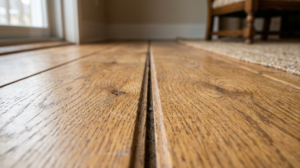
That layered build is the whole point. It resists the shrinking, expanding, and gapping that solid hardwood is prone to when humidity drops in January and climbs again in July.

Calgary’s chinooks are brutal on flooring. One week it’s minus 20, the next it’s plus 10 and everything in your house is contracting and expanding at a different rate. Engineered wood handles that stress far better than solid planks.

If you’re still deciding between the two, our breakdown of solid vs engineered hardwood for Calgary homes walks through the tradeoffs in more detail.

Engineered hardwood installation methods

There are three main ways to get engineered hardwood down, and the right one depends on your subfloor.

Floating installation

Floating floors aren’t attached to the subfloor at all. The planks click together (tongue and groove or a locking system) and rest on a cushioned underlayment.

This is the fastest method and the most forgiving for slightly uneven subfloors. It’s also the go-to choice over concrete, in basements, or over radiant heating systems where nailing isn’t an option.

Glue-down installation

Here, the planks get bonded directly to the subfloor with a urethane adhesive. It’s messier and takes longer, but it produces the quietest, most solid-feeling floor. Fewer hollow sounds. Less movement underfoot.

Glue-down is usually the pick for concrete subfloors when you want maximum stability, or in high-traffic rooms where you don’t want any give at all.

Nail-down or staple-down installation

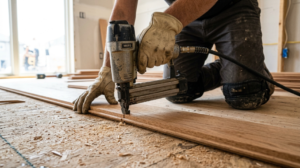
This is the traditional method, and it only works on wood subfloors (plywood or OSB, not concrete). Planks get fastened through the tongue at an angle, hidden once the next row locks in.

It needs a thicker plank, usually 3/4 inch, and a bit more skill to pull off cleanly. Done right, it’s rock solid for decades.

Not sure which method fits your home? Our article on nail-down vs glue-down hardwood floors compares them side by side, including cost and noise differences.

Method

Best for

Difficulty

Sound quality

Floating

Concrete, basements, radiant heat

Easy

Good, can feel slightly hollow

Glue-down

Concrete, high-traffic rooms

Moderate to hard

Excellent, very solid

Nail-down

Plywood or OSB subfloors

Hard

Excellent, traditional feel

Engineered hardwood installation methods
What to expect during the installation process
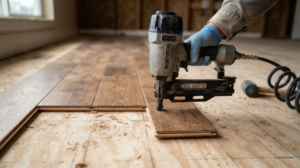
Here’s what a typical engineered hardwood installation actually looks like, start to finish, for an average-sized Calgary home.

Acclimation (3 to 7 days). The wood sits in the room where it’ll be installed, still in its packaging, so it adjusts to your home’s temperature and humidity. Skip this step and you risk gaps or buckling down the road.

Subfloor prep (1 to 2 days). Old flooring comes out. The crew checks the subfloor for flatness, usually within 3/16 inch over 10 feet, and levels any dips or sands down high spots. Moisture gets tested too, especially over concrete.

Layout and installation (1 to 3 days, depending on square footage). Chalk lines mark the starting point. Planks go down row by row, staggered joints, expansion gaps left around every wall.

Trim and transitions (half a day to a full day). Baseboards or shoe molding cover the expansion gaps. Transition strips go in at doorways where flooring meets tile or carpet.

Curing time (24 to 48 hours). You wait before moving heavy furniture back, longer if the floor was glued down.
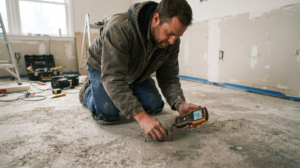
expect during the installation process

For a 1,000 square foot space, most homeowners are looking at 8 to 12 days total from delivery to move-in, including acclimation. That timeline stretches or shrinks depending on room count, layout complexity, and whether the crew is also removing old carpet or tile. Our guide on how long hardwood installation takes in Calgary breaks down timelines room by room if you want more detail.

Engineered hardwood installation cost in Calgary

Pricing varies a fair bit based on wood species, plank width, installation method, and subfloor condition. Here’s a rough range to budget around.

Cost factor

Typical range (per sq ft, installed)

Basic engineered oak, floating

$6 to $9

Mid-range engineered hardwood, glue-down

$9 to $13

Premium wide-plank or exotic species

$13 to $18+

Subfloor leveling or repair (if needed)

$2 to $5 extra per sq ft

Removal of old flooring

$1 to $3 extra per sq ft

These numbers include materials and labor but don’t factor in baseboards, custom staining, or stair work, which get quoted separately. If your existing subfloor needs major leveling, that adds to the bill fast, so it’s worth asking your contractor to inspect before you get a final number.

Choosing the right engineered hardwood for your home

The installation method matters, but so does the product itself. A few decisions here will shape how your floor looks and performs for years.

Picking a wood species

Oak is still the most popular choice in Calgary, mostly because it stains well and holds up to daily traffic. But the species you pick changes the whole feel of a room.

Red oak leans warm, with visible grain and a slightly pink undertone. White oak runs cooler and more neutral, which is why it’s become the go-to for modern, Scandinavian-style interiors. If you’re torn between them, our comparison of red oak vs white oak flooring covers the visual and durability differences.

Choosing a brand

Not all engineered hardwood is built the same. Wear layer thickness, core construction, and finish quality all vary between manufacturers, and that affects how many times (if any) the floor can be sanded and refinished later.

We’ve put together a list of the best hardwood flooring brands available in Calgary if you want a starting point before you go sample shopping.
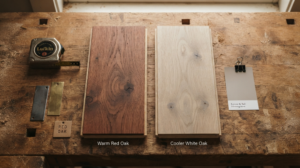
Choosing the right engineered hardwood

Common installation mistakes to avoid

Most flooring failures I get called out to fix trace back to one of these:

  • Skipping acclimation. Installing the wood the same day it’s delivered is asking for gaps or buckling within a year.
  • Ignoring subfloor moisture. Concrete that tests high on moisture will ruin a floor from underneath, glue-down or not.
  • Wrong expansion gaps. Too tight against the wall and the floor has nowhere to move when it expands. It’ll buckle.
  • Uneven subfloor left unaddressed. Even a small dip creates a hollow spot or a squeak that shows up months later.
  • Choosing the wrong installation method for the subfloor. Nailing over concrete, for example, just doesn’t work.

We’ve written a full breakdown of the most frequent hardwood installation mistakes homeowners run into, along with how each one gets fixed once it’s already happened.

DIY or hire a professional?

Floating floors with a click-lock system are genuinely doable for a confident DIYer with a weekend to spare. I’ve seen plenty of homeowners pull it off well.

Glue-down and nail-down installations are a different story. They demand precise layout work, the right tools, and experience reading how a subfloor will behave. One misaligned starting row and the whole floor telegraphs that mistake wall to wall.

If your project involves concrete moisture testing, radiant heat, stairs, or a layout with a lot of cuts around cabinets and door frames, hiring a professional saves you from a costly redo. Our team handles engineered and solid hardwood installation across Calgary and the surrounding area, from single rooms to full main-floor projects.

Subfloor prep, acclimation, and moisture testing

This is the part that gets skipped most often, and it’s the part that determines whether your floor lasts 20 years or fails in 2.

Before anything gets installed, the subfloor needs to be flat, clean, dry, and structurally sound. Any loose panels get fastened down. Dips get filled with leveling compounds. High spots get sanded flat.

Over concrete, moisture testing is non-negotiable. A calcium chloride test or a relative humidity probe tells you whether the slab is dry enough to install over. Skip it and you’re gambling with warping, mold, or adhesive failure down the line.

The National Wood Flooring Association sets the industry standards most professional installers follow for acclimation periods, moisture thresholds, and subfloor tolerances. If a contractor tells you they can skip acclimation or install without testing, that’s worth a second opinion.

Custom flooring options

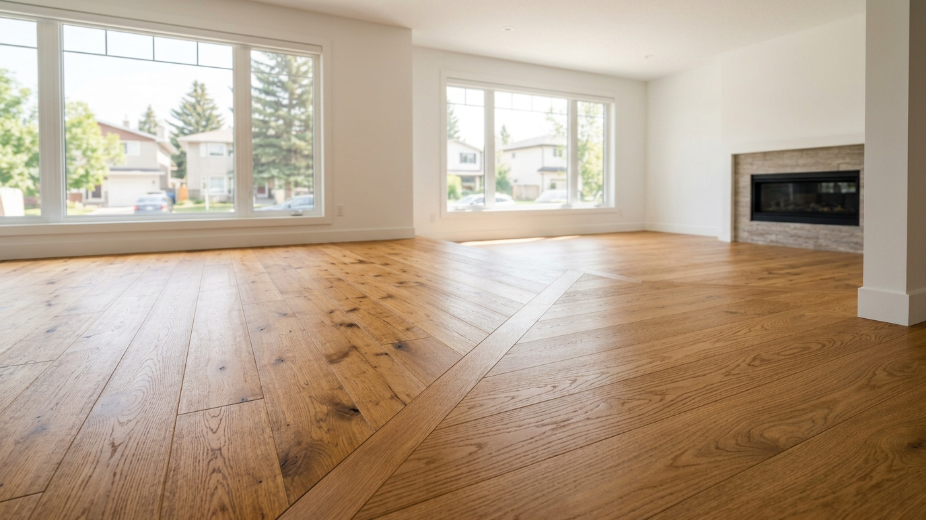
Standard plank widths and finishes work for most homes, but some projects call for something specific: a wider plank, a custom stain to match existing trim, or a herringbone layout that no off-the-shelf product offers.

If that’s the direction you’re leaning, our custom hardwood flooring service covers sourcing, staining, and layout design tailored to your space.

Final thoughts

Engineered hardwood installation done right comes down to three things: proper acclimation, a subfloor that’s actually ready, and a method that matches your specific space. Get those right and the floor will outlast most of the furniture sitting on it.

If you’re weighing your options or just want a straight answer on what your home needs, our team is here to help. We’ve been installing, repairing, and refinishing hardwood across Calgary and the surrounding communities for over 30 years, and we’re happy to walk you through what your project actually requires before you spend a dollar on materials.

Call us today or request your free quote online and we’ll get back to you with honest, upfront pricing, no surprises.
Yes, and it's actually one of the better flooring options for radiant heat systems. Floating installation is usually recommended here since it allows the floor to expand and contract without stressing the adhesive or fasteners.

That depends entirely on the wear layer thickness. A 2mm wear layer typically allows for one light sanding, while a 4mm or thicker layer can handle 2 to 3 refinishes over the floor's lifetime.

Generally, yes. Real estate agents in the city consistently note that hardwood, engineered or solid, ranks above laminate and vinyl in buyer preference, particularly in main living areas.

 Most manufacturers require at least 3/4 inch thickness for nail-down or staple-down methods. Thinner planks don't hold fasteners securely and are better suited to floating or glue-down installation.

 You can, especially with a click-lock floating system. Just budget extra time for acclimation, subfloor prep, and the learning curve on your first few rows, since mistakes there carry through the whole floor.

 Light foot traffic is usually fine after 24 hours. If the floor was glued down, wait the full 48 hours before moving furniture or appliances back into the room.

How to choose a hardwood flooring contractor in Calgary

How to choose a hardwood flooring contractor in Calgary

How to choose a hardwood flooring contractor in Calgary Learn how to choose a hardwood flooring contractor in Calgary by checking experience, insurance, past projects and written quotes before you hire. Contact Us Your floors will be under your feet for 20 years or more. The person you hire to…

Hardwood Flooring Cost Calgary: 2026 Price & Installation Guide

Hardwood Flooring Cost Calgary: 2026 Price & Installation Guide

Hardwood Flooring Cost in Calgary: What You’ll Actually Pay Planning your project but unsure about hardwood flooring cost in Calgary? This guide explains installation, refinishing, and repair expenses to help you plan your flooring budget. Contact Us If you’re planning to install, repair, or refinish hardwood flooring in Calgary, understanding…

Matte vs Gloss Hardwood Flooring | Arbutus Hardwood

Matte vs Gloss Hardwood Flooring | Arbutus Hardwood

Matte vs gloss hardwood flooring: which finish is right for your home? Matte vs gloss hardwood flooring, see which finish suits Calgary homes best for durability, style & upkeep. Get expert advice from Arbutus Hardwood. Contact Us Matte vs gloss hardwood flooring feels like a small decision until you’re standing…

    Engineered Hardwood Installation: Calgary Homeowner's Guide 3

    9 Hardwood Installation Mistakes That Wreck Calgary Floors

    9 Hardwood Installation Mistakes That Wreck Calgary Floors

    Calgary’s harsh weather makes hardwood floors especially prone to damage from hardwood installation mistakes. From skipping acclimation to using the wrong underlayment, these errors cause buckling, gaps, and costly repairs. Here are the 9 most common hardwood installation mistakes that wreck Calgary floors  and how to avoid them.

    A new hardwood floor is one of the best upgrades you can make to a home. It looks warm, it adds real value, and it lasts for decades when it’s done right.

    The problem is that most hardwood installation mistakes don’t show up on day one. They show up three months later, when the heat kicks on and the wood starts telling you the truth about how it was installed.

    We’ve spent over 30 years fixing floors in Calgary homes, and almost every callback traces back to one of the same handful of errors. Some are made by inexperienced DIYers. A surprising number are made by installers who skipped a step to save time. Either way, the fix is almost always more expensive than doing it right the first time.

    Here are the nine hardwood installation mistakes we see most often, why they happen, and what to do instead. Whether you’re hiring a professional crew or tackling part of the project yourself, understanding these hardwood installation mistakes before work begins can save you thousands of dollars and a lot of frustration down the road.

    1. Skipping or Rushing the Acclimation Period

    Hardwood is not like tile or vinyl. It’s a natural material that keeps reacting to the air around it long after it’s been milled and boxed.

    When boards go straight from a delivery truck to your subfloor without time to adjust, they’re still carrying the humidity level of the warehouse or the truck they came from. That almost never matches the humidity of your living room.

    What goes wrong: If the wood is drier than your home, it will absorb moisture after installation and swell, causing the boards to buckle or push against each other. If it’s more humid than your home, the opposite happens: it shrinks, and you end up with gaps you can slide a coin into.

    The fix: Boards need to sit in the actual room where they’ll be installed for at least three to five days before work begins. In a Calgary winter, when indoor air can drop to 20 to 30 percent relative humidity, this step matters even more than it does in milder climates.

    This is one of the first things a good installer checks before touching a single plank. If you’re comparing quotes, ask how the acclimation period is handled. It’s a fair question, and any experienced hardwood floor installation team should have a clear answer.

    Moisture Damage & Buckling

    2. Ignoring Subfloor Preparation

    A hardwood floor is only as good as what’s underneath it. This is the step that gets rushed most often, because it’s invisible once the planks go down.

    What goes wrong: An uneven, dirty, or structurally weak subfloor telegraphs straight through to the finished surface. You’ll notice hollow-sounding spots when you walk across the room, squeaks that never go away, and in bad cases, cracked joints between boards within the first year.

    The fix: Before installation starts, the subfloor should be checked for flatness, cleaned, and repaired where needed. Self-leveling compound handles minor dips. Larger structural issues need to be addressed before flooring goes anywhere near the room.

    Skipping this step is one of the most common reasons homeowners end up calling us for repairs a year or two after a rushed install. If your floor already has that hollow, springy feeling, it’s worth reading up on the signs your hardwood floor needs repair before the problem gets worse.

    3. Skipping Moisture Testing

    This is the mistake that causes the most expensive damage, and it’s also the easiest one to prevent.

    What goes wrong: Wood doesn’t have to look wet to hold too much moisture. A concrete slab can feel perfectly dry to the touch and still be holding enough residual moisture to ruin a floor. When hardwood is installed over a subfloor with hidden moisture, you often see cupping, where the edges of each board rise higher than the center. In worse cases, mold can start growing underneath the surface where nobody sees it until the smell shows up.

    The fix: A professional moisture meter should be used on both the hardwood itself and the subfloor before installation begins. The readings need to fall within the range the manufacturer recommends, not just whatever feels close enough. This step follows the same standards outlined in the NWFA installation guidelines, which is the industry reference most professional installers use to set moisture and acclimation benchmarks.

    If your basement or main floor sits over concrete, this step is non-negotiable, especially with Calgary’s seasonal humidity swings between a dry winter and a wetter summer.

    4. Forgetting Expansion Gaps

    Wood moves. It always has, and it always will, no matter how good the finish looks on installation day.

    What goes wrong: When planks are installed too tightly against the walls, there’s nowhere for the wood to go when it naturally expands with the seasons. The pressure builds along the perimeter until the entire floor has no choice but to buckle or lift somewhere in the middle of the room.

    The fix: A consistent gap, usually around half an inch, needs to be left around the perimeter of every room. Spacers keep this even during installation, and the gap gets covered later by baseboards, so nobody ever sees it. It’s a small detail that prevents one of the most dramatic and expensive failures a hardwood floor can have.

    5. Choosing the Wrong Installation Method for the Subfloor

    Not every hardwood installation method works with every subfloor, and this is a mistake we see even from installers who should know better.

    What goes wrong: Nailing hardwood into a concrete slab isn’t possible without the right underlayment, and gluing a floating floor system down defeats the purpose of the design. When the method doesn’t match the subfloor, adhesion fails, boards shift over time, and the floor starts making noise within months.

    The fix: The subfloor type should decide the method, not personal preference or whatever the installer is most comfortable doing. Wood subfloors typically support nail-down installation. Concrete usually calls for glue-down or a floating system. If you’re weighing your options, our guide on choosing between nail-down and glue-down methods breaks down which one fits your situation.

    6. Choosing the Wrong Wood Type for Calgary’s Climate

    This mistake happens before installation even starts, at the point where the wrong product gets ordered.

    What goes wrong: Solid hardwood is a beautiful, long-lasting product, but it’s more sensitive to humidity swings than engineered hardwood. In a climate like Calgary’s, where indoor air can be extremely dry through the winter heating season, solid wood installed without the right precautions is more prone to gapping. Homeowners who don’t know this end up disappointed by a floor that looked perfect in the showroom.

    The fix: Engineered hardwood’s layered construction resists movement better, which makes it a smart choice for basements, homes with radiant heat, and rooms with more humidity swings. Solid hardwood still works beautifully in the right rooms with the right humidity control. The key is matching the product to the space. Our breakdown of solid vs. engineered hardwood for Calgary homes covers this in more detail if you’re still deciding.

    7. Buying Low-Quality or Wrong-Grade Material

    Sometimes the mistake isn’t the installation at all. It’s what got installed.

    What goes wrong: Cheaper hardwood often uses thinner wear layers, inconsistent milling, or lower-grade wood that doesn’t hold up to daily traffic. It might look fine for the first year, then start showing wear, warping, or finish damage well before it should.

    The fix: Buying from a supplier who stands behind their product matters as much as who installs it. This is one of the reasons we handle sourcing quality hardwood flooring directly for our clients instead of leaving it to chance. If you’re shopping around, our guide to trusted hardwood flooring brands in Calgary is a good starting point before you commit to a product.

    8. Poor Nailing or Gluing Technique

    This one is purely about workmanship, and it’s a big reason experience matters more than a lower quote.

    What goes wrong: Too few nails, inconsistent spacing, or glue that doesn’t make full contact with the subfloor all lead to the same result: planks that shift under weight. Over time, that movement creates gaps, and the floor starts to pop or squeak every time someone walks across it.

    The fix: Nail spacing should follow industry standards, generally every 6 to 8 inches, and glue-down installations need full, even adhesive coverage between the subfloor and the plank. This is a detail that’s easy to rush and hard to fix later without pulling up boards.

    9. Rushing the Installation Timeline

    The last mistake ties several of the others together: trying to compress a job that needs time.

    What goes wrong: Acclimation gets cut short. Moisture readings get skipped because there’s no time to wait for them. Subfloor repairs get glossed over because the schedule doesn’t allow for delays. A rushed installation almost always means one of the earlier steps on this list got shortcut somewhere along the way.

    The fix: A realistic timeline protects every other step in the process. If you’re planning a renovation and trying to figure out scheduling, it helps to know how long hardwood installation actually takes before you lock in a move-in date or a deadline that forces shortcuts.

    Why Calgary’s Climate Makes These Mistakes More Costly

    Every one of these hardwood installation mistakes can happen anywhere. But a handful of them do more damage, faster, in a city like Calgary than they would in a more humid climate.

    Winters here are long, dry, and cold enough that furnaces run for months at a stretch. That constant heat pulls moisture out of the air, and indoor humidity can drop into the 20 to 30 percent range without a homeowner ever noticing, since it doesn’t feel uncomfortable the way summer humidity does. Wood doesn’t get that pass. It reacts to every percentage point.

    Summers bring the opposite swing. Humidity climbs, sometimes sharply after a wet spell, and wood that wasn’t given proper expansion room during installation has nowhere to go but up.

    This back-and-forth is exactly why acclimation, moisture testing, and expansion gaps matter more here than they might in a milder region. A mistake that might only cause a minor issue in a stable climate can turn into a full board replacement after one Calgary winter.

    It’s also why we lean toward engineered hardwood for a lot of local installations, and why we take humidity readings seriously on every job, not just the ones over concrete. Thirty years of watching how local homes behave through the seasons has taught us which shortcuts simply don’t hold up here, even if they’d be fine somewhere else.

     Common Mistakes at a Glance

    Common Mistakes at a Glance

    Mistake

    Common Consequence

    Prevention

    Skipped acclimation

    Buckling or gapping

    3–5 day on-site acclimation

    Poor subfloor prep

    Hollow spots, squeaks

    Level, clean, and repair subfloor first

    No moisture testing

    Cupping, mold

    Moisture meter readings before install

    No expansion gaps

    Buckling at perimeter

    1/2 inch gap, hidden by baseboards

    Wrong installation method

    Adhesion failure, shifting

    Match method to subfloor type

    Wrong wood type

    Gapping in dry climates

    Engineered hardwood for humidity-prone rooms

    Low-grade material

    Premature wear

    Buy from a trusted supplier

    Poor nailing or gluing

    Popping, squeaking

    Follow industry nail/glue spacing standards

    Rushed timeline

    All of the above, at once

    Build a realistic schedule

    What to Do If Your Hardwood Was Already Installed Incorrectly

    If your floor is already down and something feels off, whether that’s a squeak that won’t quit, a board that’s started to cup, or gaps that seem to be getting wider, it’s worth having it looked at before the damage spreads to more of the floor. Small issues caught early are usually a repair. Left alone, they tend to turn into a full replacement.

    We offer hardwood floor repair services across Calgary for exactly this situation, and in most cases, a trained eye can tell within minutes whether the problem is cosmetic or structural.

    The Bottom Line

    Most hardwood installation mistakes happen before a single board is nailed or glued down. Skipped acclimation, untested moisture levels, and rushed subfloor prep cause more damage over time than almost anything that happens during the actual installation day.

    The good news is that every mistake on this list is preventable. It just takes the right process, the right materials for your home’s climate, and an installer who won’t cut corners to hit a deadline.

    If you’re planning a new hardwood installation in Calgary, or you’re already noticing signs that something wasn’t done right the first time, our team at Arbutus Hardwood has spent over 30 years getting it right for homeowners across the city. Contact us today for a free quote, and let’s make sure your floor is one that lasts.

    Most manufacturers recommend three to five days, but in Calgary's dry winter months, some products may need closer to a full week. The goal is for the wood's moisture content to match the room, not just for a certain number of days to pass.

    Yes, but it takes more planning. Indoor heating dries the air significantly, so humidification during and after installation is often necessary to keep boards from shrinking too much once the season shifts.

    Look for gaps that seem larger than a coin's width, edges of boards sitting higher than the center, persistent squeaking, or areas that sound hollow when you walk on them. Any of these are worth a professional inspection.

    It depends on the scope. Simple, small rooms with floating floor systems can be manageable for an experienced DIYer. Glue-down installations over concrete, wide-plank solid hardwood, and anything involving moisture-prone subfloors are much harder to get right without training and the proper tools.

    Most manufacturers recommend keeping indoor relative humidity between 35 and 55 percent year-round. In Calgary, that usually means running a humidifier through the winter and, in some homes, a dehumidifier during humid summer stretches.

    It varies widely depending on the extent of the damage. A few boards with gapping or minor cupping can often be repaired without pulling up the whole floor. Widespread moisture damage or subfloor issues usually cost more, since those repairs mean removing larger sections to fix the root cause.

    How to choose a hardwood flooring contractor in Calgary

    How to choose a hardwood flooring contractor in Calgary

    How to choose a hardwood flooring contractor in Calgary Learn how to choose a hardwood flooring contractor in Calgary by checking experience, insurance, past projects and written quotes before you hire. Contact Us Your floors will be under your feet for 20 years or more. The person you hire to…

    Hardwood Flooring Cost Calgary: 2026 Price & Installation Guide

    Hardwood Flooring Cost Calgary: 2026 Price & Installation Guide

    Hardwood Flooring Cost in Calgary: What You’ll Actually Pay Planning your project but unsure about hardwood flooring cost in Calgary? This guide explains installation, refinishing, and repair expenses to help you plan your flooring budget. Contact Us If you’re planning to install, repair, or refinish hardwood flooring in Calgary, understanding…

    Matte vs Gloss Hardwood Flooring | Arbutus Hardwood

    Matte vs Gloss Hardwood Flooring | Arbutus Hardwood

    Matte vs gloss hardwood flooring: which finish is right for your home? Matte vs gloss hardwood flooring, see which finish suits Calgary homes best for durability, style & upkeep. Get expert advice from Arbutus Hardwood. Contact Us Matte vs gloss hardwood flooring feels like a small decision until you’re standing…
      9 Hardwood Installation Mistakes That Wreck Calgary Floors 7

      How Long Does Hardwood Floor Installation Time in Calgary?

      How Long Does Hardwood Floor Installation Take in Calgary?

      Hardwood floor installation time in Calgary typically ranges from 1 to 5 days for installation, plus 3 to 7 days for proper acclimation before work begins. The exact timeline depends on factors like your flooring type, home size, subfloor condition, and the complexity of the project. This guide explains every stage so you know exactly what to expect.

      If you’re planning new floors, the first question is almost never about wood species or finish. It’s this: how long is my house going to be turned upside down?

      Fair question. Hardwood floor installation time in Calgary usually runs 1 to 5 days for the actual installation, plus 3 to 7 days of acclimation before anyone even picks up a hammer. For a full-home project, total project time (delivery to final walkthrough) often lands somewhere between one and two weeks.

      But that range hides a lot of detail, and the “it depends” answer that most flooring sites give you isn’t very useful when you’re trying to book time off work or figure out when the movers should show up. So this guide breaks down exactly what happens at each stage, what stretches the timeline, and why Calgary’s climate specifically plays a bigger role here than most articles mention.

      How Long Does Hardwood Floor Installation Really Take?

      Before we get into the step-by-step process, here’s the short version most homeowners actually want:

      Project Size

      Installation Time

      Total Time (incl. Acclimation)

      Single room (up to 300 sq ft)

      1 day

      4–8 days

      Multiple rooms (500–1,000 sq ft)

      1–2 days

      5–10 days

      Main floor (1,000–2,000 sq ft)

      2–4 days

      7–12 days

      Whole home (2,000+ sq ft)

      3–5 days

      10–14 days

      Baseline Speed: A two-person installation crew typically covers 750 to 1,000 square feet per day under normal conditions, open layout, no major obstacles, no pattern work. That number is the baseline everything else in this article adjusts up or down from.

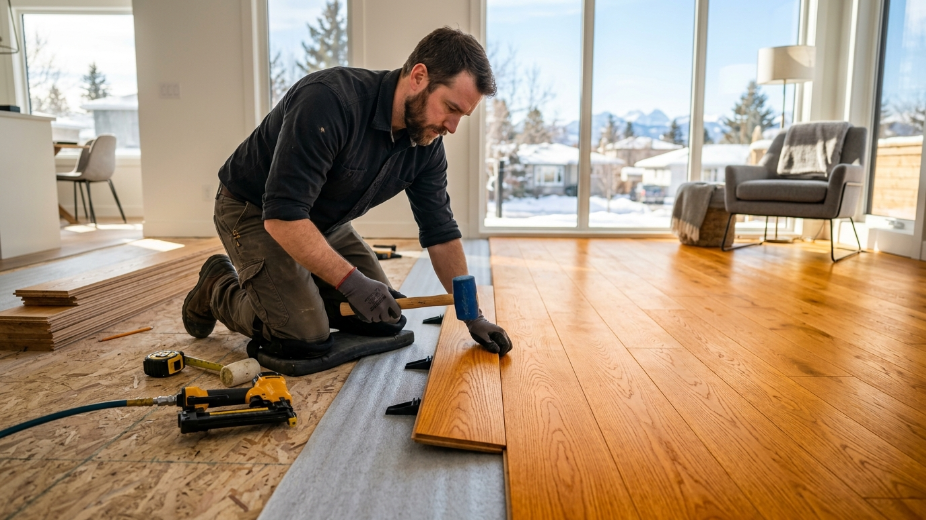
      Hardwood Floor Installation Time: Step-by-Step Breakdown  Hardwood flooring planks in room

      Understanding what actually happens during each phase makes the total timeline make a lot more sense.

      Step 1: In-Home Consultation and Measurement

      Most projects start with a walkthrough where a professional measures the space, checks the subfloor, and helps you settle on a wood type. This usually takes an hour or two and happens days or weeks before installation begins. If you’re comparing companies for hardwood floor installation  in Calgary, this is also the point where you’ll get an honest, project-specific timeline instead of a generic estimate.

      Step 2: Acclimation (Why Calgary’s Climate Matters Here)

      Acclimation means letting the wood adjust to the humidity and temperature of your home before it’s installed. Skip this step, and you risk gaps, cupping, or buckling months later.

      Solid hardwood generally needs 5 to 7 days to acclimate. Engineered hardwood is more dimensionally stable and often needs only 1 to 3 days. This stage follows the standards laid out in the NWFA installation guidelines , which require the wood’s moisture content to fall within a small percentage of the subfloor’s moisture content before installation can safely begin.

      Here’s the part most guides skip: Calgary’s climate makes this step more important than it is in milder regions. Winters here are extremely dry, and chinook winds can swing temperature and humidity dramatically within 24 hours. That combination stresses wood flooring more than a steady, humid climate would. Rushing acclimation in a Calgary home is one of the most common reasons floors develop problems within the first year.

      Step 3: Old Flooring Removal

      If you’re replacing carpet, tile, or old hardwood, this adds time before the new floor can go down. Carpet removal is quick, usually 2 to 4 hours for an average room. Tile and old hardwood removal takes longer, sometimes a full day for larger areas, since it often involves scraping adhesive or dealing with nails.

      Step 4: Subfloor Preparation

      The subfloor needs to be clean, level, dry, and structurally sound. Squeaks, soft spots, or uneven areas need to be fixed before installation starts. This is one of the biggest wildcards in any timeline. A subfloor in good shape adds almost no time. One with hidden moisture damage or serious leveling issues can add one to two extra days, sometimes more.

      If your existing floor shows signs of water damage or structural issues before you even get to this stage, it’s worth having a hardwood floor repair assessment done first, rather than discovering the problem mid-installation.

      Step 5: Installation Day(s)

      This is the main event. Installers lay, cut, and secure the planks using whichever method fits your flooring type: nailing, gluing, or floating. For a straightforward room with no major obstacles, this can be done in a single day. Larger or more complex spaces take longer, and we’ll cover exactly why in the next section.

      Step 6: Finishing (If You Chose Unfinished Hardwood)

      If you went with site-finished hardwood, the floor gets sanded, stained (if desired), and sealed with multiple coats of finish after installation. Each coat needs drying time, usually 24 hours, and most floors need two to three coats. This adds 2 to 4 extra days compared to prefinished flooring, which arrives ready to walk on.

      Step 7: Final Walkthrough and Cleanup

      Once everything is installed and cured enough to walk on, your installer should do a final walkthrough with you, check for any gaps or issues, and clean the site. This is usually quick, under an hour for most homes.

      What Affects Hardwood Floor Installation Time?

      Hands installing hardwood flooring

      Two projects of the same square footage can take very different amounts of time. Here’s what actually moves the needle.

      Solid vs. Engineered Hardwood:

       Solid hardwood needs longer acclimation and is more sensitive to humidity swings, which matters more in a Calgary winter than almost anywhere else in Canada. Engineered hardwood is built with cross-layered cores that resist movement, so it acclimates and installs faster. If you’re still deciding between the two, this solid vs engineered hardwood comparison breaks down how each performs in Alberta homes specifically.

      Installation Method (Nail-Down, Glue-Down, or Floating):

       The method you choose changes both the install speed and the skill required. Nail-down is the traditional approach for solid wood and takes longer per square foot. Glue-down requires curing time for the adhesive. Floating floors, often used with engineered wood, go down fastest since planks click together without nails or glue. If you’re weighing your options, this guide on nail-down vs. glue-down hardwood floors walks through the trade-offs in more detail.

      Prefinished vs. Unfinished Flooring:

       Prefinished floors arrive stained and sealed from the factory, so you can walk on them almost immediately after installation. Unfinished flooring needs onsite sanding and finishing, which is where most of the extra days in a “site-finished” project come from.

      Room Layout and Obstacles:

       Open, rectangular rooms are the fastest to install. Add cabinets, fireplaces, closets, or staircases, and the crew has to cut around each one individually. A staircase alone can add a full day, since each step is essentially its own custom installation.

      Pattern Choice:

       Standard straight-plank installation is the quickest layout. Herringbone or parquet patterns require significantly more precision and cutting, and can take two to three times longer than a standard install for the same square footage.

      Subfloor Condition:

       As mentioned earlier, this is often the biggest hidden variable. A flat, dry, structurally sound subfloor barely affects your timeline. A damaged or uneven one can turn a two-day job into a four-day job.

      Removing Old Flooring:

       Multiple layers of old flooring, stubborn adhesive, or nails left behind from a previous install all add hours to the prep stage before new hardwood can even be laid down.

      Hardwood Floor Installation Time by Type

      Hardwood Type

      Typical Acclimation

      Typical Installation Speed

      Best For

      Solid Hardwood (Nail-Down)

      5–7 days

      750–1,000 sq ft/day

      Traditional homes, long-term durability

      Engineered Hardwood (Floating/Glue)

      1–3 days

      800–1,200 sq ft/day

      Faster projects, basements, radiant heat

      Prefinished Hardwood

      Same as above by type

      Same as above, no added finishing time

      Homeowners wanting quick move-back-in

      Unfinished Hardwood

      Same as above by type

      Add 2–4 days for onsite sanding/finishing

      Custom stain matching, high-end finishes

      Hardwood Floor Installation Time vs. Cost: A Quick Reality Check

      Time and cost move together more than most homeowners expect. Faster installation methods, like floating engineered floors, tend to cost less in labour hours. Longer processes, like unfinished solid hardwood with a custom pattern, cost more partly because of the extra days involved in sanding, staining, and curing.

      If your quote seems to have a wide time range, ask your installer to break down which stage (acclimation, subfloor repair, or finishing) is driving that range. A detailed, honest breakdown is a good sign you’re working with a professional rather than getting a rough guess.

      How to Speed Up Your Hardwood Floor Installation

      Finished result hardwood flooring

      A few things are within your control, and they genuinely shave time off the process:

      • Clear the space before installers arrive: Moving furniture yourself instead of having the crew do it can save hours per room.
      • Book your consultation early: Ordering flooring and starting acclimation ahead of time means installation day isn’t delayed waiting on materials.
      • Get your subfloor checked in advance: Catching problems before installation day avoids mid-project surprises.
      • Choose prefinished flooring: Ideal if timeline matters more than custom finish options.
      • Keep pets and kids out of the work zone: It sounds minor, but it genuinely keeps installers working at full speed.
      • Ask about HVAC requirements ahead of time: Some finishes need a specific temperature range to cure properly, and Calgary’s dry indoor heat in winter can affect this more than people expect.

      Common Mistakes That Delay Hardwood Floor Installation

      1. Skipping or rushing acclimation to save a few days (which often causes gaps or cupping later).
      2. Not addressing subfloor issues early, leading to repairs discovered mid-installation.
      3. Underestimating obstacles like staircases, cabinetry, or fireplaces when asking for a timeline.
      4. Choosing a complex pattern without budgeting extra time for the cutting and layout work it requires.
      5. Not clearing furniture ahead of time, which pushes back the actual installation start.

      What About Repairs and Refinishing Timelines?

      If your existing hardwood just needs restoring rather than full replacement, the timeline is different from a new installation. Refinishing typically takes less time overall since there’s no acclimation stage for new material, but sanding, staining, and multiple coats of finish still apply.

      If that sounds closer to your situation, this breakdown of how long hardwood floor refinishing takes covers it in detail, and our hardwood floor refinishing service page has more on the process itself.


      Final Thoughts

      Hardwood floor installation time really comes down to a handful of factors: the size of your space, the type of wood you choose, the condition of your subfloor, and how much prep work is needed before the crew even starts. In Calgary, the added variable is climate. Between dry winters and chinook swings, giving your flooring proper time to acclimate matters more here than in most parts of the country.

      Most projects, from delivery to final walkthrough, wrap up somewhere between one and two weeks, with the actual installation itself taking just one to five days depending on scope. If you want an exact timeline instead of a general range, the only way to get one is a proper in-home assessment.

      If you’re ready to get a clear, honest timeline for your own home, visit Arbutus Hardwood or reach out for a free estimate and we’ll walk you through exactly what to expect, start to finish.

      With prefinished hardwood, yes, usually right after installation. Light furniture can go back after 24 hours, and heavier pieces after 48 hours. Unfinished floors need longer, since the finish coats need time to cure before regular foot traffic.

      For a single room or two, most homeowners stay in their home without issue. For whole-home installations, some people choose to stay elsewhere for a few days, mainly due to dust, noise, and limited access to certain rooms.

      If it's prefinished, there's no drying time since the finish was applied at the factory. If it's unfinished and sanded on site, each coat of finish typically needs about 24 hours to dry, with full curing taking up to 30 days.

      Not necessarily longer to install, but acclimation can behave differently. Calgary's dry winter air and chinook-driven humidity swings mean it's especially important not to rush the acclimation period during colder months.

      Prefinished engineered hardwood with a floating or click-lock installation is generally the quickest option, since it skips onsite finishing and has a shorter acclimation window than solid wood.

      Yes. Hidden subfloor damage, unexpected moisture issues, or discovering the floor isn't level are common reasons a timeline shifts once work begins. A good installer will flag this early and explain what it means for your schedule.

      How to choose a hardwood flooring contractor in Calgary

      How to choose a hardwood flooring contractor in Calgary

      How to choose a hardwood flooring contractor in Calgary Learn how to choose a hardwood flooring contractor in Calgary by checking experience, insurance, past projects and written quotes before you hire. Contact Us Your floors will be under your feet for 20 years or more. The person you hire to…

      Hardwood Flooring Cost Calgary: 2026 Price & Installation Guide

      Hardwood Flooring Cost Calgary: 2026 Price & Installation Guide

      Hardwood Flooring Cost in Calgary: What You’ll Actually Pay Planning your project but unsure about hardwood flooring cost in Calgary? This guide explains installation, refinishing, and repair expenses to help you plan your flooring budget. Contact Us If you’re planning to install, repair, or refinish hardwood flooring in Calgary, understanding…

      Matte vs Gloss Hardwood Flooring | Arbutus Hardwood

      Matte vs Gloss Hardwood Flooring | Arbutus Hardwood

      Matte vs gloss hardwood flooring: which finish is right for your home? Matte vs gloss hardwood flooring, see which finish suits Calgary homes best for durability, style & upkeep. Get expert advice from Arbutus Hardwood. Contact Us Matte vs gloss hardwood flooring feels like a small decision until you’re standing…
        How Long Does Hardwood Floor Installation Time in Calgary? 11

        Solid vs Engineered Hardwood: Which Is Best for Calgary?

        Solid vs Engineered Hardwood: Which Is Best for Calgary Homes?

        Choosing between solid and engineered hardwood comes down to how well each handles Calgary’s extreme, dry climate. While solid wood offers timeless luxury, engineered hardwood provides superior stability against seasonal gapping and warping. Weighing durability, budget, and long-term performance is key to making the right choice for your home.

        If you’re renovating or building in Calgary, you’ve probably hit the same wall every homeowner does: solid hardwood or engineered hardwood? Both look stunning in showroom photos. Both are marketed as “the better choice.” And neither salesperson is going to tell you which one actually holds up once our winters get involved.

        That’s the real question behind solid vs engineered hardwood: not which one is objectively superior, but which one survives Calgary’s dry air, sudden Chinook swings, and finished basements without turning into a five-year headache.

        We’ve spent years refinishing and repairing floors across Calgary and the surrounding communities, and we’ve seen firsthand what actually happens to each type of flooring once the honeymoon phase ends. This guide breaks it down honestly, including the parts most flooring blogs skip over.

        What’s Actually Different Between Solid and Engineered Hardwood?

        Before comparing performance, it helps to understand what you’re buying. These aren’t just two grades of the same product. They’re built differently, and that construction is what determines how they behave in your home.

        What Is Solid Hardwood Flooring?

        Solid hardwood is one piece of wood, top to bottom, usually around ¾ inch thick. Oak, maple, walnut, and hickory are the most common species used in Calgary homes. Because the entire plank is a single piece of timber, it reacts to humidity the same way a tree does: it swells when moist air is around and shrinks when the air dries out.

        If you’d rather move beyond the standard oak or maple look, wider planks, unique stains, herringbone or chevron patterns, and less common species are all achievable through a custom hardwood flooring project rather than off-the-shelf material.

        That’s not a flaw. It’s just wood being wood. The trade-off is that solid hardwood can be sanded and refinished repeatedly over its lifetime, often five to seven times, which is a big part of why it’s still considered a long-term investment rather than a disposable finish.

        What Is Engineered Hardwood Flooring?

        Engineered hardwood has a real wood veneer on top, bonded to several layers of plywood or high-density fiberboard underneath. Each layer runs in a different direction, which is what makes it more dimensionally stable than solid wood.

        This layered structure is why engineered hardwood tends to handle humidity swings better and why it’s the go-to option for basements or floors installed over radiant heating, spaces where solid hardwood typically isn’t recommended.

        Why Calgary’s Climate Changes the Answer

        Hardwood floor gap visible

        This is the part most comparison articles gloss over, and it’s the reason a flooring choice that works fine in Vancouver or Toronto can fail here.

        Calgary winters routinely drop indoor relative humidity below 20 percent once central furnace heating kicks in for months on end. Then summer arrives and relative humidity rises. Add rapid Chinook wind events which can swing outdoor temperatures by 15°C to 20°C within a few hours and wood flooring in Alberta is under far more structural stress than in almost any other Canadian market.This is also why gaps between boards are so common here, and you can read more about why gaps appear in Calgary winters and what to do about them. 

        According to Environment Canada’s climate normals data for Calgary,Calgary regularly experiences some of the widest daily temperature swings in the country, largely due to Chinook events. That’s not marketing language. It’s a documented weather pattern, and it’s exactly why local installation and care matter more here than the national average advice you’ll find online.

        The Critical Acclimation Factor Before a single plank is installed, wood must reach Equilibrium Moisture Content (EMC) inside your home. In Calgary’s dry climate, solid hardwood requires a minimum of 5 to 7 days to acclimate inside a temperature-controlled environment. Engineered hardwood typically needs 48 to 72 hours. Rushing or skipping acclimation in southern Alberta is the single leading cause of winter gapping, board warping, and floor squeaks.

        Solid vs Engineered Hardwood: Side-by-Side Comparison

        Factor

        Solid Hardwood

        Engineered Hardwood

        Construction

        Single piece of wood

        Wood veneer over plywood/HDF core

        Humidity Stability

        Requires humidity control

        Naturally more stable

        Refinishing

        5–7 times over its lifespan

        1–2 times, depending on wear layer

        Basement Installation

        Not recommended

        Suitable

        Radiant Heat Compatible

        Not recommended

        Yes

        Upfront Cost

        Higher

        Generally lower

        Lifespan (with care)

        50–100+ years

        25–30 years

        Resale Perception

        Premium, traditional

        Modern, practical

        Refinishing and Lifespan: The Difference That Matters Most

        Floor sander refinishing oak floor

        Here’s what a lot of homeowners don’t realize until they’re a decade into owning their floors: refinishing potential is the single biggest long-term difference between these two products.

        Solid hardwood’s biggest advantage is that it can be sanded down and refinished multiple times over its lifetime—typically 5 to 7 times depending on the depth of the groove. Scratches from pets or moving furniture, worn traffic paths near doorways, or a stain color you no longer like can all be corrected with proper hardwood floor refinishing. We’ve refinished 30-year-old solid oak floors across Calgary and had them come out looking better than the day they were installed.

        Engineered hardwood can also be refinished, but only if the top wear layer (lamella) is thick enough.

        • 1mm – 2mm wear layer: Cannot be sanded with a heavy belt sander. It can only be lightly buffed and recoated.
        • 3mm – 4mm wear layer: Can typically be fully sanded and refinished 1 to 2 times.
        • 5mm – 6mm wear layer: Can be refinished 2 to 3 times, performing almost on par with solid wood.

        Once you sand past that real wood veneer, you hit the plywood or fiberboard core, causing irreversible damage. If you’re choosing engineered hardwood, always check the exact wear layer thickness on the spec sheet before buying.

        Installation Differences You Should Know

        Nail-Down vs Glue-Down

        Solid hardwood is almost always nail-down or staple-down onto a plywood subfloor. Engineered hardwood is more flexible here. It can be nailed, glued, or even floated depending on the product, which is part of why it works over concrete slabs and radiant heat systems where nailing isn’t an option.

        If you’re comparing installation methods for your specific subfloor, our breakdown of nail-down vs glue-down hardwood floors covers which method suits different room types and why it matters for long-term stability.

        Basements, Concrete Slabs, and Radiant Heat

        This is a straightforward technical rule: Solid hardwood should never be installed directly over concrete or in below-grade basements. Concrete slabs naturally absorb and transfer moisture from the surrounding soil. Over time, that vapor migrates into solid wood planks, causing cupping, crowning, or severe structural warping.

        Engineered hardwood’s criss-cross layered core resists multidirectional movement, making it the industry standard for basement renovations and homes with in-floor radiant heating systems.

        However, engineered wood isn’t immune to moisture. Before installing engineered floors over a Calgary basement slab, a proper concrete relative humidity (RH) moisture test must be performed. Even dimensional stability requires a proper moisture barrier underlayment or epoxy sealer to protect your investment long-term.

        Engineered Hardwood in Calgary: What to Know Before You Buy

        Engineered hardwood is one of the most practical flooring choices for Calgary homes. Its layered core resists the expansion and shrinking caused by our dry winters and Chinook swings, and it can be installed over concrete slabs, in basements and over radiant heat, where solid hardwood isn’t recommended. A real wood veneer on top means you still get the look and feel of hardwood.

        Engineered oak typically costs $8 to $13 per square foot installed in Calgary, depending on the product and subfloor. When choosing a product, check the wear layer thickness first: a wear layer of 3 mm or more allows the floor to be refinished at least once. You can source quality engineered flooring through our hardwood flooring supply service.


        Finish Options for Both Types

        Both solid and engineered hardwood need a protective topcoat, and the finish you choose affects durability just as much as the wood itself. Water-based polyurethane dries fast and stays clear. Oil-based polyurethane gives that warm amber tone but takes longer to cure. Hard wax oils sit into the wood rather than on top, which makes small scratches easier to spot-repair.

        If you’re deciding between finish types, our comparison of oil vs water-based floor finish goes deeper into drying time, smell, durability, and which option holds up best against Calgary’s dry indoor air.

        Cost Comparison: Solid vs Engineered Hardwood in Calgary

        Cost Factor

        Solid Hardwood

        Engineered Hardwood

        Material Cost (per sq ft)

        $6.00 – $14.00

        $4.00 – $10.00

        Installation Labor (per sq ft)

        $4.00 – $8.00

        $3.00 – $7.00

        Subfloor Prep / Moisture Testing

        $1.00 – $2.50 / sq ft

        $1.00 – $3.00 / sq ft (Slab prep)

        Old Floor Removal & Disposal

        $1.50 – $3.00 / sq ft

        $1.50 – $3.00 / sq ft

        Refinishing Cost (per sq ft)

        $4.00 – $7.50

        $4.00 – $7.50 (Wear layer dependent)

        Expected Lifespan

        50 – 100+ Years

        25 – 35 Years

        Engineered hardwood usually wins on upfront price. But if you’re planning to stay in your home for decades, solid hardwood’s refinishing lifespan often makes it the cheaper option long-term, since you’re not paying for full replacement every 20-25 years.

        Pricing also depends heavily on where the material comes from. Working directly with a hardwood flooring supply source instead of a big-box retailer usually means better species selection, accurate stock availability, and pricing that reflects the actual grade of wood you’re getting.

        Moisture, Water Damage, and Long-Term Care

        Wood and moisture don’t mix well, regardless of which type you choose. Solid hardwood is more vulnerable simply because there’s no protective layered core beneath it. A slow leak under a dishwasher or a forgotten spill near a plant can cause staining, cupping, or even structural damage if it’s not caught early.

        Engineered hardwood handles minor moisture exposure better, but it isn’t waterproof. Standing water for extended periods will still damage the veneer and, eventually, the core layers underneath.

        If you’ve noticed dark spots, soft areas, or a musty smell near your flooring, don’t wait. Our guide on water-damaged hardwood repair walks through what can typically be saved and when replacement of a section becomes necessary.

        Not every issue needs a full refinish, either. A handful of damaged boards, a squeak, or a dent from dropped furniture is often better solved with targeted hardwood floor repair rather than sanding and refinishing an entire room.

        For reference on humidity best practices, the National Wood Flooring Association’s technical guidelines recommend keeping indoor relative humidity between 30 and 50 percent to protect any hardwood installation, a range that lines up closely with what we recommend to Calgary clients running furnace humidifiers through the winter.

        Which One Should You Choose?

        There’s no universal right answer here. It genuinely comes down to where the floor is going and how long you plan to keep it.

        Choose Solid Hardwood If:

        • You’re flooring a main or upper level, not a basement
        • You’re willing to run a humidifier during winter months
        • You want a floor that can be refinished multiple times over decades
        • You’re planning to stay in the home long-term or want to preserve resale value
        • You like the authentic feel and sound of real, single-piece wood underfoot

        Choose Engineered Hardwood If:

        • You’re finishing a basement or installing over radiant heat
        • You want more built-in stability without babysitting humidity levels
        • Your budget favors a lower upfront cost
        • You’re renovating a rental property or a secondary home
        • You still want the look and feel of real wood, just with less maintenance

        Solid vs Engineered Hardwood for Calgary’s Nearby Communities

        Flooring decisions don’t change much once you leave city limits, but local conditions can shift slightly depending on the community.

        In Airdrie and Chestermere, newer builds often have concrete basements ideal for engineered hardwood, while main floors handle solid hardwood well with proper humidity control. Cochrane homeowners dealing with older character homes often lean toward solid hardwood for refinishing flexibility, especially in heritage properties where matching original wood tones matters.

        In Okotoks, we regularly install and refinish both types depending on the home’s age and layout. If you’re in the area, our hardwood floor refinishing in Okotoks service covers exactly this kind of solid-vs-engineered assessment on-site.

        Acreage properties around Priddis and Strathmore tend to see more seasonal humidity swings due to their exposure, which is why we often recommend engineered hardwood for lower levels and solid hardwood for main living spaces. If repair work comes up in that area, our hardwood floor repair in Priddis team handles both types.

        Wherever you’re located around Calgary, the underlying advice stays the same: match the flooring type to the room’s conditions, not just to personal preference.

        Common Mistakes Homeowners Make

        Skipping the humidifier during winter: Operating solid hardwood without a furnace humidifier during a Calgary winter leads to unsightly gapping between boards and potential surface checking (cracking).

        Rushing the acclimation phase: Installing wood materials straight off the delivery truck without letting them adjust to indoor relative humidity guarantees post-installation movement.

        Ignoring wear layer specifications: Buying engineered wood based solely on overall plank thickness rather than the actual top veneer thickness.

        Installing solid hardwood over concrete or in basements: Pushing solid wood into below-grade moisture conditions almost always leads to board cupping and failure within a few seasons.

        Skipping subfloor moisture testing: Failing to test basement slab emissions before laying engineered flooring over concrete.

        Final Thoughts

        Both solid and engineered hardwood can perform beautifully in a Calgary home, but only if they’re matched to the right space and maintained with our climate in mind. Solid hardwood rewards homeowners who are willing to manage indoor humidity and want a floor that can be refinished for generations. Engineered hardwood rewards homeowners who need stability in basements, radiant-heated spaces, or budget-conscious renovations.

        If you’re still not sure which one makes sense for your home, or your existing floors need attention either way, Arbutus Hardwood has spent over three decades helping Calgary homeowners make this exact decision. Reach out for a consultation, and we’ll take a look at your specific space before recommending anything.

        It depends on the application. Engineered hardwood performs better in basements and humid-prone areas, while solid hardwood offers more refinishing potential and a longer overall lifespan on main floors.

        Yes, but only if the wear layer is thick enough, typically once or twice compared to solid hardwood's five to seven refinishes.

         Not necessarily. High-quality engineered hardwood uses real wood veneers and can be visually indistinguishable from solid hardwood once installed.

        Generally, yes. Buyers still associate solid hardwood with quality, and its long refinishing lifespan means the floor can look brand new at resale time with minimal work.


         Check a doorway transition or vent cutout if possible. Solid hardwood shows consistent wood grain all the way through the plank edge, while engineered hardwood shows visible layered plywood underneath the veneer.

        Yes, and it's actually common. Many Calgary homeowners use engineered hardwood in basements and solid hardwood on main and upper levels to get the benefits of both.

        Yes, in many cases. Engineered hardwood handles Calgary's dry winters and humidity swings better than solid hardwood, and it's suitable for basements, concrete slabs and radiant heat. The trade-off is that it can only be refinished once or twice, depending on the wear layer, so check the thickness before you buy. Not sure which fits your home? Contact us for a free consultation.

        How to choose a hardwood flooring contractor in Calgary

        How to choose a hardwood flooring contractor in Calgary

        How to choose a hardwood flooring contractor in Calgary Learn how to choose a hardwood flooring contractor in Calgary by checking experience, insurance, past projects and written quotes before you hire. Contact Us Your floors will be under your feet for 20 years or more. The person you hire to…

        Hardwood Flooring Cost Calgary: 2026 Price & Installation Guide

        Hardwood Flooring Cost Calgary: 2026 Price & Installation Guide

        Hardwood Flooring Cost in Calgary: What You’ll Actually Pay Planning your project but unsure about hardwood flooring cost in Calgary? This guide explains installation, refinishing, and repair expenses to help you plan your flooring budget. Contact Us If you’re planning to install, repair, or refinish hardwood flooring in Calgary, understanding…

        Matte vs Gloss Hardwood Flooring | Arbutus Hardwood

        Matte vs Gloss Hardwood Flooring | Arbutus Hardwood

        Matte vs gloss hardwood flooring: which finish is right for your home? Matte vs gloss hardwood flooring, see which finish suits Calgary homes best for durability, style & upkeep. Get expert advice from Arbutus Hardwood. Contact Us Matte vs gloss hardwood flooring feels like a small decision until you’re standing…
          Solid vs Engineered Hardwood: Which Is Best for Calgary? 15

          Hardwood Floor Installation Cost Calgary | 2026 Guide

          Hardwood Floor Installation Cost Calgary: A Complete Pricing Guide

          Planning a home renovation? Discover the actual hardwood floor installation cost in Calgary for 2026, including how local climate factors drive pricing. This guide covers what you will pay per square foot for a professional hardwood floor installation in Calgary and nearby areas like Okotoks, Airdrie, and Cochrane.

          If you’re planning a renovation, the hardwood floor installation cost in Calgary is probably the first number you want to nail down. It makes sense. Hardwood is one of the bigger investments you’ll make in your home, and the price can swing a lot depending on the wood you pick, the shape your subfloor is in, and how the crew installs it.

          At Arbutus Hardwood, we’ve spent more than 30 years installing, refinishing, and repairing floors across Calgary, so we see these budgets play out in real homes every week. This guide breaks down exactly what you’ll pay in 2026, what pushes the price up, and how to avoid the surprise costs that catch a lot of homeowners off guard.

          How Much Does Hardwood Floor Installation Cost in Calgary?

          For a quick answer: most Calgary homeowners pay somewhere between $10 and $22 per square foot for hardwood floor installation, including materials and labour. That range covers everything from budget-friendly engineered hardwood to premium solid wood with a more involved layout.

          For a typical 1,000-square-foot main floor, that works out to roughly $10,000 to $22,000 for a standard installation. Choose a rare or exotic species, a custom pattern like herringbone, or a site-finished floor, and the total can climb higher.

          Here’s a quick snapshot before we dig into the details:

          Project Type

          Typical Cost Per Sq Ft

          1,000 Sq Ft Total

          Engineered hardwood, standard install

          $10 – $17

          $10,000 – $17,000

          Solid hardwood, standard install

          $12 – $22

          $12,000 – $22,000

          Prefinished hardwood, click-lock

          $9 – $15

          $9,000 – $15,000

          Site-finished solid hardwood

          $14 – $26

          $14,000 – $26,000

          Custom pattern (herringbone, chevron, parquet)

          $18 – $30+

          $18,000 – $30,000+

          These numbers are a starting point, not a quote. The only way to get an accurate figure for your home is a proper on-site assessment, since subfloor condition and layout complexity can move the price a lot in either direction.

          What Affects Hardwood Floor Installation Cost in Calgary

          Installation in Progress

          A handful of factors decide where your project lands on that price range. Understanding them helps you budget realistically and spot a fair quote when you see one.

          Wood Species and Material Grade

          The wood itself is usually the biggest line item. Domestic species like oak, maple, and ash tend to sit at the more affordable end, while walnut, cherry, and exotic imports push costs higher. Grade matters too. Select and better grade boards, with fewer knots and more consistent colour, cost more than character or rustic grades.

          Solid vs Engineered Hardwood

          Hardwood flooring samples side

          Solid hardwood is milled from a single piece of wood, which makes it durable and easy to sand and refinish many times over its life. Engineered hardwood has a real wood veneer over a plywood core, which makes it more stable in Calgary’s dry climate and often a bit cheaper to install, especially over concrete.

          Feature

          Solid Hardwood

          Engineered Hardwood

          Typical cost per sq ft

          $12 – $26

          $10 – $22

          Refinishing potential

          Multiple times over decades

          Once or twice, depending on veneer thickness

          Best for

          Main floors, living areas

          Basements, condos, over concrete

          Climate stability

          Can shrink or gap in dry winters

          More resistant to humidity swings

          Installation method

          Nail-down or staple-down

          Glue-down, staple-down, or click-lock

          Subfloor Condition and Prep Work

          If your subfloor has high spots, squeaks, or moisture issues, it needs to be corrected before any hardwood goes down. Subfloor repair and levelling is one of the most common hidden costs on a flooring project, and it’s worth asking your installer to inspect this before you finalize a budget.

          Installation Method

          There are four main ways hardwood gets installed, and each has its own labour cost:

          • Nail-down: the traditional method for solid wood over a wooden subfloor, prized for long-term durability.
          • Staple-down: common for engineered hardwood, offering solid stability at a slightly lower labour cost.
          • Glue-down: used mostly over concrete subfloors, common in basements and condos.
          • Click-lock (floating): planks lock together without nails or glue, usually the fastest and most budget-friendly option.

          Pattern Complexity

          Standard straight-plank layouts are the most economical. Herringbone, chevron, and parquet patterns require far more precision and time, since even small alignment errors are noticeable across the whole room. These patterns typically add several dollars per square foot to the labour cost. If you’re drawn to a distinctive layout, our custom hardwood flooring service covers pattern design, stain matching, and full installation.

          Removal and Disposal of Old Flooring

          Tearing out old carpet, tile, or flooring adds to your total. Carpet removal is usually the simplest and cheapest, while glued-down tile or old hardwood can be more labour-intensive to pull out and haul away.

          Finishing: Prefinished vs Site-Finished

          Prefinished hardwood arrives with the stain and topcoat already applied at the factory, which makes for a faster, cleaner installation. Site-finished, or unfinished, hardwood is sanded and coated after installation. It costs more in labour and time, but it delivers a perfectly flat surface with no bevelled edges and complete control over stain colour.

          Stairs and Transitions

          Stairs are priced per step rather than per square foot, and hardwood stairs generally cost more than flat flooring because of the nosing, risers, and precision cutting involved.

          Calgary’s Climate and Acclimation

          Calgary sits at a high altitude with very low indoor humidity in winter, sometimes dropping to 10% or lower. Hardwood needs to acclimate in your home for several days before installation to prevent gapping, cupping, or warping later. Skipping this step is one of the most common causes of hardwood floor damage we see on repair calls, so a good installer will always build acclimation time into your schedule.

          Best Time of Year to Install Hardwood Floors in Calgary

          Timing your installation can actually affect both cost and long-term performance. Calgary’s humidity swings hard between seasons, and that matters more for hardwood than most homeowners realize.

          Late spring through early fall tends to be the busiest season for flooring contractors, since it lines up with most renovation projects and home sales. Booking during this window sometimes means a longer wait for an installer, though pricing itself usually stays consistent.

          Installing during the depths of winter isn’t a problem as long as your contractor accounts for the low indoor humidity. Wood needs to sit and acclimate in the room where it will be installed, sometimes for several days longer in winter than in summer, so the boards settle at the moisture level they’ll actually live at. Skipping or rushing this step is one of the fastest ways to end up with gaps between boards by the following spring.

          If your schedule is flexible, shoulder seasons like early spring or late fall can sometimes mean shorter wait times for booking a crew, without sacrificing quality.

          Cost to Install Hardwood by Room

          Whole-home projects usually get better per-square-foot pricing than single small rooms, since a contractor can move through the job more efficiently. Here’s roughly what homeowners in Calgary can expect for common project sizes, based on mid-range engineered hardwood:

          Room or Area

          Approx. Size

          Estimated Cost

          Bedroom

          150 sq ft

          $1,800 – $3,200

          Living room

          300 sq ft

          $3,600 – $6,300

          Kitchen

          200 sq ft

          $2,400 – $4,200

          Main floor (open concept)

          800 sq ft

          $9,600 – $16,800

          Whole main floor plus stairs

          1,000 sq ft + 14 stairs

          $11,700 – $20,800

          Smaller, single-room jobs often carry a slightly higher per-square-foot rate because setup, material delivery, and site protection cost roughly the same whether you’re doing 150 square feet or 1,500.

          Common Mistakes That Inflate Hardwood Installation Cost

          A few avoidable missteps tend to push project costs higher than they need to be:

          • Skipping the subfloor inspection. Problems discovered mid-job almost always cost more to fix than issues caught during the initial assessment.
          • Choosing a quote without a home visit. Phone or online-only estimates rarely account for your specific subfloor, layout, or square footage accurately.
          • Not budgeting for stairs and transitions separately. These are commonly left out of a base square-footage number, then added on later as a surprise.
          • Rushing the acclimation period. A shorter timeline can mean a lower quote up front, but it raises the risk of costly repairs down the road.
          • Mixing incompatible installation methods. For example, gluing solid hardwood directly to concrete without the right underlayment can lead to failures that require a full redo.

          Asking your installer directly how they handle each of these points is one of the simplest ways to protect your budget.

          Hardwood Flooring Cost by Popular Species in Calgary

          Wood Species

          Style

          Approx. Cost Per Sq Ft (Installed)

          Red Oak

          Classic

          $12 – $18

          White Oak

          Classic, modern-neutral

          $13 – $20

          Maple

          Classic, smooth grain

          $12 – $19

          Ash

          Classic, durable

          $12 – $18

          Hickory

          Rustic, high durability

          $14 – $21

          Walnut

          Bold, rich tone

          $18 – $28

          Cherry

          Bold, warm tone

          $17 – $26

          Acacia

          Exotic, unique grain

          $16 – $24

          Prices shift based on plank width, board length, finish, and current supply. A wider select-grade plank in a premium species will always land at the top of these ranges.

          Hidden Costs Homeowners Often Miss

          A per-square-foot number rarely tells the whole story. Before you commit to a budget, ask your contractor whether these are included:

          • Subfloor repair or levelling, typically $1 to $4 per square foot in problem areas
          • Moisture barrier or underlayment, especially over concrete
          • Old flooring removal and disposal
          • Baseboard or trim removal and reinstallation
          • Stair installation, priced separately from flooring
          • Transition strips between rooms or flooring types

          A detailed, written quote should spell out each of these so you’re not hit with add-ons partway through the job.

          DIY vs Professional Hardwood Installation

          Technically, you can install hardwood yourself, and some homeowners do it for smaller, simple rooms. But hardwood is unforgiving of mistakes. Incorrect acclimation, poor subfloor prep, or uneven nailing can lead to squeaks, gaps, or a floor that needs to be pulled up and redone within a few years. For most homeowners, the labour savings from a DIY install don’t outweigh the risk, especially for anything beyond a small, low-traffic space.

          Professional installers also carry the tools, like flooring nailers and moisture meters, that make a floor perform well over the long run. According to the National Wood Flooring Association, proper acclimation and moisture testing are among the most important steps in a lasting hardwood installation, and both are easy to get wrong without experience.

          How to Get an Accurate Hardwood Flooring Quote in Calgary

          Online cost guides, including this one, can only give you a ballpark. To get a number you can actually budget around, look for a quote that includes:

          1. An in-person subfloor and moisture assessment
          2. A clear breakdown of material, labour, and prep costs
          3. The specific wood species, grade, and finish you’re choosing
          4. Stair or transition pricing, if applicable
          5. A written timeline for the project

          Be cautious of quotes given without a home visit. They often miss subfloor issues that show up later as unexpected charges.

          Why Hardwood Flooring Is Worth the Investment

          Home interior with hardwood floor

          Hardwood floors add real, lasting value to a Calgary home. They’re durable, easy to clean, and can be sanded and refinished many times rather than replaced, which makes the long-term cost per year often lower than cheaper flooring that needs replacing sooner. Hardwood also tends to be a strong selling point for resale, since buyers consistently favour it over carpet or laminate.

          If your current floors are structurally sound but showing scratches, dullness, or a worn finish, a full replacement isn’t always necessary. Our hardwood floor refinishing service restores that original shine at a fraction of the cost of new installation. And if the damage is more specific, like water stains, loose boards, or gaps from a dry Calgary winter, our hardwood floor repair service can often fix the problem area without touching the rest of the floor.

          Final Thoughts on Hardwood Floor Installation Cost in Calgary

          Budgeting for hardwood floor installation cost in Calgary comes down to a few key decisions: the wood species, solid versus engineered, the installation method, and how much prep your subfloor needs. Most projects land between $10 and $22 per square foot, but the only way to know your real number is a proper in-home assessment.

          At Arbutus Hardwood, we’ve been helping Calgary homeowners plan and install hardwood floors for over 30 years, and we know exactly how this city’s dry climate affects wood over time. Whether you need a full hardwood floor installation, a custom pattern, a refinish, or a repair on an existing floor, we’re happy to walk through your space and give you a clear, honest quote.

          Ready to get a real number for your project?

          Contact Dave and the team at Arbutus Hardwood for a free, no-pressure quote, or call 403.371.7531.

          Generally, yes. Engineered hardwood tends to sit slightly lower on the price range, especially when installed with a glue-down or click-lock method, though premium engineered products can cost as much as mid-range solid wood.

          A standard 1,000-square-foot installation usually takes three to five days, including acclimation time, prep work, and installation. Site-finished floors take longer because of on-site sanding and coating.

          It depends on the contractor. Some include basic furniture moving in their quote, while others expect the space to be cleared beforehand. Always confirm this before the job starts.

          Solid hardwood isn't recommended below grade due to moisture risk. Engineered hardwood, installed with a proper moisture barrier, is a much safer option for basements.

          Often, yes, but it's usually cheaper than replacement. Loose boards, minor water stains, and surface scratches can typically be repaired and then refinished, saving a large portion of the cost of a full tear-out.

          Yes. Hardwood is consistently one of the most requested flooring types among buyers, and a well-maintained hardwood floor can support a stronger resale price compared to carpet or laminate.

          How to choose a hardwood flooring contractor in Calgary

          How to choose a hardwood flooring contractor in Calgary

          How to choose a hardwood flooring contractor in Calgary Learn how to choose a hardwood flooring contractor in Calgary by checking experience, insurance, past projects and written quotes before you hire. Contact Us Your floors will be under your feet for 20 years or more. The person you hire to…

          Hardwood Flooring Cost Calgary: 2026 Price & Installation Guide

          Hardwood Flooring Cost Calgary: 2026 Price & Installation Guide

          Hardwood Flooring Cost in Calgary: What You’ll Actually Pay Planning your project but unsure about hardwood flooring cost in Calgary? This guide explains installation, refinishing, and repair expenses to help you plan your flooring budget. Contact Us If you’re planning to install, repair, or refinish hardwood flooring in Calgary, understanding…

          Matte vs Gloss Hardwood Flooring | Arbutus Hardwood

          Matte vs Gloss Hardwood Flooring | Arbutus Hardwood

          Matte vs gloss hardwood flooring: which finish is right for your home? Matte vs gloss hardwood flooring, see which finish suits Calgary homes best for durability, style & upkeep. Get expert advice from Arbutus Hardwood. Contact Us Matte vs gloss hardwood flooring feels like a small decision until you’re standing…
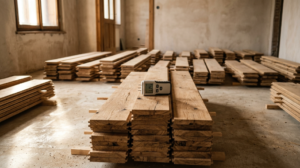
          Need Help in Hardwood Floor Installation?

          Choosing the right hardwood flooring species is one of the most important steps in creating a durable and visually appealing home. Calgary’s climate requires careful consideration, making it essential to select a species that can handle environmental changes without compromising performance. If you’re planning to install hardwood flooring contact us today to get the best results from your investment.

            Hardwood Floor Installation Cost Calgary | 2026 Guide 19