Arbutus Hardwood Floors

Can you refinish hardwood floors without sanding?

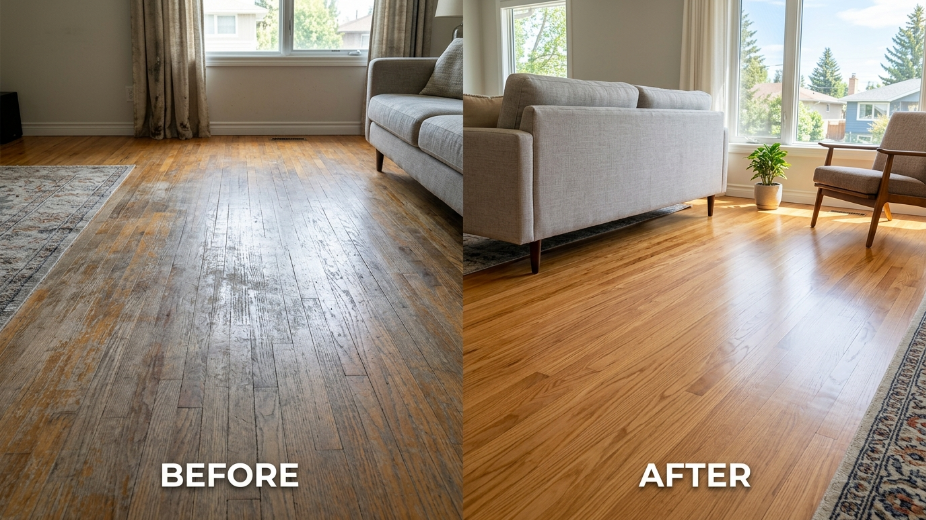
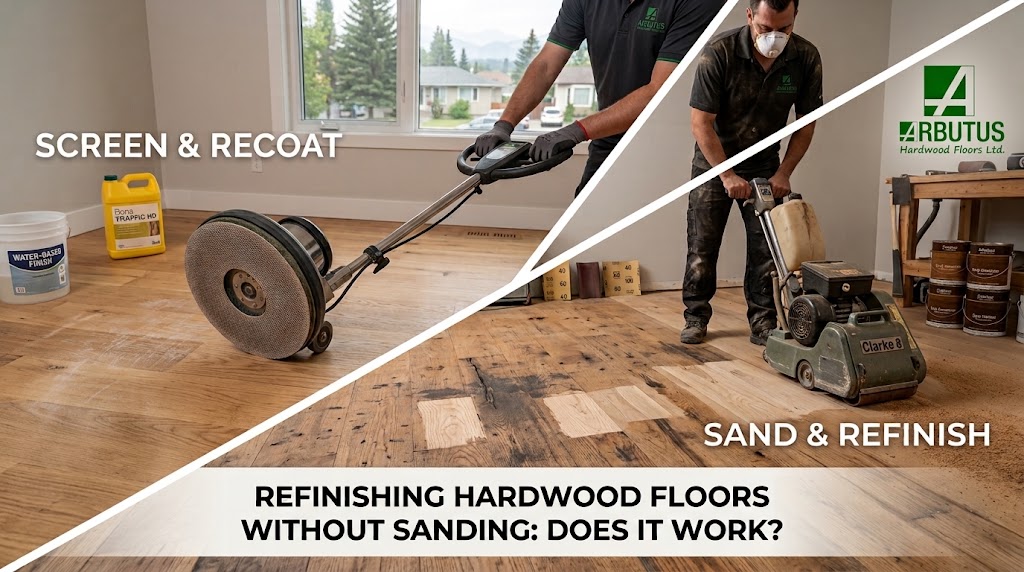
Yes, you can refinish hardwood floors without sanding, but only in the right situation. If the finish is dull and worn but the wood underneath is in good shape, a screen and recoat can bring the floor back for a fraction of the price.

Quick answer: A screen and recoat lightly abrades the old finish and adds a fresh protective coat, with no heavy sanding. It works when the floor has surface wear, dullness, and light scuffs. It will not fix deep scratches, dark stains, gouges, or a color you want to change. Those need a full sand and refinish.

Here’s how to tell which one your floor needs, what each costs, and where homeowners go wrong.

What Does Refinish Hardwood Floors Without Sanding Actually Mean?

When people say this, they usually mean one of three things.

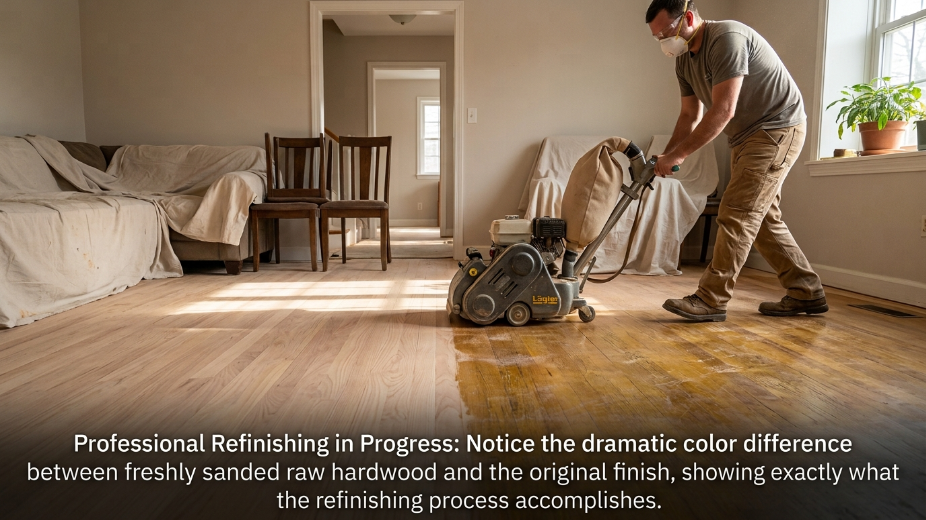
Screen and recoat: A floor buffer with a fine abrasive screen scuffs the surface of the existing finish. Then a new coat of finish goes on top. Some people call this buffing and recoating. It’s the only method here that really renews a floor’s protection.

Cleaning and restoring products: Rejuvenators and restorers are sold as quick fixes. They fill tiny scratches and add shine, but most wear off within months.

Paint or chemical stripping: These get searched a lot, and they cause the most problems. More on that below.

When you can skip sanding

A screen and recoat is a good fit when your floor shows these signs:

  • The finish looks dull or cloudy, especially in walkways
  • Light surface scratches that haven’t reached bare wood
  • General scuffing from furniture and foot traffic
  • The floor was refinished within the last several years and the finish is still mostly intact
  • You want to extend the life of the floor before it needs a full refinish

It’s also a smart maintenance step. A recoat every few years can delay a full sand and refinish by a long time, which matters because solid hardwood only has so many sandings in it. We cover that limit in our guide to hardwood floor refinishing vs replacement.

When you can’t skip sanding

Sanding is the only fix when:

  • Scratches or gouges have cut through the finish into the wood
  • Pet stains or water marks have turned the wood dark or gray
  • The finish is peeling or flaking in patches
  • You want to change the stain color
  • Years of wax or polish buildup are blocking new finish from bonding
  • The floor has never had a proper coat, or the finish is worn down to bare wood

Stain color is the one people ask about most. New finish sits on top of the old surface, so the color underneath stays the same. If you want a darker, lighter, or different tone, the old finish and stain have to come off first.

Pro Tip: Not sure if a recoat will work? Put a few drops of water on a worn spot. If the water beads up, the finish is still intact and a recoat can bond to it. If the water soaks in and darkens the wood, the finish is gone in that area and the floor needs sanding.

Why wax and polish can ruin a recoat

New finish needs to grip the old surface. Oil soaps, wax, and some store-bought polishes leave a film that stops that from happening. The new coat can peel within weeks, and fixing it means sanding the whole floor, which is the job you were trying to avoid.

If you’ve ever used wax or a polish product on your floor, mention it before anyone quotes a recoat. A good contractor will test the surface for adhesion first.

Can you paint hardwood floors instead

You can, but think carefully before you do. Paint hides the wood grain and wears faster than a clear finish on floors with regular traffic. The bigger issue is later. If you ever want to go back to natural wood, sanding painted floors takes much more work, and the paint can clog sanding equipment and cost more to remove.

Paint can make sense for a low-traffic room in an older home where the wood is too damaged to show. For most homes, we’d steer you toward a proper refinish.

Rejuvenators and restorers: do they work

They give a short-term improvement. Most products fill fine scratches and add a thin layer of shine, so the floor looks better for a while. They don’t repair damage and don’t replace a recoat.

There’s also a catch. Some products leave a residue, and that residue can interfere with a professional recoat later. If you plan to hire someone, ask before you use one.

Screen and recoat vs sand and refinish

Screen and recoatSand and refinish
What it doesScuffs old finish, adds a new coatRemoves old finish and a layer of wood
Fixes deep scratchesNoYes
Changes stain colorNoYes
Typical cost per sq ft$1.50 to $3.50$3 to $6
Typical time1 to 2 days2 to 7 days
Impact on wood thicknessNoneRemoves a thin layer

These are estimates for the Calgary market. Your price depends on square footage, finish type, and floor condition. For a full breakdown, see our hardwood flooring cost guide.

How a screen and recoat works

  1. The floor is cleaned and checked for wax, oil, or other contamination
  2. A buffer with a fine screen scuffs the existing finish
  3. Dust is removed completely
  4. Any small repairs are done
  5. One or two new coats of finish go on, with drying time between coats

Most water-based finishes are ready for light foot traffic the next day. Plan on a few days before you put heavy furniture and rugs back. Your contractor will give you exact timing for the product they use.

How often do hardwood floors need refinishing

It depends on traffic, pets, and how well the finish was maintained. As a rough guide, a recoat every 3 to 5 years suits many homes. A full sand and refinish typically comes much less often, closer to every 10 to 20 years.

Calgary adds one more factor. Our dry winters stress finishes and wood, and fall is a good time to book a recoat so the new finish is in place before the heat comes on. If your floors also gap in winter, our guide to hardwood floor gaps in Calgary winters explains what’s normal.

Should you do this yourself

You can rent a buffer, but the results depend on details that are easy to miss. Dust left on the floor shows up as bumps in the new finish. A wrong product choice can cause peeling. Some finishes need specific prep, and the finish manufacturers publish their own instructions, such as Bona’s guidance on recoating, which are worth reading before you start.

DIY can work on a small, simple room if the floor has never been waxed. For a full main floor, most homeowners are happier with a professional result.

Frequently asked questions

Can hardwood floors be refinished without sanding in one day?

A screen and recoat can often be done in one to two days for an average room or two. Drying time before you can use the floor depends on the finish.

Does screen and recoat remove scratches?

It hides very light surface scratches in the finish. It doesn’t remove scratches that have gone into the wood.

Can I recoat engineered hardwood?

Yes, and it’s often the best option. Engineered floors can only be sanded once or twice because of the thin top layer, so recoating helps protect that limited wear layer.

Is buffing hardwood floors the same as a recoat?

Buffing alone only smooths and cleans the surface. A recoat adds new finish after the buffing, and that’s what restores protection.

Will a recoat fix a floor that’s gray or black in spots?

No. Dark stains are in the wood itself. Sanding may lighten them, and some may need board replacement. Our repair service handles those cases.

How do I know if my floor was waxed?

Wax leaves a slightly greasy or hazy look, and water may bead oddly. A professional can run a quick test patch to confirm before quoting.

Choosing the right fix for your floor

Refinishing hardwood floors without sanding is a real option, but it’s a maintenance step, not a cure-all. If the wood is sound and only the finish is tired, a screen and recoat saves money and keeps your floor’s thickness for later. If the damage goes into the wood or you want a new color, sanding is the honest answer.

Not sure which one your floor needs? Contact Arbutus Hardwood for a free assessment in Calgary, Airdrie, Cochrane, Okotoks, Chestermere, or nearby. We’ll test the floor and tell you plainly whether a recoat will do the job, or if our hardwood floor refinishing service is the better move.
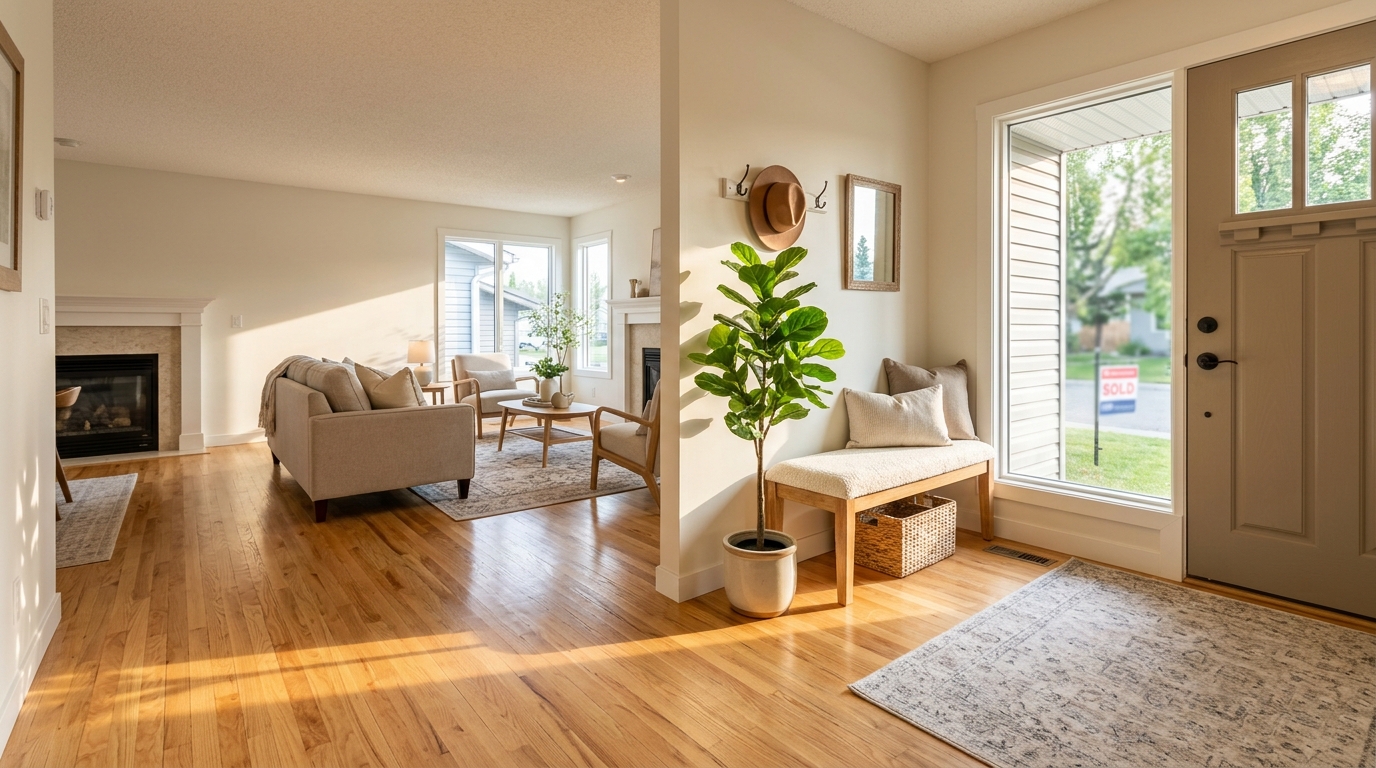
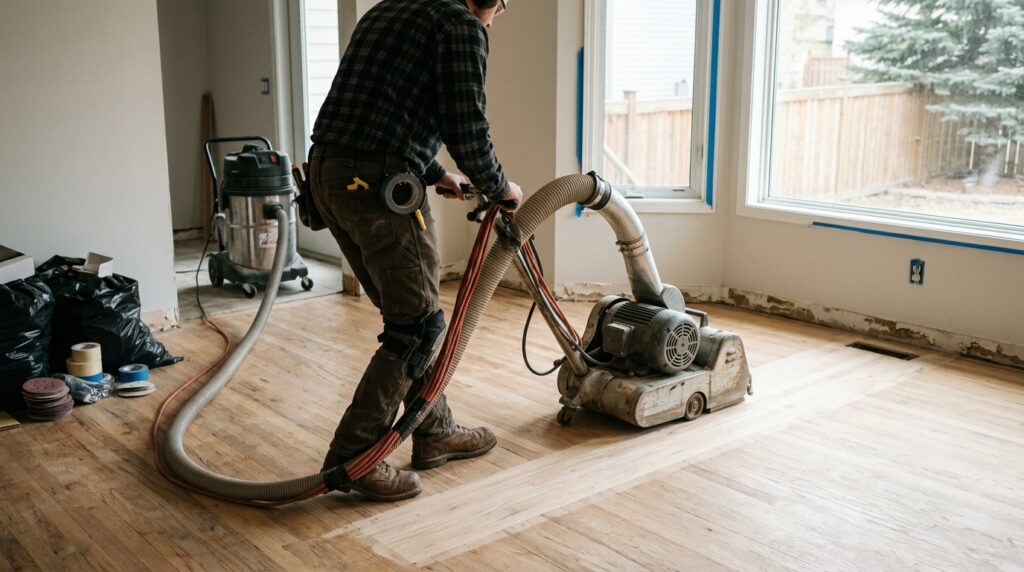
Does Refinishing Hardwood Floors Increase Home Value in Calgary?

Does Refinishing Hardwood Floors Increase Home Value in Calgary?

Refinishing hardwood floors usually adds value in Calgary homes, with national data showing cost recovery between 100% and 147% and bigger gains in faster sales and better listing photos. The article covers typical costs, when refinishing pays off or doesn’t, how to choose a finish, and what the process and timeline look like.

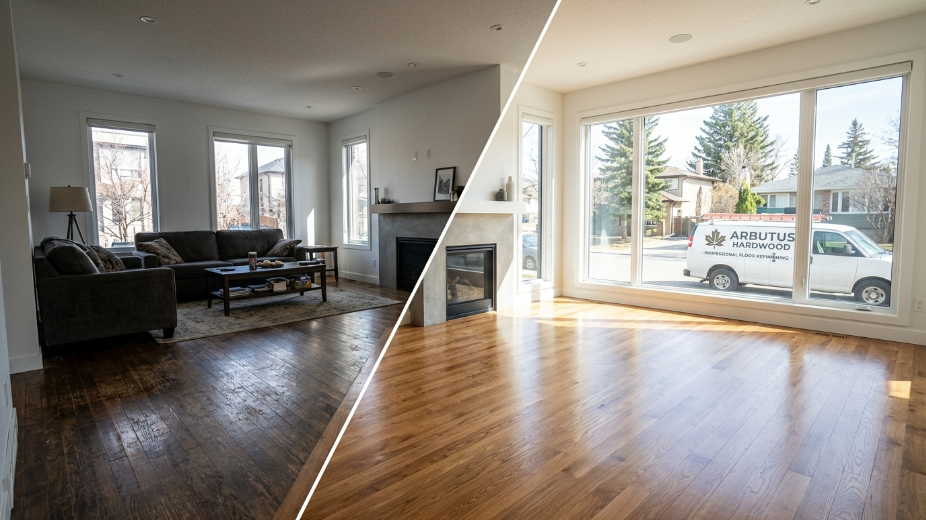
Does refinishing hardwood floors increase home value? In most Calgary homes, yes. It also costs less than almost any other upgrade you could do before listing.

The gain rarely shows up as a neat dollar figure. It shows up as stronger offers and fewer requests for a flooring credit after the inspection.

We’ve spent 30+ years sanding and refinishing floors across Calgary, so this guide sticks to what we see on real jobs. You’ll find cost ranges, a few cases where refinishing is a bad idea and some practical advice on timing.

The short answer for Calgary sellers

Yes, refinishing usually adds value. The floor has to be in the right shape though: solid wood or thick engineered boards, with damage that stays on the surface.

Think of it as a project that protects your asking price. A buyer who walks onto dull, scratched floors starts subtracting money in their head. A buyer who walks onto fresh floors doesn’t.

What the national research says

The best-known numbers come from the National Association of Realtors. Its Remodeling Impact Report has ranked hardwood refinishing among the top interior projects for cost recovery. The 2022 edition put it at 147%. Other editions landed closer to 100%.

Even the low end means you get your money back. Plenty of kitchen and bathroom remodels can’t say that.

Those figures come from US homeowners and US dollars. We’re not aware of a Calgary-specific study, so treat the percentages as a rough direction.

Does refinishing hardwood floors increase home value in Calgary specifically?

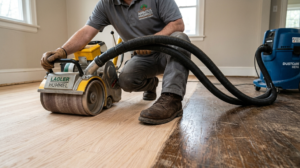
Technician sanding hardwood floor

Probably, and for a few local reasons.

Older neighbourhoods like Inglewood, Bridgeland and Varsity have plenty of homes with original hardwood. Buyers there often want that character. They’ll pay for it when it looks cared for.

Calgary’s dry winters also beat up floors. Low humidity shrinks boards and opens gaps. A finish that has worn thin gives the wood no protection at all. A fresh one gives it a shield again.

Then there’s the scroll. Calgary buyers flip through dozens of listings online. A home with glowing hardwood stands out next to one with tired laminate or worn carpet.

Why refinished floors help a home sell

Photos and first showings

Most buyers meet your home through a screen first. Fresh hardwood photographs well because the finish reflects window light evenly. Worn floors do the opposite. Every scuff and dull patch shows up in a wide-angle shot.

At a showing, floors are the one surface buyers stand on in every room. They notice.

Condition tells a story

Buyers read floors as a sign of how the owners treated the rest of the house. Gouged boards at the front door make people wonder what else got ignored. Clean, even floors send the opposite message.

This matters most when buyers are stretching their budget. They look for reasons to negotiate, and floors are an easy target.

What appraisers actually count

Appraisers rarely add a separate line item for flooring. They adjust for overall condition compared with similar sales nearby. A refinish can move your home into a better condition bracket, which is where the extra value comes from.

That’s also why we wouldn’t promise anyone a dollar-for-dollar return.

How much does refinishing cost in Calgary?

Prices depend on scope. These are ballpark ranges for planning. Your quote will move with species, stain colour and the shape of your floor.

Option

Typical cost per sq ft

Example: 1,000 sq ft

Best for

Buff and recoat

$1.50 to $3

$1,500 to $3,000

Light wear with an intact finish

Full sand and refinish

$3 to $8

$3,000 to $8,000

Scratches, dull spots or a new stain colour

Sand, repair and refinish

$5 to $10+

$5,000 to $10,000+

Gaps, damaged boards or pet stains

A few things push the price up or down:

  • Stairs, which are usually priced per step
  • Dark stains and white washes, which take more labour
  • Boards that need repair or replacement
  • The finish type and number of coats
  • Furniture moving and access (a third floor condo is a different day than a bungalow)

A quick cost versus return example

Say you have 1,000 sq ft of main floor and pay $5,000 for a full refinish. If the NAR range holds even loosely, that’s roughly $5,000 to $7,350 in value on paper. The real return shows up in sale price, days on market or both. Treat the math as an illustration.

Buff and recoat versus a full sand

A buff and recoat scuffs up the old finish and adds a fresh coat on top. It’s quick and cheap. It can’t remove scratches that reach the wood or change the stain colour.

Here’s a simple check. Drop a little water on a worn spot. If it beads up, the finish is still working and a recoat might be enough. If it soaks in or the wood looks grey, you need a full sand.

Our hardwood floor refinishing service covers both options, so we’ll tell you which one your floor actually needs.

When refinishing adds the most value

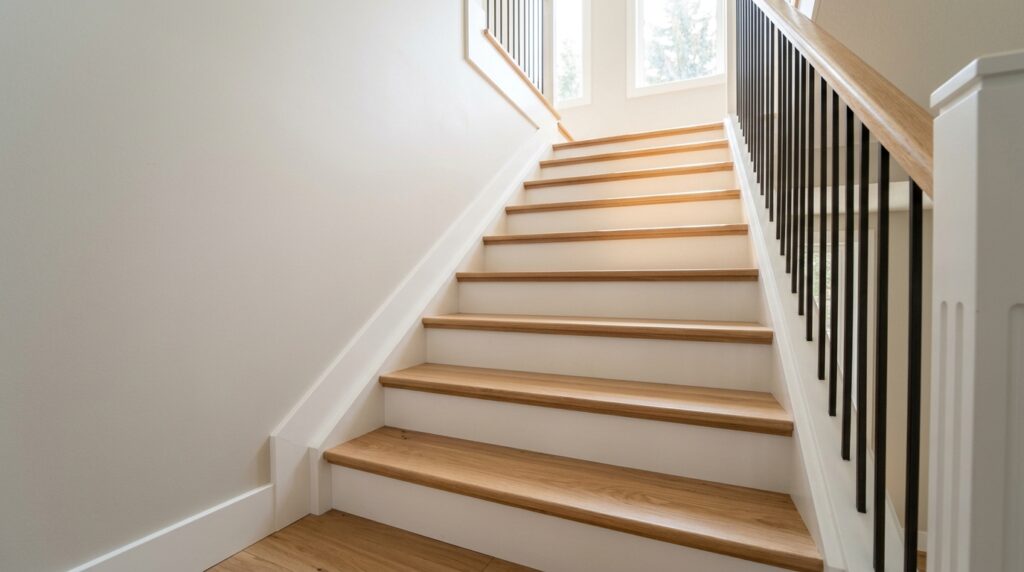
Hardwood staircase refinished home

Original oak in older homes

Old growth oak is dense and stable. It sands beautifully and often looks better after refinishing than it did when new. Homes in character neighbourhoods get the biggest lift because buyers expect that warm, aged hardwood look.

Solid wood with a worn finish

Solid hardwood with dull traffic lanes is the sweet spot. The wood underneath is fine. Only the top layer has given up. One refinish resets the whole floor.

Open layouts with one worn patch

When hardwood runs through the living room, dining area and hallway, a tired section stands out fast. Refinishing the whole connected space in one go gives it a single even look. Stairs matter too. Refinished treads show up in listing photos.

When refinishing won’t pay off

Sometimes the honest answer is to skip it. We’d rather say that up front.

Thin engineered boards

Engineered hardwood has a real wood layer on top of plywood or a core board. If that top layer is thin, sanding can go straight through it. Many newer builds in areas like Mahogany or Seton use engineered flooring, so check before you plan anything. Pull a floor vent cover and look at the board edge to see the wear layer.

Damage that needs repair first

Cupped boards, water stains and deep pet urine damage won’t disappear under a new finish. A fresh coat over a problem just makes the problem shiny. Fix the cause first. Our hardwood floor repair service handles squeaks, water damage and board replacement before we refinish.

Floors sanded too many times

Solid wood can be sanded several times over its life. Each sanding removes a bit of the wear layer. When nail heads start showing or the tongue-and-groove joints are exposed, the floor is near the end. Replacement is usually the better money at that point.

Refinish, replace or cover: how they compare

If your floors are borderline, this table helps you decide.


Refinish

Replace with new hardwood

Install vinyl plank

Cost per sq ft

$3 to $8

$10 to $20+

$4 to $8

Time on site

3 to 5 days

1 to 2 weeks

2 to 4 days

Buyer appeal

High

High

Moderate

Can it be refinished later?

Yes

Yes

No

Refinishing wins on cost almost every time. Replacement makes sense when the boards are past saving or you want a different look entirely, like wider planks, herringbone or a border. In that case, custom hardwood flooring gives you a floor designed for your space.

Covering hardwood with vinyl is the one move we’d talk you out of. Buyers who find hardwood under vinyl are often disappointed they can’t see it.

Picking a finish and stain buyers like

Mid-tone natural colours tend to sell best. They work with grey walls and warm walls alike. Very dark floors show every speck of dust and pet hair. Heavily grey tones date quickly.

Sheen matters too. Satin hides scratches and foot traffic better than a high gloss finish. We compare both in our guide to high-gloss vs satin hardwood finish.

For current colour direction, our post on hardwood flooring trends in Calgary shows what homeowners are choosing right now. If you’re selling, lean conservative. If you’re staying, pick what you love.

Waterborne polyurethane is the usual choice. It has low odour and cures quickly. Oil-based finishes add an amber warmth some owners want on oak or fir.

What the refinishing process looks like

Here’s how a typical job runs:

  1. Inspect and prep. We check the wear layer, look for damage and move or protect anything that stays.
  2. Sand with dust control. We sand in passes from coarse to fine grit. Dustless sanding pulls most of the dust into a vacuum system instead of your living room.
  3. Repair and fill. Small gaps and nail holes get filled. Damaged boards get replaced.
  4. Stain. This step is optional. Many owners keep the natural wood colour.
  5. Apply the finish. Most floors get two to three coats with drying time between.
  6. Cure. The floor looks done before it’s actually ready for heavy use.

Stage

Typical timing

Sanding and repairs

Day 1 to 2

Stain and first coat

Day 2 to 3

Final coats

Day 3 to 4

Walking in socks

About 24 hours after the last coat

Furniture back

48 to 72 hours

Area rugs

1 to 2 weeks

These times vary with the product and the weather. Cold, humid days slow drying.

Calgary’s dry air matters after the job too

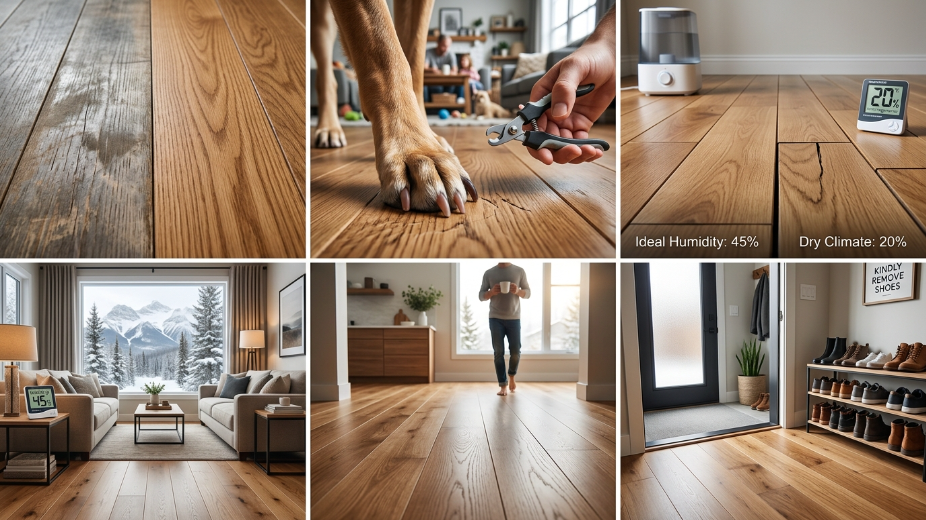
Fresh finish can’t stop wood from reacting to winter air. Keep indoor humidity somewhere around 30% to 50% and the boards stay calmer. A humidifier in January is cheap insurance for any hardwood floor.

Mistakes that cost you value

  • Renting a drum sander. One pause in the wrong spot leaves a dent you can see from across the room. Our post on DIY vs professional hardwood floor repair covers where DIY goes wrong.
  • Skipping repairs. Loose boards and gaps show through any finish.
  • Rushing the cure. Rugs and furniture too early leave marks in soft finish.
  • Chasing a trend. A bold colour that reads great today can put buyers off in five years.
  • Sanding before other trades finish. Painters and electricians scratch new floors. Do floors last when you can.
  • Picking on price alone. The cheapest quote often leaves out dust control, repairs or the final coat.

The best time to refinish before selling

Aim for 2 to 4 weeks before photos. That leaves room for curing and any touch-ups. Most listing agents want floors done before the photographer arrives.

If you’re staying put, refinish when the finish starts wearing through to bare wood. Waiting past that point lets moisture and dirt into the grain. Spring and fall are comfortable seasons for the work. Winter jobs are fine too if the house is heated.

Conclusion

So, does refinishing hardwood floors increase home value? In most Calgary homes it does. National data shows cost recovery between 100% and 147%, and the less measurable gains matter too: better photos, faster showings and fewer price chops.

Check the wear layer first. Fix damage before you refinish. Choose a neutral colour with a satin sheen if you’re selling.

If you’re unsure what your floors can handle, we’ll look at them and give you a straight answer. Request a free quote or call Arbutus Hardwood at 403-371-7531.

Usually yes. A full refinish takes 3 to 5 days for a typical main floor. Add a few days for cure time before furniture goes back. Book as early as you can since spring and early summer fill up quickly.

Solid hardwood at 3/4 inch can often be sanded 4 to 6 times over its life. Thinner or heavily sanded floors have fewer left. We check the board thickness before quoting.

No, though you'll stay off the floors for a day or two. With dustless sanding and a low odour waterborne finish, many families stay home. Pets and small children do better at a friend's house for the first night.

Paint first when you can. Floors should be among the last jobs because ladders and tape scratch fresh finish. If the walls need repainting, schedule the painters a week ahead of your floor date.

Often yes for surface stains. Deep urine stains that turned the wood black usually need boards replaced. We can tell during an inspection which camp your floor falls into.


It can be. If the finish is intact and scratches are shallow, a recoat gives a fresh look for much less money. If you see grey wood or deep marks, a full sand gives buyers a better first impression.


How to choose a hardwood flooring contractor in Calgary

How to choose a hardwood flooring contractor in Calgary

How to choose a hardwood flooring contractor in Calgary Learn how to choose a hardwood flooring contractor in Calgary by checking experience, insurance, past projects and written quotes before you hire. Contact Us Your floors will be under your feet for 20 years or more. The person you hire to…

Hardwood Flooring Cost Calgary: 2026 Price & Installation Guide

Hardwood Flooring Cost Calgary: 2026 Price & Installation Guide

Hardwood Flooring Cost in Calgary: What You’ll Actually Pay Planning your project but unsure about hardwood flooring cost in Calgary? This guide explains installation, refinishing, and repair expenses to help you plan your flooring budget. Contact Us If you’re planning to install, repair, or refinish hardwood flooring in Calgary, understanding…

Matte vs Gloss Hardwood Flooring | Arbutus Hardwood

Matte vs Gloss Hardwood Flooring | Arbutus Hardwood

Matte vs gloss hardwood flooring: which finish is right for your home? Matte vs gloss hardwood flooring, see which finish suits Calgary homes best for durability, style & upkeep. Get expert advice from Arbutus Hardwood. Contact Us Matte vs gloss hardwood flooring feels like a small decision until you’re standing…

    Does Refinishing Hardwood Floors Increase Home Value in Calgary? 3

    Hardwood Floor Maintenance After Refinishing: Complete Care Guide (2026)

    How to Maintain Hardwood Floors After Refinishing

    Proper maintenance after refinishing is essential to protect your investment and prevent early damage. This complete guide covers curing timelines, safe cleaning practices, and climate care to help you maintain hardwood floors after refinishing for long-lasting shine.

    Getting your hardwood floors refinished is one of the best upgrades you can make to your home. The wood looks new again, the scratches are gone, and that fresh coat of finish brings out a warmth that old, worn floors just can’t match.

    But here’s the part a lot of homeowners miss: what you do in the days and months after refinishing matters just as much as the refinishing job itself. A brand new finish is actually more vulnerable than you’d think, and a few wrong moves in the first month can undo weeks of careful sanding and coating.

    If you’re wondering how to maintain hardwood floors after refinishing so they stay beautiful for years instead of months, this guide covers the curing period, daily care, long-term protection, and the mistakes that quietly wreck a fresh finish.

    Most of what damages a new finish early on isn’t dramatic. It’s small, everyday things like moving furniture back too soon, using the wrong cleaner, or not accounting for Calgary’s dry winters. None of these mistakes are obvious until months later, when you notice dull patches, faint scratches, or gaps between boards that weren’t there before. The good news is that almost all of it is avoidable once you know what to watch for.

    Understanding the Curing Process: Water-Based vs Oil-Based Finish Cure Time

    Floor finish comparison infographic

    This is where most confusion starts, so it’s worth clearing up first.

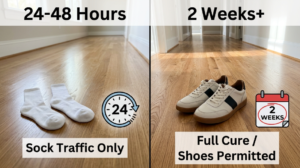
    There’s a difference between a floor being dry and a floor being fully cured. Most water-based finishes feel dry to the touch within a few hours, and you can usually walk on the floor in socks within 24 hours. Some homeowners are told it’s safe to walk on in as little as 3 to 4 hours after the final coat.

    But “walkable” isn’t the same as “ready for normal life.” The finish is still hardening underneath the surface, and that process can take 7 to 14 days for water-based finishes, and up to 30 days for oil-based ones. If you’re weighing oil vs water based finishes for your Calgary home, cure time is one of the biggest practical differences between the two. During this window, the finish is soft enough to scuff, dent, or scratch far more easily than once fully cured. This is exactly why homeowners who move furniture back too soon often see marks appear almost immediately.

    Quick Curing Timeline & Walkability

    Time After Final Coat

    What You Can Do

    3–4 hours

    Walk on the floor in socks or bare feet

    24–48 hours

    Light foot traffic, no hard-soled shoes

    5–7 days

    Move light furniture carefully, avoid rugs

    14 days

    Place rugs and mats (with caution)

    30 days

    Resume completely normal use, deep cleaning

    If your floor was finished with an oil-based product, add extra time to each step above. When in doubt, ask your installer what product they used and how long they recommend waiting.

    The First 30 Days: Critical Care Rules & How Long After Refinishing Floors Can You Put Furniture Back

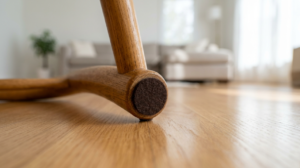
    Chair leg on refinished floor

    Think of the first month as a probation period for your floor. It looks finished, but it hasn’t fully hardened yet, and it needs a bit of extra care.

    • Keep rugs and mats off direct sunlight areas: Placing rugs down too early, especially in sunny spots, can trap moisture or create uneven fading once the rug is removed. Wait at least two weeks, and avoid heavy rubber-backed mats until the floor has cured.
    • Never drag furniture across the floor: This causes more damage than almost anything else. Dragging a couch, table, or bookshelf across a curing floor can gouge straight through the finish. Instead, lift furniture completely when moving it, use felt pads on every leg, and use a rubber-wheeled dolly for heavier pieces.
    • Keep blinds and curtains closed: Direct UV exposure during curing can cause uneven color development across the room.
    • Rotate items occasionally: Rugs, plants, or furniture left in one spot for weeks can leave faint discoloration once moved. Shifting items every so often during the first couple of months avoids obvious sun-bleaching patterns.
    • Be careful with tape: If you need to tape down protective paper during a move, use only low-tack painter’s tape and remove it within a few hours. Regular tape can pull up the finish.

    Daily and Weekly Hardwood Floor Cleaning Routine

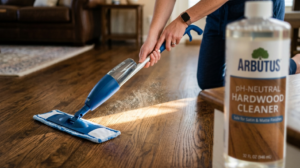
    arbutus hardwood cleaner

    Once your floor is past the initial curing period, the goal shifts from protection to ongoing maintenance. A consistent, gentle cleaning routine is the single biggest factor in how long your refinish actually lasts.

    Daily Cleaning Habits:

    • Sweep or dry-mop with a microfiber cloth to remove grit before it gets ground into the finish
    • If vacuuming, use the hardwood attachment, never the rotating beater bar
    • Wipe up spills immediately with a soft, absorbent cloth

    Weekly Deep Cleaning Routine:

    • Use the best cleaner for refinished hardwood floors (specifically formulated for hardwood, never an all-purpose cleaner or vinegar solution)
    • Apply cleaner to a damp microfiber mop rather than pouring it directly onto the floor
    • Avoid soaking the floor. Standing water is one of the fastest ways to damage wood, even freshly refinished wood

    What to Avoid Completely:

    • Steam mops: the heat and moisture can break down the finish and even affect the wood underneath
    • Vinegar and water mixes: vinegar is acidic and can dull a fresh finish over time
    • Wax-based products: these build up on modern finishes and make future recoats harder

    If your floor already has water exposure or staining from a spill that sat too long, it’s worth reading up on how to repair water-damaged hardwood floors before trying a DIY fix, since some water damage looks minor on the surface but runs deeper into the boards.

    Once you’re past the first few months, maintenance becomes more about prevention than reaction.

    • Control indoor humidity: Wood expands and contracts with humidity changes. In Calgary’s climate, with dry winters and humid summers, this movement can eventually cause gaps between boards or, in more extreme cases, cupping and warping. The National Wood Flooring Association recommends keeping indoor relative humidity between 35% and 55% and temperature between 60°F and 80°F year-round to keep wood flooring performing as it should.
    •  Manage sun exposure. UV rays don’t just fade the finish, they can fade the wood itself over time, creating visible patterns where furniture or rugs block the light. UV-filtering window film or simply keeping blinds partially closed during peak sun hours slows this down.
    • Protect high-traffic areas. Entryways, hallways, and kitchen walkways take the most abuse. Use walk-off mats at exterior doors, consider a no-shoes policy, and check furniture pads periodically since they wear down over time.
    • Living with pets. Dog nails in particular can leave fine scratches across a finish faster than almost anything else in the house. Keep nails trimmed short, wipe paws before pets come inside, and consider keeping high-energy play off the hardwood.

    Maintenance Coat vs. Full Refinish: Which Do You Need?

    This is one of the most common questions homeowners have a few years after refinishing.

    A maintenance coat, sometimes called a screen-and-recoat, adds a fresh layer of finish on top of the existing one without sanding down to bare wood. It’s fast, usually done in a single day, and roughly a third of the cost of a full refinish. It only works if the existing finish hasn’t worn through to raw wood.

    A full hardwood floor refinishing involves sanding the floor down completely and starting over, which becomes necessary once the wood itself is exposed or the damage runs too deep for a surface-level fix. If you’re not sure which one your floor needs, a quick inspection is usually the fastest way to find out and to get an accurate sense of cost before committing either way. 

    How to Tell Which One You Need

    Sign

    Likely Fix

    Dull finish, light surface scratches

    Maintenance coat / polishing

    Water spots or minor surface discoloration

    Maintenance coat

    Bare wood visible in high-traffic spots

    Full refinish

    Deep gouges, stains, or board damage

    Hardwood floor repair

    Floor hasn’t been recoated in 5+ years

    Inspection recommended

    As a general rule, a maintenance coat every 3 to 5 years extends the life of your floor significantly and delays the need for a full, more expensive refinish. Waiting until the finish wears through to bare wood almost always means you’ve missed the window for the cheaper option.

    When to Handle Maintenance Yourself vs. Calling a Hardwood Professional

    Day-to-day care, sweeping, mopping, humidity control, is something every homeowner can and should handle on their own. It doesn’t require special tools or training, just consistency.

    Where it makes sense to bring in a professional is anything that touches the finish itself. Screen-and-recoat work, buffing out deeper scratches, or assessing whether a water-damaged area needs board replacement all require judgment that’s hard to get right on the first try. A DIY recoat gone wrong, using the wrong abrasion level or an incompatible product, can actually make the floor harder to fix later.

    If you’re weighing a DIY approach against calling someone in, it also depends on the type of flooring you have. For example, homeowners comparing nail-down vs glue-down hardwood flooring often find that the installation method affects how forgiving the floor is of minor repairs, which is worth understanding before attempting anything beyond basic cleaning. 

    A good rule of thumb: if the fix involves sanding, staining, or reapplying finish, it’s worth getting a professional opinion first, even if you end up doing some of the prep work yourself.

    Common Mistakes That Damage a Fresh Refinish

    Even careful homeowners make a few of these without realizing it:

    • Moving back in too fast: rushing furniture and rugs back before the cure period ends is the top cause of early damage
    • Using the wrong cleaner: vinegar and all-purpose cleaners slowly dull and degrade the finish
    • Skipping felt pads: a single chair dragged without pads can leave a mark that lasts for years
    • Ignoring humidity swings: many homeowners don’t connect seasonal gapping to humidity until it’s already happened
    • Waiting too long for a maintenance coat: letting the finish wear through means paying for a full refinish that could’ve been avoided
    • Letting spills sit: even a small puddle left overnight can leave a permanent water mark.

    Final Thoughts

    Knowing how to maintain hardwood floors after refinishing really comes down to two things: patience during the curing period, and consistency afterward. Give the finish time to fully harden before moving furniture and rugs back in, stick to the right cleaning products, and stay ahead of wear with a maintenance coat every few years instead of waiting for damage to show.

    Done right, a refinished hardwood floor can look great for well over a decade before it needs sanding again. If you’re not sure whether your floor needs a simple maintenance coat, polishing, or a full refinish, it’s worth getting a professional opinion before small issues turn into bigger, more expensive ones.

    Have questions about your specific floor, or ready to schedule a maintenance coat before the next season change? Contact Arbutus Hardwood for a quick assessment and a straightforward recommendation.

    Most water-based finishes are safe to walk on in socks within 3 to 4 hours, but full cure time takes 1 to 2 weeks. Avoid shoes and heavy foot traffic during that window.

    It's best to wait at least two weeks before placing rugs, and avoid rubber-backed mats until the floor has fully cured, since they can trap moisture against the finish.

    A pH-neutral cleaner made specifically for hardwood floors is the safest choice. Avoid vinegar, oil soaps, and any cleaner with wax, as these can dull or damage the finish over time.

    Most floors benefit from a maintenance coat every 3 to 5 years, depending on foot traffic and how well the floor has been cared for in between.

    Yes. Wood naturally expands and contracts with humidity changes, and keeping indoor levels between 35% and 55% helps prevent gaps, cupping, or warping over time, especially through Calgary's dry winters.

    No. Steam mops introduce heat and moisture that can break down the finish and potentially damage the wood underneath, even on floors that were recently refinished.

    How to choose a hardwood flooring contractor in Calgary

    How to choose a hardwood flooring contractor in Calgary

    How to choose a hardwood flooring contractor in Calgary Learn how to choose a hardwood flooring contractor in Calgary by checking experience, insurance, past projects and written quotes before you hire. Contact Us Your floors will be under your feet for 20 years or more. The person you hire to…

    Hardwood Flooring Cost Calgary: 2026 Price & Installation Guide

    Hardwood Flooring Cost Calgary: 2026 Price & Installation Guide

    Hardwood Flooring Cost in Calgary: What You’ll Actually Pay Planning your project but unsure about hardwood flooring cost in Calgary? This guide explains installation, refinishing, and repair expenses to help you plan your flooring budget. Contact Us If you’re planning to install, repair, or refinish hardwood flooring in Calgary, understanding…

    Matte vs Gloss Hardwood Flooring | Arbutus Hardwood

    Matte vs Gloss Hardwood Flooring | Arbutus Hardwood

    Matte vs gloss hardwood flooring: which finish is right for your home? Matte vs gloss hardwood flooring, see which finish suits Calgary homes best for durability, style & upkeep. Get expert advice from Arbutus Hardwood. Contact Us Matte vs gloss hardwood flooring feels like a small decision until you’re standing…

      Hardwood Floor Maintenance After Refinishing: Complete Care Guide (2026) 7

      How Long Does Hardwood Floor Refinishing Take?

      How Long Does Hardwood Floor Refinishing Take? (Calgary Guide)

      Dealing with water-damaged hardwood floors? Our flooring specialists can assess the damage, recommend the right repair solution, and restore your floors to their original beauty. From minor stains and cupping to warped boards and deeper moisture damage, we use proven restoration techniques and premium materials to deliver results that last. And if you’re already wondering how long does hardwood floor refinishing take once the repair is done, most projects wrap up in just 2 to 5 days, so you won’t be without your floors for long.

      If you’re planning hardwood floor refinishing in Calgary, the first question on your mind is probably simple: how long will this take?

      It’s a fair question. You need to plan around it. Maybe you’re hosting a family event, selling your home soon, or just want your floors back so you can move around your house normally again.

      The short answer: most hardwood floor refinishing projects take 2 to 5 days, depending on the size of the space and the condition of your floors.

      But the real answer has a lot more detail in it, and that detail actually matters. It affects how you plan your week, where you sleep, and what you should expect from your contractor.

      In this guide, we’ll walk through the full timeline step by step, what speeds the process up, what slows it down, and how to plan your project in Calgary and nearby areas like Airdrie, Okotoks, Cochrane, De Winton, Priddis, and Chestermere.

      Average Timeline for Hardwood Floor Refinishing

      Let’s start with the numbers, since that’s usually what people want first. To help you visualize the week, here is how a typical project breaks down day by day.

      Project Phase

      Estimated Duration

      Key Homeowner Takeaway

      Furniture Removal & Prep

      Half a Day

      The area must be completely clear; high noise levels begin.

      Sanding

      1 to 2 Days

      Loudest and messiest phase; dustless systems recommended.

      Staining (Optional)

      Half a Day

      Required only if you are changing the floor color.

      Applying Finish Coats

      1 to 2 Days

      2 to 3 coats are applied; strictly zero foot traffic allowed.

      Drying & Curing

      24 Hours to 2 Weeks

      Safe for socks in 24 hours; wait on rugs and pets.

      Add it all up, and a single room usually takes 1 to 2 days. A full main floor or an entire house can take 3 to 5 days.

      Bigger homes, homes with detailed inlays, or floors with heavy damage sometimes take longer. It’s not a race. A floor done right the first time saves you money and stress down the road.

      The Full Refinishing Process, Step by Step

      It helps to understand what actually happens during those days. Here’s the process broken down.

      Step 1: Inspection and Prep

      Before any sanding starts, your contractor checks the floor for loose boards, nail heads sticking up, gaps, or water damage.

      If there’s damage, that needs to be addressed first, sometimes through hardwood floor repair rather than a quick fix. If the damage is from a leak or spill, it’s worth reading up on how to repair water-damaged hardwood floors so you know what to expect before work begins.

      This step also includes removing furniture, rugs, and floor vents, and sealing off the work area from the rest of your home. This stage usually takes half a day for an average room, longer for a full house.

      Step 2: Sanding

      Sanding removes the old finish and any surface damage. It’s usually done in a few passes, starting with a coarse grit and moving to a finer one.

      This step is the loudest and messiest part of the job, though dustless systems cut down on the mess significantly. Sanding a single room usually takes about a day.

      Technician operating floor sander

      A full house can take two days or more. This is especially true if the old finish is thick or the floor has deep scratches.

      Step 3: Staining

      If you’re changing the color of your floor, staining happens after sanding.

      This step needs to dry fully before the finish coats go on. This usually adds half a day to a full day, depending on humidity and the type of stain used.

      If you’re keeping the natural wood tone, you can skip this step entirely and move straight to the finish.

      Step 4: Applying the Finish

      This is where the floor gets its protective finish coating, which protects the wood from scratches, moisture, and everyday wear. Most floors get two to three coats.

      Each coat needs to dry before the next one goes on. This is usually the longest part of the whole project, because you can’t rush drying time without risking a poor finish.

      Oil-based finishes generally need a full day to dry between coats. Water-based finishes dry faster, sometimes in just a few hours, which can shave a day or more off your total timeline.

      If you’re unsure which is right for your home, our breakdown of oil vs water based floor finishes in Calgary covers the trade-offs in more detail.

      Step 5: Curing

      Consultant reviewing floor plan 

      Drying and curing aren’t the same thing. Drying means the surface feels safe to walk on. Curing means the finish has fully hardened.

      Most floors are safe to walk on in socks within 24 hours, but full curing can take up to two weeks. This is why contractors usually ask you to avoid rugs, heavy furniture, and pets with sharp nails for a little while after the job wraps up.

      🛠️ Planning a refinishing project in the Calgary area? Let’s map out a timeline specific to your home’s unique square footage and needs. Get a local expert consultation here.

      What Affects How Long Refinishing Takes

      A few factors can add real time to your project. Knowing these ahead of time helps you set the right expectations.

      • Size of the Area: This one’s obvious, but worth repeating. A small bedroom refinishes faster than an open-concept main floor. More square footage means more sanding passes and more drying time between coats.
      • Condition of Your Existing Floors: If your floors have deep scratches, dark stains, or years of old finish buildup, they need extra sanding passes to get down to clean wood. If you’re dealing with actual water damage, that’s a different kind of repair altogether, and it’s worth handling that separately before you book a refinish.
      • Type of Finish You Choose: Oil-based finishes take longer to dry between coats, sometimes a full day each. Water-based finishes dry faster, which can shorten your total project time. Each option has its own trade-offs beyond just speed, including durability, smell, and how the final color looks.
      • Number of Coats: Most floors get two to three coats of finish. Higher-traffic homes, or homes with kids and pets, sometimes need an extra coat for durability. Each additional coat adds drying time to the schedule.
      • Weather and Humidity: Calgary’s dry climate actually works in your favor here. Low humidity generally helps finishes cure faster compared to more humid cities. That said, during winter, indoor heating can dry the air out even more, which sometimes affects how evenly a finish sets. An experienced contractor knows how to adjust for this.
      • Dustless vs Traditional Sanding: Dustless refinishing systems contain the dust with a vacuum attachment connected directly to the sanding equipment. This keeps the mess down and often keeps the whole process moving faster, since there’s less cleanup needed between steps and less dust settling back onto wet finish.

      Can You Stay Home During the Refinishing Process?

      This is one of the most common questions homeowners ask, right after “how long will it take.” The honest answer depends on the size of the job and your comfort level.

      Sanding is loud and can create dust, even with dustless systems. Finish coats also have a noticeable smell, especially oil-based ones, while they’re drying.

      Many homeowners do stay home during smaller jobs, especially if only one or two rooms are being done and the rest of the house stays livable.

      For full-house refinishing projects, some people choose to stay elsewhere for a couple of nights. This is particularly helpful while finish coats are drying, just for comfort and to avoid walking through wet or tacky floors by accident.

      Can You Speed Up the Process?

      A little, yes. Here’s what actually helps:

      • Clear the room of furniture, rugs, and small items before the crew arrives.
      • Choose a water-based finish if drying time matters most to you.
      • Confirm the number of coats upfront, so there are no surprise delays mid-project.
      • Avoid last-minute layout or color changes once work has started.
      • Keep pets and kids out of the work area during sanding and finishing.

      What Slows It Down

      • Old, thick layers of finish that need extra sanding passes.
      • Sudden humidity swings during the finishing stage.
      • Adding stain color changes midway through the project.
      • Skipping proper dry time between coats, which can ruin the final result.
      • Hidden water damage discovered partway through sanding.

      Common Mistakes That Extend the Timeline

      Rushing the process is one of the most common mistakes homeowners run into. It usually costs more time and money to fix later than it would have taken to just wait it out the first time.

      Walking on floors too soon, moving furniture back too early, or choosing the cheapest possible finish without asking about dry time are all small decisions that can lead to bigger delays or redo work.

      Another mistake is skipping the hardwood floor polishing option when it’s actually all your floor needs. Not every floor needs a full sand-and-refinish.

      If your floor just looks dull but isn’t damaged, it might only need a polish, which takes far less time. It’s worth reading hardwood floor polishing vs refinishing before you commit to the longer process.

      Planning Your Project in Calgary and Nearby Areas

      If you live in Calgary or nearby communities like Okotoks, De Winton, Priddis, Airdrie, or Cochrane, your timeline will look about the same across the board.

      Local weather, home age, and floor condition play the biggest role in how long your project takes, not your specific neighborhood. Calgary’s dry climate is generally a plus for curing time, no matter where in the region you’re located.

      If you’re not sure whether your floors need a full refinish or just a polish, it helps to get a professional opinion first. It can save you both time and money, and it changes your whole timeline.

      And if your existing hardwood is beyond saving, it’s worth asking about custom hardwood floor options instead of refinishing an old floor past its prime.

      How to Maintain Your Floors After Refinishing

      Once the work is done, a little care goes a long way. Avoid placing rugs or furniture back for at least 24 to 48 hours, longer if your contractor recommends it.

      Use felt pads under furniture legs once you do move things back. Sweep or vacuum regularly, and avoid wet mopping for the first couple of weeks while the finish fully cures. This keeps your new finish looking sharp for years instead of months.

      A Simple Way to Think About the Timeline

      Refinishing isn’t a rushed job, and that’s actually a good thing. A floor that’s sanded properly and given the right drying time between coats will last for years without needing attention again.

      Think of the few days of inconvenience as an investment in a floor that won’t need touching up again for a long time.

      Final Thoughts

      Refinishing your hardwood floors is a short-term inconvenience for a long-term result. Most projects wrap up within a week, and the wait is worth it once you see the finished floor looking new again.

      If you’re ready to get a timeline specific to your home, our team serves Calgary and surrounding areas including Okotoks, Priddis, De Winton, Airdrie, and Cochrane, and we’re happy to walk you through the entire process from start to finish.

      A single average-sized room usually takes 1 to 2 days, including sanding, staining, and finish coats.

      A full main floor or whole house typically takes 3 to 5 days, depending on square footage and floor condition. Larger or more damaged floors can take longer.

      You can usually walk carefully in socks after 24 hours, but full curing can take up to 2 weeks. Avoid heavy furniture or rugs until your contractor gives the go-ahead.

      It can. Dustless systems reduce cleanup time and mess between steps, which often keeps the overall project moving faster.

      Oil-based finishes need more drying time between coats, sometimes a full day each, while water-based finishes can dry in just a few hours.

      Yes, for smaller jobs many homeowners stay home comfortably. For full-house projects, some people prefer to stay elsewhere for a night or two while the finish dries, mainly for comfort.

      Not dramatically, but Calgary's dry climate generally helps finish cure faster than in more humid regions.

      How to choose a hardwood flooring contractor in Calgary

      How to choose a hardwood flooring contractor in Calgary

      How to choose a hardwood flooring contractor in Calgary Learn how to choose a hardwood flooring contractor in Calgary by checking experience, insurance, past projects and written quotes before you hire. Contact Us Your floors will be under your feet for 20 years or more. The person you hire to…

      Hardwood Flooring Cost Calgary: 2026 Price & Installation Guide

      Hardwood Flooring Cost Calgary: 2026 Price & Installation Guide

      Hardwood Flooring Cost in Calgary: What You’ll Actually Pay Planning your project but unsure about hardwood flooring cost in Calgary? This guide explains installation, refinishing, and repair expenses to help you plan your flooring budget. Contact Us If you’re planning to install, repair, or refinish hardwood flooring in Calgary, understanding…

      Matte vs Gloss Hardwood Flooring | Arbutus Hardwood

      Matte vs Gloss Hardwood Flooring | Arbutus Hardwood

      Matte vs gloss hardwood flooring: which finish is right for your home? Matte vs gloss hardwood flooring, see which finish suits Calgary homes best for durability, style & upkeep. Get expert advice from Arbutus Hardwood. Contact Us Matte vs gloss hardwood flooring feels like a small decision until you’re standing…

      Dealing with water damage doesn’t always mean replacing your entire hardwood floor. Our water damaged hardwood repair specialists can assess the extent of the damage, recommend the most effective repair solution, and restore your floors with lasting results. Whether you’re facing cupping, buckling, stains, or warped boards, contact us today for expert repairs that protect your investment and bring your hardwood floors back to life.

        How Long Does Hardwood Floor Refinishing Take? 11

        Dustless Hardwood Floor Refinishing in Calgary: Worth It?

        Dustless Hardwood Floor Refinishing: Is It Worth It?

        Restore the natural beauty of your home with our expert dustless hardwood floor refinishing and polishing service in Calgary. We completely remove dullness, deep scratches, and everyday wear to bring back a smooth, rich finish that looks brand new. Using professional-grade products and proven local techniques, we deliver a long-lasting shine and ultimate protection without the messy cleanup.

        So your floors are looking tired. Scratched up, dull in the high-traffic spots, maybe that weird gray cast old finish gets when it’s had enough. You’ve probably already searched around and run into the term dustless hardwood floor refinishing a dozen times, usually next to a price that made you pause. Is it actually different from the regular sanding job your neighbor got done, or is it just a fancier name with a fancier bill attached? I’ve been down this rabbit hole with clients across Calgary and the surrounding towns, and honestly, the answer isn’t a simple yes or no. Let’s actually get into it.

        What Even Is a Dust Containment System

        wood floor sanding drum machine

        Old-school floor sanding is loud, messy, and it gets everywhere. I mean everywhere your bookshelves, your ceiling fan blades, inside cabinets you thought were sealed. That’s traditional floor refinishing for you. The machines grind down the old finish and top layer of wood, and all that fine dust just floats. Some of it settles on your floor, most of it drifts through the house for weeks after the crew’s gone home.

        A dust containment system changes that math. It’s basically a sanding machine hooked up to a high-powered vacuum, usually through a hose that pulls dust straight from the sanding drum before it has a chance to become airborne. Some setups also run a HEPA filtration unit in the room, catching whatever particles sneak past. It’s not magic, and it’s not perfectly dust-free, nothing involving a sander ever really is but it’s a massive step down from what you’d get otherwise.

        Dustless Floor Sanding vs Traditional Floor Refinishing

        People throw these terms around like they mean wildly different processes, but really the core job is the same. You’re removing the old finish, smoothing the wood, and applying a new stain and topcoat. The difference is in how the dust gets handled during that middle step.

        Here’s a rough breakdown of how they stack up against each other:

        Factor

        Dustless Floor Sanding

        Traditional Floor Refinishing

        Airborne dust

        Minimal, contained through vacuum system

        Heavy, spreads through the home

        Cleanup time after

        Usually light a quick wipe down

        Can take days, dust resettles repeatedly

        Cost

        Slightly higher, often 10-20% more

        Lower upfront cost

        Equipment needed

        Specialized vacuum-linked sanders

        Standard drum or orbital sanders

        Good for allergy-prone households

        Yes

        Not really

        Time on site

        Similar, sometimes a touch longer

        Similar

        Furniture/belongings protection

        Better, less residue on surfaces

        Requires heavy plastic sheeting, still gets dusty

        Neither one changes the actual quality of the finish once it’s done. A well-sanded floor is a well-sanded floor whether the dust went into a vacuum bag or your lungs. What changes is your experience during the process and, honestly, your cleanup bill afterward if you’re paying someone to scrub baseboards and dust blinds later.

        How the Process Actually Plays Out

        Inspection & Structural Repair

        Before any sanding machines turn on, the floor is thoroughly checked for deep gouges, water damage, or squeaky planks. True structural fixes address the boards themselves first, saving you from having to redo work down the line.

        Sealed Sanding Passes:

        The crew connects professional-grade sanders directly to high-powered vacuum containment systems. Using progressively finer grits, the old finish is stripped away cleanly, keeping fine particulate out of your living space.

        Stain & Protective Topcoat:

        Once the wood is perfectly smooth, stain is applied (if you want a color change), followed by protective topcoats. Choosing water-based finishes here pairs nicely with the low-dust route to keep the process as low-odor and livable as possible.

        Why the Dust Actually Matters

        It’s not just about not having to dust your shelves twice. Fine wood dust, especially from older finishes, can contain silica particles and sometimes residue from old varnishes or, in older homes, lead-based products underneath newer coats. Breathing that stuff in isn’t great for anyone, but it’s especially rough on kids, older folks, and anyone with respiratory issues. There’s also the simple fact that dust migrates into your HVAC system if you’re not careful, and then you’re breathing sanding dust for months after the job’s technically over.

        I’m not saying traditional sanding is dangerous exactly, companies have been doing it for decades without disaster but if you’ve got the option, and the budget stretches to it, low-dust refinishing just makes the whole ordeal less physically unpleasant for everyone living in the house.

        Is Dustless Hardwood Floor Refinishing Worth the Extra Cost

        This is the actual question most people are asking, so let’s not dance around it. The honest answer: it depends on your situation, and I mean that genuinely, not as a cop-out.

        You’ll probably find it worth it if:

        • Someone in your home has allergies, asthma, or another respiratory condition
        • You’re refinishing floors in a home you’re still living in during the work
        • You have a lot of furniture, electronics, or open shelving that dust would settle into
        • You want to avoid a multi-day deep clean afterward
        • The floors connect to an open-concept space where dust would spread fast

        You might skip the upgrade if:

        • You’re renovating a totally empty house before move-in
        • Budget is genuinely tight and every dollar counts
        • The area being refinished is small and isolated, like a single closet or a small hallway

        There’s no universal right answer here. I’ve had clients pay the extra bit and say it was the best decision of the renovation. I’ve had others do a standard job in an empty flip property and never think twice about it because nobody was living there to breathe the dust anyway.

        What About Cost Differences, Really

        Numbers vary a lot by region, by square footage, by whether you’re doing stain work or just a clear refinish. But as a general pattern, dustless floor sanding tends to run somewhere around 10 to 20 percent above traditional pricing. On a mid-size living room and hallway combo, that might mean a few hundred extra dollars total, not thousands. It’s not nothing, but compared to the cleanup costs of traditional sanding professional cleaning crews, HVAC filter replacements, the hours you’ll spend wiping surfaces yourself it often evens out closer than people expect.

        Ask for itemized quotes. A contractor should be able to break down labor, materials, and the dust containment add-on separately so you can actually see what you’re paying for instead of just a lump number.

        When Repair Should Come Before Refinishing

        Technician repairing hardwood floor

        Here’s something people skip past: not every floor is actually ready for refinishing straight away. If there are deep gouges, water damage, loose boards, or squeaky sections, sanding over them doesn’t fix the underlying problem. It just puts a shiny coat on top of an issue that’s going to reappear.

        If your floor has structural or surface damage beyond normal wear, it’s worth getting that looked at first. A proper hardwood floor repair job addresses the boards themselves before refinishing ever touches them, which honestly saves you from redoing work down the line. Skipping this step is one of the more common regrets I hear about after the fact.

        Choosing Between DIY and Hiring a Pro

        I’ll be straight with you, dustless sanding equipment isn’t something most homeowners have sitting in the garage. Rental options exist, but they’re clunky, the vacuum attachments aren’t always great quality, and getting an even finish takes practice most people don’t have. Traditional sanders are a bit more forgiving to rent and use, but even then, an uneven pass leaves visible marks that are hard to undo without starting over.

        Refinishing hardwood floors is one of those jobs that looks simple on video tutorials and turns out to be a lot more finicky in person. Grain direction, pressure consistency, drying times between coats small mistakes compound fast. Most people end up calling in professional hardwood floor refinishing services once they’ve watched a few tutorials and realized how much room there is for error.

        A Quick Note on Finish Choices

        flooring installer applying polyurethane

        While we’re at it refinishing isn’t just about sanding. The topcoat you choose matters just as much for how the floor looks and holds up. Oil-based polyurethane gives that warm amber tone and tends to be more durable, but it takes longer to cure and smells strong for days. Water-based finishes dry faster, stay clearer, and off-gas less, which pairs nicely if you’ve already gone the low-dust refinishing route and want to keep the whole process as livable as possible.

        Prepping Your Home Before the Crew Shows Up

        Whichever method you go with, a little prep on your end makes the whole thing smoother. Clear the room completely if you can furniture, rugs, curtains if they hang low enough to catch dust. If you’re keeping items in the house, cover anything upholstered with plastic sheeting, even in rooms not directly being worked on, because dust travels through doorways and vents more than people expect, dustless system or not.

        Take doors off their hinges if they’re going to be sanded flush with the new floor height, or at least give the crew a heads-up so they can plan around it. Pets should be somewhere else entirely during active sanding days — the noise alone is enough to stress most animals out, never mind the fine dust settling on paws and fur. And if you’ve got young kids, this is usually a good week to plan a few outings, honestly, just for everyone’s sanity.

        Label anything valuable or fragile that has to stay in the house and let the contractor know where it is. Most crews are careful, but accidents happen faster when nobody’s flagged the antique lamp sitting in the corner.

        Maintaining the Floor Once It’s Done

        Refinishing isn’t a one-and-done deal you never think about again. The finish is what protects the wood, and how you treat that finish in the weeks and months after determines how long it actually lasts. For the first couple weeks, skipping the rugs and floor mats entirely trapping moisture or blocking air circulation while the finish is still curing underneath can cause cloudy patches that are a pain to fix later.

        Felt pads under furniture legs, always. Doesn’t matter how careful you think you’ll be, dragging a chair across a freshly finished floor even once can leave a mark that sticks around for years. Sweep or vacuum regularly rather than wet mopping too often, since standing water is still the enemy of hardwood no matter how good the topcoat is. An occasional damp mop with a wood-safe cleaner is fine, just don’t let water pool anywhere.

        Sunlight fades finish unevenly over time too, so if you’ve got a room with heavy afternoon sun, rotating rugs or furniture placement every so often keeps the wear looking more even long term. Small thing, but it adds up over the years.

        Living With It During and After

        If you’re staying in the house during work, plan for at least a few uncomfortable days regardless of which method you pick. Rooms get closed off, furniture gets shuffled, and there’s usually a period where you can’t walk on the floor at all while the finish cures. Dustless methods make the air quality part easier, but they don’t speed up drying time or make the logistics of moving your whole living room into the garage any less annoying.

        Ventilation still matters even with dust containment. Crack windows where you can, run fans if the weather allows, and don’t rush back onto the floor before the recommended cure time, even if it looks dry. Walking on a finish too early leaves marks that show up weeks later once the coating fully hardens.

        A Few Things Contractors Won’t Always Mention Upfront

        • Not every “dustless” service is fully dustless, asking specifically what containment equipment they use and how old it is. Worn vacuum seals leak dust just like anything else.
        • Edge work near baseboards sometimes still needs hand sanding, which produces more dust than the main machine passes. Ask how they handle edges.
        • Pet hair and existing debris on the floor before sanding starts can clog containment systems and reduce their effectiveness, so a pre-sweep matters more than people think.
        • Older homes with finishes from before the 1970s sometimes contain lead, and changing the safety protocol entirely always disclose your home’s age.

        Serving Calgary and the Surrounding Areas

        Worth mentioning since it comes up a lot: a good chunk of the jobs I’m describing here are happening right in Calgary homes, plus the towns just outside it. Airdrie, Okotoks, Cochrane, Chestermere, that whole ring around the city. The climate matters more than people think too. Calgary winters are dry, and that dryness affects how wood moves and how finish cures, so a crew that’s used to working in this specific region tends to time the job differently than one used to a more humid climate.

        Because Calgary winters are incredibly dry, static electricity can make fine wood dust cling aggressively to walls and window tracks. If you are renovating an empty property before moving in, you can easily save a few bucks and go traditional. But if you are actively living in your home during the project, dustless containment isn’t just a luxury it’s a sanity saver. 

        Final Verdict: Is Dustless Hardwood Floor Refinishing Worth It?

        For most homeowners, dustless hardwood floor refinishing is absolutely worth considering.

        It delivers the same beautiful restoration results as traditional refinishing while significantly reducing dust throughout the process. The cleaner work environment, easier cleanup, and improved comfort make it an attractive option for many households.

        While no system is completely dust-free, modern dustless sanding technology can dramatically reduce airborne dust and create a better overall refinishing experience.

        If your hardwood floors are showing signs of wear, professional Hardwood Floor Refinishing Calgary services can help restore their beauty and extend their lifespan. And if your floors have deeper damage, combining refinishing with Hardwood Floor Repair Calgary services may provide the best long-term results.

        The bottom line is simple: if you want cleaner floor restoration with less mess and less disruption, dustless hardwood floor refinishing is often well worth the investment.

         No, not completely. It significantly reduces airborne dust compared to traditional sanding, but some fine particulate still escapes, especially during edge work or if the vacuum seals aren't well maintained.

         Typically around 10 to 20 percent more, depending on your region and the size of the job. Get itemized quotes so you can compare exactly what's included.

        Many people do stay, especially compared to traditional methods, though you'll still need to stay off the floors during sanding and drying, and rooms directly involved will be inaccessible for a few days.

         Most residential jobs take anywhere from three to five days including drying and curing time, though larger homes or oil-based finishes can push that longer.

         Yes, Calgary and the surrounding communities, including Airdrie, Okotoks, Cochrane, and Chestermere, are all areas we regularly work in. Distance from the city core can affect scheduling and pricing slightly, so it's worth confirming coverage for your specific address when you reach out.

        How to choose a hardwood flooring contractor in Calgary

        How to choose a hardwood flooring contractor in Calgary

        How to choose a hardwood flooring contractor in Calgary Learn how to choose a hardwood flooring contractor in Calgary by checking experience, insurance, past projects and written quotes before you hire. Contact Us Your floors will be under your feet for 20 years or more. The person you hire to…

        Hardwood Flooring Cost Calgary: 2026 Price & Installation Guide

        Hardwood Flooring Cost Calgary: 2026 Price & Installation Guide

        Hardwood Flooring Cost in Calgary: What You’ll Actually Pay Planning your project but unsure about hardwood flooring cost in Calgary? This guide explains installation, refinishing, and repair expenses to help you plan your flooring budget. Contact Us If you’re planning to install, repair, or refinish hardwood flooring in Calgary, understanding…

        Matte vs Gloss Hardwood Flooring | Arbutus Hardwood

        Matte vs Gloss Hardwood Flooring | Arbutus Hardwood

        Matte vs gloss hardwood flooring: which finish is right for your home? Matte vs gloss hardwood flooring, see which finish suits Calgary homes best for durability, style & upkeep. Get expert advice from Arbutus Hardwood. Contact Us Matte vs gloss hardwood flooring feels like a small decision until you’re standing…

        Need Help in Hardwood Floor Installation?

        Choosing the right hardwood flooring species is one of the most important steps in creating a durable and visually appealing home. Calgary’s climate requires careful consideration, making it essential to select a species that can handle environmental changes without compromising performance. If you’re planning to install hardwood flooring contact us today to get the best results from your investment.

          Dustless Hardwood Floor Refinishing in Calgary: Worth It? 15

          How Often Should You Refinish Hardwood Floors in Calgary

          How Often Should You Refinish Hardwood Floors in Calgary

          Wondering how often should you refinish hardwood floors? You don’t always need a full sand-and-refinish instantly restore your wood with our expert hardwood floor polishing service in Calgary. We remove surface dullness, light scratches, and daily wear to bring back a smooth, rich finish with long-lasting protection.

          If you’ve invested in hardwood floors for your Calgary home, you’re looking at one of the most valuable decisions you can make for your property. Beautiful hardwood floors enhance your home’s character, warmth, and resale value. But here’s the question that keeps every Calgary homeowner up at night: how often should you refinish hardwood floors?

          The answer isn’t as simple as following a calendar. It’s a dynamic conversation between your floors and your lifestyle, heavily influenced by:

          • Your family’s daily habits and traffic patterns.
          • Calgary’s unique, volatile climate conditions.
          • The original quality of your floor’s protective finish.
          • The presence of active kids or energetic pets.

          This comprehensive guide will walk you through everything you need to know about hardwood floor refinishing in Calgary. Whether you have a bustling household or a quiet space with minimal foot traffic, this article will help you make an informed decision on when to call in the professionals.

          The 7 to 10 Year Rule: What It Really Means

          You’ve probably heard it before: hardwood floors typically need refinishing every 7 to 10 years. While this timeframe is the industry standard, treating it as a hard and fast rule is where many homeowners go wrong.

          Think of it more as a general guideline like a highway speed limit. Your actual household circumstances may push you to adjust your timeline considerably. If your planks have structural gaps or cracks from age, skipping straight to a comprehensive hardwood floor repair is often necessary to secure the floor before applying any new treatments. 

          • High-Impact Homes (5 to 7 Years): Parents of multiple rambunctious kids or large dog owners will notice high-traffic areas wearing down much faster.
          • Average Homes (7 to 10 Years): Perfect for households with moderate foot traffic, standard sun exposure, and consistent routine maintenance.
          • Quiet Households (12 to 15+ Years): Single-person homes or spaces where guest bedrooms rarely see visitors can safely stretch the timeline.

          Ultimately, what matters most is not the calendar on your wall, but the actual physical condition of your hardwood floors.

          How Calgary’s Climate Affects Your Refinishing Timeline

          Calgary’s climate is dramatically different from the humid regions of Eastern Canada or the Pacific Northwest. Our Prairie city experiences extreme temperature and moisture fluctuations between seasons, which directly impacts natural wood cells.

          The Winter Shrinkage Challenge

          Hardwood water damage spectrum

          During Calgary’s long, harsh winters, furnaces work overtime. This constant heating creates an extremely dry interior environment. When indoor humidity drops below 30%, the wood cells contract, causing the boards to shrink. This movement can create small gaps between planks and place immense structural stress on your floor’s finish. When seasonal shifting causes severe splitting or loose planks, standard maintenance won’t cut it you will need a professional hardwood floor repair specialist to stabilize the foundation. 

          The Summer Moisture Swing

          While Prairie summers are generally dry, the sudden introduction of air conditioning and home humidifiers can create rapid moisture fluctuations. These swings contribute to the gradual breakdown of your floor’s protective topcoat.

          Pro Tip: To maximize your refinishing timeline, invest in a quality home humidifier. Maintaining a consistent interior humidity level between 35% and 50% year-round is the single best way to add years to your floor’s life.

          Understanding Your Home’s Traffic Patterns

          Nothing wears down a protective floor finish faster than daily foot traffic. To accurately map out your maintenance schedule, take an honest look at how different zones in your home are used.

          • High-Traffic Zones (Refinish every 5 to 7 years): Entryways, kitchens, main hallways, and central living rooms. These areas face thousands of footsteps daily, dropped toys, moving furniture, and accidental spills.
          • Medium-Traffic Zones (Refinish every 7 to 10 years): Dining rooms, secondary family rooms, and main bathrooms. These spaces see regular daily use but escape the heavy impact of main thoroughfares.
          • Low-Traffic Zones (Refinish every 10 to 15+ years): Guest bedrooms, home offices, and formal sitting rooms. If properly maintained, the original finish in these rooms can last surprisingly long.

          Recoating vs. Full Refinishing: The Critical Difference

          floor sander

          Understanding the distinction between a simple recoat and a full sand-and-refinish can save you thousands of dollars, hours of dust cleanup, and unnecessary disruption.

          Feature

          Recoating (Screen & Coat)

          Full Refinishing

          Best Suited For

          Dull finishes, minor surface scratches, faded sheen.

          Deep gouges, severe water stains, bare wood exposure.

          The Process

          Lightly scuffing the topcoat and applying a fresh protective layer.

          Sanding down 1–2 mm into the raw wood to erase all damage.

          Time Frame

          1 to 2 days

          4 to 7 days

          Disruption & Dust

          Minimal; fast turnaround and low odor.

          High; generates dust and requires total room evacuation.

          Project Cost

          30% to 40% of full refinishing cost.

          Standard full-service investment.

          Visible Signs Your Calgary Floors Need Attention

          Instead of guessing based on dates, learn to look for the specific physical warnings your floors display when their protective layer is compromised:

          • Water Damage and Dark Staining: While small spills can be wiped away, dark stains around furniture legs or appliance boundaries mean moisture has bypassed the finish and soaked into the wood fibers. Cupping or warping indicates serious moisture distress that requires professional evaluation.
          • Sun Fading and Discoloration: Calgary’s intense spring and summer sunlight can rapidly bleach wood. If you pull back an area rug and see a dramatic color mismatch, your finish has succumbed to UV degradation.
          • Deep Scratches and Gouges: Minor surface scuffs sit safely in the topcoat. However, if you run your finger over a scratch and feel it dipping into the raw wood grain, a full refinishing is required to smooth it out.
          • Cloudy, Worn-Out Dullness: If your floors look faded, cloudy, or chalky even immediately after a thorough, correct cleaning, the protective chemical bond of the polyurethane finish has failed.

          The Hard Limit: How Many Times Can Hardwood Be Refinished?

          A common misconception is that hardwood floors can be sanded down indefinitely. In reality, there is a strict mechanical limit dictated by the thickness of the floor’s wear layer (the wood sitting above the structural tongue-and-groove joint).

          • The Measurement: To safely undergo a full sand, the wear layer must be at least 1/8 inch thick.
          • The Lifespan: Because every full refinishing removes roughly 1 to 2 millimeters of wood, a typical solid hardwood floor can only be fully refinished 2 to 5 times over its entire lifespan.

          Before planning a major project on older or inherited flooring, it is vital to have a professional measure your remaining wear layer to ensure the structural integrity of the planks.

          Daily Habits to Extend Your Refinishing Timeline

          The choices you make during routine cleaning have a massive impact on how long your floor finish lasts. Implement these pro habits to maximize your investment:

          • Debris Control: Sweep or vacuum 2 to 3 times weekly. Ground-in dirt acts exactly like sandpaper under moving feet, grinding away the finish. Always use a soft-bristled broom or a dedicated hard-surface vacuum attachment.
          • Smart Cleaning Products: Never use vinegar, ammonia, steam mops, or harsh all-purpose oil soaps. Use only specialty, pH-neutral hardwood cleaners applied with a barely damp microfiber mop.
          • Scratch Prevention: Apply heavy-duty felt pads to the bottom of all furniture legs and replace them annually. Use high-quality entry mats at exterior doors to catch outdoor gravel and grit before it enters your living spaces. Avoid sliding heavy furniture across hardwood at all costs; if you are moving large items or managing a delivery, utilizing a professional local hot-shot service like City Wide Courier ensures your assets are handled safely without destroying your floor’s protective coating. 
          • Spill Response: Water remains hardwood’s primary enemy. Wipe up liquid spills instantly and dry the area completely with a towel.

          The Cost Consideration: Why Timing Matters

          Refinishing costs money, and Calgary homeowners want to understand what to expect. Hardwood floor refinishing in Calgary typically ranges from $1,500 to $5,000 for an average home, depending on square footage, current condition, and finish type. A full refinish costs significantly more than a recoat.

          By extending your refinishing timeline through smart maintenance and humidity control, you reduce how frequently you need to invest in this service. If you can extend from 7 years to 10 or 12 years between refinishing projects, you’re saving thousands of dollars over the life of your floors.

          Conversely, neglecting maintenance might force you into refinishing more frequently than necessary, making poor maintenance habits financially painful in the long run.

          Addressing Water Damage and Staining in Calgary Homes

          Calgary’s dry climate means you’re unlikely to experience the chronic moisture issues that plague other regions. However, water damage can happen suddenly from leaks, spills, or accidents.

          The source of water damage determines your options. Small spills and surface moisture usually dry without causing permanent damage. Leaks from refrigerators, dishwashers, toilets, or patio doors represent more serious concerns. If water seeps under the finish and soaks into the wood below, it causes swelling and darkening that simple refinishing cannot fix. You’ll need professional assessment to determine whether the water damage is limited to the finish or has penetrated the wood itself.

          Pet accidents and certain cleaning products can also cause discoloration. Each situation affects the wood differently. Some damage responds well to sanding and refinishing, while other damage requires repair or replacement before refinishing can occur.

          Our recommendation is to have any water damage or suspicious staining professionally assessed immediately. The sooner you address it, the more options remain available.

          Creating Your Hardwood Floor Action Plan for Calgary

          Ready to take control of your home’s flooring? Follow this straightforward roadmap:

          1. Assess: Walk through your home in good daylight and audit your floors room-by-room for deep scratches, fading, or dullness.
          2. Establish a Baseline: Take high-resolution photos of high-traffic areas to monitor wear over the coming months.
          3. Control Air Quality: Place a digital hygrometer in your main living room to monitor interior humidity, aiming for that sweet spot of 35% to 50%.
          4. Consult Experts: Schedule a professional inspection every 3 to 5 years once your floors cross their 5-year benchmark to see if a cost-effective recoat can save you from a future full refinish.

          Professional Services for Calgary Hardwood Floors

          If you’re uncertain about your floor’s condition, need expert guidance about refinishing versus recoating, or are ready to move forward with a refinishing project, Arbutus Hardwood Floor offers comprehensive services across Calgary.

          Our team specializes in hardwood floor refinishing that brings new life to tired floors. We assess your specific situation, explain your options clearly, and provide transparent quotes. We’re proud to serve all Calgary neighborhoods and understand the specific challenges that our local climate creates for hardwood floors.

          We also offer hardwood floor repair services for floors with damage that goes beyond refinishing, and floor polishing for floors that just need a refresh. If you’re considering new hardwood, we provide professional hardwood floor installation as well.

          Final Thoughts

          For most Calgary homeowners, hardwood floor refinishing falls within a 7–10 year cycle. However, no calendar can accurately predict when every floor will need attention. The most reliable indicators are the condition of the finish, the amount of daily traffic, and the presence of visible wear.

          By maintaining proper humidity, following recommended cleaning practices, and addressing problems early, homeowners can often extend the life of their floors while preserving their beauty, durability, and long-term value. When in doubt, a professional inspection can determine whether a simple recoat will suffice or whether full refinishing is the smarter long-term investment.

          Absolutely. When we perform a full sand down to the raw wood, it completely clears away the old color, allowing you to select an entirely new stain. This is the perfect time to modernize your home by switching from an outdated golden oak to a contemporary light gray, natural blonde, or deep espresso tone.

          Traditional sanding creates substantial airborne dust, but utilizing a professional service with an advanced, truck-mounted dust containment system captures up to 99% of particles at the source. This modern setup keeps your air clean, protects your electronics, and eliminates the need for intensive post-project deep cleaning.

          Refinishing your existing wood is significantly more cost-effective, typically costing only 20% to 30% of the price of a total replacement. Choosing to sand and coat preserves your high-quality original wood planks while instantly restoring their structural beauty and market value.

          You can perform a simple "water droplet test" by pouring a few drops of water onto your floor's most worn areas. If the water beads up, your protective seal is still intact and your floors just need a professional cleaning or a light buff and recoat. If the water quickly soaks into the wood fibers and leaves a dark spot, your finish has failed and a full refinish is required.

          Yes, we can apply a specialized wood filler across the floor during the sanding process to fill active gaps. However, because Calgary’s dry winter air causes natural wood to contract, some minor seasonal shifting is completely normal even after professional filler is applied.

          How to choose a hardwood flooring contractor in Calgary

          How to choose a hardwood flooring contractor in Calgary

          How to choose a hardwood flooring contractor in Calgary Learn how to choose a hardwood flooring contractor in Calgary by checking experience, insurance, past projects and written quotes before you hire. Contact Us Your floors will be under your feet for 20 years or more. The person you hire to…

          Hardwood Flooring Cost Calgary: 2026 Price & Installation Guide

          Hardwood Flooring Cost Calgary: 2026 Price & Installation Guide

          Hardwood Flooring Cost in Calgary: What You’ll Actually Pay Planning your project but unsure about hardwood flooring cost in Calgary? This guide explains installation, refinishing, and repair expenses to help you plan your flooring budget. Contact Us If you’re planning to install, repair, or refinish hardwood flooring in Calgary, understanding…

          Matte vs Gloss Hardwood Flooring | Arbutus Hardwood

          Matte vs Gloss Hardwood Flooring | Arbutus Hardwood

          Matte vs gloss hardwood flooring: which finish is right for your home? Matte vs gloss hardwood flooring, see which finish suits Calgary homes best for durability, style & upkeep. Get expert advice from Arbutus Hardwood. Contact Us Matte vs gloss hardwood flooring feels like a small decision until you’re standing…

          Need Help in Hardwood Floor Installation?

          Choosing the right hardwood flooring species is one of the most important steps in creating a durable and visually appealing home. Calgary’s climate requires careful consideration, making it essential to select a species that can handle environmental changes without compromising performance. If you’re planning to install hardwood flooring contact us today to get the best results from your investment.

            How Often Should You Refinish Hardwood Floors in Calgary 19