Arbutus Hardwood Floors

How to Prepare Hardwood Floor for Calgary Winters

 Learn how to prepare hardwood floor for Calgary winters  humidity control, refinishing tips & maintenance from Arbutus, local experts since 1990s.

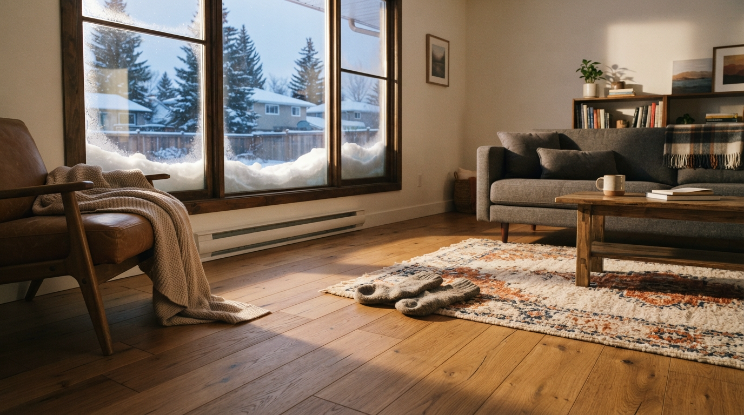
Calgary winters are hard on hardwood. One week you’ve got a chinook pushing 15°C, the next you’re at minus 25 with the furnace running non-stop. That swing dries out the air inside your house fast and your floors feel it before you do.

If you’ve ever noticed thin gaps opening between your boards in January, or a squeak that wasn’t there in the summer, that’s not damage. That’s wood doing exactly what wood does when the humidity drops. The good news: you can prepare hardwood floor for Calgary winters in a weekend and most of it costs nothing but a little attention.

I’ve been fixing, refinishing and installing hardwood in this city for over 30 years. Here’s what actually works.

Why Calgary winters are rough on hardwood floors

Wood is hygroscopic. It absorbs moisture from the air in summer and gives it back in winter. In a coastal city that swing is small. In Calgary, where winter relative humidity indoors can drop into the teens without a humidifier running, the swing is huge.

The National Wood Flooring Association recommends keeping indoor relative humidity between 35% and 55% year round to protect wood flooring. Most Calgary homes sit well below that from November through March unless someone’s actively managing it.

Add chinooks into the mix and you get something most flooring guides never mention: rapid freeze-thaw cycles that push and pull moisture out of your wood multiple times a season instead of once. Your floor isn’t just adjusting to winter. It’s adjusting to winter, then a false spring, then winter again, sometimes in the same week.

That’s the real reason a Calgary homeowner needs to prepare a hardwood floor differently than someone in Vancouver or Toronto.

I’ve walked into homes where the owner assumed a contractor from out of province had done something wrong with the install. Nine times out of ten, the install was fine. It was just never set up to handle Alberta’s dry season, because whoever installed it wasn’t thinking about chinooks or forced-air heating running six months straight.

Calgary sits in a spot where cold Arctic air and warm chinook winds trade places constantly through the winter. Each swing pulls moisture out of the air a little differently and your floor reacts to every single one of them. It’s not one long dry stretch from November to March. It’s more like a series of dry stretches interrupted by brief warm-ups and each transition is its own small stress event for the wood.

That’s also why floors in older Calgary homes, especially ones built before better vapour barriers and modern HVAC systems, tend to show more dramatic seasonal gapping than newer builds. The subfloor and the wall assembly play a role too, not just the hardwood itself.

Signs your hardwood floor isn’t ready for winter

Walk through your home before the temperature drops and look for these:

  • Boards that already feel slightly loose or squeaky underfoot
  • Visible gaps wider than a credit card’s edge between planks
  • A finish that looks dull, scratched, or worn through in high-traffic zones
  • Cupping (edges of boards higher than the middle) near exterior walls or big windows
  • Doors dragging on the floor, which sometimes points to subfloor movement

Small gaps that open in winter and close back up in summer are normal seasonal movement. If you’re seeing signs you need hardwood floor repair that won’t close up again by June, that’s a different problem and it’s worth getting looked at before winter makes it worse.

Step 1: Get your humidity under control

This is the single biggest thing you can do, full stop.

Buy a $15 hygrometer from any hardware store and put it on the main floor. If your reading sits under 30% once the furnace kicks in for winter, your wood is going to shrink and it’s going to show up as gaps.

What actually helps:

  • A whole-home humidifier tied into your furnace (the most effective fix and worth the install cost if you’re not already running one)
  • A portable humidifier in the room with the most hardwood, if a whole-home unit isn’t in the budget this year
  • Keeping houseplants, which do a little work but won’t get you all the way there on their own
  • Cracking a window for 10 minutes a day when it’s not brutally cold, believe it or not this helps refresh stale dry air

Don’t overcorrect either. Pushing humidity above 55% in winter risks condensation on your windows and, eventually, cupping in the opposite direction. Aim for the middle of that 35-55% range and you’re in good shape.

A mistake I see a lot: homeowners buy a humidifier, run it for two weeks in November, then forget about it once they get used to the dry air again. Humidity control only works if it’s consistent through the whole season. One good week doesn’t undo three dry months and it definitely won’t stop gaps from opening back up.

Placement matters too. A portable humidifier sitting in a corner of a big open-concept living room isn’t doing much for the hardwood in your hallway or upstairs bedroom. If you’re only running one unit, put it centrally and consider a small hygrometer in more than one room if your home has distinct zones.

Step 2: Check and adjust your thermostat habits

Check and adjust your thermostat habits

A lot of people crank the heat to 24°C and forget about it. That’s rough on wood.

Keep your home in the 18-21°C range if you can. Big temperature swings between rooms, especially near vents and cold exterior walls, create uneven drying that shows up as inconsistent gapping across the floor.

If you’ve got forced air heating pointed directly at a section of hardwood, consider a vent deflector. It’s a $10 fix that redirects hot, dry air away from the boards instead of blasting them all winter.

Step 3: Deal with entryways before the snow starts
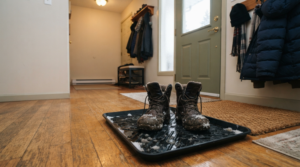
Deal with entryways before the snow starts

Calgary winters mean salt, slush and grit tracked in on every boot. That combination is brutal on the finish.

  • Put a real boot tray or mat right at the door, before the first snowfall, not after
  • Wipe up melted snow and salt residue the same day, don’t let it sit
  • Consider a walk-off mat that’s long enough for two full strides, most people underestimate how much they need

Salt crystals are abrasive. Left on a finished floor and ground in by foot traffic, they’ll dull and scratch the surface faster than almost anything else that happens to hardwood in a Calgary winter.

Step 4: Get ahead of refinishing, not behind it

Late summer or early fall is genuinely the best time to polish hardwood before winter arrives, mostly because the humidity is more stable for the finish to cure properly and because a fresh finish gives you a stronger moisture barrier heading into the dry months.

If your current finish is worn thin in walkways, water and grit can reach bare wood faster once winter starts. A worn finish plus dry winter air plus salt is a bad combination for your boards.

We usually recommend dustless hardwood floor refinishing for Calgary homeowners who want the work done without shutting down the house for a week, since it keeps the mess contained and the floor usable again much sooner.

If you’re deciding between finish types for durability against winter grit, our breakdown on oil vs water-based floor finish covers which holds up better under heavy winter traffic and which is easier to spot-repair later.

Waiting until January to book refinishing is the wrong move and not just because of scheduling. Cold, dry winter air makes finish cure slower and less evenly in some cases and you’re stuck living around the smell and downtime during the months you’re home the most. Booking your hardwood floor refinishing in September or early October means the work is done and cured before the temperature drops and your floor goes into winter with a fresh protective layer instead of a worn one.

How installation type affects winter performance

Not every hardwood floor moves the same way, even within the same house. How it was installed matters as much as what it’s made of.

Nail-down floors have a bit more natural give across the whole surface, which can actually help distribute seasonal movement more evenly. Glue-down floors are more rigid and tend to show movement in more concentrated spots, usually where there’s the least adhesive coverage or where the subfloor itself has a weak point. Floating floors, common with a lot of engineered products, handle humidity swings differently again because the whole floor can expand and contract as one unit rather than board by board.

If you’re not sure which installation method your home has, it’s usually visible from a basement or crawl space, look at the underside, or your original installer’s paperwork will say. It’s worth knowing before winter, because the repair approach for a squeak or a gap is different depending on how the floor was put down in the first place.

For newer installs or renovations, the right installation method depends heavily on your subfloor type, whether that’s a concrete slab in a newer build or the older wood subfloors common in some of southwest Calgary’s established neighbourhoods.

Step 5: Protect furniture and high-traffic zones

Winter means more time indoors, more foot traffic and heavier furniture staying put in the same spot for months. That combination leaves marks if you’re not careful.

  • Felt pads under every chair and table leg, replaced when they wear thin
  • Area rugs in high-traffic paths, especially hallways and in front of the couch
  • Rotate rugs occasionally so you’re not creating a permanent sun-fade or wear line underneath one spot

None of this stops seasonal wood movement. It just keeps your finish from taking unnecessary damage while the movement happens.

Solid vs engineered: does it matter for winter prep?
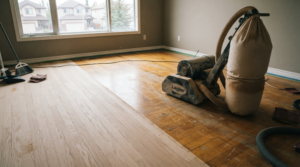
Solid vs engineered

It does, actually. If you’re building or renovating and haven’t picked your flooring yet, solid vs engineered hardwood in Calgary is worth reading before you commit.

Engineered hardwood’s layered construction resists the kind of shrinking and gapping that solid wood is more prone to in a dry Calgary winter, particularly over concrete or in basements. Solid hardwood can absolutely handle our winters too and a lot of homeowners prefer it, it just needs more consistent humidity management to stay stable.

Wood species matters here too. Some hardwood flooring species handle humidity swings better than others. Oak, for example, tends to be more forgiving of Calgary’s dry season than some of the softer or more exotic species.

A quick pre-winter checklist

Task

When to do it

Why it matters

Test indoor humidity

Early fall, before heating season

Establishes your baseline before it drops

Install or run a humidifier

Before first hard freeze

Keeps wood from shrinking too fast

Inspect finish for wear

Late summer

Catches problems before winter stress hits

Refinish if needed

September-October

Finish cures better in stable humidity

Set up entryway mats

Before first snowfall

Stops salt and grit from reaching the finish

Check thermostat habits

Ongoing through winter

Prevents uneven drying across rooms

What to do if water damage happens anyway

Even with good prep, accidents happen. A leaking boot, a spilled humidifier tank, a window that wasn’t sealed as well as you thought. If you catch standing water on hardwood, dry it immediately and don’t wait to see if it’s fine.

Left too long, moisture gets under the finish and into the wood itself and that’s a different repair entirely. Our guide on water-damaged hardwood repair walks through what’s salvageable and what isn’t, depending on how long the water sat and which type of flooring you have.

What you can handle yourself vs when to call a pro

A lot of winter prep is genuinely DIY. Setting a hygrometer, running a humidifier, laying down entry mats, wiping up snow melt, adding felt pads under furniture, none of that requires a professional.

Where it makes sense to call someone:

  • Gaps that don’t close back up by early summer, which can point to a deeper humidity or subfloor issue
  • Cupping that’s gotten worse over more than one season
  • A finish that’s worn through to bare wood in walkways
  • Squeaking that’s gotten louder or spread to more of the floor
  • Any water damage bigger than a small spill you caught right away

Trying to sand and refinish a floor yourself without the right equipment usually ends up costing more in the long run, either because the sanding wasn’t even or because a rushed job traps moisture under a new finish right before winter, which is close to the worst timing possible for that mistake.

A note on older Calgary homes

If you’re in one of Calgary’s older communities, homes built in the 60s, 70s, or 80s often have original hardwood that’s outlasted several generations of homeowners already. That says a lot about the wood itself, but it also means these floors have usually been through decades of uneven humidity control before anyone thought to manage it properly.

If that’s your situation, don’t assume the floor is too far gone just because it’s got more visible seasonal movement than a newer install. Solid hardwood can be sanded and refinished multiple times over its life and older growth wood used decades ago is often denser and more stable than a lot of what’s sold today. A proper inspection will tell you whether you’re dealing with cosmetic wear or something structural.

The bottom line

You don’t need to overhaul your whole house to get through another Calgary winter with your floors intact. A hygrometer, a humidifier, decent entryway mats and catching finish wear before it gets bad will cover most of it.

If your floors are already showing gaps that don’t close, cupping near the windows, or a finish that’s worn through in the hallway, don’t wait for spring to deal with it. Contact Arbutus Hardwood for a straight assessment and a quote. We’ve been doing this in Calgary for over 30 years and we know exactly how this climate treats a hardwood floor.
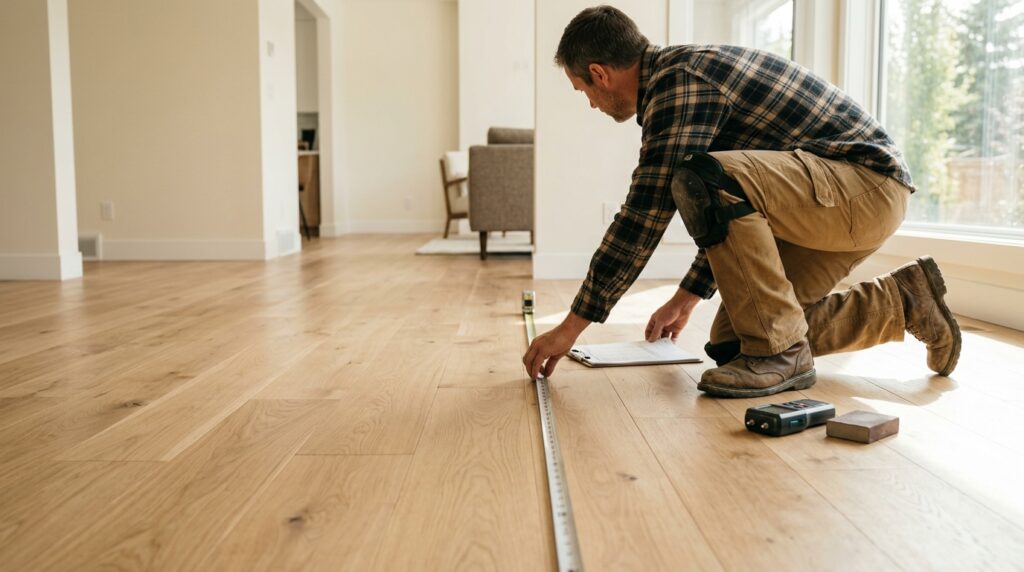
Start with a hygrometer reading in your first week of cold weather. If you don't know the floor's refinishing history, get an inspection before winter stresses it further. New-to-you floors sometimes have hidden wear that only shows up once the dry season hits.

Wood loses moisture to dry indoor air and physically shrinks. The boards pull slightly apart from each other. It's normal seasonal movement and most gaps close back up on their own by summer.

Yes, in almost every case. Calgary's winter air is dry enough that most homes need active humidity management to keep hardwood stable, whether that's a whole-home unit or a portable one in the main living space.

Between 35% and 55% relative humidity, according to NWFA guidelines. Below that range for extended periods is when you start seeing excessive shrinkage and gapping.

Occasional seasonal shrinkage isn't permanent damage. Chronic exposure to very low humidity over years can cause deeper cracking, finish failure and boards that no longer close their gaps in summer. That's when you're looking at repair or refinishing rather than just seasonal movement.

It depends on traffic and finish type, but most Calgary homes need a refinish every 7 to 10 years. Homes with pets, kids, or high foot traffic sometimes need it sooner, especially if winter salt and grit have been wearing down the finish faster than expected.

How to choose a hardwood flooring contractor in Calgary

How to choose a hardwood flooring contractor in Calgary

How to choose a hardwood flooring contractor in Calgary Learn how to choose a hardwood flooring contractor in Calgary by checking experience, insurance, past projects and written quotes before you hire. Contact Us Your floors will be under your feet for 20 years or more. The person you hire to…

Hardwood Flooring Cost Calgary: 2026 Price & Installation Guide

Hardwood Flooring Cost Calgary: 2026 Price & Installation Guide

Hardwood Flooring Cost in Calgary: What You’ll Actually Pay Planning your project but unsure about hardwood flooring cost in Calgary? This guide explains installation, refinishing, and repair expenses to help you plan your flooring budget. Contact Us If you’re planning to install, repair, or refinish hardwood flooring in Calgary, understanding…

Matte vs Gloss Hardwood Flooring | Arbutus Hardwood

Matte vs Gloss Hardwood Flooring | Arbutus Hardwood

Matte vs gloss hardwood flooring: which finish is right for your home? Matte vs gloss hardwood flooring, see which finish suits Calgary homes best for durability, style & upkeep. Get expert advice from Arbutus Hardwood. Contact Us Matte vs gloss hardwood flooring feels like a small decision until you’re standing…

    How to Prepare Hardwood Floor for Calgary Winters 3

    Wide Plank Flooring: Complete Guide, Pros & Cons (2026)

    Everything you need to know about wide plank flooring widths, wood species, pros and cons and how it holds up in Calgary’s dry climate.

    Wide plank flooring is having a moment. Walk into any new build or renovated home right now and there’s a good chance you’re standing on boards wider than what your grandparents had.

    But wider isn’t automatically better. It changes how a floor looks, how it’s installed and how it behaves in a dry climate like Calgary’s.

    I’ve spent years installing, refinishing and repairing hardwood floors. Wide plank jobs come with their own rules. This guide covers what wide plank flooring actually is, which species and widths work best, what it costs and where it can go wrong if it’s not handled right.

    Most of what’s written about wide plank flooring online comes from writers in Georgia or California, places where humidity barely moves and wood behaves itself year-round. That’s not the world we live in here. A Calgary winter can drop indoor relative humidity into the teens. A wide plank floor feels every point of that swing far more than a narrow strip floor does. Keep that in mind as you read the rest of this.

    What is wide plank flooring?

    Standard hardwood boards run 2 ¼ to 3 inches wide. That’s the classic strip flooring you’ve seen in older Calgary homes for decades.

    Wide plank flooring starts around 4 inches and can go up to 10 inches or more, depending on the species and manufacturer. Some specialty mills cut boards 12 inches wide or beyond, though anything past 7 or 8 inches gets into custom territory fast.

    The wider the board, the more of the tree’s natural grain, knots and color variation you see on each piece. Fewer seams across a room. A calmer, less busy floor.

    How width changes the look of a room

    Narrow strip flooring reads as traditional and formal. Wide planks read as relaxed, rustic or modern, depending on the finish.

    A 3-inch oak floor in a small dining room can feel choppy, with dozens of seams breaking up the sightline. Swap that for 6-inch boards and the same room feels bigger and calmer. Fewer lines for your eye to trip over.

    Solid vs engineered wide plank flooring

    Solid vs engineered

    This is the decision that matters most. It’s where a lot of homeowners get steered wrong by a salesperson pushing whatever’s in stock.

    Solid hardwood is one piece of wood, top to bottom. You can sand and refinish it multiple times over its life, which for a wide plank floor can mean decades of use.

    Engineered hardwood has a real wood veneer bonded to layers of plywood underneath. That layered core resists the expansion and contraction that comes with Calgary’s dry winters and humid summer swings.

    Here’s the part most flooring guides skip: width and stability are directly related. A 3-inch solid oak board moves a little with the seasons. A 7-inch solid board moves a lot more, because there’s simply more wood to expand and contract.

    That’s why engineered construction is often the smarter call once you go past 5 or 6 inches wide. I’ve broken this down in more detail here: solid vs engineered hardwood in Calgary.

    Feature

    Solid wide plank

    Engineered wide plank

    Can be refinished

    Yes, multiple times

    Usually 1 to 3 times, depends on veneer thickness

    Stability in dry climates

    Lower, more prone to gaps

    Higher, built for movement

    Best board width

    Up to 5 inches

    5 to 10+ inches

    Typical lifespan

    50+ years

    25 to 40 years

    Installation methods

    Nail-down

    Nail-down, glue-down, floating

    Best wood species for wide plank floors

    Not every species holds up well at wider widths. Softer, more open-grained woods tend to show more movement.

    White oak is the most popular choice for wide plank right now, for good reason. It’s dense, has a tight grain and stains evenly across a wide board.

    Red oak is a close second and usually a bit cheaper, though it has a slightly pinker undertone that shows more at wider widths.

    Walnut looks incredible in wide plank, with deep chocolate tones and dramatic grain. It’s also softer than oak, so it’s not the best pick for high-traffic areas like entryways or kitchens.

    Hickory and maple work too, but their tighter, busier grain patterns can look overwhelming once you get past 6 inches. Oak tends to stay the safer bet for most living rooms and main floors.

    If you’re stuck between red and white oak specifically, I wrote a full breakdown here: red oak vs white oak flooring. And if you want the full species lineup, including walnut and maple, that’s covered in our hardwood species guide.

    Pros of wide plank flooring

    Fewer seams, more character. Each board shows more of the tree’s natural grain. That variation is the whole appeal for a lot of homeowners.

    Faster installation, in theory. Fewer boards means fewer pieces to lay per square foot. In practice this gets offset by the extra care wide boards need, so the time savings aren’t as big as people expect.

    Makes small rooms feel larger. Fewer lines breaking up the floor plane reads as more open space.

    Works with more design styles. Wide plank floors show up in farmhouse kitchens, mid-century remodels and modern new builds equally well. It’s one of the more flexible flooring decisions you’ll make.

    Cons of wide plank flooring

    More visible movement. Wider boards show gaps and cupping more obviously than narrow strip flooring when humidity swings hit. You’ll notice it faster on a 7-inch board than a 2 ¼-inch one.

    Higher cost. Wider boards mean more waste at the mill and slower kiln drying. That gets passed on to you.

    Installation needs more skill. Subfloor flatness matters more with wide boards. A dip that’s invisible under narrow strip flooring can show up as a rock or a squeak under a wide plank.

    Fewer refinishing cycles for engineered options. If you go engineered to solve the stability problem, you’re trading off some of the lifetime refinishing solid wood offers.

    I go into more depth on subfloor prep and installation methods in this guide on nail-down vs glue-down hardwood floors, which matters even more once boards get wider.

    Wide plank flooring installation: what’s different

    Wide plank flooring installation

    Wide boards are less forgiving than narrow ones. A careful installation crew catches problems a rushed one won’t. A few things change on the install side.

    1. Subfloor prep gets stricter. Most manufacturers want flatness within 3/16 inch over a 10-foot span for wide plank, tighter than what’s needed for standard strip flooring.
    2. Acclimation takes longer. Wide boards need more time sitting in the room before installation so they can adjust to your home’s humidity. Rushing this step is the number one cause of gaps down the road.
    3. Fastening pattern changes. Wide solid boards typically need more fasteners per board to keep them from cupping or lifting at the edges.
    4. Expansion gaps need to be sized correctly. Skip this and you’ll see buckling the first dry Calgary winter.

    Get any one of these wrong and you’ll be calling someone for repairs within a year or two.

    The most common installation mistakes

    I’ve walked into more than a few homes where a wide plank floor started failing within its first winter. Almost every time, it comes down to one of these:

    1. Rushed acclimation. Boards were installed within a day or two of delivery, before they’d settled to the home’s actual humidity.
    2. No expansion gap, or too small a gap. The boards were installed edge to edge without room to expand, so they buckled the first humid summer.
    3. Fastening from the wrong end of the board. Wide boards can cup if they’re not fastened evenly across their width, not just at the edges.
    4. Installing over an uneven subfloor. A dip of even a quarter inch can telegraph up through a wide board as a squeak or a soft spot.
    5. Ignoring the home’s HVAC setup. A floor installed in July without accounting for what a bone-dry January will do to it is a floor set up to fail.

    None of these are hard to avoid. They just take an installer who’s actually paid attention to how wide boards behave, not someone treating it the same as a standard strip job.

    Wide plank flooring styles and trends

    flooring styles and trends

    A wide plank isn’t one look. It stretches across several current styles.

    • Matte, low-sheen finishes on white oak, which soften the wide board’s visual weight
    • Wire-brushed or hand-scraped textures that hide minor dents and wear, popular in busy households
    • Gray and warm-neutral stains, a shift away from the orange-toned oak that dominated the 2000s
    • Herringbone and chevron patterns cut from wider boards, giving a bold geometric look without the busyness of narrow-plank herringbone

    For a broader look at where hardwood design is headed this year, check out our hardwood flooring trends article.

    How wide plank floors handle Calgary’s dry climate

    This is where a lot of national flooring guides fall short, because they’re written for climates that don’t see 20% humidity in January.

    Calgary winters pull moisture out of everything, wood included. When a solid wide plank floor loses moisture, it shrinks. Do that every winter for a few years and you’ll see gaps opening between boards, sometimes wide enough to catch a coin.

    Come summer, the reverse happens. Boards pick up moisture, expand and press against each other. If there wasn’t enough expansion gap left at installation, that pressure has to go somewhere. Usually that’s cupping or buckling.

    The National Wood Flooring Association recommends acclimating wood flooring to the room’s expected in-use humidity range before installation, not just to whatever the humidity happens to be on delivery day. That’s a detail a lot of installers skip. It’s usually the first thing I check when I’m called out to fix a wide plank floor that’s failing early.

    If you’re set on solid wide plank in Calgary, plan on running a humidifier through the winter months. If that’s not realistic for your household, engineered construction solves most of this problem for you.

    Cost of wide plank flooring

    Wide plank costs more than standard strip flooring, generally 15 to 30% more per square foot for the same species. A few reasons why:

    • Wider boards mean more waste at the mill, since fewer boards can be cut from each log without defects
    • Kiln drying takes longer for wider stock, tying up equipment longer
    • Grading is stricter, since flaws are more visible on a bigger surface

    Rough Calgary pricing for materials alone, installed:

    Wood type

    Width

    Price range per sq ft (installed)

    Red oak, solid

    5 inch

    $9 to $13

    White oak, solid

    6 to 7 inch

    $12 to $18

    White oak, engineered

    7 to 9 inch

    $10 to $16

    Walnut, engineered

    6 to 8 inch

    $14 to $22

    Brand matters too. Some manufacturers charge a real premium for consistent milling and grading. With a wide plank, that consistency is worth paying for. I put together a comparison here: best hardwood flooring brands in Calgary.

    Caring for wide plank floors long term

    Wide plank floors don’t need much day to day, but a few habits go a long way.

    Run a humidifier through the winter months and aim for somewhere between 35 and 50% indoor relative humidity. That single habit prevents more gapping problems than anything else on this list.

    Wipe up spills fast, especially near wide seams. Water sitting in a seam for hours is one of the quickest ways to see localized cupping on a single board.

    Use furniture pads and avoid dragging heavy items across the floor. Wide boards show scuffs and gouges just as clearly as they show grain, maybe more so, since there’s more flat surface area to catch the light.

    Stick to a cleaner made for hardwood, not an all-purpose spray. Anything with excess water or wax buildup causes more harm on wide boards than narrow ones, since moisture has more surface to sit on before it evaporates.

    Is wide plank flooring right for your home?

    A wide plank makes sense if you’ve got open-concept living spaces where fewer seams read as a bigger, calmer floor plan. It also suits homes going for a farmhouse, rustic or modern aesthetic where natural grain variation is the point.

    It’s a tougher sell in a tight, older home with an uneven original subfloor, unless you’re prepared to invest in leveling first. And if you’re not willing to manage indoor humidity through the winter, a solid wide plank probably isn’t your best bet.

    A lot of our clients land on a middle ground: engineered wide planks in the 5 to 7 inch range, wide enough to get the visual benefit, stable enough for our climate. That’s a conversation worth having before you order material. It’s exactly what we help homeowners work through in our custom hardwood flooring consultations.

    The bottom line

    Wide plank flooring gives you a calmer, more open-looking floor with real character in the grain. It also asks more of your subfloor, your installer and your home’s humidity control, especially here in Calgary.

    Get the species, width and construction type matched to your home and it’ll be one of the best upgrades you make. Get it wrong and you’ll be dealing with gaps and cupping by the second winter.

    If you’re weighing your options, we’re happy to walk through what’ll actually hold up in your home. Get in touch with us for a clear, honest quote.

    Generally, yes. Fewer seams across the floor create a more continuous surface, which tends to make a room read as more open. It's a small design trick, but it works.

    It depends what matters most to you. Engineered wins on stability and is often the better choice for wide boards in a dry climate. Solid wins on total lifespan if you're planning to refinish the floor several times over the decades.

    Most standard product lines top out around 7 to 8 inches. Custom mills can go wider, sometimes past 10 inches, but boards that wide need extra acclimation time and a near-perfect subfloor.

    A little, mostly because there's more surface area per board to notice a mark on. Matte and wire-brushed finishes hide wear better than high-gloss finishes.

    Yes, but engineered construction is strongly recommended. Solid wide boards over radiant heat are far more prone to gapping from the constant, uneven moisture loss.

    For an average main floor, plan on 3 to 5 days including acclimation time, longer than standard strip flooring because of the extra prep work involved.

    How to choose a hardwood flooring contractor in Calgary

    How to choose a hardwood flooring contractor in Calgary

    How to choose a hardwood flooring contractor in Calgary Learn how to choose a hardwood flooring contractor in Calgary by checking experience, insurance, past projects and written quotes before you hire. Contact Us Your floors will be under your feet for 20 years or more. The person you hire to…

    Hardwood Flooring Cost Calgary: 2026 Price & Installation Guide

    Hardwood Flooring Cost Calgary: 2026 Price & Installation Guide

    Hardwood Flooring Cost in Calgary: What You’ll Actually Pay Planning your project but unsure about hardwood flooring cost in Calgary? This guide explains installation, refinishing, and repair expenses to help you plan your flooring budget. Contact Us If you’re planning to install, repair, or refinish hardwood flooring in Calgary, understanding…

    Matte vs Gloss Hardwood Flooring | Arbutus Hardwood

    Matte vs Gloss Hardwood Flooring | Arbutus Hardwood

    Matte vs gloss hardwood flooring: which finish is right for your home? Matte vs gloss hardwood flooring, see which finish suits Calgary homes best for durability, style & upkeep. Get expert advice from Arbutus Hardwood. Contact Us Matte vs gloss hardwood flooring feels like a small decision until you’re standing…

      Wide Plank Flooring: Complete Guide, Pros & Cons (2026) 7

      7 Easy Ways to Clean Hardwood Floors | Best Methods & Tips

       7 easy, expert-approved ways to clean hardwood floors and keep them shining. Tips from Calgary’s hardwood flooring pros to protect your finish.

      If you’ve got hardwood in your home, you already know the drill. One week the floor looks like it just came out of the showroom. Next, there’s a haze over it that no amount of sweeping seems to fix.

      Learning how to clean hardwood floors the right way is a lot simpler than most cleaning blogs make it sound. You don’t need a cabinet full of products. You need the right tools, the right order of steps and a little restraint with water.

      We’ve spent over 30 years installing, sanding and refinishing hardwood floors across Calgary. A big chunk of the repair calls we get started the same way: someone used the wrong cleaner, too much water or a steam mop they picked up at a big box store. So this guide isn’t a theory. It’s what actually keeps a hardwood floor looking good for decades instead of years.

      Here are 7 ways to do it right, plus what to avoid, how to tell when cleaning isn’t enough and a few things specific to Calgary’s climate.

      Why hardwood floor care matters more than people think

      Wood isn’t like tile or vinyl. It breathes. It reacts to moisture in the air and moisture on its surface, which means the wrong cleaning routine doesn’t just leave streaks. It can cause the boards to cup, gap or lose their finish years before they should.

      The National Wood Flooring Association puts it plainly: routine cleaning should involve sweeping, dust mopping or vacuuming, with spills wiped up immediately using a dry or barely damp cloth. Wet mops and steam mops sit on their “don’t” list for good reason. Once moisture works its way into a seam, there’s no undoing it with a towel.

      That’s the real reason this guide exists. A good cleaning routine protects an investment that isn’t cheap to replace. It’s also a lot cheaper than the repair bill that follows years of the wrong habits.

      We’ve walked into homes where the owner swore they only ever used a damp mop. The boards along the kitchen window still cupped from years of condensation nobody noticed. Small habits add up. That’s true whether they’re good ones or bad ones.

      What you’ll actually need

      What you'll actually need

      Before getting into the steps, here’s the short list of tools worth keeping on hand. You don’t need everything at once, but having these ready makes the routine below take minutes instead of an hour.

      Tool

      What it’s for

      Soft-bristle broom

      Daily sweeping without scratching the finish

      Vacuum with hard floor setting

      Lifting debris from seams and corners

      Dry microfiber mop

      Catching fine dust between vacuum sessions

      pH-neutral hardwood cleaner

      Safe deep cleaning without stripping the finish

      Damp microfiber mop

      Applying cleaner without soaking the floor

      Dry towel

      Removing excess moisture right after mopping

      Felt furniture pads

      Preventing scratches under chairs and tables

      Skip anything with “all-purpose” on the label unless it specifically says hardwood safe. Generic cleaners are built for tile and laminate. They don’t play well with a finished wood surface.

      1. Sweep or vacuum first, every time

      This sounds obvious, but it’s the step most people rush through.

      Dust, grit and tiny bits of outdoor debris act like sandpaper under socks and shoes. Walk over the same patch of floor a few hundred times with grit underneath and you’ll wear a dull track into the finish, usually right where people walk most: hallways, in front of the sink, near the front door.

      A soft-bristle broom works fine for daily upkeep. If you’re vacuuming, switch to the hard floor setting or a brush attachment. Skip the beater bar. Those rotating brushes are built for carpet fibers, not finished wood. They’ll leave fine scratches you won’t notice until the light hits the floor at the wrong angle.

      Aim two to three times a week. Homes with pets or kids probably need it daily, especially near entryways where most of the grit gets tracked in first.

      Solid hardwood and engineered hardwood handle this step the same way, since the finish sitting on top is what’s actually being protected, not the wood underneath it. The difference between the two only really matters once you get into deeper cleaning or refinishing, not for daily sweeping.

      2. Follow up with a dry microfiber mop

      Vacuuming gets the big stuff. It misses the fine dust that settles into the grain and corners.

      A dry microfiber mop picks up what’s left behind without adding any moisture. Run it over the floor after vacuuming, especially before doing any wet cleaning. This step also makes a deep clean faster later, since you’re not mopping through a layer of dust that turns into grey sludge the second it meets water.

      If you’ve got a lot of pet hair, a dry mop with a static charge does a better job than a broom at grabbing it. Wash the mop head every couple of weeks so it keeps working the way it should.

      3. Mix a cleaning solution made for hardwood

      Not every cleaner belongs on a wood floor.

      The safest bet is a pH-neutral cleaner made specifically for hardwood. Check what finish your floor has first. Oil finishes, wax finishes and polyurethane finishes all respond differently to cleaning products. Using the wrong one can leave a dull film or strip the protective layer entirely. If you’re not sure which one you’ve got, our breakdown of oil-based vs water-based floor finishes walks through how to tell the difference and what each one needs.

      Dilute the product exactly as the label says. More isn’t better here. Excess cleaner just sits on the surface, attracts dirt and leaves streaks once it dries.

      A quick test before doing the whole floor: try the diluted mix in a closet or under a piece of furniture. Wait for it to dry fully. If there’s no discoloration or dulling, you’re good to go.

      4. Mop with barely any water

      Mop with barely any water

      This is where most people go wrong.

      Wring the mop out until it feels almost dry to the touch. You’re aiming for a light dampness rather than a wet sheen. Work in the direction of the wood grain and rinse the mop head often so you’re not just pushing dirty water around the room.

      Once you’re done, go over the floor again with a dry towel or a clean, dry microfiber mop. Standing water is the number one cause of the repair calls we get, especially in kitchens and near patio doors. If you’ve ever dealt with cupped or discolored boards near a sink, our page on water-damaged hardwood repair covers what usually causes it and how it typically gets fixed.

      Small sections at a time work better than mopping the whole room in one pass. It’s slower, but the floor never sits wet long enough for moisture to become a problem.

      5. Handle spills the second they happen

      A spill sitting for five minutes is a lot easier to clean than one that’s been there overnight.

      Grab a dry cloth or a barely damp one and wipe it up right away. For anything sticky like juice or sauce, a small amount of hardwood-safe cleaner on a cloth works better than dumping water straight onto the boards.

      The longer moisture sits, the more chance it has to seep between planks. That’s usually how small, forgettable spills turn into swollen or discolored boards months later, long after anyone remembers what caused it. Keep a few microfiber cloths under the kitchen sink so you’re never digging through a cupboard while a puddle spreads.

      6. Deep clean once a month

      Weekly sweeping and light mopping handle surface dirt. They don’t touch the grime that builds up in the wood grain over weeks of foot traffic.

      Once a month, go over the whole floor with a hardwood cleaner and a barely damp mop, working in smaller sections so nothing sits wet too long. If you’ve got a large open floor plan, split the job across a couple of days rather than rushing it in one go.

      If your floor still looks dull after a deep clean, that’s usually not a cleaning problem anymore. It’s a finish problem. No amount of scrubbing fixes worn-through finish. That’s when polishing or refinishing comes in. It’s worth knowing the difference before spending money on either. A professional hardwood floor polishing service can restore shine on a finish that’s still intact, while our guide on polishing vs refinishing hardwood floors breaks down which one actually fits your situation.

      7. Protect the floor between cleanings

      Cleaning is half the job. Preventing damage is the other half. It’s a lot less work.

      A few habits go a long way:

      • Take shoes off at the door. Outdoor grit is the main culprit behind scratched finishes.
      • Use felt pads under furniture legs and check them every few months since they wear down.
      • Put rugs in high-traffic spots like entryways and hallways.
      • Trim pet nails regularly if you’ve got dogs running across the floor.
      • Keep indoor humidity somewhere between 30 and 50 percent, since wood shrinks and swells with the seasons.
      • Rotate area rugs occasionally so the boards underneath age evenly with sun exposure.

      None of this takes long. It just needs to become routine, the same way you’d wipe down a counter without thinking twice about it.

      What not to use on hardwood floors

      A few products and tools show up over and over in the “how did this happen” conversations we have with homeowners.

      Avoid this

      Why it causes problems

      Steam mops

      Heat and moisture push into the wood and cause swelling or warping

      Wet mops or soaked cloths

      Standing water seeps into seams and causes cupping

      Vinegar or citrus cleaners

      Acidic ingredients break down the finish over time

      Bleach or ammonia

      Strips finish, discolors wood and can void warranties

      Oil soaps

      Leave residue that attracts dirt and interferes with refinishing later

      Abrasive scrubbers

      Steel wool and rough pads scratch the finish

      If a product isn’t specifically labeled safe for hardwood, skip it. It’s not worth the risk to a floor that took real money to install in the first place.

      Signs your floor needs more than a cleaning

      Signs your floor needs more than a cleaning

      Sometimes the floor looks tired no matter what you do. That’s a different problem than dirt.

      Deep scratches that catch a fingernail, boards that feel soft or spongy underfoot, gaps that open and close with the seasons or a finish gone matte in patches are all signs the wood itself needs attention rather than another round of mopping. Our page on signs you need hardwood floor repair goes into more detail on what to look for and when it’s worth calling someone in.

      Waiting rarely helps in these cases. A small repair now is almost always cheaper than a full hardwood floor repair job after the damage spreads across more boards.

      A note for Calgary homes

      Calgary’s dry winters are tough on hardwood. Indoor heating strips moisture from the air. Wood responds by shrinking, which is why gaps between boards tend to show up around January and February then close back up by summer.

      Chinooks make things trickier. A sudden swing from minus 20 to plus 10 in a single day pulls moisture out of the air fast. Wood floors feel that shift even indoors. Running a humidifier through the colder months helps a lot. So does holding off on wet cleaning right after a big temperature swing, when humidity levels are still catching up.

      If your floor has already developed noticeable gaps or a dull finish from a rough winter, sanding and refinishing brings it back without replacing a single board. Our dustless hardwood floor refinishing process handles this without turning your home into a construction zone for a week, which matters when you’ve still got to live in the house while the work gets done.

      We see the same pattern every spring. Homeowners notice the gaps closing back up on their own and figure the floor fixed itself. It didn’t. The wood just absorbed enough moisture to swell again. The finish underneath is still wearing thinner every year that passes without attention. A yearly check, even just a quick look at the corners near exterior walls, catches problems long before they turn into a full refinish.

      The bottom line

      Clean hardwood floors come down to a handful of habits repeated consistently: sweep before you mop, use minimal water, pick products made for wood and deal with spills fast. Skip the steam mops, skip the vinegar and skip the guesswork.

      Most floors that end up needing repair got there through years of small mistakes rather than one big accident. Catching those habits early saves a lot of money down the road. It also keeps a floor looking the way it did the day it was installed.

      If your floor is past the point where cleaning helps, or you’re just not sure what condition it’s really in, we’re happy to take a look. Arbutus Hardwood has been installing, repairing and refinishing floors across Calgary for over 30 years. A quick assessment costs nothing. Get in touch for a free quote and we’ll tell you honestly whether your floor needs a deep clean, a polish or a full refinish.

       Sweep or vacuum two to three times a week, mop lightly every one to two weeks and do a full deep clean once a month. High-traffic homes with kids or pets should lean toward the more frequent end of that range.

      Only if it's specifically labeled safe for hardwood and used sparingly. Many spray mops release more liquid than they should, so dampen a cloth by hand instead if you're not sure how much your particular model puts down.

      Usually it's leftover cleaner residue, or the cleaner wasn't diluted properly. It can also mean the finish itself is worn and needs polishing or refinishing rather than another cleaning session.

       It's a common DIY suggestion, but most flooring manufacturers advise against it. The acidity slowly breaks down polyurethane and other finishes, leaving the floor duller and less protected the more it's used.

      Polishing adds shine to a finish that's still in decent shape. Refinishing sands the floor down to bare wood and applies a new finish, which is what's needed once scratches or wear go deeper than the surface layer.

      A proper deep clean with a pH-neutral cleaner, followed by a hardwood floor polish made for your finish type, brings back shine on floors that aren't badly worn. If the dullness persists after that, the finish itself is likely gone and refinishing is the next step.

      How to choose a hardwood flooring contractor in Calgary

      How to choose a hardwood flooring contractor in Calgary

      How to choose a hardwood flooring contractor in Calgary Learn how to choose a hardwood flooring contractor in Calgary by checking experience, insurance, past projects and written quotes before you hire. Contact Us Your floors will be under your feet for 20 years or more. The person you hire to…

      Hardwood Flooring Cost Calgary: 2026 Price & Installation Guide

      Hardwood Flooring Cost Calgary: 2026 Price & Installation Guide

      Hardwood Flooring Cost in Calgary: What You’ll Actually Pay Planning your project but unsure about hardwood flooring cost in Calgary? This guide explains installation, refinishing, and repair expenses to help you plan your flooring budget. Contact Us If you’re planning to install, repair, or refinish hardwood flooring in Calgary, understanding…

      Matte vs Gloss Hardwood Flooring | Arbutus Hardwood

      Matte vs Gloss Hardwood Flooring | Arbutus Hardwood

      Matte vs gloss hardwood flooring: which finish is right for your home? Matte vs gloss hardwood flooring, see which finish suits Calgary homes best for durability, style & upkeep. Get expert advice from Arbutus Hardwood. Contact Us Matte vs gloss hardwood flooring feels like a small decision until you’re standing…

        7 Easy Ways to Clean Hardwood Floors | Best Methods & Tips 11

        Matte vs Gloss Hardwood Flooring | Arbutus Hardwood

        Matte vs gloss hardwood flooring, see which finish suits Calgary homes best for durability, style & upkeep. Get expert advice from Arbutus Hardwood.

        Matte vs gloss hardwood flooring feels like a small decision until you’re standing in your living room, staring at two sample boards under different light. One looks warm and quiet. The other throws a shine across the room.

        Both are good floors. They just behave differently once life happens to them.

        I’ve refinished floors in Calgary homes for over 30 years, and the matte vs gloss question comes up on almost every job. Here’s what actually matters when you’re choosing.

        What matte and gloss actually mean on a wood floor

        The finish is the top coat sealed onto your hardwood. It’s not the wood color or the stain. It’s the layer that reflects (or doesn’t reflect) light.

        Sheen is measured on a scale, and most flooring finishes fall somewhere between these two ends.

        Matte finish

        Matte hardwood has a flat, low sheen. Light doesn’t bounce off it much, so the wood grain and texture show through instead of the shine.

        It reads as natural and understated. A lot of homeowners describe it as looking “raw,” even though it’s fully sealed and protected.

        Gloss finish

        Gloss (sometimes called high-gloss) reflects light strongly. It gives floors a polished, almost wet look.

        It photographs beautifully. It also shows every footprint, dust particle, and pet hair the moment light hits it at the wrong angle.

        If you want something between the two, there’s also high-gloss vs satin hardwood finish to consider, which lands closer to the middle of the sheen scale and softens some of gloss’s downsides.

        Most manufacturers rate sheen on a percentage scale. Matte usually sits around 10 to 25%. Satin lands closer to 30 to 50%. Gloss can hit 70% or higher. Those numbers aren’t marketing fluff. They tell you exactly how much light bounces off the surface, which is the whole ballgame here.

        How the finish gets applied

        Matte and gloss aren’t different products applied differently. They’re the same base finish (usually a polyurethane) with different amounts of flattening agent mixed in.

        More flattening agent, less shine. That’s really the entire chemistry behind it.

        This matters because it means switching from one sheen to another doesn’t require ripping out your floor. In most cases, our hardwood floor refinishing team can screen the existing coat and apply a new topcoat in the sheen you want, as long as the wood underneath is still in good shape.

        Matte vs gloss hardwood flooring: durability and scratch visibility

        This is where the decision usually gets made for most homeowners.

        Gloss floors show scratches, dents, and scuffs far more than matte. The high shine catches light at an angle, and any imperfection stands out like a scar. If you’ve got kids, dogs, or a busy household, gloss can start looking tired within a year or two.

        Matte finish hides wear much better. It doesn’t mean the floor is more durable underneath. Both finishes can use the same protective topcoat. Matte just masks daily life better.

        I tell most families with pets to lean matte. I tell homeowners who barely walk on their floors, maybe a formal dining room, that gloss is fair game.

        Quick comparison:

        Factor

        Matte Finish

        Gloss Finish

        Scratch visibility

        Low

        High

        Light reflectivity

        Low

        High

        Cleaning frequency

        Moderate

        Frequent

        Best for

        High-traffic homes, pets, kids

        Low-traffic, formal rooms

        Maintenance effort

        Easier

        More demanding

        Style

        Natural, modern

        Classic, polished

        durability and scratch visibility
        A quick example from a real job

        We refinished a family home in Panorama Hills last year. Two dogs, three kids, an open-concept main floor that gets hit with afternoon sun for hours.

        The homeowner originally wanted gloss because it matched a photo she’d seen online. We walked her through what that floor would look like after six months with that kind of foot traffic. She went with satin instead.

        Eighteen months later, the floor still looks close to new. That’s not luck. That’s the finish doing exactly what it’s supposed to do for that lifestyle.

        Maintenance and cleaning differences

        Gloss hardwood shows dust the second it settles. You’ll be sweeping or mopping more often just to keep that reflective surface looking clean.

        Matte forgives a lot more. A light layer of dust or a small smudge doesn’t jump out the way it does on a shiny floor.

        Neither finish needs anything exotic. Both hold up fine with a soft-bristle broom, a microfiber mop, and a cleaner made for sealed hardwood. Where they differ is how often you’ll feel like you need to clean.

        The National Wood Flooring Association points to proper finish selection and regular care as two of the biggest factors in how long any hardwood floor lasts, and that holds true whether you go matte or gloss.

        If your floors are already showing wear and you’re weighing your options, our guide on hardwood floor polishing vs refinishing breaks down which approach makes sense before you commit to a full finish change.

        One thing homeowners don’t expect: gloss floors show mop streaks. If you don’t use a microfiber mop or you leave water sitting too long, you’ll see it. Matte just doesn’t broadcast that the same way.

        Kitchens and entryways are the two spots where this really shows up. Both areas deal with grit, spills, and constant foot traffic. If those rooms flow into your main living space, it’s worth thinking about whether you want one consistent finish throughout, or a different sheen just in the high-abuse zones.

        Which finish fits Calgary homes best
        Which finish fits Calgary homes best

        Calgary’s dry winters and big swings in humidity put extra stress on hardwood. Wood moves. It shrinks a bit when the air is dry, expands when it’s not.

        That movement is more noticeable on gloss floors, because the reflective surface highlights every subtle gap or unevenness. Matte tends to hide these small seasonal shifts better.

        We also see a lot of homes with big south-facing windows here. Direct sunlight on a gloss floor creates glare that can actually be uncomfortable to walk across in the afternoon. Matte handles strong natural light without the same issue.

        For homes going through a full refinish, we always factor in Calgary’s climate when recommending a finish. You can read more about how we handle it in our dustless hardwood floor refinishing process, which also keeps your home clean during the job itself.

        Basements and lower levels come with their own wrinkle. They tend to hold more humidity, and light down there is usually artificial rather than natural. Gloss can actually work better in a basement rec room than upstairs, since there’s less direct sun to create glare. It’s one of the few spots in a Calgary home where we’ll often recommend it without hesitation.

        Semi-gloss and satin: the middle ground

        Not everyone wants to pick a side. Semi-gloss and satin finishes split the difference: some shine, but not the mirror effect of full gloss.

        Satin is the most popular finish we install in Calgary right now. It hides minor scratches almost as well as matte, but still has enough sheen to look intentional and finished rather than flat.

        If you’re torn, ask to see satin samples alongside your matte and gloss options before deciding.

        How to actually test samples before deciding

        Don’t pick a finish from a small chip in a showroom. Sheen looks completely different once it’s on a full floor under your home’s lighting.

        A few things worth doing before you commit:

        • Ask for a sample board at least 12 by 12 inches, not a tiny swatch
        • Look at it in the morning and again in the evening, since lighting shifts the effect
        • Set it on the actual floor area, not a table or countertop
        • Walk on it. Scuff it a little on purpose. See how it recovers
        • View it from a standing angle, not just looking straight down

        Wood species changes how this looks too. Oak has more grain texture that shows through matte beautifully, while smoother woods like maple can look almost plain in matte and benefit from a bit more sheen. Bring a sample of your actual flooring species when comparing finishes, since a generic sample board won’t tell you the full story.

        Does the finish affect resale value?

        Buyers generally respond well to satin and matte finishes right now. Gloss reads as dated to a lot of house hunters, especially in older listings where the shine has already dulled unevenly from wear.

        That said, resale value comes down to the overall condition of the floor more than the sheen level. A well-maintained gloss floor still beats a scratched-up matte one.

        Realtors we’ve worked with in Calgary tell us the same thing every time: buyers notice damage before they notice sheen. A dull, worn gloss floor reads as neglected. A fresh matte floor reads as cared for. It’s the condition doing the talking, not the finish itself.

        If your floors need work before listing, our team can walk you through timing. Check best time to polish hardwood if you’re planning ahead of a sale or a big event at home.

        Cost differences between matte and gloss finishes

        Here’s some good news: matte and gloss cost roughly the same to apply. The price difference comes from the number of coats, the finish brand, and whether you’re doing oil-based or water-based.

        Speaking of which, the base finish type matters as much as the sheen. Our breakdown of oil vs water-based floor finish covers how each one changes drying time, smell, and durability, regardless of whether you go matte or gloss on top.

        Some premium finish lines only come in a limited range of sheens, so your budget can end up narrowing your options before style even enters the conversation. If you’re comparing products, our rundown of best hardwood flooring brands in Calgary covers which manufacturers offer the widest sheen selection at each price point.

        Which finish is trending in 2026

        Matte and satin have been leading the pack in newer builds and renovations across Calgary. The look pairs well with the wider, natural-toned planks that are popular right now.

        Gloss hasn’t disappeared. It still shows up in older character homes and spaces where homeowners want a more formal, traditional feel.

        For a broader look at what’s popular beyond just sheen, our hardwood flooring trends article covers species, colors, and plank widths trending in Calgary homes this year.

        What about stairs?
        What about stairs

        Stairs deserve a separate mention. They take more abuse than flat floor space, especially the nosing on each step.

        Gloss on stairs is risky for two reasons. It shows wear fast, and a highly reflective surface can be more slippery, especially in socks. Most of the staircases we finish in Calgary get a satin or matte topcoat for exactly that reason, even in homes where the main floor is gloss.

        If safety is a concern, especially with kids or older family members in the house, matte or satin on stairs is the safer call regardless of what you choose for the rest of the house.

        We also get asked whether you can mix a gloss main floor with matte stairs without it looking mismatched. It works fine as long as the wood tone and stain color stay consistent. The eye picks up on color shifts far more than it picks up on sheen changes between connected spaces.

        Lighting changes everything

        I mentioned this earlier, but it deserves its own section because it trips up so many homeowners.

        LED bulbs, halogen, natural daylight, they all hit a gloss floor differently. A finish that looks rich and elegant under warm evening light can look almost harsh under bright overhead LEDs.

        Before finalizing your choice, walk through the room at different times of day. Turn the lights on and off. Open the blinds, then close them. It sounds excessive, but it’s the single best way to avoid buyer’s remorse on a decision you’ll be living with for the next decade.

        North-facing rooms in Calgary get flatter, cooler light most of the year. Those rooms tend to handle gloss a little better since there’s less harsh glare to deal with. South and west-facing rooms with big windows are where matte earns its keep.

        Common mistakes homeowners make choosing a finish

        • Picking gloss based on a showroom sample under bright lighting, then being surprised by glare at home
        • Assuming matte means less durable (it doesn’t, durability depends on the topcoat, not the sheen)
        • Not testing samples in the actual room, since lighting changes everything
        • Choosing gloss for a home with young kids or large dogs without weighing the maintenance
        • Ignoring how sunlight exposure in the room will interact with the finish

        Matte vs gloss: pros and cons at a glance

        Matte finish

        Pros: hides scratches and dust, handles sunlight glare well, low-maintenance feel, fits current design trends.

        Cons: some homeowners find it looks less “finished” or polished.

        Gloss finish

        Pros: dramatic, polished look, great for formal spaces, classic aesthetic.

        Cons: shows every scratch and footprint, more frequent cleaning, glare in sunlit rooms.

        Final thoughts

        Matte and gloss hardwood flooring both look great. The right choice comes down to how your home actually gets used, not just what looks best in a photo.

        If you’ve got an active household, matte or satin will save you a lot of maintenance headaches. If you want a formal, polished look in a lower-traffic space, gloss still delivers.

        Not sure which finish fits your home? Our team can walk you through samples in your own lighting before you commit. Call us at 403-371-7531 or email dave@arbutushardwood.com for a free consultation, and we’ll help you pick a finish that looks good for years, not just for the first six months.

        Sometimes. If the existing finish is in decent shape, a light screen-and-recoat with a matte topcoat can work. If the floor has deep wear, a full refinish is usually needed to get an even result.

         No, it's actually easier day to day since it hides dust and light debris better. Gloss just needs more frequent attention to stay looking sharp.

        It can. The reflective surface bounces light around, which sometimes makes smaller rooms feel more open. Matte doesn't have that same effect.

        Matte, by a wide margin. Nail scratches and paw prints are far less visible on a low-sheen surface.

        Yes, plenty of homeowners do this. Matte or satin in high-traffic living areas, gloss in a formal dining room or entryway, works well as long as the transition points are planned properly.

         It can be, especially in socks or bare feet. Matte and satin generally offer slightly more grip, which is part of why we recommend them for stairs.

        How to choose a hardwood flooring contractor in Calgary

        How to choose a hardwood flooring contractor in Calgary

        How to choose a hardwood flooring contractor in Calgary Learn how to choose a hardwood flooring contractor in Calgary by checking experience, insurance, past projects and written quotes before you hire. Contact Us Your floors will be under your feet for 20 years or more. The person you hire to…

        Hardwood Flooring Cost Calgary: 2026 Price & Installation Guide

        Hardwood Flooring Cost Calgary: 2026 Price & Installation Guide

        Hardwood Flooring Cost in Calgary: What You’ll Actually Pay Planning your project but unsure about hardwood flooring cost in Calgary? This guide explains installation, refinishing, and repair expenses to help you plan your flooring budget. Contact Us If you’re planning to install, repair, or refinish hardwood flooring in Calgary, understanding…

        Matte vs Gloss Hardwood Flooring | Arbutus Hardwood

        Matte vs Gloss Hardwood Flooring | Arbutus Hardwood

        Matte vs gloss hardwood flooring: which finish is right for your home? Matte vs gloss hardwood flooring, see which finish suits Calgary homes best for durability, style & upkeep. Get expert advice from Arbutus Hardwood. Contact Us Matte vs gloss hardwood flooring feels like a small decision until you’re standing…

          Matte vs Gloss Hardwood Flooring | Arbutus Hardwood 15

          Custom Hardwood Floor Borders & Inlays | Calgary

          Get custom hardwood floor borders & inlays in Calgary from Arbutus Hardwood. 30+ years of craftsmanship behind every install. Free quote!

          A plain hardwood floor does its job. It looks fine. But it doesn’t say anything about the people who live there.

          That’s where custom hardwood floor borders & inlays come in. A border along the perimeter of a room, a medallion at the bottom of a staircase, a herringbone pattern running through an entryway. These details turn an ordinary floor into something a guest actually stops to look at.

          We’ve been installing hardwood in Calgary homes for more than 30 years, and border and inlay work is some of the most satisfying stuff we do. It’s also some of the most misunderstood. Homeowners often assume it’s out of budget, or that it only belongs in old European mansions. Neither is true.

          This guide walks through what these designs actually are, which species work best, what they cost, and what Calgary’s climate means for your floor over the next 10 or 20 years.

          What are custom hardwood floor borders and inlays

          The two terms get used interchangeably, but they’re not quite the same thing.

          Borders run along the edge of a room, usually 6 to 10 inches from the wall. They can be a simple contrasting stripe, or a more layered pattern with multiple wood tones.

          Inlays are a broader category. They include medallions (a decorative centerpiece, often circular), geometric accents, and full pattern work like parquet or herringbone. An inlay can sit inside a border, replace an area rug in an entryway, or mark a transition between rooms.

          Most projects we do combine the two. A border frames the room, and a small medallion sits under a chandelier or at the base of a staircase.

          If you want to see the full range of what’s possible, our custom hardwood flooring page has photos from past Calgary projects.

          Why Calgary homeowners are choosing this right now

          Custom flooring has moved past the “luxury home” stereotype. We’re seeing it in renovated bungalows in Bridgeland, new builds in Mahogany, and character homes in Elbow Park.

          Part of it is Pinterest and Instagram. People see a herringbone entryway online and want the same feeling in their own house. Part of it is resale value. A well-executed inlay signals quality craftsmanship to a future buyer in a way that basic plank flooring doesn’t.

          We’ve written more about where the broader flooring market is headed in our piece on current hardwood flooring trends, if you want the bigger picture.

          Popular wood species for custom inlays

          Contrast is what makes a border or medallion pop. You need at least two species with a visible difference in tone or grain.

          Here’s what we use most often in Calgary homes:

          Species

          Tone

          Best used for

          Red oak

          Warm, reddish-brown

          Base floor with a darker walnut border

          White oak

          Cool, neutral tan

          Modern homes, works with grey stains

          Walnut

          Deep brown, almost chocolate

          Accent strips and medallion centers

          Maple

          Pale, subtle grain

          Contrast strips against darker species

          Cherry

          Rich red, deepens with age

          Traditional and formal spaces

          Wenge

          Nearly black

          High-contrast borders and inlay detailing

          If you’re still deciding between the two most common base species, our breakdown of red oak vs. white oak flooring covers durability, cost, and how each takes stain.

          One thing worth knowing before you fall in love with a species: not every wood species handles Calgary’s dry winters the same way. Species with tighter grain, like white oak, tend to move less as humidity swings. We factor that in when we’re recommending a species combination, especially for a floor that’s going to sit near a large window or a fireplace.

          Design styles: borders, medallions, and parquet

          Design styles

          Not every project needs the same approach. Here’s a quick comparison to help you figure out which style fits your space.

          Style

          Where it works best

          Complexity

          Simple border

          Living rooms, dining rooms

          Low

          Layered/multi-species border

          Formal spaces, large open rooms

          Medium

          Medallion

          Entryways, under a staircase

          Medium to high

          Herringbone

          Entryways, hallways

          Medium

          Chevron

          Modern living spaces

          Medium

          Full parquet

          Statement rooms, historic-style homes

          High

          Herringbone and chevron patterns have had a real moment over the last few years. Both use rectangular planks laid at angles, herringbone with a zigzag joint, chevron with a continuous point. They read as more modern than a traditional medallion, which is why we’re installing more of them in newer Calgary builds.

          Parquet, the oldest of these techniques, cuts wood into geometric pieces and arranges them into a mosaic. It’s labour-intensive, but it’s also the most distinctive option on this list.

          Solid or engineered: which works for inlay projects

          This question comes up on almost every consultation.

          Solid hardwood can be sanded and refinished multiple times over its life, which matters if you want your border or medallion to stay crisp for decades. Engineered hardwood handles humidity swings better, which is relevant given how dry Calgary winters get.

          For border and inlay work specifically, we lean toward solid hardwood in most cases. The detail work in a medallion or layered border shows up more clearly with solid wood, and refinishing later on preserves the pattern rather than sanding through the design layer.

          That said, engineered hardwood has its place, especially over concrete or radiant heat. We break the whole decision down in our guide to solid vs. engineered hardwood, including how each performs in a Calgary home specifically.

          How the installation process works

          Border and inlay installation is a different skill set than standard plank flooring. It requires precise measurements, careful cutting, and a steady hand with a router or table saw.

          Here’s roughly how a project moves:

          1. Design consultation. We walk through your space, discuss species combinations, and sketch out the pattern.
          2. Material sourcing. Border and inlay wood often needs to be custom milled to exact thickness, since it has to sit flush with the field flooring.
          3. Layout and dry fit. Before anything gets glued or nailed, we lay the pattern out to confirm spacing and symmetry.
          4. Cutting and installation. This is where precision matters most. A gap of even a millimetre throws off the whole visual line.
          5. Sanding and finishing. The entire floor, field and inlay together, gets sanded flush and finished as one surface.

          This is also where professional hardwood floor installation really earns its keep. A border that’s off by a fraction of an inch is obvious the moment you walk into the room, and there’s no fixing it without pulling boards back up.

          The National Wood Flooring Association sets the installation and moisture-testing standards most reputable contractors in North America follow, and we hold our own crews to those benchmarks on every project, custom or not.

          How the installation process works

          Common mistakes to avoid

          We’ve fixed enough botched jobs over the years to know where things usually go wrong.

          • Skipping the moisture test. Calgary’s humidity swings hard between seasons. Installing without checking subfloor moisture is asking for gaps or cupping later.
          • Mismatched wood movement rates. Combining species with very different expansion rates in a tight border can cause cracking at the seams.
          • Rushing the layout stage. A medallion that looks slightly off-center is more noticeable, not less, because of how much attention the design draws.
          • DIY inlay kits on existing floors. Pre-made medallion kits look good in photos. Fitting them into an existing floor without the right tools usually ends in a visible seam.

          Our article on hardwood installation mistakes covers more of these in detail, including a few that apply to standard installations too.

          Caring for and refinishing a bordered floor

          A custom border or medallion needs the same day-to-day care as any hardwood floor. Sweep regularly, wipe up spills fast, and use furniture pads under heavy pieces.

          Refinishing is where it gets a little different. Because a border uses multiple species, each one sands and absorbs stain at a slightly different rate. A refinishing crew that hasn’t worked on inlay floors before can end up with uneven colour across the pattern.

          When it’s time to refresh yours, our hardwood floor refinishing service accounts for the different species in the design, so the border comes back looking the way it did on day one.

          What does it cost

          Pricing depends on the complexity of the design, the species you choose, and how much of the floor the pattern covers.

          Project type

          Typical scope

          Relative cost

          Simple single-species border

          Perimeter of one room

          $

          Multi-species layered border

          Perimeter of one room

          $$

          Small medallion (entryway)

          2-4 ft diameter

          $$

          Large medallion (foyer/staircase)

          5+ ft diameter

          $$$

          Herringbone or chevron pattern

          Entryway or hallway

          $$ to $$$

          Full parquet room

          Entire room

          $$$$

          The honest answer is that a quote depends on your specific space, the wood species you want, and the pattern complexity. We give free, no-pressure estimates so you know the real number before committing to anything.

          A few cost factors homeowners don’t always expect going in:

          • Custom milling. Border and inlay wood usually needs to be milled to a specific thickness so it sits flush with the field flooring. That milling adds cost before installation even starts.
          • Exotic species. Wenge, purple heart, and other high-contrast woods used in accent strips cost more per board foot than standard oak or maple.
          • Room shape. A perfectly rectangular room is cheaper to border than one with bay windows, angled walls, or multiple doorways breaking up the perimeter.
          • Existing floor condition. Adding a border to an existing floor sometimes requires more prep work than installing into a brand new subfloor.

          None of these should scare you off. They’re just the variables we walk through on a consultation so the number you get is the number you actually pay, with no surprises halfway through the project.

          Why homeowners choose Arbutus Hardwood

          We’ve been doing this in Calgary for over 30 years. Dave and the team have handled everything from a single accent border in a condo to a full parquet foyer in a custom-built home.

          What sets border and inlay work apart from standard installation is patience. There’s no rushing a layout, and there’s no fixing a cut that’s slightly off. It’s the kind of work you either do carefully or you don’t do at all.

          If you’re weighing whether custom detailing fits your budget or your home’s style, our custom hardwood flooring page has more examples, or you can call us directly and we’ll talk through what makes sense for your space.

          Matching a border style to your home

          Matching a border style to your home

          The wrong border can fight with a room instead of framing it. A few things we walk through with homeowners before picking a design.

          Room size matters more than people think. A wide, layered border with three species can overwhelm a small bedroom. In a smaller space, a single thin accent line usually reads better than a full multi-species pattern.

          Existing trim and doors set the tone. A home with dark walnut trim and traditional casings usually calls for a border that echoes that warmth. A modern build with clean baseboards and large windows tends to suit a simpler, high-contrast line, like white oak against wenge.

          Think about furniture placement. A medallion looks incredible until a dining table sits directly on top of it for 10 months of the year. We always ask where the furniture is going before finalizing a centerpiece design.

          One project that sticks with us: a family in Aspen Woods wanted a full medallion under their dining table, thinking it would show through a glass tabletop. It worked, but only because we measured the table dimensions first and sized the medallion to sit visible around the edges. Skip that step and you’ve spent extra money on a design nobody sees.

          Seasonal timing and Calgary’s climate

          Wood moves. It expands when the air is humid and contracts when it’s dry, and Calgary swings between both extremes hard.

          Border and inlay work is more sensitive to this than a standard floor, because the seams between species are tighter and the visual line depends on everything staying flush.

          We generally recommend installing custom detailing in late spring or early fall, when indoor humidity sits closer to the middle of the range. Installing in the peak of a dry Calgary winter, right after the furnace has been running non-stop for weeks, increases the odds of a gap showing up once spring humidity returns.

          If your project timeline doesn’t allow for that flexibility, it’s not a dealbreaker. It just means we spend more time acclimating the wood on-site before installation, sometimes a full week longer than a standard job.

          Ready to add a custom border or inlay to your floor

          Custom hardwood floor borders & inlays aren’t just decoration. They’re a way to make a floor that’s actually yours, built by hands that know how Calgary’s climate treats wood over the long run.

          Whether you’re picturing a simple border in the dining room or a full medallion at your front entrance, we’ll help you figure out what’s realistic for your space and budget.

          Get your free quote from Arbutus Hardwood today, or call us at 403-371-7531 to talk through your project.

          A simple border in one room usually adds 1 to 2 days to a standard installation timeline. A large medallion or full parquet room can add a week or more, depending on complexity.

          Sometimes. It depends on the condition of your existing floor and whether there's enough wear-layer left to sand and blend the new work in. We'd need to see the floor first.

          Yes, though we typically recommend engineered hardwood in that case, since it handles temperature-driven movement better than solid wood.

          It generally helps. Buyers notice craftsmanship, and a well-installed border or medallion reads as a sign the whole home has been cared for.

          Herringbone entryways are the most requested design we're seeing this year, followed by simple two-tone perimeter borders in living and dining rooms.

           It's not recommended. The two products move differently with humidity, and mixing them in a tight pattern increases the risk of gapping or cracking at the seams.

          How to choose a hardwood flooring contractor in Calgary

          How to choose a hardwood flooring contractor in Calgary

          How to choose a hardwood flooring contractor in Calgary Learn how to choose a hardwood flooring contractor in Calgary by checking experience, insurance, past projects and written quotes before you hire. Contact Us Your floors will be under your feet for 20 years or more. The person you hire to…

          Hardwood Flooring Cost Calgary: 2026 Price & Installation Guide

          Hardwood Flooring Cost Calgary: 2026 Price & Installation Guide

          Hardwood Flooring Cost in Calgary: What You’ll Actually Pay Planning your project but unsure about hardwood flooring cost in Calgary? This guide explains installation, refinishing, and repair expenses to help you plan your flooring budget. Contact Us If you’re planning to install, repair, or refinish hardwood flooring in Calgary, understanding…

          Matte vs Gloss Hardwood Flooring | Arbutus Hardwood

          Matte vs Gloss Hardwood Flooring | Arbutus Hardwood

          Matte vs gloss hardwood flooring: which finish is right for your home? Matte vs gloss hardwood flooring, see which finish suits Calgary homes best for durability, style & upkeep. Get expert advice from Arbutus Hardwood. Contact Us Matte vs gloss hardwood flooring feels like a small decision until you’re standing…

            Custom Hardwood Floor Borders & Inlays | Calgary 19

            Hardwood Flooring Species in Calgary: Full Guide

            Compare the top hardwood flooring species for Calgary homes, from oak to ipe, with honest tips on durability, cost, maintenance and Calgary climate fit.

            Hardwood flooring is one of the highest-value upgrades you can make to a Calgary home. It changes how a room feels, and it holds resale value in a way most other renovations don’t. Real estate agents will tell you the same thing: buyers notice hardwood before they notice almost anything else in a listing photo.

            But picking the right hardwood flooring species isn’t just a color decision. Calgary’s climate is hard on wood. Dry winters, big humidity swings, chinooks that flip the weather overnight, it all adds up. A floor that performs great in Toronto or Vancouver can gap, cup or crack here within a year if it’s the wrong species for the job.

            We’ve installed and refinished floors across Calgary for over 3 decades, and the same pattern shows up every time. Homeowners fall in love with a photo online, order the wood, and only find out afterward that it wasn’t built for a Prairie climate. That’s an expensive mistake to fix after the fact.

            This guide covers the wood species we see most often in Calgary homes, how each one actually holds up locally, and how to pick one without guessing. By the end, you’ll know which species fits your household, your budget and the room you’re flooring.

            Contact Us

            Why wood species selection matters for Calgary homes

            This isn’t a style choice you make once and forget. The species you pick affects how your floor performs for the next 20 to 30 years.

            Wood moves. That’s not a defect, it’s physics. And in Calgary, where indoor humidity swings harder than most cities, that movement is more pronounced. So the species you choose has to be able to handle it.

            Three things decide how well a floor holds up:

            • Durability
            • Grain behavior
            • Moisture response

            This is also why so many homeowners weigh a solid vs engineered hardwood decision before they even think about species. The construction type changes how much that natural movement actually matters.

            Density plays a bigger role than most people expect. According to the Wood Database, hardness on the Janka scale can vary by more than 300% between common flooring species. That’s the difference between a floor that shrugs off a dropped cast iron pan and one that dents from a dining chair.

            Get these three factors right and the floor stays flat, tight and good-looking for decades. Get them wrong and you’re looking at gaps, cupping or an early refinish.

            Here’s how the most common species stack up on the Janka hardness scale, from softest to hardest:

            Species

            Approximate Janka rating

            Pine

            380–870

            Cherry

            ~950

            Mahogany

            ~800–900

            Walnut

            ~1,010

            Teak

            ~1,000–1,155

            Red oak

            ~1,290

            Ash

            ~1,320

            White oak

            ~1,360

            Hard maple

            ~1,450

            Hickory

            ~1,820

            Ipe

            ~3,510

            Numbers vary a bit by source and by exact cut, but the ranking holds. Use this table as a starting point, not gospel. Room use matters just as much as the raw number.

            Climate considerations for hardwood flooring in Calgary

            Calgary winters are brutal on indoor air. Furnaces run constantly, humidity drops, and wood reacts to that dryness whether you notice it or not. Indoor relative humidity here can fall into the 15 to 25 percent range during a cold snap, well below the 30 to 50 percent that most hardwood is designed around.

            Small seasonal gaps between planks in winter are normal. Slight expansion in summer humidity is normal too. What isn’t normal is major damage, and that’s a different problem entirely.

            A burst pipe. A leaking dishwasher. Spring runoff finding its way through a basement wall. When that happens, you’re not dealing with seasonal movement anymore, you’re dealing with real damage. It’s worth knowing the early signs of water-damaged hardwood so you can catch it before it spreads under the whole floor.

            For everyday climate management, three things matter most:

            • Choosing a stable species
            • Proper acclimation before install
            • Controlled indoor humidity year-round

            Let the wood sit in your home for 5 to 7 days before installation. Run a humidifier in winter, aim for somewhere in the 35 to 45 percent range indoors. These two habits prevent most of the problems homeowners call us about.

            How to match a species to your room and lifestyle

            Most homeowners overthink the aesthetic and underthink the room. Here’s a simpler way to approach it.
            How to match a species to your room

            Entryways and mudrooms. These take the most abuse in any Calgary home, especially with winter boots and salt-covered floors half the year. Hickory or oak handle this best. Skip walnut and cherry here entirely.
            Entryways and mudrooms

            Kitchens. Dropped pans, chair scrapes, foot traffic all day. Oak and maple are the safest picks. If you want something with more visual punch, ash works well too.

            Living and dining rooms. Moderate traffic, more visibility, more time spent looking at the floor up close. This is where walnut, cherry and mahogany earn their price tag.

            Bedrooms. Lower traffic than almost anywhere else in the house. Softer, more character-driven species like pine or cherry work fine here, and a primary bedroom is often the one room where a softer wood makes real sense.

            Basements. Moisture risk is higher below grade. Engineered construction, regardless of species, is usually the safer call. Teak’s natural moisture resistance also makes it a strong option if you want solid wood down there.

            If you have pets or kids, bump your durability priority up a tier no matter which room you’re flooring. A scratch-resistant species in the wrong room still gets scratched.

            Oak hardwood flooring

            Oak has been Calgary’s default choice for decades, and it’s earned that spot. It’s durable, reasonably priced and flexible enough to work in almost any style of home.

            The grain does a lot of the heavy lifting here. It’s strong and visible, which means everyday scratches and small dents blend right into the pattern instead of standing out. Smoother woods don’t get that luxury.

            If you’re stuck between the two most common oak varieties, our breakdown of red oak vs white oak covers how they differ in tone, hardness and grain.

            Oak also takes stain evenly, so you’re not locked into one look. Pale Scandinavian, dark walnut-style, anything in between, it all works. The sheen matters just as much as the color though. Our guide on high-gloss vs satin hardwood finish breaks down which works best on oak specifically.

            Maintenance is simple too. A weekly sweep, a damp mop every couple of weeks and a refinish every 7 to 10 years in high-traffic zones. That’s about as low-effort as solid hardwood gets.
            Oak hardwood flooring

            Maple hardwood flooring

            Maple looks nothing like oak. Tight grain, smooth surface, a much more uniform appearance. If you want a modern, minimalist floor, this is usually the pick.

            It’s harder than oak too, which helps it resist dents and daily wear. But that tight, closed grain makes it more sensitive to humidity changes. Any movement shows up more clearly on maple than it does on oak, so acclimation and humidity control matter more here than with most species.

            One thing worth knowing before you commit: maple can blotch during staining if it’s not prepped correctly. A pre-stain conditioner or a professional finish avoids this. Left natural or lightly whitewashed, maple tends to look best and needs the least intervention to get there.

            Ash hardwood flooring

            Ash sits close to oak on the hardness scale, but the look is completely different. Bolder grain, more dramatic pattern, a lighter, almost blonde tone that brightens a room.

            It also has more flex than oak or maple. That flexibility helps it absorb impact rather than dent outright, which is a real practical advantage in busy spaces, not just a nice-sounding feature.

            Ash isn’t as widely stocked as oak or maple in Calgary, so lead times can run longer if you’re ordering a large quantity. Worth checking availability early if you’re set on this one.

            Walnut hardwood flooring

            People choose walnuts for one reason: the color. Rich, dark, warm. Nothing else on this list gives you that depth.

            It’s softer than oak or hickory though, closer to 1,010 on the Janka scale. That’s fine in a dining room or primary bedroom. It’s not fine in an entryway with three kids and a dog running through it daily.

            Walnut also costs more upfront, usually 30 to 50 percent above oak per square foot. Homeowners who go this route almost always use it in one or two rooms rather than throughout the whole main floor, partly for budget and partly because that concentrated use is what makes it feel special.

            Hickory hardwood flooring

            Hickory is the toughest domestic species you’ll find. Roughly 1,820 Janka, nearly 50% harder than oak. If your household is hard on floors, this is the answer.

            The look matches the toughness. Dramatic color shifts within the same board, sometimes cream to deep brown in a single plank. It’s not subtle, and it’s not trying to be.

            Because it’s so dense, hickory is tougher to nail and can be harder on tools during installation. It’s not a serious DIY candidate for most homeowners. Professional installation isn’t optional here the way it might be with a softer species.

            Cherry hardwood flooring

            Cherry does something no other species on this list does well: it deepens in color as it ages. A few years of sun exposure and it goes from a light reddish tone to something much richer.

            It’s soft though, close to walnut in hardness. Save it for formal rooms where you’re buying the look, not the durability.

            Direct sunlight speeds up the color change, and it doesn’t always happen evenly. A rug left in place for a few months can leave a visible outline once you move it. Worth keeping in mind if you’re planning to rearrange furniture down the road.

            Mahogany wood floors

            Mahogany has a fine, even grain and a deep, consistent tone that reads as high-end the second you walk into a room.

            It’s moderately hard, softer than oak but more consistent in texture. Homeowners usually save it for a specific space, a foyer or a library, somewhere the visual impact matters more than heavy daily traffic.

            Genuine mahogany is also an import, which means pricing and availability shift with supply. If you’re planning a large area, it’s worth locking in your order early rather than assuming it’ll be in stock when you’re ready to install.

            Pine wood flooring

            Pine is the softest option here. Visible knots, easy dents, a lived-in look that develops fast.

            Most people who choose pine want exactly that. It fits the farmhouse or cottage aesthetic where imperfections read as character, not damage.

            It’s also usually the cheapest solid wood option on this list, which makes it a reasonable pick for a first hardwood project or a lower-traffic secondary space like a den.

            Ipe wood flooring

            Ipe is an exotic South American hardwood, and it’s genuinely in a different category. Around 3,510 Janka, roughly three times harder than oak. It also resists moisture and insects on its own.

            It costs more and the install is harder (it’s dense enough that you need to pre-drill for fasteners). For homeowners who want the toughest floor available and don’t mind paying for it, this is the pick.

            Ipe is more commonly seen on decks and exterior applications than interior floors, but it holds up just as well indoors. If you go this route, source from a supplier who can confirm sustainable harvesting. It matters for the wood and it’s worth asking about regardless.

            Teak wood flooring

            Teak’s natural oils give it moisture resistance most domestic species can’t touch. It’s the same reason teak shows up on boat decks. Moderate hardness, excellent stability, warm tones that age well.

            It’s a strong pick for a mudroom, a sunroom, or any space where humidity swings more than the rest of the house. The tradeoff is price. Teak sits at the top of the cost range here, alongside ipe.

            Best hardwood flooring species for high-traffic areas

            If durability is your main concern, three species consistently outperform the rest:

            1. Hickory, the hardest domestic option available
            2. Oak, durable and forgiving in daily use
            3. Maple, very hard, though it needs more humidity control

            Cost comparison of different wood species

            Tier

            Species

            Budget-friendly

            Pine, Ash

            Mid-range

            Oak, Maple

            Premium

            Walnut, Cherry

            Luxury

            Ipe, Teak

            Most Calgary homeowners land on oak or maple. Good balance of cost, durability and style. Premium and luxury species usually get chosen for a specific design goal rather than practicality.

            If you want to compare specific manufacturers before deciding, our guide to the best hardwood flooring brands in Calgary breaks down quality and pricing by brand.

            Common mistakes when choosing hardwood flooring

            • Choosing based on looks alone
            • Ignoring Calgary’s climate
            • Skipping ongoing maintenance
            • Skipping professional installation

            That last one costs more homeowners than any species mismatch. The debate over nail-down vs glue-down hardwood floors often gets ignored until it’s too late to change course. For a closer look at how these mistakes play out in real homes, see our full guide on hardwood installation mistakes.

            Need help with hardwood floor installation?

            Picking the right species is the single most important decision in a flooring project. Calgary’s climate doesn’t leave much room for guessing.

            If you’re planning a build with specific design needs, our custom hardwood flooring service can match the species, finish and layout to your home. And if you’re ready to move forward, contact us and we’ll help you get it right the first time.

            With proper acclimation and normal care, most solid hardwood species last 25 to 50 years here. Oak and hickory tend toward the higher end. Softer species like pine or cherry lean toward the lower end, mostly because they show wear sooner, not because the wood itself fails.

            Yes, and a lot of homeowners do it on purpose. A common approach is oak or maple in high-traffic areas and something softer like walnut or cherry in a formal dining room or primary bedroom. Just keep the transition points clean, usually at a doorway or a natural break in the layout.

            Not necessarily. Hickory beats oak on pure hardness, but oak's grain hides scratches better and it takes stains more evenly. Hardness matters most for households with kids, pets or heavy furniture. For everyone else, grain pattern and finish flexibility often matter more day to day.

            A lot. Pine or ash can run several dollars less per square foot than walnut or teak, and exotic species like ipe cost more again on top of that. Installation labor stays roughly the same across species, so the wood itself drives most of the price gap.

            Generally, yes. Dark stains and dark species like walnut show dust, pet hair and fine scratches more than lighter oak or ash. It's not a durability difference, just a visibility one. If you want a dark floor without the constant upkeep, ask about a matte or satin finish instead of high-gloss.

            Most of them, yes. Oak, maple, walnut and hickory are all common in engineered construction. Exotic species like ipe are harder to find engineered and usually come as solid wood only. If stability is your main concern, engineered construction in your preferred species is often the better route.

            How to choose a hardwood flooring contractor in Calgary

            How to choose a hardwood flooring contractor in Calgary

            How to choose a hardwood flooring contractor in Calgary Learn how to choose a hardwood flooring contractor in Calgary by checking experience, insurance, past projects and written quotes before you hire. Contact Us Your floors will be under your feet for 20 years or more. The person you hire to…

            Hardwood Flooring Cost Calgary: 2026 Price & Installation Guide

            Hardwood Flooring Cost Calgary: 2026 Price & Installation Guide

            Hardwood Flooring Cost in Calgary: What You’ll Actually Pay Planning your project but unsure about hardwood flooring cost in Calgary? This guide explains installation, refinishing, and repair expenses to help you plan your flooring budget. Contact Us If you’re planning to install, repair, or refinish hardwood flooring in Calgary, understanding…

            Matte vs Gloss Hardwood Flooring | Arbutus Hardwood

            Matte vs Gloss Hardwood Flooring | Arbutus Hardwood

            Matte vs gloss hardwood flooring: which finish is right for your home? Matte vs gloss hardwood flooring, see which finish suits Calgary homes best for durability, style & upkeep. Get expert advice from Arbutus Hardwood. Contact Us Matte vs gloss hardwood flooring feels like a small decision until you’re standing…

              Hardwood Flooring Species in Calgary: Full Guide 23

              Best Time to Polish Hardwood Floors | Arbutus Hardwood

              “Wondering about the best time to polish hardwood floors? See Calgary’s ideal season, humidity levels, and expert tips from Arbutus Hardwood.” 

              If you’ve ever wondered why your floors looked amazing right after polishing and then went dull again within a few months, timing is probably the culprit. The best time to polish hardwood floors depends on humidity, temperature and how much your home’s air changes throughout the year. In Calgary, that window is narrower than most homeowners think.

              We’ve been polishing and refinishing floors across Calgary for over 30 years. The question we get asked more than almost anything else is simple: “When should I actually get this done?” So let’s answer it properly, with real numbers and real seasonal breakdowns, not vague advice you could find on any generic blog.

              Why timing actually matters for hardwood floor polishing

              Wood moves. It absorbs moisture from the air, swells a little, then releases that moisture and shrinks back down. This happens constantly, all year, whether you notice it or not.

              Polishing puts a fresh protective layer on your floor’s surface. If that layer cures while the wood is expanding or contracting too much, you get problems. Cloudy patches. Uneven sheen. Sometimes tiny cracks in the finish where the wood pulled away underneath it.

              Get the timing right and the polish bonds evenly, dries at the correct pace and lasts years instead of months.

              We’ve seen both outcomes plenty of times. A client who polished mid-January without running a humidifier ended up with a finish that looked slightly hazy near the exterior walls, right where the dry air hit hardest. Another client did the exact same job in late April with zero issues, same product, same crew. The only real difference was the air in the house.

              That’s the whole point of this guide. Not just telling you spring and fall are good, but explaining why, so you can make a smart call even if your schedule doesn’t cooperate with the ideal window.

              The best season to polish hardwood floors in Calgary

              Spring and early fall are your best bet. Here’s why those two windows beat summer and winter in a city like Calgary.

              Spring (April to early June)

              Calgary springs bring milder temperatures and humidity that sits in a manageable range, usually somewhere between 30% and 50%. Your furnace isn’t running constantly anymore, so the air isn’t bone dry the way it is in January. That’s close to ideal for polyurethane and polish products to cure properly.

              Homeowners also tend to book spring appointments before summer travel and backyard season take over their calendars, so scheduling is usually easier too.

              There’s a practical side to this as well. Spring cleaning season means most people are already thinking about their floors, moving furniture and noticing wear they’ve ignored all winter. Booking the polish while you’re already in that mindset tends to work out better than waiting until fall reminds you again.

              Fall (September to mid-November)

              Fall works almost as well as spring, sometimes better. The summer humidity has dropped off, the furnace hasn’t kicked into full winter mode yet and temperatures are stable enough for even curing.

              A lot of our clients specifically time their polishing before the holidays. Makes sense. Nobody wants sticky floors two days before hosting Thanksgiving dinner.

              Why summer is riskier than people assume

              Calgary summers aren’t as humid as, say, a coastal city, but on hot, sticky days indoor humidity can still climb high enough to slow drying times and cause a tacky finish that takes forever to fully harden.

              Air conditioning helps. If you’re set on a summer polish job, run the AC steadily for a few days before and after the work is done.

              Winter needs extra care, not avoidance

              Winter isn’t off the table entirely, but it comes with its own challenge: dry winter air. Calgary furnaces can push indoor humidity down below 20% in the coldest months. That kind of dry winter air causes wood to contract, sometimes leaving small gaps between boards.

              If you’re polishing in winter, run a humidifier for a week or two beforehand to bring moisture content in the wood back into a healthier range. It’s not a deal breaker. It just takes a bit more prep.
              best season to polish hardwood floors

              Ideal humidity levels for polishing hardwood floors

              Most flooring manufacturers, including the brands we install and service here in Calgary, recommend keeping indoor relative humidity between 35% and 55% year round. That range keeps seasonal wood movement small enough that your floors stay stable and your finish cures the way it’s supposed to.

              Here’s a quick breakdown by season:

              Season

              Typical Calgary indoor humidity

              Polishing outlook

              Spring

              30-50%

              Excellent

              Summer

              40-65% (varies with AC use)

              Good, with climate control

              Fall

              30-50%

              Excellent

              Winter

              15-30% (without a humidifier)

              Fair, needs humidity support

              If you’re not sure where your home currently sits, a $15 hygrometer from any hardware store will tell you in seconds. Worth doing before you book anything.
              Ideal humidity levels for polishing hardwood floors

              How often should you polish hardwood floors?

              This depends on foot traffic, pets and how well you maintain your floors day to day. As a general rule:

              • Light traffic homes: every 3 to 5 years
              • Moderate traffic with kids or one pet: every 2 to 3 years
              • High traffic homes with multiple pets or heavy use: every 1 to 2 years

              Polishing is a surface-level treatment. It restores sheen and adds a protective finish layer without sanding down to bare wood. That’s very different from a full hardwood floor refinishing, which strips the floor back and rebuilds the finish from scratch. If you want the full breakdown of when each option makes more sense, we’ve covered how polishing differs from refinishing in detail.

              Signs your floors are ready for polishing

              You don’t need to wait for a specific date on the calendar. Your floors will usually tell you when they’re due:

              • The sheen looks flat or dull instead of reflective
              • Light scratches are visible but haven’t gone through the finish
              • Foot traffic areas look worn compared to under furniture
              • Water no longer beads on the surface when spilled

              If you’re seeing deeper gouges, dark staining or boards that feel unstable underfoot, polishing alone won’t fix it. That usually points to bigger issues. It’s worth reviewing the signs your floors need attention before booking a simple polish.

              How Calgary’s climate makes this different from other cities

              Most flooring advice online comes from cities with wetter, more humid climates. Calgary is different. We get chinooks that swing temperatures dramatically within a single day, plus long stretches of dry winter air thanks to our forced-air heating systems.

              That combination makes indoor climate control more important here than almost anywhere else in Canada. Homes with solid hardwood tend to show seasonal wood movement more noticeably than homes with engineered hardwood, since engineered flooring’s layered construction resists humidity swings a bit better. If you’re deciding between the two for a Calgary home, our guide on solid vs engineered hardwood in Calgary’s climate walks through which one handles our weather better long term.

              Polish, wax or recoat: what’s actually right for your floor?

              People use these terms interchangeably. That causes real confusion.

              Polish restores shine and adds light surface protection. It doesn’t involve sanding.

              Wax was common decades ago but isn’t compatible with modern polyurethane finishes. If your floors were finished any time in the last 20 years, skip wax entirely.

              Recoat adds a fresh layer of finish over the existing one, usually after a light abrasion or buffing step. This lasts longer than a basic polish and works well for floors with moderate wear.

              The type of finish your floor already has affects how it should be maintained too. Oil-based finishes and water-based finishes cure differently. Their drying times vary significantly, which matters even more when you’re timing the job around Calgary’s seasonal humidity swings.

              Keeping your floor’s shine between polishing appointments

              Timing the polish itself is only half the equation. What you do in between appointments determines whether you’re polishing every 2 years or every 5.

              A few habits that genuinely extend the life of a polish job:

              • Use felt pads under furniture legs, especially chairs that get dragged in and out daily
              • Sweep or vacuum with a hard-floor attachment weekly to remove grit before it scratches the surface
              • Stick to cleaning products made for polyurethane or polished wood finishes, not generic all-purpose cleaners
              • Wipe up spills right away rather than letting moisture sit on the surface
              • Add a mat at every exterior entrance to cut down on dirt and gravel tracked in from outside

              None of this replaces a proper polish or recoat down the road, but it buys you time and keeps the finish looking better for longer between jobs.

              Choosing a sheen that matches your home

              Polishing is also a chance to reconsider your floor’s finish level. Some homeowners switch from high gloss to satin, or the reverse, when they polish. Gloss shows scratches more easily but photographs beautifully. Satin hides daily wear better, which matters if you’ve got kids or dogs running around.

              If you’re on the fence, our comparison on choosing the right sheen for your floors breaks down the maintenance differences between the two.

              What polishing typically costs in Calgary

              Pricing depends on square footage, current condition and the product used, but here’s a general range homeowners can expect:

              Job size

              Typical price range

              Turnaround time

              Single room (under 200 sq ft)

              $200-$400

              1 day

              Full main floor (600-1,000 sq ft)

              $600-$1,200

              1-2 days

              Whole home (1,500+ sq ft)

              $1,500-$2,500+

              2-3 days

              These numbers assume a standard polish or recoat, not a full sand-down refinish. If your floor needs sanding first because of deep scratches or water staining, expect the cost and timeline to increase.

              Get an exact number by requesting a free quote, since every home’s floor condition is a little different.

              Common mistakes homeowners make with timing

              A few patterns show up again and again with jobs that don’t turn out as well as they should.

              Booking right before a chinook. Calgary’s rapid temperature swings can throw off curing conditions mid-job. If a chinook is forecast, it’s worth pushing the appointment a few days.

              Skipping the humidity check in winter. Plenty of people assume their furnace keeps the house comfortable enough. Comfortable to a person and correct for wood finish curing aren’t the same thing. Always check with a hygrometer first.

              Polishing right after a major renovation. Drywall dust, paint fumes and new construction humidity can all interfere with a clean cure. Wait a few weeks after any major renovation work before scheduling.

              Moving furniture back too soon. Even once a floor feels dry to the touch, the finish underneath may still be curing for days or weeks. Rushing furniture back in can leave permanent indentations or dull spots.

              What to expect on polishing day

              Most single-room jobs follow a similar timeline:

              1. Morning: Room is cleared, floor is deep cleaned and inspected for problem areas
              2. Midday: Light screening or buffing prepares the surface for the new coat
              3. Afternoon: Polish or recoat is applied evenly across the floor
              4. Evening: Floor is safe to walk on carefully in socks, but stays off-limits to furniture and pets

              Full cure time varies by product, but plan on 5 to 7 days before rugs go back down and 2 to 3 weeks before anything heavy sits on the surface long term.

              What professional polishing actually involves

              A lot of homeowners assume polishing means a quick mop-and-shine job. Professional hardwood floor polishing is more thorough than that. It typically includes:

              1. A deep clean to remove grit and debris that can scratch the surface during buffing
              2. Light screening or buffing to prep the existing finish
              3. Application of a fresh polish or recoat layer
              4. Controlled drying time, ideally in stable humidity conditions

              Done right, the whole process takes a single day for most rooms, with the floor safe to walk on within a few hours and fully cured within a week or two depending on the product used.
              professional polishing actually involves

              Preparing your home before polishing

              A few simple steps make a real difference in how well the finish cures, no matter what season you book:

              • Clear the room of furniture and rugs
              • Run your HVAC system a few days beforehand to stabilize indoor humidity
              • Avoid scheduling right before or after a major weather swing, especially during chinook season
              • Keep pets and kids off the floor until the finish has fully set

              Following the National Wood Flooring Association’s humidity guidelines is a good baseline if you want to double check your home’s conditions against industry standards before booking.

              Serving Calgary and surrounding communities

              This same humidity and seasonal advice applies whether you’re in the city or just outside it. We regularly handle polishing service near De Winton and other surrounding communities. The climate factors stay consistent across the region: dry winters, chinook swings and a narrow humidity window in spring and fall.

              Getting the timing right

              Spring and fall give you the most forgiving conditions for polishing hardwood floors in Calgary. Summer and winter both work, but they need a bit more humidity management to get the same results.

              If you’re not sure which season fits your schedule, or you want a professional to check your floor’s current condition before committing to a date, our team at Arbutus Hardwood has spent over 30 years working with Calgary homes and this exact climate. Contact us for a free quote and we’ll tell you honestly whether your floors are ready for a polish, a recoat, or something more.

              You can do very light maintenance, using manufacturer-approved polish products. But getting an even finish without streaking or buildup takes practice. Using the wrong product on the wrong finish type can actually damage the floor, so for anything beyond a light touch-up, professional application gives a more even, longer-lasting result.

               Light surface scratches, yes, usually. Deeper scratches that have gone through the finish layer and into the wood need sanding or spot repair first, then polishing afterward.

               With normal household traffic, a professional polish typically holds up for 2 to 4 years before it starts looking dull again. Heavy traffic homes may need it sooner.

               Polishing costs significantly less than a full refinish since there's no sanding involved. It's the more budget-friendly option when your floor's wear is still surface-level rather than structural.

              The finish may cure unevenly, develop a cloudy appearance or fail to bond properly, which shortens how long it lasts before needing to be redone. This is exactly why humidity control matters so much here.

              Mostly yes, though the wear layer thickness on engineered flooring limits how many times it can be polished or refinished over its lifespan compared to solid hardwood.


              How to choose a hardwood flooring contractor in Calgary

              How to choose a hardwood flooring contractor in Calgary

              How to choose a hardwood flooring contractor in Calgary Learn how to choose a hardwood flooring contractor in Calgary by checking experience, insurance, past projects and written quotes before you hire. Contact Us Your floors will be under your feet for 20 years or more. The person you hire to…

              Hardwood Flooring Cost Calgary: 2026 Price & Installation Guide

              Hardwood Flooring Cost Calgary: 2026 Price & Installation Guide

              Hardwood Flooring Cost in Calgary: What You’ll Actually Pay Planning your project but unsure about hardwood flooring cost in Calgary? This guide explains installation, refinishing, and repair expenses to help you plan your flooring budget. Contact Us If you’re planning to install, repair, or refinish hardwood flooring in Calgary, understanding…

              Matte vs Gloss Hardwood Flooring | Arbutus Hardwood

              Matte vs Gloss Hardwood Flooring | Arbutus Hardwood

              Matte vs gloss hardwood flooring: which finish is right for your home? Matte vs gloss hardwood flooring, see which finish suits Calgary homes best for durability, style & upkeep. Get expert advice from Arbutus Hardwood. Contact Us Matte vs gloss hardwood flooring feels like a small decision until you’re standing…

                Best Time to Polish Hardwood Floors | Arbutus Hardwood 27

                Hardwood Flooring Trends 2026 in Calgary | Arbutus Hardwood

                See the hardwood flooring trends shaping Calgary homes in 2026: warm tones, wide planks and matte finishes, from Calgary’s 30+ year flooring pros.

                Grey floors had a good run. But if you’ve walked into a new build or a renovated home this year, you’ve probably noticed something warmer underfoot.

                Hardwood flooring trends for 2026 are moving away from cool, ashy tones and heading straight into honey, caramel and soft walnut territory. It’s not a small shift either. Showrooms, builders and designers across Calgary are all pointing the same direction.

                At Arbutus Hardwood, we’ve spent over 30 years installing, refinishing and repairing floors across Calgary. We’re seeing this shift play out in real homes, not just in showroom displays. Here’s what’s actually trending in 2026 and what it means once you factor in Calgary’s climate.

                Hardwood flooring trends 2026 at a glance

                Trend

                What’s driving it

                Best for

                Warm wood tones

                Move away from cold, sterile interiors

                Living rooms, main floors

                Wide plank flooring

                Fewer seams, open-concept flow

                Open-concept new builds

                Matte and low-sheen finishes

                Practicality, easier maintenance

                Households with kids or pets

                Wire-brushed and textured surfaces

                Authenticity, hides daily wear

                High-traffic areas

                Herringbone and chevron patterns

                Craftsmanship without a full redesign

                Entryways, dining rooms

                Engineered hardwood

                Climate stability, radiant heat compatibility

                Basements, Calgary homes generally

                Sustainable and low-VOC materials

                Health and long-term value

                Whole-home renovations

                Each one of these shows up across nearly every design report this year, but a few matter more in Calgary specifically than they do somewhere with a milder, more consistent climate. We’ll get into why below.

                Warm wood tones are replacing cool grey

                For close to a decade, grey ruled. Whitewashed oak, driftwood stains, anything that read cool and neutral.

                That era is winding down.

                Homeowners in 2026 want honey oak, caramel, rich brown and greige (a soft blend of grey and beige that still leans warm). These tones do something practical too. In a Calgary condo or a smaller main-floor space, warmer wood makes the room feel bigger and brighter, especially during the long stretch of grey winter days we get here.

                Warm tones also pair well with sage greens, cream textiles and matte black hardware, which is the look most designers are pushing right now.

                If you’re weighing species rather than just color, it helps to know how each one takes a stain. Our breakdown of red oak vs white oak flooring covers how the two hold color differently over time, which matters more than most people expect once a floor is a few years old.

                One thing we tell clients often: a sample board under showroom lighting almost never matches how a floor looks in your actual home. Calgary gets intense, low-angle sun for a good chunk of the year. That light pulls warm undertones out of wood in a way fluorescent showroom lighting just doesn’t. Bring a sample home and look at it in your own living room before committing to a full order.

                Grey isn’t gone completely. Some homeowners doing a modern, minimalist build still ask for it and it still works in the right space. As a default though, it’s lost the position it held for most of the 2010s and early 2020s.

                Wide plank flooring keeps growing

                Standard 3-inch planks aren’t disappearing completely, but 7-inch to 10-inch wide planks are now the go-to for anyone doing a full main-floor renovation.

                Wider boards mean fewer seams. Fewer seams mean a cleaner, more open look, especially in the kind of open-concept living and dining spaces common in newer Calgary builds.

                There’s a tradeoff worth knowing about though. Wide boards move more than narrow ones as humidity shifts through the seasons. Calgary’s dry winters make that movement more noticeable than it would be somewhere humid year-round. The installation method matters a lot here. We walk through the technical side in nail-down vs glue-down hardwood floors if you’re deciding between the two for a wide-plank project.

                A few of our recent Calgary projects have used what’s sometimes called a “variable width” layout: mixing 5-inch, 7-inch and 9-inch boards in the same room instead of one uniform size. It creates a look closer to older European homes, where boards weren’t perfectly standardized. It’s more work to plan and lay out correctly, but the result reads as custom rather than off-the-shelf, which is exactly the point.

                Longer board lengths are part of this trend too, not just width. Fewer end joints across a room means fewer visual breaks and, honestly, fewer weak points over the life of the floor.

                Matte finishes have replaced high gloss

                Glossy floors used to be the default finish almost everywhere. Not anymore.

                Matte and low-sheen finishes are now the preferred option for most homeowners. It’s not purely an aesthetic choice either. Matte surfaces hide dust, scuffs and footprints far better than a glossy topcoat does. For a household with kids, pets or just a lot of daily foot traffic, that’s a real difference in how often you’re cleaning.

                The type of finish you pick changes more than just the shine level too. Oil-based finishes tend to darken slightly over time and need more regular maintenance, while water-based finishes stay clearer and cure faster after application. We cover the full tradeoff in oil vs water-based floor finish.

                Wire-brushed and hand-scraped textures

                Alongside matte finishes, texture is having a moment.

                Wire-brushed and hand-scraped surfaces pull out the natural grain of the wood and leave a floor that looks and feels lived-in rather than perfectly smooth. There’s a practical side to this too: texture is genuinely better at hiding minor scratches and everyday wear than a flat, glass-smooth surface.

                This trend fits naturally with the warm-tone movement. A honey oak floor with wire-brushed texture reads a lot more authentic than the same color in a flat, polished finish.

                Hand-scraped is the more dramatic version of texture, with deeper grooves that mimic the look of an old, hand-finished floor. It’s a stronger design statement than wire-brushing, so it tends to show up more in character-heavy homes, like older Calgary properties in neighborhoods such as Bridgeland or Inglewood, where a bit of history in the flooring fits the rest of the house.

                If you’re unsure how much texture is too much, start small. A wire-brushed floor in a main living area, kept subtle, ages a lot better over a decade than a heavily hand-scraped floor might in a smaller, more modern space.
                Wire-brushed and hand-scraped textures

                Herringbone and chevron patterns are making a comeback

                Straight-lay planks still dominate main living areas, but patterned floors are showing up more in entryways, home offices and formal dining rooms.

                Herringbone and chevron are the two patterns getting the most attention in 2026. Both add a sense of craftsmanship to a space without requiring a full room redesign around them, which is part of why they’re popular in older Calgary homes going through partial renovations.

                Patterned floors take more planning than a standard install though. Board angle, subfloor prep and layout all need to line up before a single piece goes down. Get the layout wrong at the start and the pattern drifts visibly by the time you reach the far wall, which is a hard mistake to fix after the fact.

                Chevron tends to read as slightly more formal than herringbone, since the boards meet at a continuous angle rather than a zigzag. Herringbone is more forgiving for irregular room shapes, which is one reason it shows up more often in older Calgary homes with less-than-perfectly-square rooms.

                Our custom hardwood flooring service handles that planning stage for homeowners who want a pattern floor done right the first time, from the initial layout drawing through the final board.
                Herringbone and chevron patterns

                Engineered hardwood is winning in Calgary specifically

                This trend is climate-driven and it’s a big deal for Calgary homeowners specifically.

                Solid hardwood expands and contracts with humidity. Calgary’s dry winters and the occasional summer humidity spike put real stress on solid wood floors over the years, sometimes leading to gaps or cupping if the floor wasn’t acclimated properly before install.

                Engineered hardwood handles that stress better. Its layered construction resists movement, which makes it a stronger choice for basements, homes with radiant heating and anywhere subfloor conditions aren’t perfectly consistent.

                The National Wood Flooring Association has tracked this shift at the industry level too, noting that pre-finished engineered products are projected to lead growth this year because of how well they perform across different subfloor types and heating systems.

                If you’re trying to decide between the two for your own home, our full comparison of solid vs engineered hardwood in Calgary breaks down the cost, lifespan and performance differences side by side.

                A lot of contractors who aren’t local to Calgary miss this distinction entirely. They install the same way they would in Vancouver or Toronto, without adjusting for how much drier and more variable our winters are. That’s usually where you see gaps between boards show up a year or two after installation, sometimes even cupping if moisture got trapped before the floor fully acclimated. It’s less about the wood being low quality and more about the install not accounting for local conditions.

                Engineered hardwood also opens up rooms that solid wood historically couldn’t handle well, particularly basements. Below-grade concrete slabs hold more moisture than a wood subfloor upstairs and solid hardwood reacts to that directly. Engineered products are built to handle it instead.

                Sustainable choices are becoming standard, not optional

                FSC-certified hardwood and low-VOC, water-based finishes have gone from a niche request to something most homeowners ask about upfront.

                Part of that is health-driven. Low-VOC finishes mean less off-gassing in your home during and after installation, which matters more to people now than it did five years ago. Part of it is just a broader shift toward materials that hold up over decades instead of needing replacement every 10 to 15 years.

                Cork flooring is picking up interest too, mostly in basements and home offices where a softer, naturally antimicrobial surface makes sense. It’s not a hardwood replacement everywhere, but it’s worth knowing about if you’re planning a lower-level renovation alongside your main floor.

                What’s fading out in 2026

                Trends work in both directions. A few flooring choices that dominated the last decade are losing ground this year.

                • High-gloss finishes. Once the default in new builds, glossy floors now read as dated and show every mark within weeks.
                • Cold, ashy grey tones. Still around, but no longer the safe default choice it was five years ago.
                • Very dark, almost black stains. They look striking in photos but show dust and pet hair constantly, which is a hard sell for busy households.
                • Overly uniform, machine-perfect surfaces. Homeowners are choosing character and natural variation over a flawless, showroom-smooth look.
                • Thin wear-layer engineered products. As engineered hardwood becomes more popular, buyers are getting pickier about wear layer thickness, since a thin layer limits how many times a floor can be refinished.

                None of this means these options are unusable. A dark stain still works beautifully in a large, bright space with the right lighting. It just means they’re no longer the automatic first choice they used to be.

                Trendy floors fade. Well-installed floors don’t

                Here’s the thing about flooring trends: they’re useful for direction, but they shouldn’t be the only thing driving your decision.

                A floor that’s installed properly, acclimated correctly and maintained over time will outlast whatever’s fashionable this year. Hardwood can be sanded and refinished multiple times over its lifespan, sometimes 3 or 4 times for solid wood, which means the floor you choose today doesn’t have to be the floor you’re stuck with in 15 years.

                If your current floor is more worn than trendy right now, replacement isn’t always the answer. Our hardwood floor refinishing service can often bring an older floor back to life at a fraction of what a full replacement would cost. It also lets you update the finish or sheen level to match current trends without tearing anything out.

                Bringing these trends into a Calgary home

                Every one of these hardwood flooring trends looks great in a photo. Getting them to actually perform well in a Calgary home is a different question. It comes down to installation more than anything else.

                Dry winters shrink improperly acclimated wood. Skipped subfloor prep shows up as squeaks and unevenness within a year or two. Contractors unfamiliar with local conditions sometimes miss both.

                Our hardwood floor installation service is built around Calgary’s climate specifically, from acclimation timelines to subfloor moisture checks before a single board is laid.

                If you’re still narrowing down products, it also helps to know what’s actually available locally versus what just looks good in an online catalog. Our guide to the best hardwood flooring brands in Calgary breaks that down by what we’ve installed and stand behind ourselves.
                trends into a Calgary home

                Which trend fits which room

                Not every trend belongs in every space. A few guidelines that tend to hold up in real Calgary homes:

                Living rooms and main floors: Wide plank, warm-toned engineered hardwood is the safest bet for the space you’ll spend the most time in and show off the most. It handles Calgary’s humidity swings and still delivers the open, seamless look most homeowners want.

                Kitchens: Matte or low-sheen finishes matter more here than anywhere else in the house, since spills and daily wear show up fastest in this room. Engineered construction also holds up better near dishwashers and sinks than solid wood does.

                Basements: Engineered hardwood is close to a requirement here, not just a preference, given how much more moisture a below-grade slab holds onto compared to a main-floor subfloor.

                Entryways and formal dining rooms: This is where herringbone or chevron patterns earn their keep. These are lower-traffic, high-visibility spaces where a patterned floor makes a strong first impression without needing to survive the same daily abuse as a kitchen or mudroom.

                Bedrooms: Softer, warmer tones with a matte finish tend to feel calmer underfoot. Bedrooms also see less foot traffic than the rest of the house, which makes this a reasonable place to experiment with a bolder color or texture.

                The bottom line

                Hardwood flooring trends in 2026 all point toward warmth, texture and materials that perform well under real, everyday conditions, not just under showroom lighting.

                Warm tones, wide planks, matte finishes and engineered construction are all pieces of the same shift: homeowners want floors that feel authentic and hold up over time, especially in a climate like Calgary’s where dry winters test every material choice you make.

                If you’re planning a renovation and want to know which of these trends actually make sense for your specific home, get in touch with Arbutus Hardwood for a free quote. We’ve been installing, refinishing and repairing floors across Calgary for over 30 years. We can walk you through what’s worth investing in and what’s just noise this year.

                No, but it's no longer the default. Warmer tones now lead the market.

                More per square foot than standard planks, since it needs extra subfloor prep. Get a direct quote for exact numbers.

                Yes. A skilled refinisher can restore the finish while keeping the texture intact.

                Somewhat. Warm neutrals appeal to more buyers than bold, trend-heavy colors.

                Solid hardwood can last decades with refinishing. Engineered hardwood usually runs 20 to 30 years.

                 It won't outlast solid wood sanding-for-sanding, but in Calgary's climate it often performs more consistently day to day.

                How to choose a hardwood flooring contractor in Calgary

                How to choose a hardwood flooring contractor in Calgary

                How to choose a hardwood flooring contractor in Calgary Learn how to choose a hardwood flooring contractor in Calgary by checking experience, insurance, past projects and written quotes before you hire. Contact Us Your floors will be under your feet for 20 years or more. The person you hire to…

                Hardwood Flooring Cost Calgary: 2026 Price & Installation Guide

                Hardwood Flooring Cost Calgary: 2026 Price & Installation Guide

                Hardwood Flooring Cost in Calgary: What You’ll Actually Pay Planning your project but unsure about hardwood flooring cost in Calgary? This guide explains installation, refinishing, and repair expenses to help you plan your flooring budget. Contact Us If you’re planning to install, repair, or refinish hardwood flooring in Calgary, understanding…

                Matte vs Gloss Hardwood Flooring | Arbutus Hardwood

                Matte vs Gloss Hardwood Flooring | Arbutus Hardwood

                Matte vs gloss hardwood flooring: which finish is right for your home? Matte vs gloss hardwood flooring, see which finish suits Calgary homes best for durability, style & upkeep. Get expert advice from Arbutus Hardwood. Contact Us Matte vs gloss hardwood flooring feels like a small decision until you’re standing…

                  Hardwood Flooring Trends 2026 in Calgary | Arbutus Hardwood 31

                  Engineered Hardwood Installation: Calgary Homeowner’s Guide

                  Planning engineered hardwood installation in Calgary? Learn the process, costs, and expert tips before hiring a pro or starting your project.

                  So you’re thinking about engineered hardwood installation for your Calgary home. Good move. It’s one of the few flooring upgrades that actually holds up against our dry winters and wild humidity swings, and it still gives you that real wood look under your feet.

                  But installation isn’t a one-size-fits-all job. The method, the cost, and even the wood species you pick all depend on your subfloor, your budget, and how much of the work you want to do yourself.

                  I’ve put this guide together after years of installing, repairing, and refinishing floors across Calgary and the surrounding towns. Below you’ll find the real process, the real numbers, and the mistakes that cost homeowners the most.

                  What is engineered hardwood, and why it works in Calgary

                  Engineered hardwood is built in layers. A real wood veneer sits on top, bonded to several layers of plywood underneath, usually running in a cross-grain pattern.

                  That layered build is the whole point. It resists the shrinking, expanding, and gapping that solid hardwood is prone to when humidity drops in January and climbs again in July.

                  Calgary’s chinooks are brutal on flooring. One week it’s minus 20, the next it’s plus 10 and everything in your house is contracting and expanding at a different rate. Engineered wood handles that stress far better than solid planks.

                  If you’re still deciding between the two, our breakdown of solid vs engineered hardwood for Calgary homes walks through the tradeoffs in more detail.

                  Engineered hardwood installation methods

                  There are three main ways to get engineered hardwood down, and the right one depends on your subfloor.

                  Floating installation

                  Floating floors aren’t attached to the subfloor at all. The planks click together (tongue and groove or a locking system) and rest on a cushioned underlayment.

                  This is the fastest method and the most forgiving for slightly uneven subfloors. It’s also the go-to choice over concrete, in basements, or over radiant heating systems where nailing isn’t an option.

                  Glue-down installation

                  Here, the planks get bonded directly to the subfloor with a urethane adhesive. It’s messier and takes longer, but it produces the quietest, most solid-feeling floor. Fewer hollow sounds. Less movement underfoot.

                  Glue-down is usually the pick for concrete subfloors when you want maximum stability, or in high-traffic rooms where you don’t want any give at all.

                  Nail-down or staple-down installation

                  This is the traditional method, and it only works on wood subfloors (plywood or OSB, not concrete). Planks get fastened through the tongue at an angle, hidden once the next row locks in.

                  It needs a thicker plank, usually 3/4 inch, and a bit more skill to pull off cleanly. Done right, it’s rock solid for decades.

                  Not sure which method fits your home? Our article on nail-down vs glue-down hardwood floors compares them side by side, including cost and noise differences.

                  Method

                  Best for

                  Difficulty

                  Sound quality

                  Floating

                  Concrete, basements, radiant heat

                  Easy

                  Good, can feel slightly hollow

                  Glue-down

                  Concrete, high-traffic rooms

                  Moderate to hard

                  Excellent, very solid

                  Nail-down

                  Plywood or OSB subfloors

                  Hard

                  Excellent, traditional feel

                  Engineered hardwood installation methods
                  What to expect during the installation process

                  Here’s what a typical engineered hardwood installation actually looks like, start to finish, for an average-sized Calgary home.

                  Acclimation (3 to 7 days). The wood sits in the room where it’ll be installed, still in its packaging, so it adjusts to your home’s temperature and humidity. Skip this step and you risk gaps or buckling down the road.

                  Subfloor prep (1 to 2 days). Old flooring comes out. The crew checks the subfloor for flatness, usually within 3/16 inch over 10 feet, and levels any dips or sands down high spots. Moisture gets tested too, especially over concrete.

                  Layout and installation (1 to 3 days, depending on square footage). Chalk lines mark the starting point. Planks go down row by row, staggered joints, expansion gaps left around every wall.

                  Trim and transitions (half a day to a full day). Baseboards or shoe molding cover the expansion gaps. Transition strips go in at doorways where flooring meets tile or carpet.

                  Curing time (24 to 48 hours). You wait before moving heavy furniture back, longer if the floor was glued down.

                  expect during the installation process

                  For a 1,000 square foot space, most homeowners are looking at 8 to 12 days total from delivery to move-in, including acclimation. That timeline stretches or shrinks depending on room count, layout complexity, and whether the crew is also removing old carpet or tile. Our guide on how long hardwood installation takes in Calgary breaks down timelines room by room if you want more detail.

                  Engineered hardwood installation cost in Calgary

                  Pricing varies a fair bit based on wood species, plank width, installation method, and subfloor condition. Here’s a rough range to budget around.

                  Cost factor

                  Typical range (per sq ft, installed)

                  Basic engineered oak, floating

                  $6 to $9

                  Mid-range engineered hardwood, glue-down

                  $9 to $13

                  Premium wide-plank or exotic species

                  $13 to $18+

                  Subfloor leveling or repair (if needed)

                  $2 to $5 extra per sq ft

                  Removal of old flooring

                  $1 to $3 extra per sq ft

                  These numbers include materials and labor but don’t factor in baseboards, custom staining, or stair work, which get quoted separately. If your existing subfloor needs major leveling, that adds to the bill fast, so it’s worth asking your contractor to inspect before you get a final number.

                  Choosing the right engineered hardwood for your home

                  The installation method matters, but so does the product itself. A few decisions here will shape how your floor looks and performs for years.

                  Picking a wood species

                  Oak is still the most popular choice in Calgary, mostly because it stains well and holds up to daily traffic. But the species you pick changes the whole feel of a room.

                  Red oak leans warm, with visible grain and a slightly pink undertone. White oak runs cooler and more neutral, which is why it’s become the go-to for modern, Scandinavian-style interiors. If you’re torn between them, our comparison of red oak vs white oak flooring covers the visual and durability differences.

                  Choosing a brand

                  Not all engineered hardwood is built the same. Wear layer thickness, core construction, and finish quality all vary between manufacturers, and that affects how many times (if any) the floor can be sanded and refinished later.

                  We’ve put together a list of the best hardwood flooring brands available in Calgary if you want a starting point before you go sample shopping.

                  Choosing the right engineered hardwood

                  Common installation mistakes to avoid

                  Most flooring failures I get called out to fix trace back to one of these:

                  • Skipping acclimation. Installing the wood the same day it’s delivered is asking for gaps or buckling within a year.
                  • Ignoring subfloor moisture. Concrete that tests high on moisture will ruin a floor from underneath, glue-down or not.
                  • Wrong expansion gaps. Too tight against the wall and the floor has nowhere to move when it expands. It’ll buckle.
                  • Uneven subfloor left unaddressed. Even a small dip creates a hollow spot or a squeak that shows up months later.
                  • Choosing the wrong installation method for the subfloor. Nailing over concrete, for example, just doesn’t work.

                  We’ve written a full breakdown of the most frequent hardwood installation mistakes homeowners run into, along with how each one gets fixed once it’s already happened.

                  DIY or hire a professional?

                  Floating floors with a click-lock system are genuinely doable for a confident DIYer with a weekend to spare. I’ve seen plenty of homeowners pull it off well.

                  Glue-down and nail-down installations are a different story. They demand precise layout work, the right tools, and experience reading how a subfloor will behave. One misaligned starting row and the whole floor telegraphs that mistake wall to wall.

                  If your project involves concrete moisture testing, radiant heat, stairs, or a layout with a lot of cuts around cabinets and door frames, hiring a professional saves you from a costly redo. Our team handles engineered and solid hardwood installation across Calgary and the surrounding area, from single rooms to full main-floor projects.

                  Subfloor prep, acclimation, and moisture testing

                  This is the part that gets skipped most often, and it’s the part that determines whether your floor lasts 20 years or fails in 2.

                  Before anything gets installed, the subfloor needs to be flat, clean, dry, and structurally sound. Any loose panels get fastened down. Dips get filled with leveling compounds. High spots get sanded flat.

                  Over concrete, moisture testing is non-negotiable. A calcium chloride test or a relative humidity probe tells you whether the slab is dry enough to install over. Skip it and you’re gambling with warping, mold, or adhesive failure down the line.

                  The National Wood Flooring Association sets the industry standards most professional installers follow for acclimation periods, moisture thresholds, and subfloor tolerances. If a contractor tells you they can skip acclimation or install without testing, that’s worth a second opinion.

                  Custom flooring options

                  Standard plank widths and finishes work for most homes, but some projects call for something specific: a wider plank, a custom stain to match existing trim, or a herringbone layout that no off-the-shelf product offers.

                  If that’s the direction you’re leaning, our custom hardwood flooring service covers sourcing, staining, and layout design tailored to your space.

                  Final thoughts

                  Engineered hardwood installation done right comes down to three things: proper acclimation, a subfloor that’s actually ready, and a method that matches your specific space. Get those right and the floor will outlast most of the furniture sitting on it.

                  If you’re weighing your options or just want a straight answer on what your home needs, our team is here to help. We’ve been installing, repairing, and refinishing hardwood across Calgary and the surrounding communities for over 30 years, and we’re happy to walk you through what your project actually requires before you spend a dollar on materials.

                  Call us today or request your free quote online and we’ll get back to you with honest, upfront pricing, no surprises.

                  Yes, and it's actually one of the better flooring options for radiant heat systems. Floating installation is usually recommended here since it allows the floor to expand and contract without stressing the adhesive or fasteners.

                  That depends entirely on the wear layer thickness. A 2mm wear layer typically allows for one light sanding, while a 4mm or thicker layer can handle 2 to 3 refinishes over the floor's lifetime.

                  Generally, yes. Real estate agents in the city consistently note that hardwood, engineered or solid, ranks above laminate and vinyl in buyer preference, particularly in main living areas.

                   Most manufacturers require at least 3/4 inch thickness for nail-down or staple-down methods. Thinner planks don't hold fasteners securely and are better suited to floating or glue-down installation.

                   You can, especially with a click-lock floating system. Just budget extra time for acclimation, subfloor prep, and the learning curve on your first few rows, since mistakes there carry through the whole floor.

                   Light foot traffic is usually fine after 24 hours. If the floor was glued down, wait the full 48 hours before moving furniture or appliances back into the room.

                  How to choose a hardwood flooring contractor in Calgary

                  How to choose a hardwood flooring contractor in Calgary

                  How to choose a hardwood flooring contractor in Calgary Learn how to choose a hardwood flooring contractor in Calgary by checking experience, insurance, past projects and written quotes before you hire. Contact Us Your floors will be under your feet for 20 years or more. The person you hire to…

                  Hardwood Flooring Cost Calgary: 2026 Price & Installation Guide

                  Hardwood Flooring Cost Calgary: 2026 Price & Installation Guide

                  Hardwood Flooring Cost in Calgary: What You’ll Actually Pay Planning your project but unsure about hardwood flooring cost in Calgary? This guide explains installation, refinishing, and repair expenses to help you plan your flooring budget. Contact Us If you’re planning to install, repair, or refinish hardwood flooring in Calgary, understanding…

                  Matte vs Gloss Hardwood Flooring | Arbutus Hardwood

                  Matte vs Gloss Hardwood Flooring | Arbutus Hardwood

                  Matte vs gloss hardwood flooring: which finish is right for your home? Matte vs gloss hardwood flooring, see which finish suits Calgary homes best for durability, style & upkeep. Get expert advice from Arbutus Hardwood. Contact Us Matte vs gloss hardwood flooring feels like a small decision until you’re standing…

                    Engineered Hardwood Installation: Calgary Homeowner's Guide 35

                    High-Gloss vs Satin Hardwood Finish | Arbutus Hardwood

                    High-gloss vs satin hardwood finish: compare shine, durability & upkeep to pick the right sheen. Expert advice from Arbutus Hardwood, Calgary.

                    Picking a sheen sounds like the easy part of a flooring project. Then you stand in a showroom under fluorescent lights, staring at two nearly identical wood samples and suddenly it isn’t easy at all.

                    High-gloss vs satin hardwood finish is one of the most common questions we get from Calgary homeowners once the wood species and stain color are already decided. It seems small. It isn’t. Sheen changes how a room feels, how much cleaning you’ll do and how long the floor looks new.

                    I’ve walked through this decision with hundreds of homeowners over the years, from young families with muddy dogs to empty nesters redoing a formal dining room. The right answer depends less on trends and more on how you actually live in the space.

                    Let’s get into what separates these two finishes and how to figure out which one belongs in your home.

                    What sheen actually means before you pick a finish

                    Sheen is just the amount of light a floor’s topcoat reflects. Nothing more mysterious than that.

                    Manufacturers measure it in gloss units, using a device called a gloss meter that shoots light at the surface and reads how much it bounces back. The National Wood Flooring Association tracks these standards across the industry and most residential finishes fall somewhere between a flat matte and a full high-gloss.

                    There are four sheen levels you’ll run into:

                    • Matte: 10 to 25 gloss units. Almost no shine. Hides everything.
                    • Satin: 35 to 45 gloss units. Soft, even glow. The most popular choice by a wide margin.
                    • Semi-gloss: 45 to 60 gloss units. Noticeably shinier, less forgiving.
                    • High-gloss: 60 to 90+ gloss units. Mirror-like. Dramatic. Demanding.

                    Here’s the part that trips people up: sheen has nothing to do with strength. A high-gloss finish isn’t tougher than a satin one. Same polyurethane, same protection, just a different amount of light reflecting off the surface. Durability comes from the coating itself (oil-based vs water-based, number of coats, how well it was applied) not the shine level.

                    High-gloss hardwood finish: what you’re actually signing up for

                    High-gloss floors turn heads. There’s no getting around it. A dark walnut floor with a high-gloss topcoat looks like something out of a design magazine, especially under good lighting.

                    That shine comes with a trade-off, though.

                    Where high-gloss actually works

                    High-gloss earns its keep in low-traffic, design-forward spaces. Think formal dining rooms, a home library, a primary bedroom that sees light foot traffic and heavy design attention. It also shows up a lot in commercial settings like hotel lobbies and boutique retail, where staff mop and buff the floors daily.

                    We rarely recommend high-gloss for a kitchen, entryway, or family room. Not because it can’t handle wear (it can, structurally) but because every footprint, dust particle and hairline scratch becomes visible almost instantly. Dog nails are especially rough on high-gloss surfaces.

                    The maintenance reality

                    I’ll be honest with clients about this one every single time. A high-gloss floor needs more attention than any other sheen.

                    Dust shows. Streaks from mopping show. Sunlight hitting the floor at a low angle shows every swirl mark left by a vacuum. Some homeowners love the discipline of keeping a showpiece floor spotless. Others find it exhausting within six months.

                    If you go this route, plan on:

                    1. Cleaning with a soft microfiber mop 2 to 3 times a week in high-visibility rooms
                    2. Using furniture pads under every chair and table leg
                    3. Rescheduling a hardwood floor polishing roughly every 12 to 18 months to keep the shine even.
                      High-gloss hardwood finish

                    Satin hardwood finish: the quiet workhorse

                    Satin is the finish most Calgary homes end up with and it isn’t close.

                    It reflects just enough light to keep a room from looking flat, without turning every scuff into a spotlight moment. That balance is why it works across almost any style, from a modern farmhouse kitchen to a traditional character home in Mount Royal.

                    Why satin is the go-to sheen for busy homes

                    Satin hides what life throws at the floor. Kids, pets, moving furniture, winter boots dragging in salt and grit off the driveway. None of it disappears completely, but it fades into the finish instead of jumping out at you.

                    Maintenance is simpler too. A regular sweep or vacuum, an occasional damp mop with a wood-safe cleaner and you’re set. Most homeowners we work with go years between deep cleanings and still love how the floor looks.

                    Satin also plays well with Calgary’s seasonal light. Long summer evenings bring harsh, low-angle sun through west-facing windows and a high-gloss floor would throw glare across the whole room. Satin softens that without dulling the wood.

                    Satin hardwood the quite workhouse

                    High-gloss vs satin hardwood finish: side-by-side comparison

                    Factor

                    High-gloss

                    Satin

                    Gloss units

                    60-90+

                    35-45

                    Best rooms

                    Formal dining, library, low-traffic spaces

                    Kitchen, living room, hallway, bedrooms

                    Scratch visibility

                    High

                    Low to moderate

                    Maintenance frequency

                    Frequent, careful cleaning

                    Occasional, easy upkeep

                    Style fit

                    Formal, dramatic, modern

                    Fits almost any style, transitional, everyday elegance

                    Resale appeal

                    Polarizing, some buyers love it, some don’t

                    Broadly appealing to most buyers

                    Light handling

                    Reflects and can glare

                    Diffuses light softly

                    How lighting changes everything

                    This one gets overlooked constantly. Two identical floors, in two different rooms, can look completely different depending on the light hitting them.

                    A north-facing room with soft, indirect light can handle a high-gloss finish without much glare. A south or west-facing room with strong afternoon sun will turn that same high-gloss floor into a mirror you can’t look at directly during golden hour.

                    Before committing to a sheen, walk the room at three different times of day. Morning, midday and evening. Bring a sample board if you can. What looks elegant at 10am can look blinding by 6pm.

                    Matching sheen to room and traffic

                    Traffic matters as much as light. Here’s how we typically guide clients room by room:

                    • Entryways and mudrooms: satin or even matte, because grit and moisture do the most damage here
                    • Kitchens: satin, since spills and foot traffic are constant
                    • Living rooms: satin for families, semi-gloss or high-gloss for adults-only formal spaces
                    • Bedrooms: satin for comfort, high-gloss works fine in primary suites with lighter use
                    • Formal dining rooms: high-gloss is a genuinely good fit here, since these rooms see occasional, careful use

                    If you’re still not sure which category your space falls into, our hardwood floor refinishing team can walk the room with you and talk through real usage patterns before you commit to anything.


                    Wood species and stain color change how sheen reads

                    The same sheen level looks different depending on the wood underneath it.

                    Darker stains, like espresso or ebony tones, make high-gloss finishes look even more dramatic because the contrast between dark wood and bright reflection is sharp. Lighter woods, like natural white oak, soften that effect since there’s less color contrast to begin with.

                    Species matters too. If you’re still deciding between red oak vs white oak flooring, know that white oak’s tighter, straighter grain tends to look cleaner under high-gloss, while red oak’s busier grain pattern hides more under a satin finish.

                    And if you haven’t locked in the flooring type itself yet, it’s worth reading up on solid vs engineered hardwood before choosing a sheen, since some engineered products come pre-finished with limited sheen options.

                    Oil-based vs water-based finish and how it affects sheen

                    Sheen level is one decision. The finish type is a separate one and it affects how that sheen actually looks and lasts.

                    Oil-based polyurethane ambers over time, giving satin and high-gloss finishes alike a warmer, honey-toned cast that deepens with age. Water-based finishes stay clear for years, so the sheen you install is closer to the sheen you’ll see a decade later.

                    We break this down in more detail in our guide on oil-based vs water-based floor finish, including dry times and VOC differences that matter if anyone in your home has sensitivities.

                    Cost and lifespan

                    Sheen level itself doesn’t change the price much. What changes cost is the finish type, the number of coats and how often you’ll need touch-ups.

                    Not every coating holds up the same way, either. Some product lines are built for high-traffic Calgary homes and others lean more decorative. Our rundown of the best hardwood flooring brands in Calgary covers which lines actually hold their sheen longest if you want to dig into specifics before your consultation.


                    High-gloss

                    Satin

                    Typical lifespan before recoat

                    5-8 years (shows wear faster)

                    8-12 years

                    Recoat frequency needed

                    Sooner, due to visible wear

                    Later

                    Long-term maintenance cost

                    Higher

                    Lower

                    If a high-gloss floor starts looking tired, a full strip-down isn’t always necessary. Many homes just need a fresh coat through hardwood floor polishing to bring the shine back without redoing the whole job.

                    Mistakes homeowners make when choosing a sheen

                    A few patterns show up again and again on jobs we’ve done across Calgary and the surrounding area.

                    Picking based on a tiny sample chip. A 6-inch sample under showroom lighting tells you almost nothing about how a full room will look under your actual windows.

                    Choosing high-gloss for a family home with kids or pets, then regretting it within a year. This is the single most common callback we get.

                    Assuming sheen determines toughness. It doesn’t. A well-applied satin finish holds up just as well structurally as high-gloss. The difference is purely visual.

                    Not asking how the finish will age. Oil-based finishes darken. That amber shift changes how a sheen reads over 5 years and skipping this conversation leads to surprises down the road.

                    Forgetting about pets before the sheen goes down. A large dog with untrimmed nails on a high-gloss floor is a recipe for visible scratching within the first winter. If you’ve got a dog that isn’t going anywhere, satin (or even matte in high-traffic zones) is almost always the smarter call, no matter how good the high-gloss sample looked in the showroom.

                    If your existing floor is showing its age and you’re weighing whether to touch it up or start over, our piece on hardwood floor polishing vs refinishing breaks down exactly when each option makes sense.

                    Testing a sheen before you commit

                    Don’t trust a 4-inch sample chip taped to a wall. I’ve seen too many homeowners make a final call based on one tiny piece of wood under one type of light.

                    Here’s what actually works:

                    1. Get a sample board at least 12 by 12 inches, not a paint-chip-sized swatch
                    2. Lay it flat on the actual floor, not propped against a wall
                    3. Look at it barefoot, from standing height and from a chair, since your eye level changes how sheen reads
                    4. Leave it in the room for at least 24 hours so you catch morning and evening light
                    5. Take a photo on your phone under each lighting condition and compare them side by side later

                    This sounds like overkill until you’ve watched a client fall in love with a floor in the store, then call two weeks after installation because the glare in their kitchen window is driving them up the wall. A day of testing saves months of regret.

                    Testing a sheen before you commit

                    DIY vs hiring a professional for sheen selection

                    Plenty of homeowners handle their own painting, their own tiling, even their own deck staining. Hardwood finish is different and the sheen decision is only half the story.

                    Applying a high-gloss topcoat evenly is genuinely hard. Every roller mark, every missed spot, every bit of dust that settles before the coat cures becomes visible under that much reflection. Satin is more forgiving of small application errors, but even then, getting consistent coverage across a large room without lap marks takes practice.

                    A professional crew also knows how local humidity and temperature affect cure time, which matters more in Calgary than people expect given how dry our winters get and how much that dryness can affect drying and adhesion.

                    If you’re leaning toward doing it yourself, at minimum have a professional walk the space with you first so the sheen choice itself is solid before you start applying anything.

                    How Arbutus Hardwood helps Calgary homeowners choose

                    We’ve refinished floors in century homes in Inglewood and brand-new builds in the southeast communities and the sheen conversation comes up on nearly every project.

                    Our process is simple. We look at the room’s light, the household’s traffic, the wood species and your design goals, then bring physical samples so you can see the finish in your actual space, not a showroom. For homeowners worried about dust during the process, we also offer dustless hardwood floor refinishing, which keeps the mess contained while the work gets done.

                    The bottom line

                    High-gloss brings drama and works best in formal, low-traffic rooms where you’re prepared for regular upkeep. Satin brings everyday practicality and handles the wear and tear of real life without much fuss.

                    Most Calgary households land on satin and for good reason. But if you’ve got a dining room or study that deserves a little theatre, high-gloss earns its place there too.

                    If you’re still weighing your options, bring us your floor plan and we’ll walk through samples in your actual lighting. Reach out to Arbutus Hardwood Floors and we’ll help you land on the sheen that fits how your home actually gets used, not just how it looks in a showroom.

                    Contact us to book a free in-home consultation. We’ll bring the samples, you bring the coffee.

                    Yes and a lot of homeowners do exactly this. High-gloss in a formal dining room, satin everywhere else, is a common and visually smooth combination as long as the rooms are separated by a doorway or clear transition.

                    It can help, since the reflection bounces more light around the space. Satin does something similar with less glare, so it's often the safer bet for small, light-starved rooms.

                    Satin remains the top-selling sheen across most of North America. It isn't a trend. It's the practical middle ground that most households genuinely need.

                    The finish itself doesn't scratch more easily. What happens is that scratches on high-gloss show up faster to the eye because of how much light bounces off the surface, even hairline ones.

                     That depends on your wood species, your household and your budget. We can walk you through options during your consultation.

                    In most cases, yes. Moving from high-gloss down to satin, or the other way around, usually just requires a screen and recoat rather than a full sand-down, assuming the wood itself is still in good shape.

                    How to choose a hardwood flooring contractor in Calgary

                    How to choose a hardwood flooring contractor in Calgary

                    How to choose a hardwood flooring contractor in Calgary Learn how to choose a hardwood flooring contractor in Calgary by checking experience, insurance, past projects and written quotes before you hire. Contact Us Your floors will be under your feet for 20 years or more. The person you hire to…

                    Hardwood Flooring Cost Calgary: 2026 Price & Installation Guide

                    Hardwood Flooring Cost Calgary: 2026 Price & Installation Guide

                    Hardwood Flooring Cost in Calgary: What You’ll Actually Pay Planning your project but unsure about hardwood flooring cost in Calgary? This guide explains installation, refinishing, and repair expenses to help you plan your flooring budget. Contact Us If you’re planning to install, repair, or refinish hardwood flooring in Calgary, understanding…

                    Matte vs Gloss Hardwood Flooring | Arbutus Hardwood

                    Matte vs Gloss Hardwood Flooring | Arbutus Hardwood

                    Matte vs gloss hardwood flooring: which finish is right for your home? Matte vs gloss hardwood flooring, see which finish suits Calgary homes best for durability, style & upkeep. Get expert advice from Arbutus Hardwood. Contact Us Matte vs gloss hardwood flooring feels like a small decision until you’re standing…

                      High-Gloss vs Satin Hardwood Finish | Arbutus Hardwood 39